
Six Simple Steps to Start Homeschooling
Starting home education can seem like an overwhelming task. There is no one place to go to learn how to start, until now.
Home Education is all so new and different from simply going to the school and signing up — curriculum choices, connecting with other home ed families, new terminology, and what is the law anyway? I know how you feel. In fact, every family who bases their children’s education from home felt exactly the same way when they started.
Let’s break it down into manageable steps:
- Connecting with families in the home education community;
- Learning the regulations and registering;
- Making friends for you and your children;
- Deschooling;
- Defining what home education means for you and your family and;
- Choosing curriculum.
Connect with Families in the Home Education Community
On Facebook, do a search for where you live (town, council, shire, state) plus homeschool or home education. Choose 2 or 3 local-to-you groups to join and a state or national group or both. State-level groups are best for getting information about the regulations as home education is regulated at the state level and information about large group excursions being organized. Local groups are best for attending and arranging meet-ups, outings, cooperative learning, etc. These groups will quickly become your go-to for quick answers to questions about all things home-education-related such as registration, outings, park days, etc.
Learn the Regulations and Register for Home Education
Each state requires some form of home education registration for each child. Some are more in-depth than others and learning those regulations is imperative. But it’s also easy to do. Do an internet search for home education regulations and your state name. Then look through what comes up for some kind of a government site. Or ask in the state group you joined above. There is not a home educating parent that doesn’t know the name of the regulating body and the website address.
Learn what the state requires and prepare to send it in. Send in exactly what they ask for but not extra. Pay particular attention to what age children have to be registered and when — beginning of the school year, before their birthday or something else. If the registration process is overwhelming or confusing, ask for help in the local home education groups you joined above. Someone will offer to help. Remember we all started in exactly the same place. It was just as confusing to each of us at the start.
Make Friends for You and Your Children
One misconception about home education is that it is all about the children. I mean school is about the children, so why would educating from home be any different? But it is. Basing your children’s education from home is a family endeavour and friends for parents, as well as the children, are a necessity. So it is time to move on to making friends, but how? There was no class in school: Socialisation 101 — making friends. Shocking, huh?
Friendships within the home education community are priceless. A tribe of five to ten families is ideal. This gives you enough close friends that a weekly meet-up will always have a good turn out and your children will have a group of friends to play with. These are families that you and your children connect strongly with through shared interests and values. It takes commitment and a good amount of work to cultivate a tribe but it is more than worth it as you travel this journey. These are your go-to friends to share your wins with and to get encouragement with on tough days.
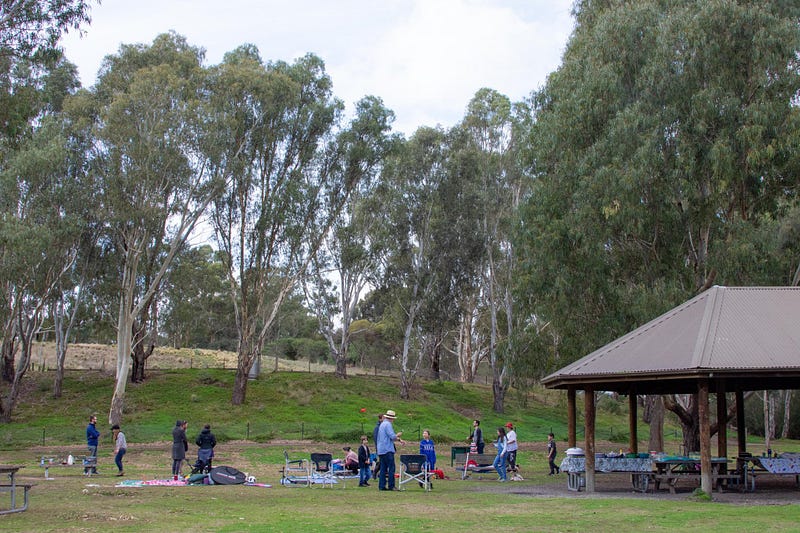
Start attending any and all excursions, meet-ups and especially park days that are local, within 1 hour of driving. Introduce yourself and chat with everyone. Watch who your children are playing with and chat with their mums or dads. Invite the ones you feel a connection with to your house for a play and chat. Organize a picnic or BBQ and invite three or four families to come along. How do they all get along? Could this be a good group? Are the children all playing well together? Is there at least one child the same age or very close to each child’s age?
All totaled, it took us about two years to settle into our tribe of six families. All through that time, there was a mixture of partial meet-ups and all of us together including the dads and camping, BBQs, picnics, playgrounds, and each other’s homes. We all have other friends in the home education community but this is our core tribe.
Deschooling
What does deschooling even mean?
It is the process of unlearning what school has taught us about how learning happens. It is a change of mindset away from learning the way it does in schools to an understanding of how learning happens naturally. We saw this in our infants, toddlers, and preschoolers before they were institutionalized.
Our little ones displayed curiosity, experimented, asked questions, and explored all the time. We need to adjust our own mindset to recognize this in our “school-age” children because it is still there. And we need to learn to encourage and support our children without attaching expectations focused on outcomes.
Resources for Deschooling:
Books Teach Your Own by John Holt The Brave Learner by Julie Bogart Free to Learn by Peter Gray
Blogs Happiness is Here Racheous
Films Self Taught Being and Becoming Class Dismissed
Youtube channels Let’s Talk About Homeschooling Kylie Raynor Marieka Lake
Podcasts The Wildlings Julie Bogart Pam Laricchia
*Links may be affiliate links.
Define What Home Education Means for You and Your Family
As part of learning about home education and deschooling, there are names of styles and philosophies that are common and include: Classical, Charlotte Mason, Waldorf/Steiner, child-led learning, project-based learning, eclectic, and unschooling. There are more but these are the most common. (I will save unpacking in-depth descriptions of each of these for a future article.)
These styles/philosophies are all worth reading about, becoming familiar with, and even trying because there is no one right or wrong style. They all have their pros and cons which will differ with each family. Some are a better fit at certain ages than others. Some will be more compatible with certain parenting styles than others. When we started home educating our daughter, I did try a few of them out and have finally settled into something rather eclectic — a blending of various methods from a few of them. Because that is what works for my family at this time.
Take the time now to write down your thoughts about why you are exploring home education. What is driving you to choose to base your child’s education from home? Describe your vision for your child’s education. How do you see your parenting style changing to accommodate home education?
Writing this down now and making it into a purpose or vision statement will help on those really tough days or months when it just all seems to be falling apart. It brings us back to why we started in the first place and helps us refocus on what is really important.
Choose Curriculum or not
Yes, this is intentionally last on the list because, in my opinion, it is the least important of the six steps of getting started in home education. A curriculum is not necessary although it can be useful. Choosing one or a few is a very personal decision subject to the mood of the moment. Most states do not require the use of a specific curriculum or method of learning/teaching. Most are more focused on outcomes or simply showing progress or evidence of learning opportunities. This is an example of why it is important to learn the regulations.
Asking for recommendations and suggestions in local groups is usually acceptable and responses typically range from all-inclusive boxed curriculum to no curriculum at all or learning from life experiences. My personal preference is life experiences and conversations followed by a curriculum created by home educators for home educators.
That’s it for getting started in home education. If you have any questions, drop a comment below.
Of course, depending on the ages of the children, deschooling may begin long before it is necessary to register them. I started reading books from the library and joined the state home education group when my daughter was an infant.
Most local home education groups allow preschool children to come along to their park days or point out a preschool group with members who intend to home educate later. Either way, start attending and building those connections and friendships. The only way to meet other parents who choose to educate their children from home is by getting out of the house.
Homeschooling is a misnomer. Most learning happens away from the home on excursions, camping trips, and bushwalks; at the beaches, museums, park days, and friends’ houses. Home Education is not school at home.
Originally published at https://letstalkabout.com.au on July 24, 2021.
Previous article: Homeschooling is Not School at Home
Next article: I Want to Homeschool My Children, But . . .


