
How to spot fake news: Part two — evaluate the facts and the context
“You’re saying it’s a falsehood, and they’re giving — Sean Spicer, our press secretary, gave alternative facts to that” — Kellyanne Conway.
“Alternative facts are not facts. They are falsehoods.” — Chuck Todd
This is part two of my series on how to spot fake news. Follow these links for part one, part three, part four, part five, part six, and part seven.
The second thing I will look at in a news story is what facts I am being asked to believe.
This comes after I consider what I am being encouraged to assume and where there are holes in the story. The reason I concentrate on this first is because it provides obvious red flags and it is much easier that questioning every single fact in every single story I read.
Once I have done that I will turn my attention to the facts and ask myself the following questions:
- How quickly is the story unfolding? Live stories have lower bars for facts due to evolving situations and things are often revised or corrected.
- Are the facts given from a primary source? These include quotes included in the story.
- Does the story link back to the source or otherwise help you to verify and is that source reputable?
- Is the story an interpretation of the facts? Can they be interpreted any other way?
- With extreme claims – could any of this have been taken out of context, fabricate, or otherwise manipulated? This point is so complicated I will dedicate Part Three of this series to it.
This is a fairly long list to be scanning for every news story you consume and I don’t subject every story to this level of scrutiny.
My method is similar to the previous criteria – I look for red flags and once I have identified a suspect story I will disregard it or investigate it further.
As written above the final point around facts is so complicated that I will explore it in part three of this series — which is looking at how you can spot manipulated videos and quotes taken out of context.
But for now we will concern ourselves with facts presented in full, but possibly interpreted deceptively.
Check how quickly the story is unfolding
“Live”, “breaking”, “rolling”, or “developing” stories have lower bars for facts due to their evolving nature.
In the frenzy for updated copy false pictures, video, and quotes often make their way into this type of news coverage.
It can be something as innocent as a video or picture.
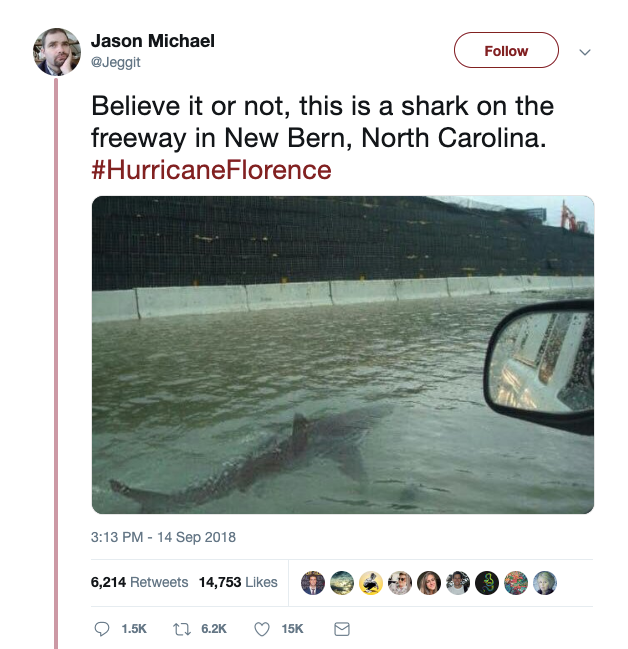
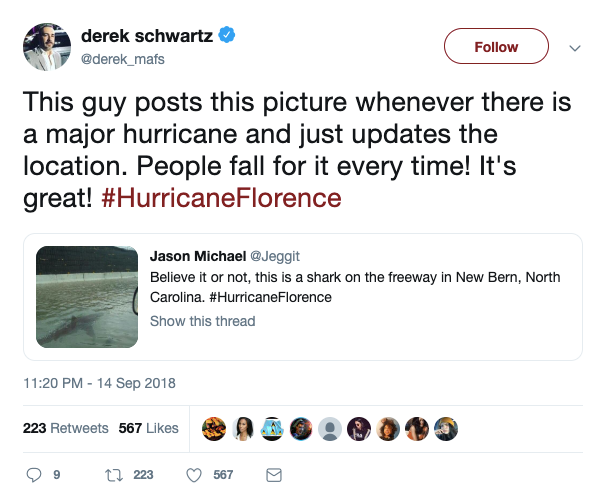
I’ve seen the picture below recycled almost every single time there is a hurricane.
But breaking news stories also have the potential for people to get caught up in the excitement and to make things up, or simply to “troll” reporters.
If you’re not familiar with the example below it’s a famous Australian news story where a girl, dubbed the “Chick chick boom” for obvious reasons, completely fabricates an eye-witness account of a shooting.
But even if a journalist is trying to be careful they may still find themselves in a situation where they are forced to broadcast something that could be “fake news”.
I was working in a newsroom when passenger plane MH17 was shot down in Eastern Ukraine, killing 298 people.
At the time we were unaware of the circumstances that had brought the plane down — we only knew it had crashed.
Our newsroom undertook rolling coverage of the tragedy searching relentlessly for fresh pictures, quotes, and updates.
One of the younger staff members found a video claiming to be an intercepted radio transmission where pro-Russian rebels admit to accidentally shooting down the plane.
Initially we refused to broadcast the video as it had not been verified. But we soon encountered a problem.
Many other sites were using it and it was being shared even more widely on social media as fact.
In fact some of our readers were getting in touch asking us why we were censoring the video.
We made the decision to run the clip but heavily branded as “unverified” until it was confirmed. This way if anyone from our audience saw it on social media or another news channel they would be aware it was not necessarily correct. This was we were informing them of the potential misinformation.
If this sounds like we tied ourselves in knots — we did. The sad truth is that most people do not need to monitor breaking news reports but only do so for the thrill it gives them.
You will be just as informed, perhaps better informed, if you read a more considered piece once a day rather than monitoring the breaking updates.
Check for a primary source
One of the clearest indicators of fake news is a lack of primary source or one that is hidden from the reader.
In his article “How I Detect Fake News” author Tim O’Reilly tells the story of two different maps — one which makes inflammatory claims and has no source for the map listed, the other which still makes inflammatory claims but which links back to a government site for details.
You can probably guess which one was fake news.
It doesn’t matter if you’re reading a news story or a funny picture on Facebook — if there is no source listed it’s a very, very red flag.
This also extends to quotes and accounts — check that subject of a news story has been quoted directly. If they aren’t you should ask why not.
It’s a joke to say a friend of friend told you something but reporters quote “someone familiar with” … whatever, all the time.
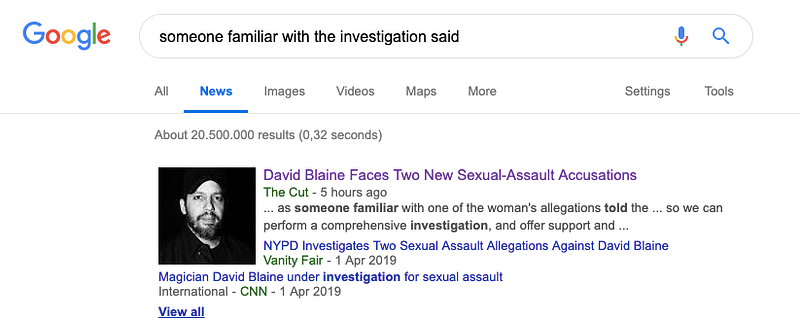
If a news story doesn’t mention a primary source where they got their facts it’s not a good sign.
It doesn’t mean it’s fake news — but it is a red flag.
Does the story link back to the source? Is that source reputable?
It’s easy to insert a hyperlink into a webpage or document now. If someone doesn’t bother it’s another red flag.
You’d be surprised how often otherwise good journalists will fail to either link to or name the source of the information in their story.
I think this will only be temporary though. We are careening towards an age where fake news is more powerful and prevalent than ever. Algorithms and browser extensions already exist to check the sources of information as you read the story and give you warnings or a ranking.
Soon I think it will no longer be optional for journalists — they will have to link back to sources or risk being disregarded.
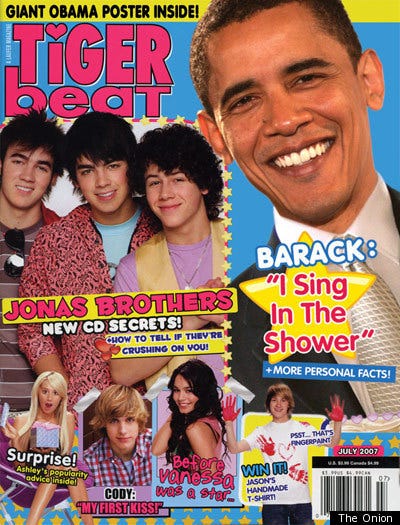
Less obvious, but just as bad are links to blogs or less-than-reputable sites.
Dodgy sites are sometimes obvious, sometimes not.
The Onion has managed to fool a lot of news services over the years including Fox News, two major Bangladesh publications, ESPN, and even the New York Times has been caught out and forced to issue a correction.
While The Onion are mostly aiming to play jokes other individuals do it to deliberately mislead for profit.
In a recent interview with The Hustle self-proclaimed “Fake News King” Jestin Coler detailed how he created and ran a fake news network which employed 25 people, made him enough money to buy his own home, and misled millions of Americans.
He bought domains that sounded reputable like DenverGuardian.com and NationalReport.net and then populated them with a mix of real and fake news.
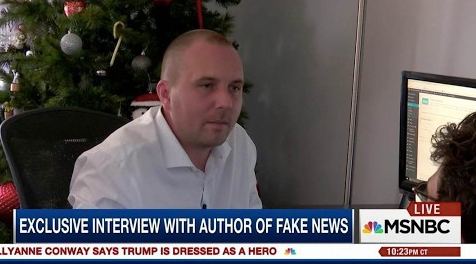
The only way to catch these sorts of sites are identifying the red flags and doing deeper investigation of the stories you find there.
If they are failing to mention a source — red flag. If they are quoting soft sources then that’s also a red flag.
When I’m checking story links the ones I trust most are sites with .gov — these are known as “Top Level Domains” (and include .gov, .gov.in or .nic.in) and you can only register them for government or governmental institution use.
Likewise look for studies on reputable university or peer-reviewed studies.
Less reputable are lobbying groups which often fund studies but with a campaigning point in mind.
A good example is outlined in this video of Edward Bernays (known as the “Father of Public Relations”) who explains how he created a study and campaign to make people eat bacon and eggs for breakfast, which they hadn’t done on a large scale up to that point — I’ll say more about that sort of thing in part three of this series.
Far more difficult is when news sites quote each other in an endless daisy chain of repetition which can sometimes leave you wondering where the story started.
Chase the thread far enough down the rabbit hole and you may find it doesn’t take much to light the fuse on a national news story if you know how.
In his book Trust Me I’m Lying: Confessions of a Media Manipulator author Ryan Holiday talks about planting news stories and “trading them up the chain”.
This is a systematic process Holiday would use to create fake news stories for his friend and client Tucker Max but also in his professional capacity working for American Apparel.
The process went something like this:
- Holiday would seed the stories to smaller blogs that he knew were monitored by larger media sites. These blogs are hungry for stories and need constant updates and can have lower editorial standards.
- These blogs would then be picked up by larger news outlets and columnists. If this didn’t happen Holiday would email to make sure they noticed the story.
- Once there were enough medium sized publications covering the story national media would begin to pay attention. If this didn’t happen Holiday would also get in touch with them. Again from a fake email address.
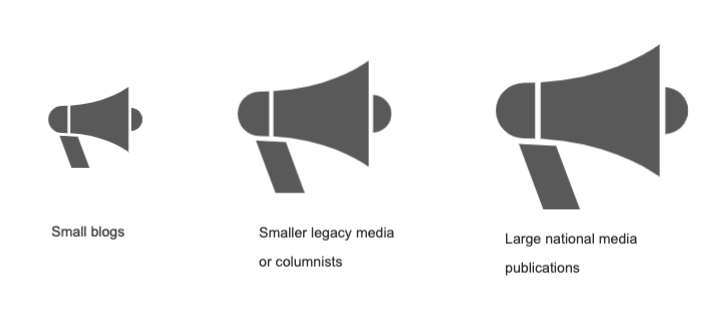
This phenomenon has also been called a “self-reinforcing news wave” by some academics.
Holiday has since devoted a lot of his time to shining a light on things like this and says he is trying to reverse some of the damage he caused.
Interpretation and context
The final check I have is if the facts are legitimate but can be interpreted differently.
In the last article I gave an example of how statistics about workplace deaths could be misrepresented. But there are many real examples of this sort of thing actually happening, and not always deliberately.
In 2017 the media went crazy for a medical breakthrough from the Victor Chang Institute which could prevent thousands of miscarriages and birth defects.
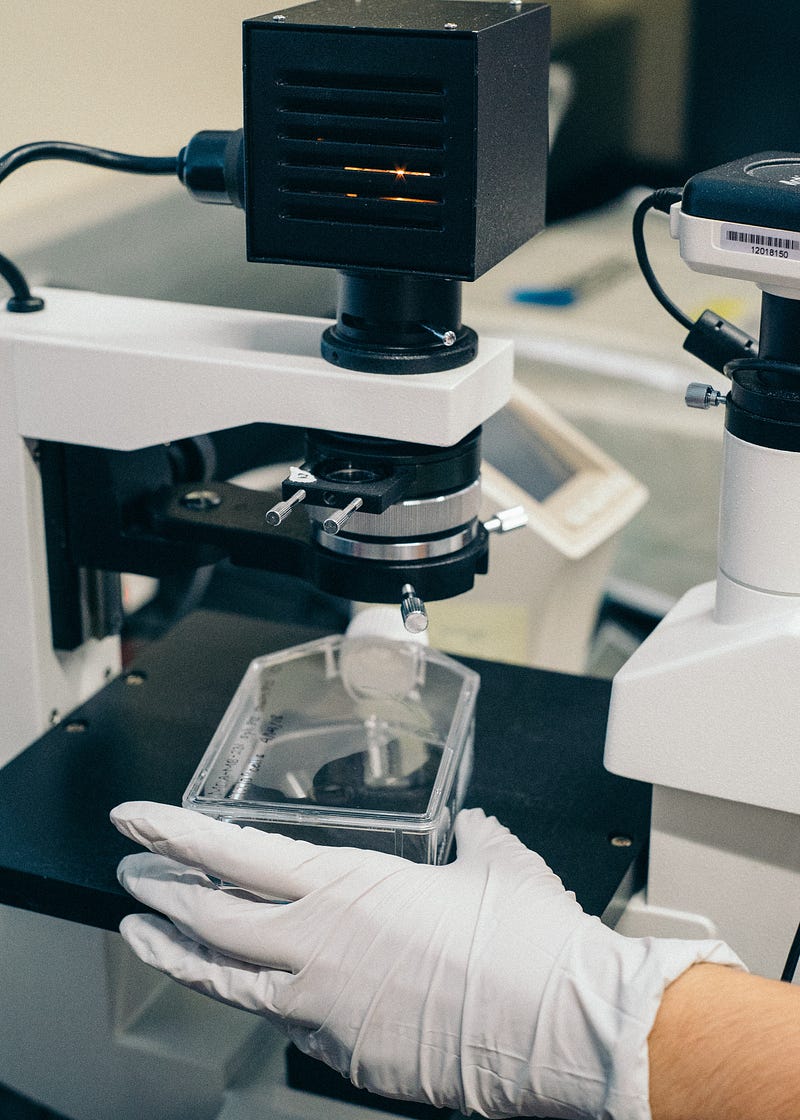
The day after the story the media was covering it again — but this time pouring scorn on the same institute for misrepresenting their “breakthrough”.
Of course they didn’t mention their failure to subject the announcement to any rigour.
As Robin Bisson wrote for the Science Media Centre:
“… the temptation for journalists to trumpet a so-called ‘breakthrough’ is hard to resist. But strong claims need to be backed up by strong evidence. By not fact-checking dramatic statements, journalists are forgetting that scientists are humans too, and can be swept up in their own work.”
The way you check it a fact has been interpreted creatively is if there are holes around it.
My previous article explained how to look for holes but in brief.
- If something is given as an increase a reputable story will give context. What were previous numbers, what are numbers in other industries, what’s the history of the number.
Look for these things surrounding a story.
If they are missing it’s a red flag.
Quotes taken out of context and spotting manipulated videos
The next point is important but it is so detailed that I will dedicate a separate article to analysis and examples.
Videos, audio, and quotes taken out of context are incredibly common. In the last few weeks Jewish Activist Avi Yemini has posted footage filmed with a hidden camera showing what appears to be the Jim Jefferies Show editing interview clips to make his views look more extreme.
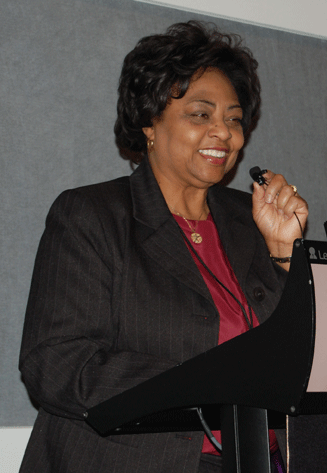
Previous incidents have included the infamous case of Shirley Sherrod and Breitbart where edited footage appeared to show a federal employee admitting to racist practices.
She was fired but then offered her job back, and a personal apology from then-President Barack Obama, when the full video demonstrated how badly she had been misrepresented.
This is part two of my series on how to spot fake news. Follow these links for part one, part three, part four, part five, part six, and part seven.


