avatarThought in the Crossfire

Free AI web copilot to create summaries, insights and extended knowledge, download it at here

3884

Abstract

y-c6af075aa35c">part four of this series</a> I explain a case where anti-Islamic Dutch politician Geert Wilders was asked to provide comment on a shooting which did not yet have a known motive. This totally changed the story into one about Islamic terrorism (if you doubt that imagine if the head of the gangs and violent crime task force was interviewed instead — the story would be about gang violence, not terrorism).</p><p id="1303">I don’t think that this was driven by any sort of anti-Islamic ideology. Rather I know that terrorism and terror attacks drive traffic to news sites. I’ve seen how much traffic first hand while running these sites.</p><h2 id="ec6a">Partisan news</h2><p id="98ce">This is when you get into what most people think of when they think fake news — news with a political or other ideological motive.</p><figure id="22aa"><img src="https://cdn-images-1.readmedium.com/v2/resize:fit:800/1*bqqNbo3Ktju9qv-6DTp2Dg.jpeg"><figcaption>In 1993 The Sun newspaper infamously ran a front page claiming credit for the result of the election.</figcaption></figure><p id="4a0c">These are stories that will misrepresent or otherwise skirt as close as they can to propaganda without falling in.</p><p id="f1a7">When you think about sites like InfoWars or Breitbart this is what you’re thinking about. You’ll hear about these publications — their infamy is often so widely spread that you can buy bumper stickers lambasting the worst of them.</p><p id="8cb3">It’s worth asking yourself why you’re reading something that you know to be false and could you be spending your time better.</p><p id="808d">These news sources and stories are junk food for the mind. Occasional consumption won’t hurt you but if you are constantly shovelling this nonsense into your mind you will end up with a world-view and understanding that is unhealthy.</p><h1 id="4958">How to spot and track these sources</h1><p id="6e04">So when you see red flags, or when you are shocked by a story, it is well worth investigating both the publication and the reporter themselves.</p><p id="20b7">There are a number of sites online that you can use to check a news publication and a journalist:</p><ul><li><b>Google:</b> No, I’m not kidding. Doing a search for both the publication and the journalist is a great first step. You may not know who Jack Kelley or Sabrina Erdely are but a search will help you know if they have a byline you should trust. But make sure that when you’re doing this you are also <a href="https://www.makeuseof.com/tag/exclude-domains-google-search-results/">excluding results from the domain that you’re searching for</a> by adding “-site: [name of site]” to the search. For example — if I was doing this for Breitbart I would type the following into the search bar.</li></ul><figure id="04ac"><img src="https://cdn-images-1.readmedium.com/v2/resize:fit:800/1*3YEcvGbouQpHZPEhmsutXQ.png"><figcaption></figcaption></figure><ul><li><b>Especially search for the journalist’s name:</b> Much to my horror I’ve begun to find that some publications will run press releases, unbranded, with the PR person named as though they were a reporter for the publication. As a PR person I’ve had this happen to me personally. You should definitely know if a news story isn’t actually a news story but is actually a press release.</li><li><b>Free online resources:</b> There are a number of free online sites like <a href="https://www.snopes.com/">Snopes</a> and <a href="https://mediabiasfactcheck.com/">Media Bias Fact</a> that can help you if you have a suspicion about a news site or journalist.</li><li><b>Press regulatory bodies:</b> A lot of countries have a membership-based regulatory bodies. In the UK it’s the <a href="https://www.ipso.co.uk/rulings-and-resolution-statements/">Independent Press Standards Association</a>, in Australia the <a href="https://www.presscouncil.org.au/se

Options

arch-complaint-outcomes/">Press Council</a>. If you have doubts about a publication go to their findings page and search for the name — you will be able to see all the recent findings against them. For example here are the first page of results when I searched for “Daily Mail” in the UK and Australia.</li></ul><figure id="c3c2"><img src="https://cdn-images-1.readmedium.com/v2/resize:fit:800/1*uQpsbTg1nbzC7zchlxEA4w.png"><figcaption></figcaption></figure><figure id="b675"><img src="https://cdn-images-1.readmedium.com/v2/resize:fit:800/1*YE5tKe8x-7HqgOPOKhdbhA.png"><figcaption></figcaption></figure><ul><li><b>Trade press and watchdog shows:</b> If you’re having trouble finding that do not have this it’s worth checking the trade press or media reporting. You will always find a record of corrections and scandals there. There are columns on the media in sites like The Guardian and Daily Beast and dedicated sites such as <a href="http://www.mumbrella.com.au">Mumbrella</a> or the <a href="https://www.pressgazette.co.uk/">Press Gazette.</a></li><li><b>Fact-checking sites:</b> There are a large number of these springing up online. My favourites are <a href="https://factcheck.afp.com/">AFP fact check</a>, <a href="https://www.politifact.com/">Politifact</a>, and <a href="https://www.factcheck.org/">Factcheck.org</a>. As always you can search these by both journalist and publication.</li></ul><h1 id="3d65">Pay attention and then STOP PAYING ATTENTION</h1><p id="ea63">The most damaging thing you can do to people who are peddling fake news is to not read, not engage, and not spread their nonsense.</p><p id="2260">Once you’ve noticed a site or journalist is pushing fake or sensationalised news withdrawing your support robs them of the financial and political profit that is motivating their actions.</p><p id="3f49">Unfortunately this pushes a lot of the obligation to check and act on fake news back on you – the reader.</p><p id="f244">I don’t think that this is right or fair but I do think it’s necessary at this point in time. With online misinformation on the rise I will always choose to expend the extra effort to be informed and know what information I can trust rather than be manipulated.</p><figure id="729b"><img src="https://cdn-images-1.readmedium.com/v2/resize:fit:800/1*3IfJlOu7dLs_mpsd0FAQIw.jpeg"><figcaption></figcaption></figure><p id="db4b">Over time I think the public backlash against “fake news” will mean more people ask for some kind of certification or way to know they can trust a story they have read. Already I am seeing sites, tools, and browser extensions set up to help people do exactly this.</p><p id="f23f">This is only the beginning.</p><p id="2763">In my next, and final, post I will outline some of these tools that I use and recommend an overall framework for turning these points into action.</p><p id="6d80"><i>This is part six of my series on how to spot fake news. <a href="https://readmedium.com/how-to-spot-fake-news-part-one-look-for-holes-and-assumptions-bcb23b80eeb"><b>Follow the links to read part one</b></a><b>, <a href="https://readmedium.com/how-to-spot-fake-news-part-two-evaluate-the-facts-and-the-context-346d882547f0">part two</a>, <a href="https://readmedium.com/part-three-manipulated-news-and-videos-1916d5d17bf5">part three</a>, <a href="https://readmedium.com/how-to-spot-fake-news-part-four-who-are-the-experts-what-is-their-agenda-and-why-are-they-c6af075aa35c">part four</a>, <a href="https://readmedium.com/how-to-spot-fake-news-part-five-balance-isnt-truth-11e135329a9f">part five</a>, and <a href="https://readmedium.com/a-toolkit-for-spotting-fake-news-59dd211c57d4">part seven</a>.</b></i></p><p id="6fbd"><a href="https://forms.gle/D6F1B7NxhVtsyH7v6"><b><i>If you would like to be notified when I publish a piece please use this link to sign up to my newsletter.</i></b></a></p></article></body>

Source: Pexels.com

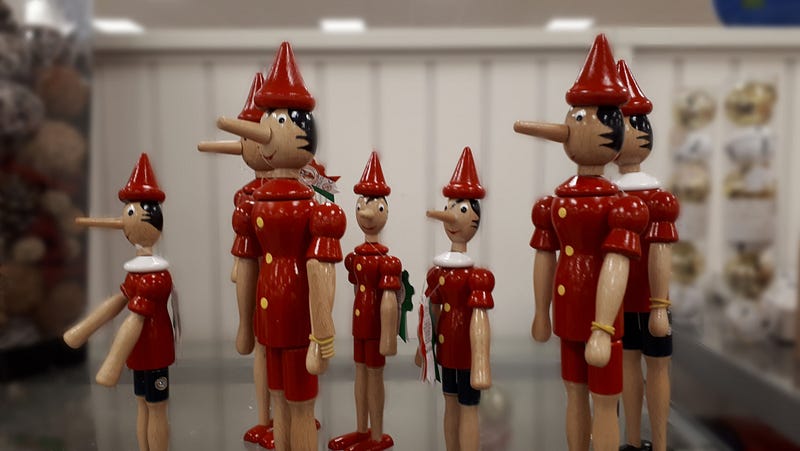
How to spot fake news: Part six — consider the reporter and publication

“Trust is the glue of life. It’s the most essential ingredient in effective communication. It’s the foundational principle that holds all relationships.” ― Stephen R. Covey

This is part six of my series on how to spot fake news. Follow the links to read part one, part two, part three, part four, part five, and part seven.

The final test of a news story is the publication.

This isn’t something you can do in the moment. Rather it is learning over time if a story is trustworthy or not.

There are a number of different ways a publication or journalist can be deceptive or peddle bad news.

Laziness, inexperience, or other lack of rigour

There are a lot of reasons for this and they don’t always have to be deliberate — but they do all end up spreading fake news.

A lazy journalist or publication can put up a story that is fake because they couldn’t be bothered to check the sources.

A hungry journalist can put up a fake story because they are trying to beat their competition or do too much at once.
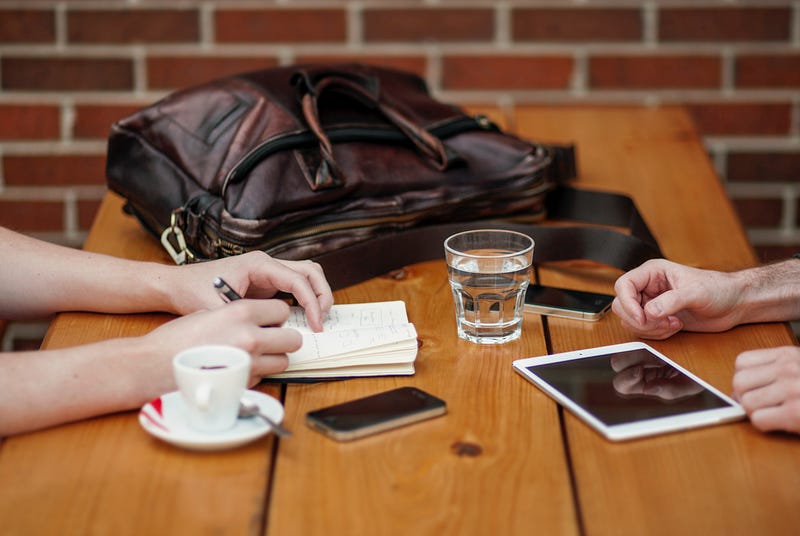
Photo by Alejandro Escamilla on Unsplash

A young journalist working in a rewrite factory with no experience can put up a story that is fake simply because they do not know better.

The end result is the same.

Sensationalism

The internet had a transformative effect on journalism in two ways — firstly it destroyed the commercial model which meant “doing more with less”.

Secondly, it totally changed the way we consume news from a subscription based model to one driven by individual clicks, and a growing percentage of social referral. Basically turning the entire industry into the online equivalent of a news boy standing on the corner yelling “extra extra, read all about it”.

These two factors mean that news outlets have continuously ramped up sensationalism in an attempt to capture a transient audience and to ensure revenue.

I have worked in newsrooms for three of the largest news organisations in Australia and know people who have worked all over the world — the pressure to get someone to click is immense.

In part four of this series I explain a case where anti-Islamic Dutch politician Geert Wilders was asked to provide comment on a shooting which did not yet have a known motive. This totally changed the story into one about Islamic terrorism (if you doubt that imagine if the head of the gangs and violent crime task force was interviewed instead — the story would be about gang violence, not terrorism).

I don’t think that this was driven by any sort of anti-Islamic ideology. Rather I know that terrorism and terror attacks drive traffic to news sites. I’ve seen how much traffic first hand while running these sites.

Partisan news

This is when you get into what most people think of when they think fake news — news with a political or other ideological motive.
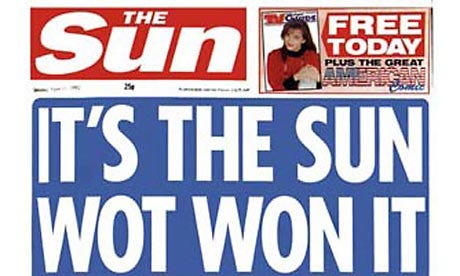
In 1993 The Sun newspaper infamously ran a front page claiming credit for the result of the election.

These are stories that will misrepresent or otherwise skirt as close as they can to propaganda without falling in.

When you think about sites like InfoWars or Breitbart this is what you’re thinking about. You’ll hear about these publications — their infamy is often so widely spread that you can buy bumper stickers lambasting the worst of them.

It’s worth asking yourself why you’re reading something that you know to be false and could you be spending your time better.

These news sources and stories are junk food for the mind. Occasional consumption won’t hurt you but if you are constantly shovelling this nonsense into your mind you will end up with a world-view and understanding that is unhealthy.

How to spot and track these sources

So when you see red flags, or when you are shocked by a story, it is well worth investigating both the publication and the reporter themselves.

There are a number of sites online that you can use to check a news publication and a journalist:

  • Google: No, I’m not kidding. Doing a search for both the publication and the journalist is a great first step. You may not know who Jack Kelley or Sabrina Erdely are but a search will help you know if they have a byline you should trust. But make sure that when you’re doing this you are also excluding results from the domain that you’re searching for by adding “-site: [name of site]” to the search. For example — if I was doing this for Breitbart I would type the following into the search bar.

  • Especially search for the journalist’s name: Much to my horror I’ve begun to find that some publications will run press releases, unbranded, with the PR person named as though they were a reporter for the publication. As a PR person I’ve had this happen to me personally. You should definitely know if a news story isn’t actually a news story but is actually a press release.
  • Free online resources: There are a number of free online sites like Snopes and Media Bias Fact that can help you if you have a suspicion about a news site or journalist.
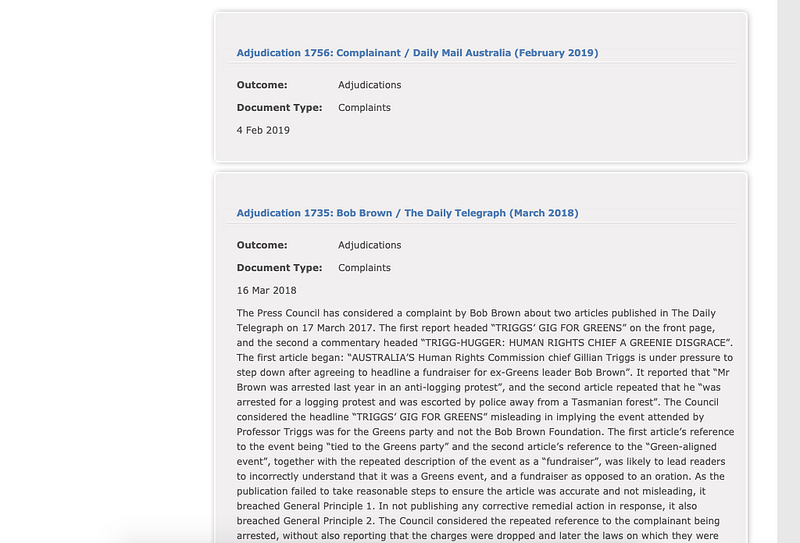
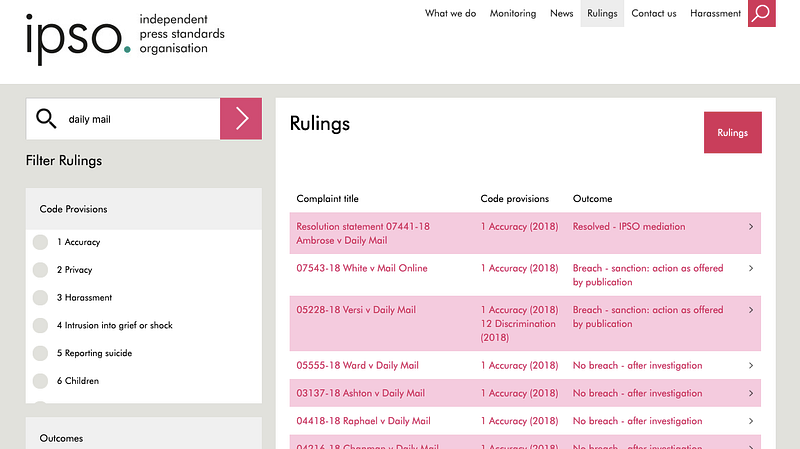
  • Press regulatory bodies: A lot of countries have a membership-based regulatory bodies. In the UK it’s the Independent Press Standards Association, in Australia the Press Council. If you have doubts about a publication go to their findings page and search for the name — you will be able to see all the recent findings against them. For example here are the first page of results when I searched for “Daily Mail” in the UK and Australia.
  • Trade press and watchdog shows: If you’re having trouble finding that do not have this it’s worth checking the trade press or media reporting. You will always find a record of corrections and scandals there. There are columns on the media in sites like The Guardian and Daily Beast and dedicated sites such as Mumbrella or the Press Gazette.
  • Fact-checking sites: There are a large number of these springing up online. My favourites are AFP fact check, Politifact, and Factcheck.org. As always you can search these by both journalist and publication.

Pay attention and then STOP PAYING ATTENTION

The most damaging thing you can do to people who are peddling fake news is to not read, not engage, and not spread their nonsense.

Once you’ve noticed a site or journalist is pushing fake or sensationalised news withdrawing your support robs them of the financial and political profit that is motivating their actions.

Unfortunately this pushes a lot of the obligation to check and act on fake news back on you – the reader.

I don’t think that this is right or fair but I do think it’s necessary at this point in time. With online misinformation on the rise I will always choose to expend the extra effort to be informed and know what information I can trust rather than be manipulated.
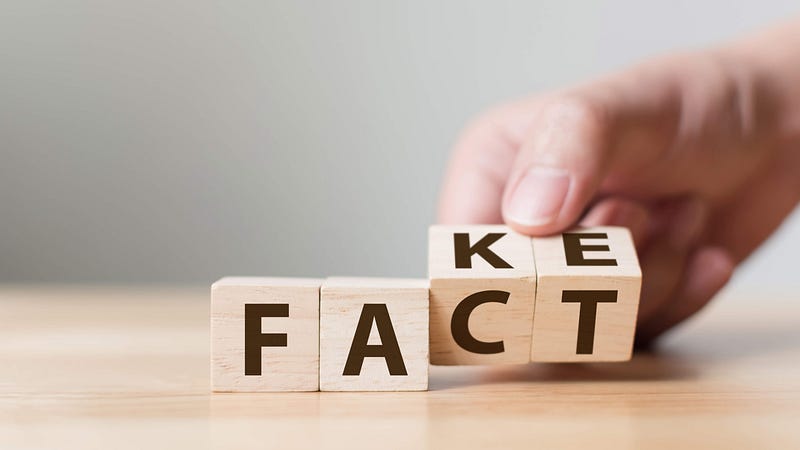
Over time I think the public backlash against “fake news” will mean more people ask for some kind of certification or way to know they can trust a story they have read. Already I am seeing sites, tools, and browser extensions set up to help people do exactly this.

This is only the beginning.

In my next, and final, post I will outline some of these tools that I use and recommend an overall framework for turning these points into action.

This is part six of my series on how to spot fake news. Follow the links to read part one, part two, part three, part four, part five, and part seven.

If you would like to be notified when I publish a piece please use this link to sign up to my newsletter.

Journalism
Media
Fake News
Communication
Politics
Recommended from ReadMedium