
avatarThought in the Crossfire

Free AI web copilot to create summaries, insights and extended knowledge, download it at here

6753

Abstract

JMSdZA?utm_source=unsplash&utm_medium=referral&utm_content=creditCopyText">Braden Collum</a> on <a href="https://unsplash.com/search/photos/athlete?utm_source=unsplash&amp;utm_medium=referral&amp;utm_content=creditCopyText">Unsplash</a></figcaption></figure><p id="0ce0">This is all without casting any judgement on the subject of the story — I simply don’t know enough about it. My emotional reaction is to think that it is unfair for a man to compete against a woman. But that’s exactly why you read and try to educate yourself. Emotional reactions are not thoughts.</p><p id="8f77">This news story did nothing other than fuel emotional reactions.</p><p id="9f16">This is quite widespread.</p><p id="d7ae">I’ve seen the managers of Apple stores asked why they think the iPhone is so popular — shocker the person responsible for selling as much of something as possible says it’s because it’s “so good and more than just a phone”.</p><p id="4b46"><b>That doesn’t mean that you should reject something out of hand — that would be an argument to authority which is a rhetorical fallacy.</b></p><p id="7542">But you have to be aware of the extra authority someone gets from being in the media — be it television or newspaper.</p><p id="d44a">Recently I’ve seen oyster fishermen interviewed about safety plans for oil rigs and state with authority that there was no danger — <b>contradicting experts with decades of experience in safety.</b></p><p id="b898">I’m not saying they shouldn’t have an opinion or that they’re stupid. But I’m going to be quite sceptical when I hear an oyster fisherman contradicting an oil spill expert with decades of experience.</p><p id="2a0a">It also isn’t fair to put them up against them. Which brings me to …</p><h1 id="377f">Lobbyists — experts at being experts</h1><p id="2f35">If you see an interview quoting an organisation like Oxfam or World Vision you know what you’re getting.</p><p id="8d9b">These organisations both have long histories and strive to set up transparent working practices which include <a href="https://accountablenow.org/accountability-in-practice/accountability-reports/">public reporting of most of their financial records and internal structures.</a></p><p id="bb3f">Sure, they’ve made mistakes in the past and there will also be bad apples in any large organisation.</p><p id="3ea7"><b>But these are mistakes and bad apples — never because they’ve been paid to do it.</b></p><p id="8988">This isn’t true of a lot of the figures you’ll see on television. A lot of the time you see lobbyists and people from “think tanks” who have strong opinions but it’s not clear <a href="https://thebestschools.org/features/most-influential-think-tanks/">who is paying their bills.</a></p><p id="fcdf">Shortly after the link between smoking and lung cancer was established by British researcher Sir Richard Doll in 1950 tobacco companies went on a public relations offensive.</p><figure id="0722"><img src="https://cdn-images-1.readmedium.com/v2/resize:fit:800/1*yGfRIRDKiwLa83lLXDj9mg.jpeg"><figcaption>Photo by <a href="https://unsplash.com/photos/c203mmajhag?utm_source=unsplash&amp;utm_medium=referral&amp;utm_content=creditCopyText">A B E D K A Y A L I</a> on <a href="https://unsplash.com/search/photos/smoking?utm_source=unsplash&amp;utm_medium=referral&amp;utm_content=creditCopyText">Unsplash</a></figcaption></figure><p id="7870">Top executives from Philip Morris, Benson & Hedges, US Tobacco, R J Reynolds and Brown & Williams met in New York and agreed to a campaign <a href="https://publicintegrity.org/accountability/how-the-spin-doctors-talked-up-tobacco-as-thousands-died/">which would span decades while hundreds of thousands of people died.</a></p><p id="7c96">This campaign included <a href="https://tobaccocontrol.bmj.com/content/10/2/124">tens of millions of dollars spent trying to prevent regulation, advertising, false reports, and lobbyists acting as talking heads.</a></p><p id="f6a0">But none of those groups called themselves tobacco lobbying groups.</p><p id="c8cc">They instead have names like;</p><ul><li><a href="https://www.tobaccotactics.org/index.php?title=Action_on_Consumer_Choice"><b>Action on Consumer Choice:</b></a> “A consumer group that fights the health police on the battlegrounds of choice and personal responsibility”. Funny that the people who stand to make millions from decisions that could give you cancer and see you die a slow and painful death are so keen to defend your right to make them.</li><li><a href="https://theconversation.com/big-tobacco-is-funding-the-anti-smoking-lobby-but-leaked-documents-reveal-the-real-reason-why-93087"><b>Foundation for a Smoke-Free World:</b></a> Despite the name this organisation gets “US$80m annually — for the next 12 years — from the world’s largest tobacco company, Philip Morris International (PMI)”. What they are advocating is a “smoke free” future not a tobacco free one — which means advances in heating tobacco and smokeless smoking are still on the table. While the science catches up…sound familiar.</li></ul><p id="f6f2">There are many others which have official sounding names but unless you go digging you won’t know who is funding them or what their agenda is.</p><figure id="115b"><img src="https://cdn-images-1.readmedium.com/v2/resize:fit:800/1*LQJxQ6GjA3KaC8BNqewXwg.jpeg"><figcaption>Photo by <a href="https://unsplash.com/photos/lzcKZlVPYaU?utm_source=unsplash&amp;utm_medium=referral&amp;utm_content=creditCopyText">Mathew MacQuarrie</a> on <a href="https://unsplash.com/search/photos/smoking?utm_source=unsplash&amp;utm_medium=referral&amp;utm_content=creditCopyText">Unsplash</a></figcaption></figure><p id="02e7">If you see someone from the Cato institute what do you really know about them? They’ll be well-spoken, often with a background in law, media, or politics, and they’ll usually be espousing libertarian free-market ideals.</p><p id="8de5">But you’re not likely to know the Cato institute used to be called the Charles Koch foundation after the Koch brothers — some of the richest people on earth. Again, I’m not saying this invalidates what they have to say, but when you’re dealing with an organisation that has an ideological position and loyalties it should be apparent.</p><p id="3848">But it isn’t. So instead you’re left with soundbites designed and delivered by people whose whole job is to lobby for something.</p><p id="ce6c">If the media do not point out this truth they are helping them.</p><p id="c9ba">But they usually wont point this out and you need to look it up for yourself. If you see someone from APPEA talking about how safe oil drilling is you should remind yourself that this is a lobbying body paid for by oil companies specifically to talk

Options

about how safe and great they are.</p><p id="a3db">Remember that the next time you hear quotes from an organisation with an ambiguous-sounding name. It’s probably worth Googling them or <a href="https://www.opensecrets.org/">looking them up on a list of lobbying groups.</a></p><h1 id="9982">Change the expert, change the story</h1><p id="eb52">It’s an interesting mental exercise to consider a recent story from the Netherlands.</p><p id="981d">I noticed that you could totally change the story by changing the expert quoted. See if you can tell what I mean.</p><h2 id="6f8a">Case study: There’s something about Geerty</h2><p id="ff85">Tuning in to television coverage in Amsterdam <a href="https://www.dutchnews.nl/news/2019/03/utrecht-tram-shooting-victim-dies-taking-death-toll-to-four/">the day of a shooting on a tram</a> I noticed a lot of coverage had grabs and interviews with Dutch politician Geert Wilders.</p><figure id="c588"><img src="https://cdn-images-1.readmedium.com/v2/resize:fit:800/1*VLaZD5VDAA4nKwIqLYyGag.jpeg"><figcaption>Wouter Engler [CC BY-SA 4.0 (<a href="https://creativecommons.org/licenses/by-sa/4.0">https://creativecommons.org/licenses/by-sa/4.0</a>)]</figcaption></figure><p id="6b1b">I’m familiar with Geert because when I was a reporter in Australia I covered protests of his lectures and appearances.</p><p id="0599">For those who don’t know him — <a href="https://www.theguardian.com/australia-news/2015/oct/21/geert-wilders-tells-australia-to-abandon-multiculturalism-or-end-up-like-the-eu">he’s a known anti-Islamist</a>. He’s so anti-Islam that <a href="https://twitter.com/geertwilderspvv/status/1107263946388631552?ref_src=twsrc%5Etfw%7Ctwcamp%5Etweetembed%7Ctwterm%5E1107263946388631552&amp;ref_url=https%3A%2F%2Fwww.dagelijksestandaard.nl%2F2019%2F03%2Fwalgelijke-geert-wilders-gebruikt-aanslag-in-christchurch-om-islam-weer-een-schop-te-geven%2F">he put out</a> a statement immediately after the Christchurch shooting that saw 50 people slaughtered, including children as young as 5, which contained the line: “the fact remains that Islam and freedom do not merge and Islam does not belong to our society”.</p><p id="7b2e">While it is difficult for me to wrap my head around this it seems to be suggesting the victims are somehow to blame for their own deaths simply for the crime of existing on “our” shores, or shores that are “not theirs”.</p><p id="1ffc">No matter your views on a religion or culture this sentiment right after a mass murder which included children — who can always be described as absolutely innocent — shows your colours.</p><p id="0dc3">The selection of Geert as commentator in the tram shooting immediately changes the coverage.</p><p id="4e06">It sends the signal that this indeed was an attack motivated by terror, and Islamic terror specifically because that’s what Geert talks about.</p><p id="ff40">These are things still not yet completely known — the gunman has a history of crime and was released on a rape charge only three weeks before the shooting — and there was certainly not known when Geert first sullied the airways.</p><p id="24c8">But simply choosing him as a guest gives the appearance they had, and that we were moving to the predictable “is moderate Islam to blame for radical Islam” or “is there any such thing as moderate Islam” stage of public discourse.</p><p id="61bb">It hadn’t.</p><p id="8dbf">Imagine if instead of Geert they had someone else — an expert on gang violence for example.</p><p id="12c5">You would assume that the shooting was gang related. It’s only logical.</p><p id="3481">But they put Geert on when little detail was known because;</p><ul><li>It was right after the Christchurch shootings</li><li>Terrorism drives viewership, viewership sells advertising</li></ul><p id="e0a6">I hope I’m just being cynical about this. But I doubt I am.</p><h1 id="1f9d">Interpretive communities and the news</h1><p id="582a">The last thing to watch out for is news broadcasts and experts who tell you things like “what this means is”, especially if they don’t back it up.</p><p id="6cb1">The people in a news story act as our own miniature <a href="https://www.jstor.org/stable/43518880?seq=1#page_scan_tab_contents">interpretive community</a>.</p><p id="5ad0">They tell us what is important, suggest what weight we should give to various facts, and help us interpret the information.</p><p id="1c56">This is incredibly powerful and extends not only to the guests quoted in a segment or article but also the journalist themselves, and the actors surrounding the piece.</p><p id="a555">If a newspaper story runs with a column next to it saying “analysis” or “comment” or if a guest panel on a breakfast show discuss the piece you have someone tying to shoehorn themselves in as an interpretive community.</p><p id="789a">You are surrounded by your own interpretive communities which literally help you create your reality.</p><p id="bffd" type="7">“Interpretive communities are involved in the construction and maintenance of reality within the ontological domain which defines their concerns.”</p><p id="b367">By stacking a panel with experts who are pushing a specific viewpoint or interpretation it radically distorts your view of the facts.</p><p id="a85f">Which direction do you think the panel from this screenshot would be pushing you.</p><figure id="7ad0"><img src="https://cdn-images-1.readmedium.com/v2/resize:fit:800/1*rR6FNerjALdDmW34HpjzGQ.png"><figcaption><a href="https://www.youtube.com/watch?v=_v-hzc6blGI">I’ve taken this from the excellent Vox explainer of the Overton Window.</a></figcaption></figure><p id="9aae">This brings me to the next part of the series — which is about false balance in reporting.</p><p id="dcaa"><a href="https://forms.gle/D6F1B7NxhVtsyH7v6"><b><i>If you would like to be notified when this (and any other story) is published use this link to sign up to my newsletter.</i></b></a></p><p id="bc1d"><i>This is part four of my series on how to spot fake news. <a href="https://readmedium.com/how-to-spot-fake-news-part-one-look-for-holes-and-assumptions-bcb23b80eeb"><b>Follow the links to read part one</b></a><b>, <a href="https://readmedium.com/how-to-spot-fake-news-part-two-evaluate-the-facts-and-the-context-346d882547f0">part two</a>, <a href="https://readmedium.com/part-three-manipulated-news-and-videos-1916d5d17bf5">part three</a>, <a href="https://readmedium.com/how-to-spot-fake-news-part-five-balance-isnt-truth-11e135329a9f">part five</a>, <a href="https://readmedium.com/how-to-spot-fake-news-part-six-consider-the-reporter-and-publication-17a5410c9029">part six</a>, and <a href="https://readmedium.com/a-toolkit-for-spotting-fake-news-59dd211c57d4">part seven</a>.</b></i></p></article></body>

Photo by Austin Distel on Unsplash

How to spot fake news: Part four — who are the experts, what is their agenda, and why are they there

“Culture has failed, almost entirely, in inculcating internal controls on actions that have their origin in authority. For this reason, the latter constitutes a far greater danger to human survival.” Stanley Milgram

This is part four of my series on how to spot fake news. Follow the links to read part one, part two, part three, part five, part six, and part seven.

We identify with, and connect with, people. In a news story, particularly one which has multimedia components like video or pictures, an individual is one of the strongest and most relatable part of the story.

They play two incredibly powerful roles which change both what you think are facts, and how you then interpret these facts;

  • Fact generation through authority
  • Fact interpretation and weighting through their capacity as an interpretive community

There are things you should think about in both these scenarios, and red flags to identify.
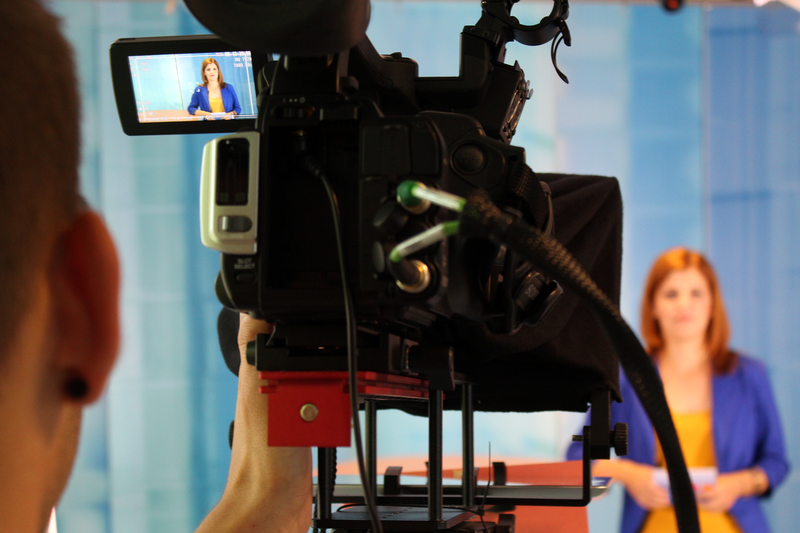
ThKnet [CC BY-SA 4.0 (https://creativecommons.org/licenses/by-sa/4.0)]

Fact generation through authority

When you see someone commenting on a subject in a news report you assume they have some sort of expertise, or reason, to be there.

But you need to ask yourself if they actually do.

This is the first test to conduct when you see an expert or authority quoted in a news piece — what are they an expert in and are they the best choice for this piece?

Case study: Do you even psychology, bro?

In the last few weeks I’ve noticed a lot of news stories around the rapper who “identified as female” to break the British deadlifting record. This clip has since gone viral because I think it plays into our current ideas and questions about gender.

I don’t want to get into that issue too much here or about what I think about it. What I found strange were the many questions asked of the rapper — Zuby — about culture and psychology.

He’s not a psychologist and while he did graduate from Oxford University, it was with a computer science degree. But he was asked to comment on complicated gender issues and speculate about things including mental health.

It’s not his fault he’s being asked these questions but I’ve seen variations on this theme repeatedly.

Really he has as much right to have an opinion as anyone else.

However — you have to ask why there wasn’t someone with actual expertise in this area quoted in the news piece. Take this piece from The Sun for example (yes I know, don’t read the sun).

Zuby’s lift and arguments in the “transgender athletes row” as The Sun calls it are given four pars at the top of the piece. Then there is another example of outrage over cyclist Rachel McKinnon and a person quoted who said it was unfair. Tennis star Martina Navratilova is quoted as saying it is also unfair, as is swimmer Sharron Davies.

Then you have the only “balance” in the article. This line:

But some have argued back claiming that point of view is prejudice and all athletes have advantages over each other such as height or hormones.

Then there are seven paragraphs from Zuby about what he says is a “biological absurdity”.

This news article doesn’t explain:

  • How often transgender athletes are competing against women.
  • What conditions and rules there are around this competition other than “male to female competitors are required to have kept their levels of testosterone — a hormone that increases muscle mass — below a certain level for at least 12 months”.
  • Heaven forbid they could possibly run a quote from the IOC or one of the transgender athletes they are pillorying.

The “some have argued back” sentence reeks of someone who wanted to write a line for balance but couldn’t be bothered actually doing the work. Otherwise the “some” would be named, and maybe even quoted.

These are all huge red flags.

Photo by Braden Collum on Unsplash

This is all without casting any judgement on the subject of the story — I simply don’t know enough about it. My emotional reaction is to think that it is unfair for a man to compete against a woman. But that’s exactly why you read and try to educate yourself. Emotional reactions are not thoughts.

This news story did nothing other than fuel emotional reactions.

This is quite widespread.

I’ve seen the managers of Apple stores asked why they think the iPhone is so popular — shocker the person responsible for selling as much of something as possible says it’s because it’s “so good and more than just a phone”.

That doesn’t mean that you should reject something out of hand — that would be an argument to authority which is a rhetorical fallacy.

But you have to be aware of the extra authority someone gets from being in the media — be it television or newspaper.

Recently I’ve seen oyster fishermen interviewed about safety plans for oil rigs and state with authority that there was no danger — contradicting experts with decades of experience in safety.

I’m not saying they shouldn’t have an opinion or that they’re stupid. But I’m going to be quite sceptical when I hear an oyster fisherman contradicting an oil spill expert with decades of experience.

It also isn’t fair to put them up against them. Which brings me to …

Lobbyists — experts at being experts

If you see an interview quoting an organisation like Oxfam or World Vision you know what you’re getting.

These organisations both have long histories and strive to set up transparent working practices which include public reporting of most of their financial records and internal structures.

Sure, they’ve made mistakes in the past and there will also be bad apples in any large organisation.

But these are mistakes and bad apples — never because they’ve been paid to do it.

This isn’t true of a lot of the figures you’ll see on television. A lot of the time you see lobbyists and people from “think tanks” who have strong opinions but it’s not clear who is paying their bills.

Shortly after the link between smoking and lung cancer was established by British researcher Sir Richard Doll in 1950 tobacco companies went on a public relations offensive.

Photo by A B E D K A Y A L I on Unsplash

Top executives from Philip Morris, Benson & Hedges, US Tobacco, R J Reynolds and Brown & Williams met in New York and agreed to a campaign which would span decades while hundreds of thousands of people died.

This campaign included tens of millions of dollars spent trying to prevent regulation, advertising, false reports, and lobbyists acting as talking heads.

But none of those groups called themselves tobacco lobbying groups.

They instead have names like;

  • Action on Consumer Choice: “A consumer group that fights the health police on the battlegrounds of choice and personal responsibility”. Funny that the people who stand to make millions from decisions that could give you cancer and see you die a slow and painful death are so keen to defend your right to make them.
  • Foundation for a Smoke-Free World: Despite the name this organisation gets “US$80m annually — for the next 12 years — from the world’s largest tobacco company, Philip Morris International (PMI)”. What they are advocating is a “smoke free” future not a tobacco free one — which means advances in heating tobacco and smokeless smoking are still on the table. While the science catches up…sound familiar.

There are many others which have official sounding names but unless you go digging you won’t know who is funding them or what their agenda is.

Photo by Mathew MacQuarrie on Unsplash

If you see someone from the Cato institute what do you really know about them? They’ll be well-spoken, often with a background in law, media, or politics, and they’ll usually be espousing libertarian free-market ideals.

But you’re not likely to know the Cato institute used to be called the Charles Koch foundation after the Koch brothers — some of the richest people on earth. Again, I’m not saying this invalidates what they have to say, but when you’re dealing with an organisation that has an ideological position and loyalties it should be apparent.

But it isn’t. So instead you’re left with soundbites designed and delivered by people whose whole job is to lobby for something.

If the media do not point out this truth they are helping them.

But they usually wont point this out and you need to look it up for yourself. If you see someone from APPEA talking about how safe oil drilling is you should remind yourself that this is a lobbying body paid for by oil companies specifically to talk about how safe and great they are.

Remember that the next time you hear quotes from an organisation with an ambiguous-sounding name. It’s probably worth Googling them or looking them up on a list of lobbying groups.

Change the expert, change the story

It’s an interesting mental exercise to consider a recent story from the Netherlands.

I noticed that you could totally change the story by changing the expert quoted. See if you can tell what I mean.

Case study: There’s something about Geerty

Tuning in to television coverage in Amsterdam the day of a shooting on a tram I noticed a lot of coverage had grabs and interviews with Dutch politician Geert Wilders.
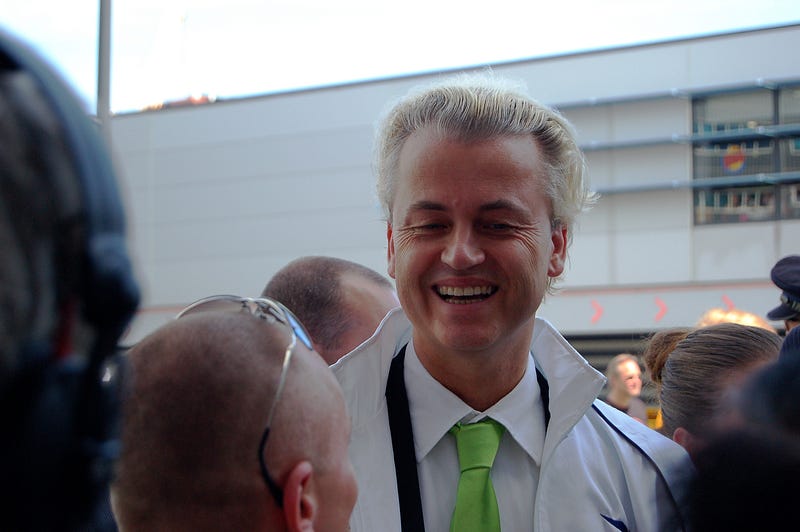
Wouter Engler [CC BY-SA 4.0 (https://creativecommons.org/licenses/by-sa/4.0)]

I’m familiar with Geert because when I was a reporter in Australia I covered protests of his lectures and appearances.

For those who don’t know him — he’s a known anti-Islamist. He’s so anti-Islam that he put out a statement immediately after the Christchurch shooting that saw 50 people slaughtered, including children as young as 5, which contained the line: “the fact remains that Islam and freedom do not merge and Islam does not belong to our society”.

While it is difficult for me to wrap my head around this it seems to be suggesting the victims are somehow to blame for their own deaths simply for the crime of existing on “our” shores, or shores that are “not theirs”.

No matter your views on a religion or culture this sentiment right after a mass murder which included children — who can always be described as absolutely innocent — shows your colours.

The selection of Geert as commentator in the tram shooting immediately changes the coverage.

It sends the signal that this indeed was an attack motivated by terror, and Islamic terror specifically because that’s what Geert talks about.

These are things still not yet completely known — the gunman has a history of crime and was released on a rape charge only three weeks before the shooting — and there was certainly not known when Geert first sullied the airways.

But simply choosing him as a guest gives the appearance they had, and that we were moving to the predictable “is moderate Islam to blame for radical Islam” or “is there any such thing as moderate Islam” stage of public discourse.

It hadn’t.

Imagine if instead of Geert they had someone else — an expert on gang violence for example.

You would assume that the shooting was gang related. It’s only logical.

But they put Geert on when little detail was known because;

  • It was right after the Christchurch shootings
  • Terrorism drives viewership, viewership sells advertising

I hope I’m just being cynical about this. But I doubt I am.

Interpretive communities and the news

The last thing to watch out for is news broadcasts and experts who tell you things like “what this means is”, especially if they don’t back it up.

The people in a news story act as our own miniature interpretive community.

They tell us what is important, suggest what weight we should give to various facts, and help us interpret the information.

This is incredibly powerful and extends not only to the guests quoted in a segment or article but also the journalist themselves, and the actors surrounding the piece.

If a newspaper story runs with a column next to it saying “analysis” or “comment” or if a guest panel on a breakfast show discuss the piece you have someone tying to shoehorn themselves in as an interpretive community.

You are surrounded by your own interpretive communities which literally help you create your reality.

“Interpretive communities are involved in the construction and maintenance of reality within the ontological domain which defines their concerns.”

By stacking a panel with experts who are pushing a specific viewpoint or interpretation it radically distorts your view of the facts.

Which direction do you think the panel from this screenshot would be pushing you.
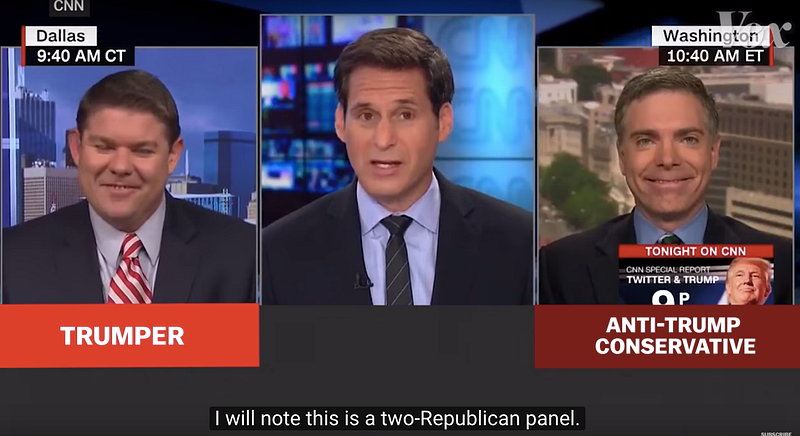
I’ve taken this from the excellent Vox explainer of the Overton Window.

This brings me to the next part of the series — which is about false balance in reporting.

If you would like to be notified when this (and any other story) is published use this link to sign up to my newsletter.

This is part four of my series on how to spot fake news. Follow the links to read part one, part two, part three, part five, part six, and part seven.

Journalism
World
Media
Fake News
Communication
Recommended from ReadMedium