
How to Spot Images Generated by AI
It is becoming more difficult to tell pretend pictures from reality — this guide might help you spot a digital phony
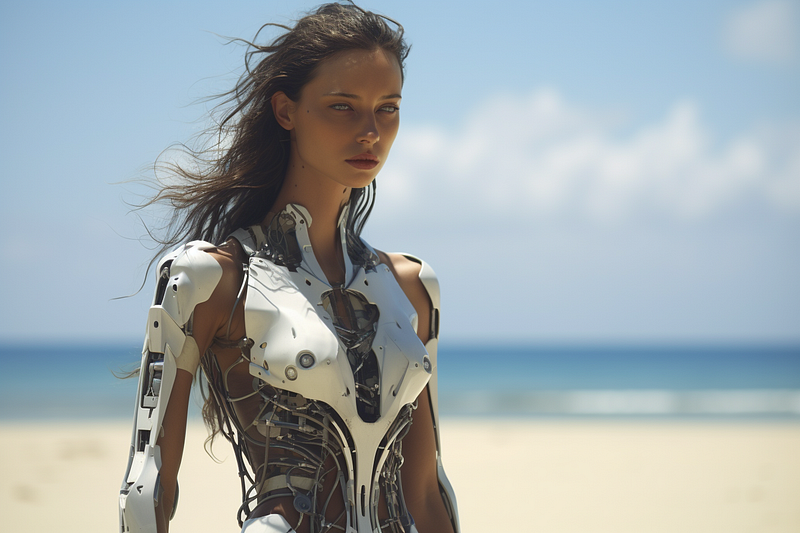
As artificial intelligence imaging becomes more advanced, it’s getting increasingly difficult to discern what’s real from a photographed scene. This will be a problem in many ways — from fake news to deepfakes of actual people.
Our only chance is to become sharper at spotting the fakes.
I recently took an online AI identification test, and was able to correctly choose all of the real pictures from the artificial versions. (I’ve been experimenting with artificially generated images for more than a year, starting with DALL-E.) But the AI outputs are becoming so advanced that they’re fooling everyone now.
I’ve seen a few Instagram photography accounts I follow post AI images, perhaps unwittingly. An AI generation actually won a photo contest, so it’s starting to fool people in the industry that should know better.
Real and artificial are melting together
Obviously, this is concerning. Information is weapon of propaganda, and people don’t always apply critical thinking skills to what they see — especially if they have a pre-existing bias.
For example, if you believe Sasquatches are real, then you’re more likely to accept an AI generated image of one as legit:
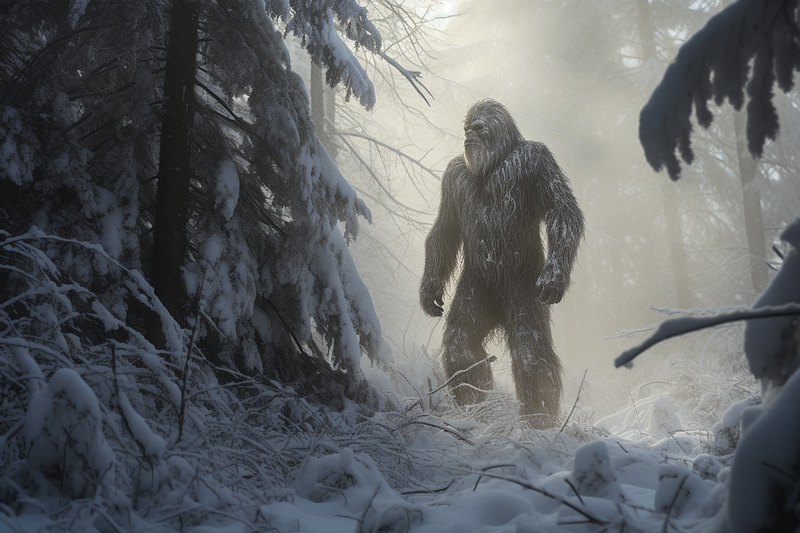
Admittedly, this looks pretty convincing. The lighting has a realistic quality to it, and the Sasquatch looks pretty real — not that we really have much to compare it to.
This is where you have to question more than the visual details. Ask yourself questions like this: Would a photographer get that close? Would the Sasquatch be this bold, when in previous reports it appears to be camera shy?
While they’re becoming harder to spot, there are a few ways you can separate AI images from reality. Here is a short visual guide for details to look out for.
Portraits
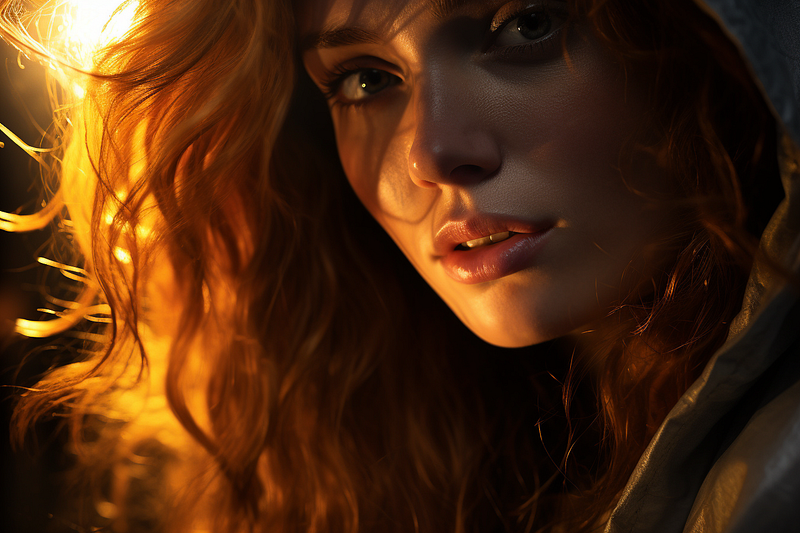
This generation of a woman in Midjourney would have many people fooled. The dramatic lighting adds depth and texture, which can trick the eye as passing it as real.
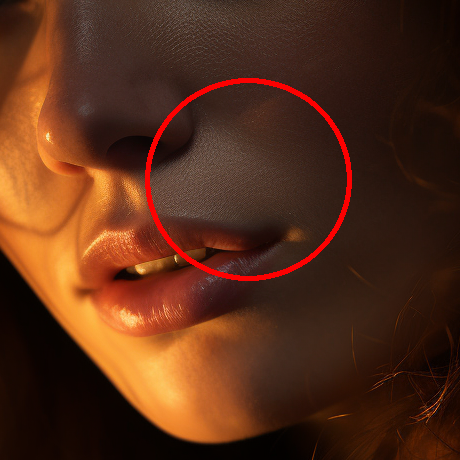
However, upon closer inspection, you can see that the skin texture is too perfect. The pores seem too small and close together. You’ll also find with many AI portraits that the skin is flawless — most people have blemishes, moles, pimples, and other identifying features.
Here’s another portrait of two girls hugging. Aww, it looks like big sis is giving little sis some love.
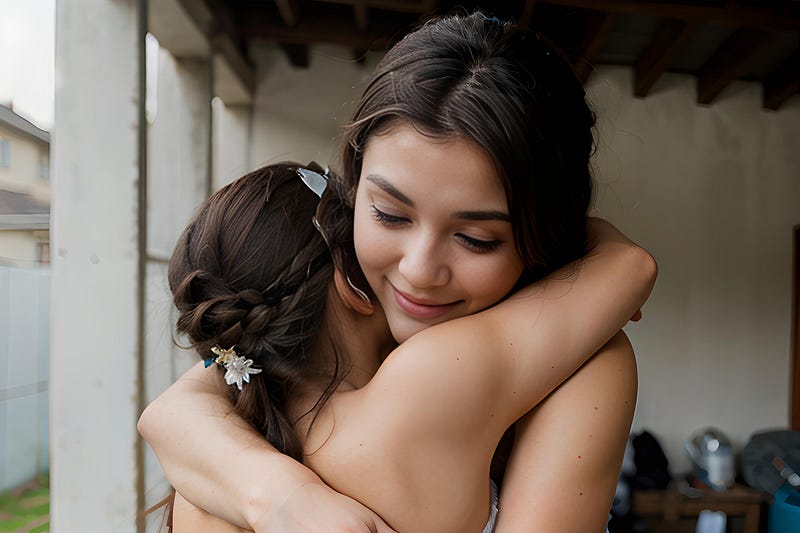
At first glance, it looks pretty real to me. The girls even have some moles on their skin, and the blurred background makes it look like a pro took it (or they used an iPhone 15 Pro that creates this effect.)
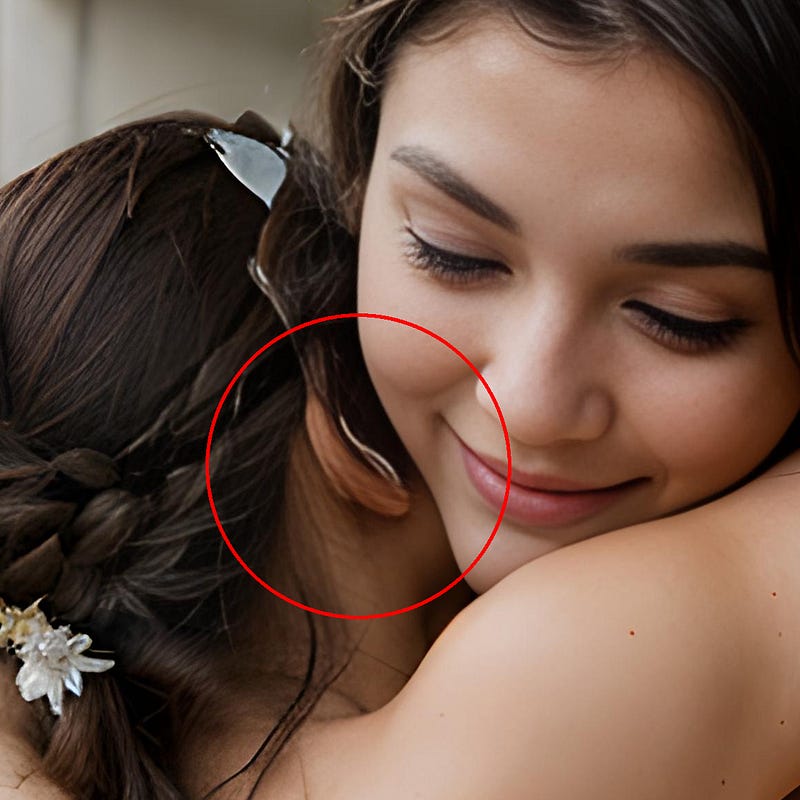
But what exactly is that behind the younger girl’s ear? I assume it might be the arm of her sunglasses, but it’s out of place.
AI will often place fashion accessories in slightly strange ways, like earrings that don’t quite connect to the lobe — which is a giveaway.
In the past, it was usually hands that alerted the viewer to fakes (extra fingers or impossible hand positions.) Now the AI models have been fine-tuned to reproduce hands pretty realistically, so they’re not the only clue anymore.
Mind you, with Photoshop being used heavily in magazine portraits and ads, this is no easy mess to sort out.
Pets
I asked Midjourney for a realistic rendering of these two adorable furry friends, as opposed to a cute cartoon version that it sometimes defaults to. The result is quite convincing — not to mention, adorable.
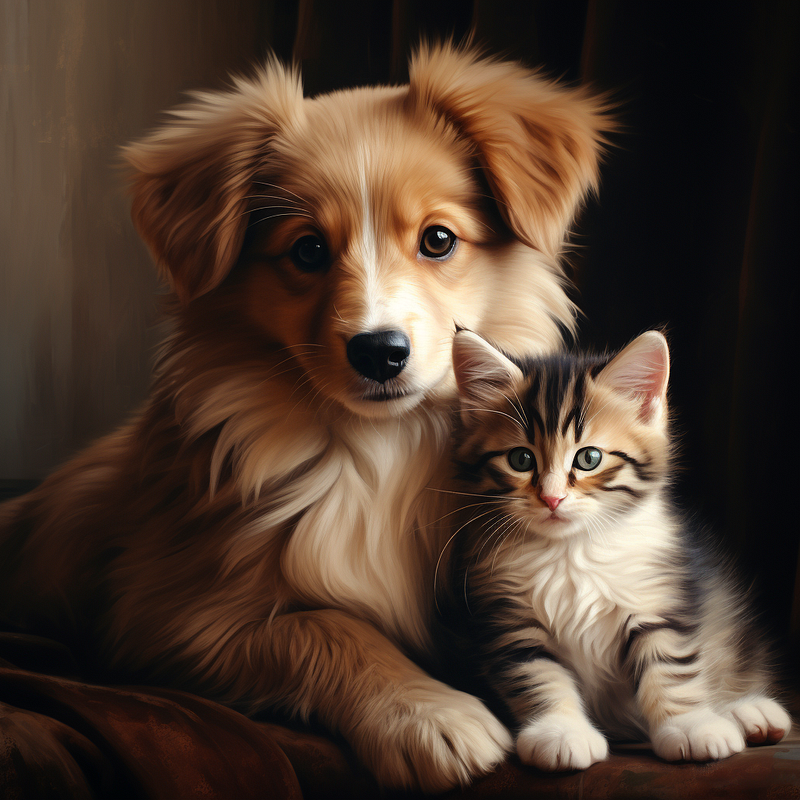
However, as you can see in the zoomed-in version, the texture is almost painterly. The “brush strokes” appear soft, with no hard shadows. In short, it’s too perfect to be real.
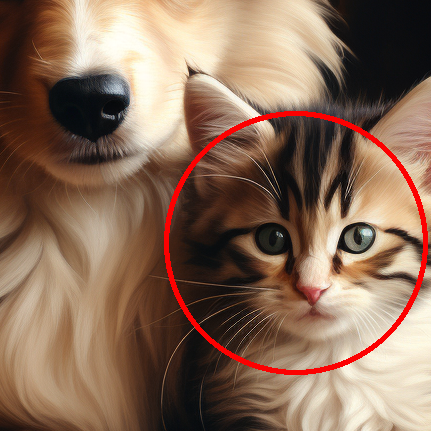
Other than that, how many dogs and cats would pose next to each other this calmly, and long enough to take a snap? Not too many, I’m guessing.
Vintage street scenes
I love street photography, including vintage street photography from the greats.
With that in mind, I asked Midjourney to produce a black and white street scene from the 1950’s, complete with a film grain effect. I could’ve easily added a white, decorative border and a date stamp on it (common during that time), making it look even more real. However, it looks pretty real on its own.
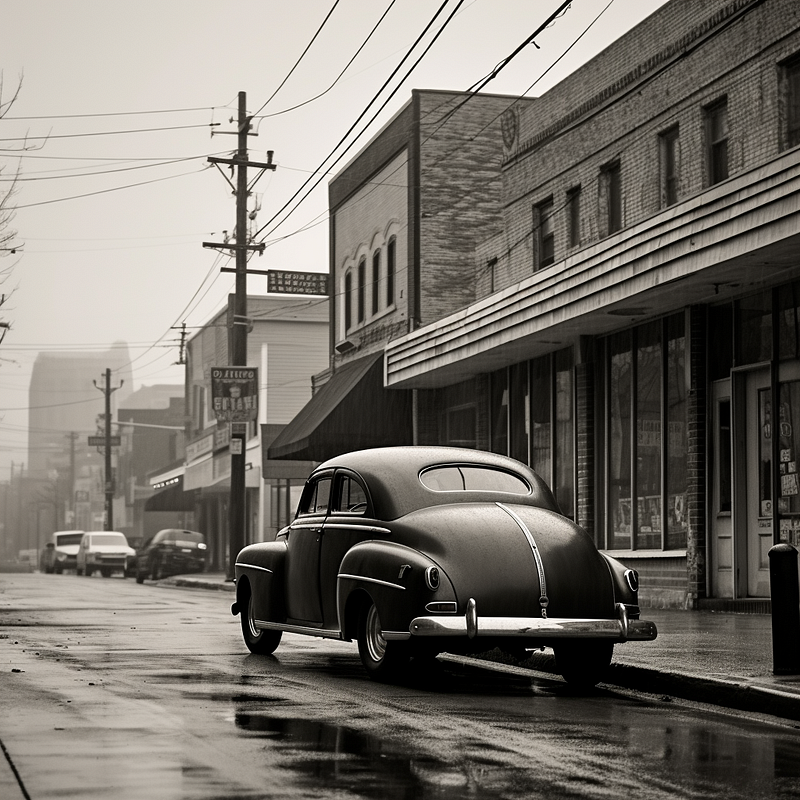
Anyhow, while the scene would be accepted without closer inspection, I noticed a couple of things. First — assuming this image is supposed to be anywhere, USA — the vehicle is missing a rear license plate, which has been mandatory for decades.
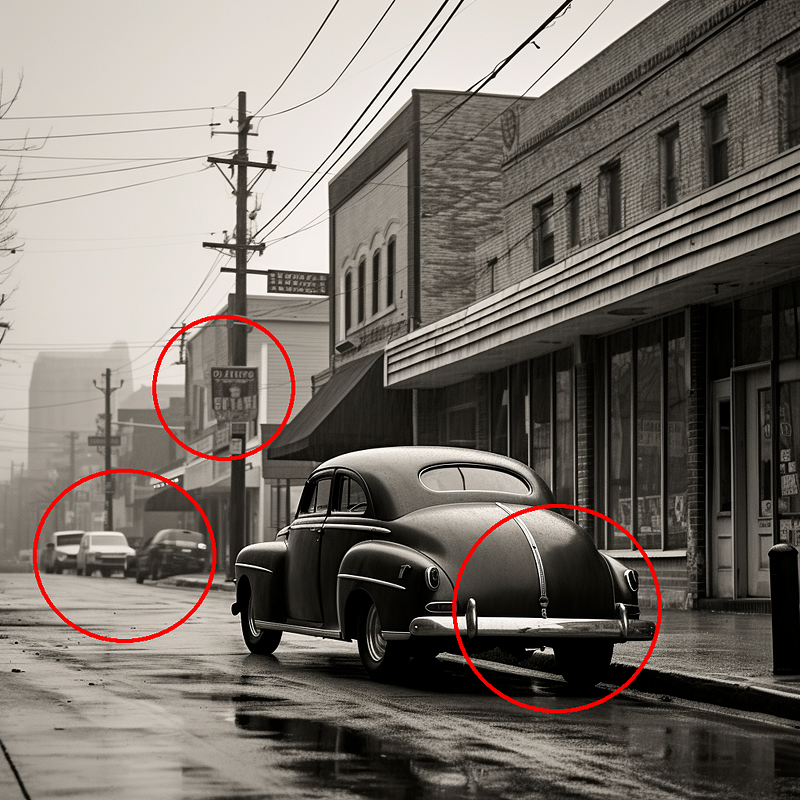
Also, pay special attention to any storefronts or signs in city images — if the text doesn’t appear to make sense (or is obviously not another language), it’s probably generated.
On a side note, those vehicles in the background appear to be from more recent years, not the 1950’s when SUVs didn’t exist.
Scenes with words
Taking that point a little further, here’s another example of an AI scene that contains words — on the newspaper and subway ads.
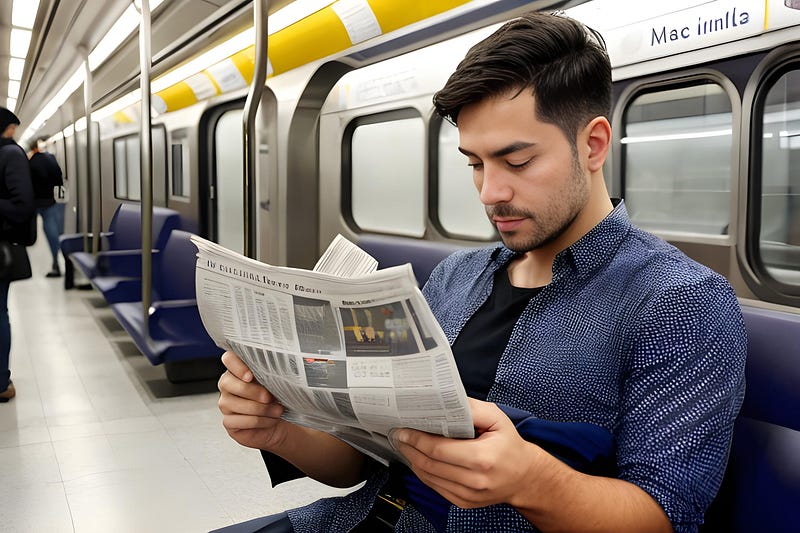
As you can see from the newspaper headline in particular, it doesn’t seem to be English (or any recognized language.) The script looks like it was scratched out by a toddler. You’ll also notice the photos on the front page don’t seem coherent.
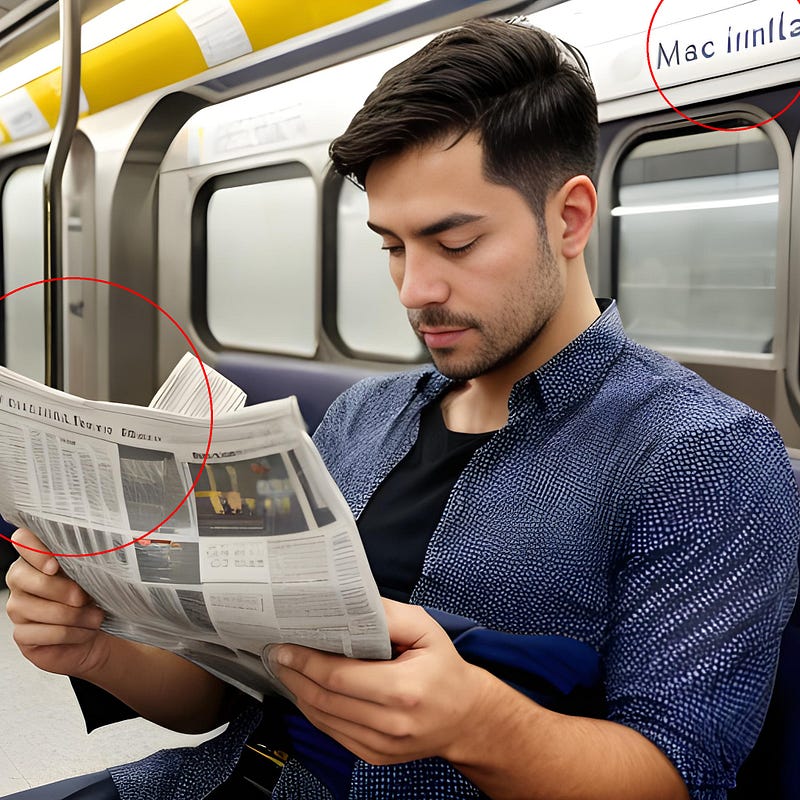
Words are one of the best ways to identify AI fakes, as so far, the platforms rarely add any text that makes sense.
If there are words in a questionable image, look at them first. (On a side note, it’s more convincing to add text in post-production than to try and generate accurate words.)
War
There are major conflicts raging right now, as I’m sure you’re all well aware of by reading the news. However, with war, there’s also a high risk of faking images as a means of propaganda.
For example, a government or news agency could release images of oppression that aren’t real to garner more support or incite anger. (Unfortunately, the war images I’ve seen recently are all too real.)
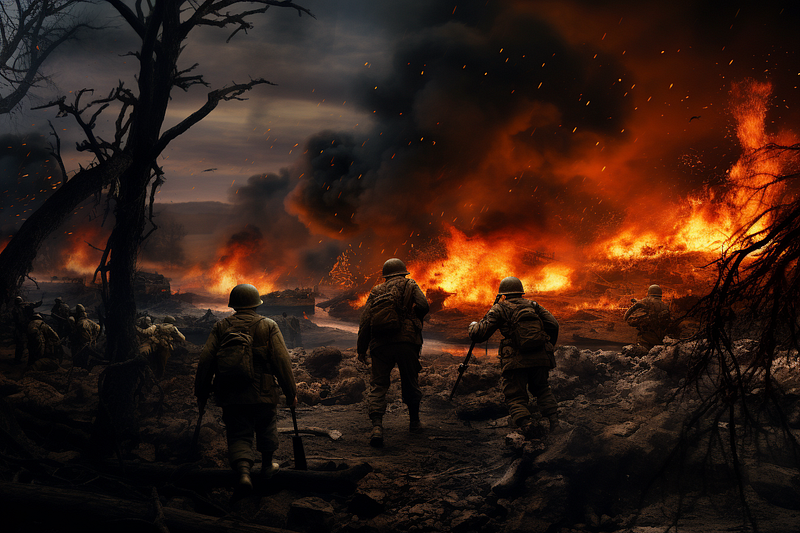
This particular scene is dramatic and emotional, so the brain might skip right over some of the finer details. However, you’ll see from the close-up there are items the soldiers are carrying that aren’t quite identifiable. (Is that a shovel the soldier on left is carrying? Or a toilet brush?)
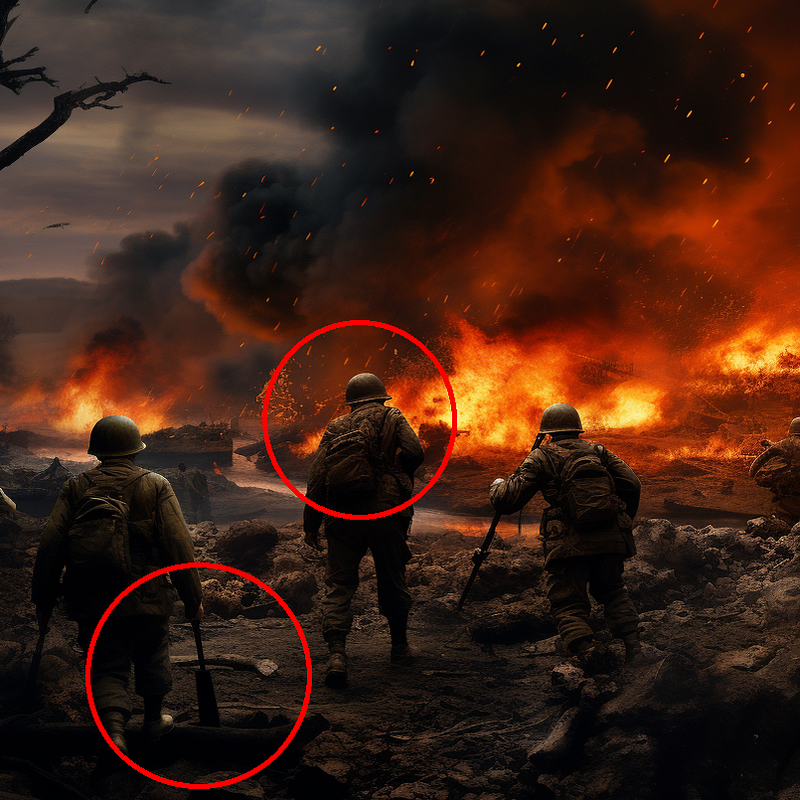
Also, ask yourself this when you see war photos: Where is the battle taking place? Do the soldiers’ uniforms/and or helmets match the countries involved?
There are war photographers putting themselves in harm’s way to expose the current horrors in our world, and I applaud them. They are irreplaceable by AI.
Cityscapes
AI can handle a lot more than people and pets, as you saw from the vintage street scene. These platforms can also faithfully reproduce city skylines, complete with identifiable buildings.
Here’s one of Toronto, which is an hour’s drive from me:
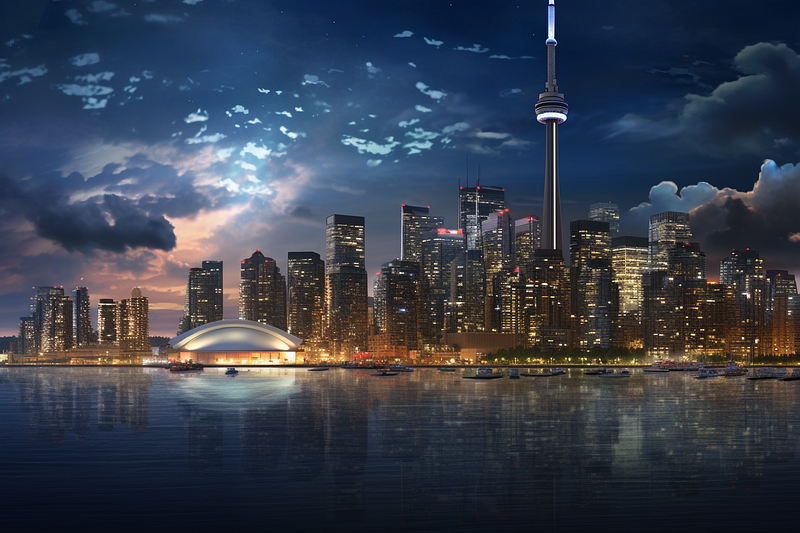
Notice the CN Tower and SkyDome (Roger’s Centre), both iconic parts of the Hogtown vista.
For this next example, I generated a generic cityscape (no particular place.) With the freedom to create any skyline it wants, Midjourney produced this:
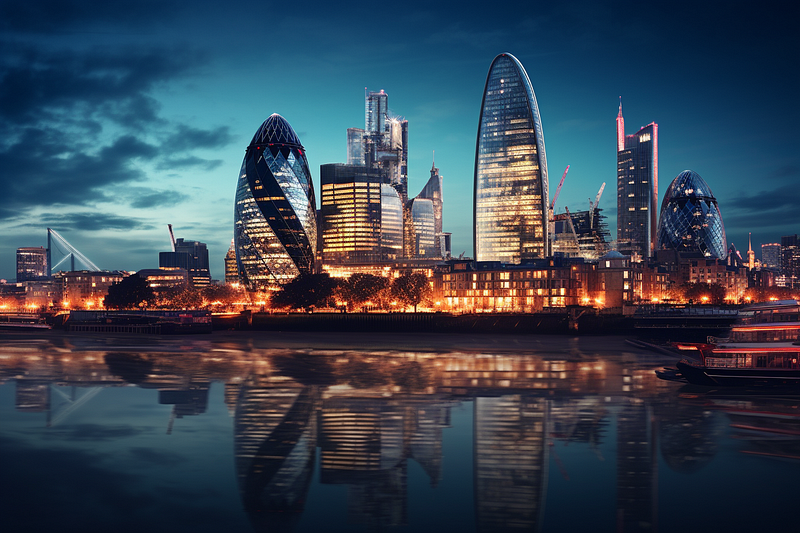
I like the modern look to this city, which does not exist. At first I thought it might be Dubai, which also has modern-looking glass structures. Then I thought it might be Limassol, Cyprus — but not quite.
So, obviously identifying key buildings is important when authenticating city photos. Make sure they are consistent within any reflections, like in this one.
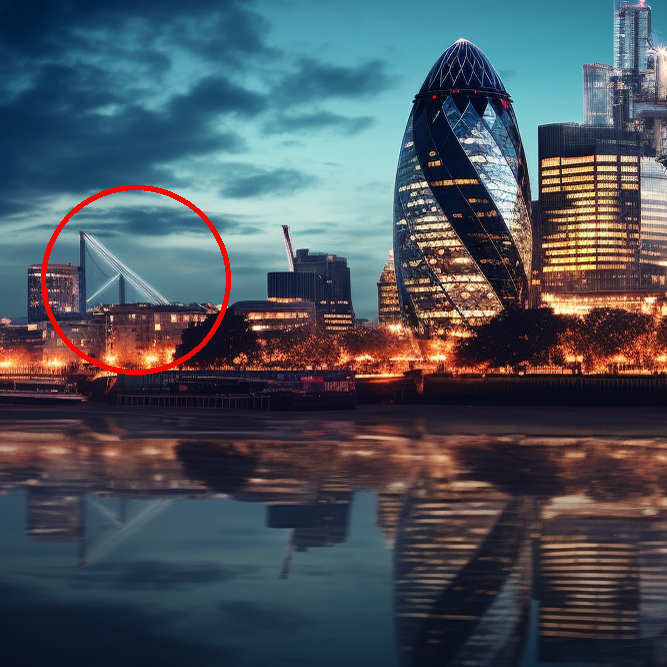
However, there are other clues in this AI image if we look closely. For example, what the heck is that thing circled at the left? At first I thought it was a crane, or some kind of light installation.
The truth is, it’s junk that Midjourney imagined might appear in a city.
Celebrities
Who doesn’t love a celebrity photo? Some people make a living from snapping famous people in the wild, and I suspect some paparazzi will try to sell fakes to news outlets (if they aren’t already.)
AI makes it pretty easy to generate a celebrity and place them wherever they want, including places that could get them in trouble.
Here’s one of Bill Murray casually waving in a crowd:
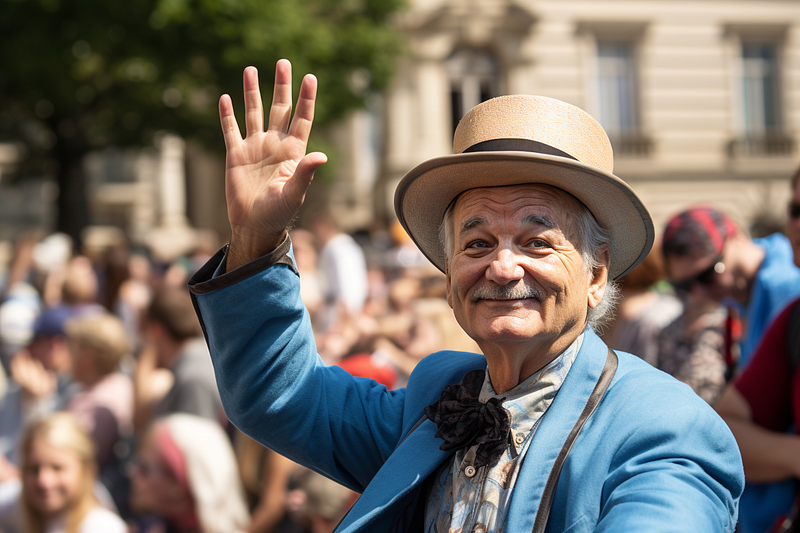
I don’t doubt that he’d dress like this, or sport this moustache. The setting also looks a little like Charleston, where he resides.
However, you can see that his skin is too perfect in this image to be real. Not to point it out, but Murray is 73 years old and has earned some more laugh lines than this shows. His nose also seems a little off to me — not that there’s anything wrong with it, but it doesn’t quite match the real thing.
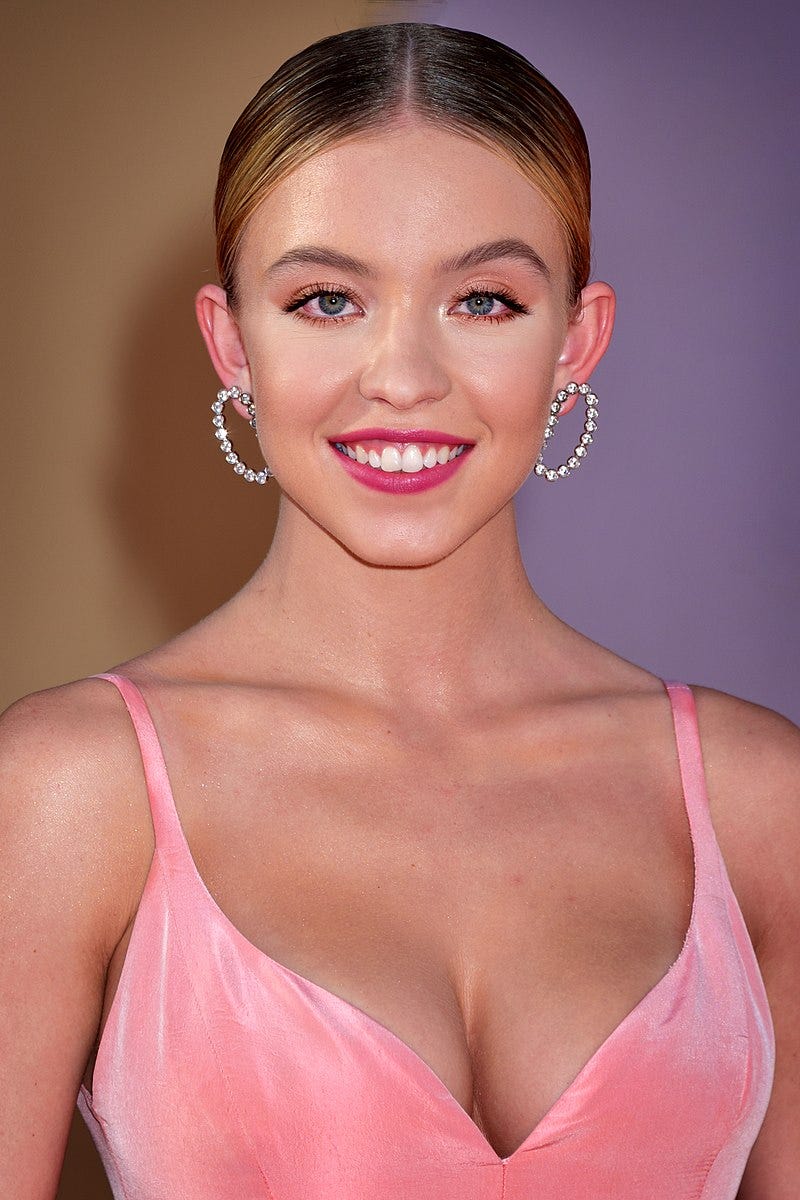
Meanwhile, we have the beautiful Sydney Sweeney of White Lotus and Euphoria fame. I even applied a special Sydney Sweeney “layer” to this in mage.space, which allows you to mimic a wide variety of well-known people.
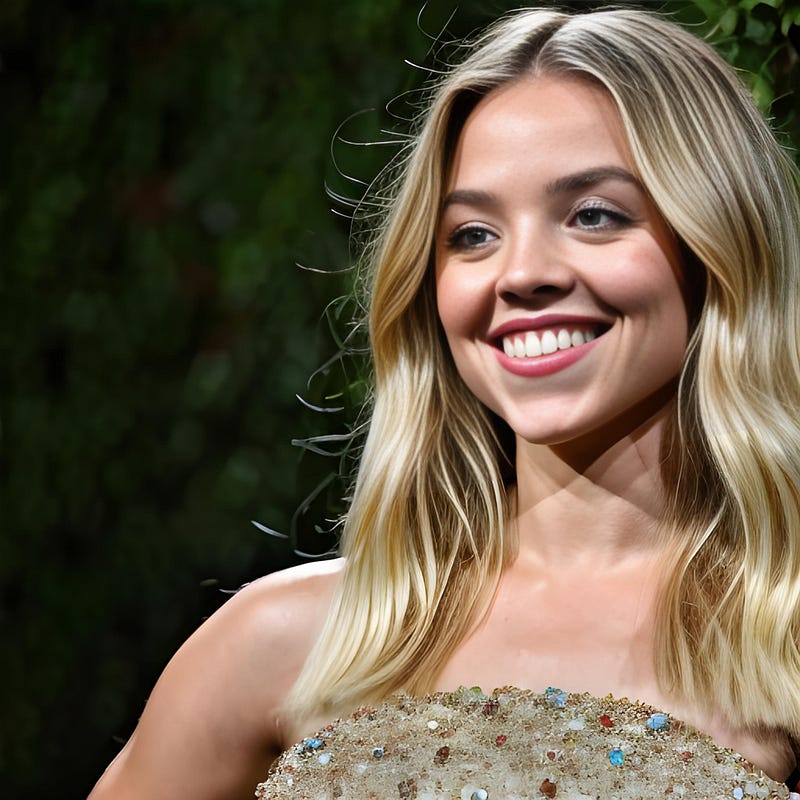
While somewhat convincing, you’ll notice that there’s something strange about the perspective of the eyes in the AI version that would make me look twice.
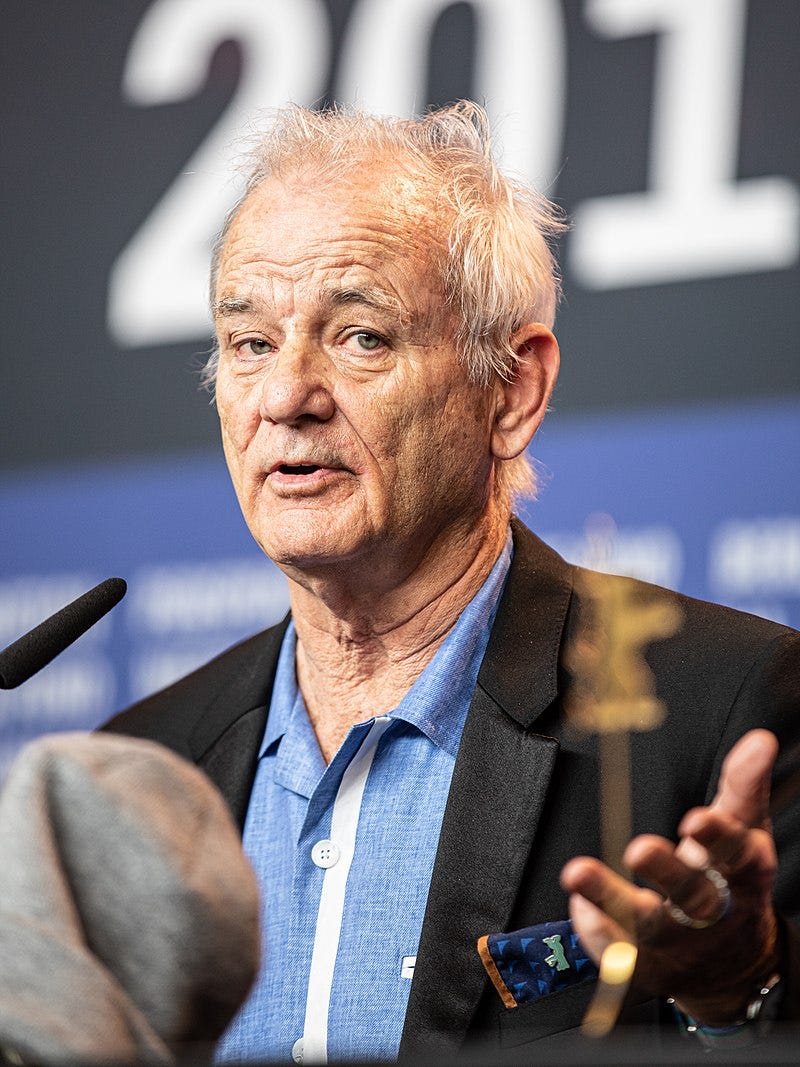
Here’s a real photo of her (I think):
Sharpen your AI spotting skills
So there you have it, a number of ways to identify AI images among real ones. This is a skill that will come in handy, especially if you’re in a profession that relies on separating fact from fiction.
Let’s recount some key ways to spot a fake:
• Is a subject’s skin too perfect, with no blemishes?
• Does their hair look too perfect, as if it’s been painted with a brush?
• Do fashions/accessories seem out of place or from a different era?
• Do words in the image make sense in any recognizable language?
• Do buildings and local clothing accurately match the setting of the image? (For example, are there women wearing short skirts in Iran, which is prohibited? Would the Pope actually wear a puffy coat like this one?)
• Is the scene itself highly unlikely to happen, especially if it’s an “exclusive” report (for example, photos of an alien landing from only one news source?)
It will only get more difficult to determine what is real as we move forward, but at least for now we can stay a step ahead of the robots.
Yes, some of it will come down to critical thinking, which has been sorely lacking in recent years. However, you should be able to spot an imposter using all of these tricks–at least for now.
I will continue to study AI, and hope to release a short guide soon to identify ChatGPT text – although in the recent test I mentioned, I got all of these questions wrong.
(P.S. Let me know if you were fooled at first by any of these AI images!)


