
How to Quit Without Notice
Grab your stuff (and your dignity) and drop the nametag

I am still thinking about the man who quit with a thirty-second notice. He was not a waiter. He is an engineer. He did not quit a job someone can make a call to get another person to cover his shift. He did not just walk away from being treated like his boundaries are negotiable. He walked away from a high-paying position, paid vacation, and a 401k.
I love when people do this. Let’s normalize quitting on the spot. Anyone who felt disrespected at work, and it made them depressed for a couple of days, should not let that happen more than once. Clear your desk, grab your things, go to the manager, return the keys, and wish them a good life. Turn off your phone notifications and walk away.
Whether you were passed for a promotion or asked to stay late again. Whether you were never given something you asked but you watched the new guy get it the first time he tried. Whether they laughed at you for asking for a pay raise or told you your vacation days are not yours to choose.
The man in the story was a great employee. He just didn’t want to work when he was off the clock. That was his sin. His boss started his performance review with a threat in the air, questioning his loyalty to the job. How is that kind of circus still acceptable? Even if you become an engineer, you still have to deal with a clown telling you to expect the insanity of not having a personal life (Toni Crowe wrote the original story, linked here).
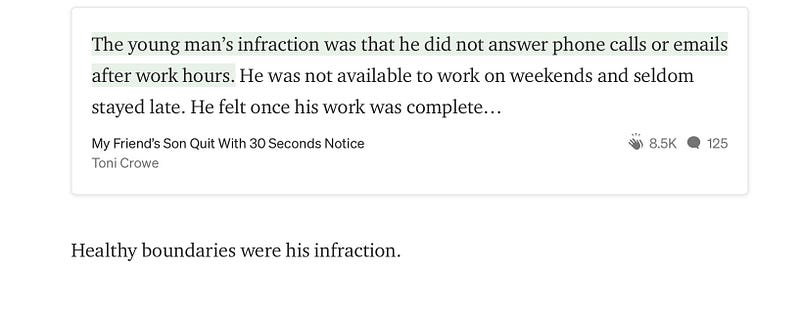
It’s so relatable, though. The power dynamics. It does not matter if you make eight dollars an hour or six figures a year. Managers are given the power of doing the wealthy company’s dirty work. Stretch the worker to the snapping point. Have no mercy. Call them weak.
Workers need to snap quicker, and never bounce back into the same job. Because if you allow yourself to get stretched beyond what is comfortable, you will get easier and easier to stretch.
I took too long to leave a job that overworked me and I missed the best times with my kids. Daycare teachers and babysitters got to witness their first words and their first steps while I was thanklessly grinding.
My husband was unhappy because I was stressed out and overwhelmed, which never translates into a joyful, relaxed woman. He is still unhappy because I no longer make money and I wiped off my 401k after I quit that lifestyle altogether. It was never about what made him happy anyway. It was about what I wanted, and I want my time for myself.
So, I am grateful to the man who quit his job without notice (or, “with thirty seconds notice”).
More from This Woman: