avatarDesiree Driesenaar

Free AI web copilot to create summaries, insights and extended knowledge, download it at here

5803

Abstract

oblem, any problem, and zoom out to see the bigger picture</li><li>Make radical choices on what you want and don’t want</li><li>Zoom in again to find the practical solutions</li><li>Work with all stakeholders to tackle resistance. Phase-out what we don’t want, stimulate what we do want. Prioritize on impact and effort, and make it happen</li></ul><p id="7f25">Sounds complicated? Too difficult? Shouldn’t think so…</p><p id="e34b">I’ll give you two real-life examples of how to use this recipe.</p><h2 id="fd99">We Want Healthy, Living Soil</h2><p id="9cd7">Let’s look again at the example of nitrogen and PFAS as explained in my article ‘Climate Change Is Not Our Most Important Problem’.</p><p id="a016">Farmers and builders are protesting that they can no longer do their jobs the way they are used to. In Holland, it’s chaos all over the place because of this issue.</p><div id="e01d" class="link-block"> <a href="https://readmedium.com/climate-change-is-not-our-most-important-problem-9fca1a7067f3"> <div> <div> <h2>Climate Change Is Not Our Most Important Problem</h2> <div><h3>But is that relevant?</h3></div> <div><p>medium.com</p></div> </div> <div> <div style="background-image: url(https://miro.readmedium.com/v2/resize:fit:320/1*hFgRJKtCApXypq5XvlOjKQ.png)"></div> </div> </div> </a> </div><p id="69f4">Let’s take the recipe and see what emerges.</p><p id="eded"><b><i>Zoom out:</i></b></p><p id="3b95">Nitrogen and PFAS are both problems of the soil.</p><p id="57c1">Farmers use too much chemical fertilizers that pollute groundwater and flow to the river. Building processes (lots of concrete) are doing harm to the environment.</p><p id="8d74">And PFAS is coming into the soil due to e.g. firefighter’s foam and production waste of water repellent materials. Zooming out, the soil is the common denominator.</p><p id="e3a2"><b><i>Make radical choices:</i></b></p><p id="9540">If the soil is the common denominator, it’s not difficult to conclude that we want healthy, living soil.</p><p id="2899"><b><i>Zooming in again and finding solutions:</i></b></p><p id="c603">Who has an influence on the soil? First of all, farmers. Also builders, road makers, city planners, etc.</p><p id="2dfa">So some solutions can be <a href="https://regenerationinternational.org/why-regenerative-agriculture/">regenerative farming</a>, and <a href="https://healthybuildingnetwork.com/">healthy building materials and -processes</a>.</p><p id="1e06">Alternatives for asphalt and alternatives for concrete. So the earth can breathe again and soak up water to prevent flooding.</p><p id="50d4">Extra space for plants and biodiversity in cities. Using the space efficiently for housing (really planning carefully) and combine it with moving water through a city and well-designed surfaces.</p><p id="d3b9">To name just a few solutions…</p><p id="bb72"><b><i>Phase-out what we don’t want and stimulate what we do want:</i></b></p><p id="c5b1">So we need new laws on polluting processes that emit nitrogen and PFAS. We can also use the money that is now poured in farmer subsidies to stimulate the transition for all farmers.</p><p id="85ec">Every farmer who creates a healthy, living soil can be supported by this money.</p><figure id="ecbe"><img src="https://cdn-images-1.readmedium.com/v2/resize:fit:800/1*i76R_H-ksHzyGBU_yCm1Kw.jpeg"><figcaption>This picture was taken while we were visiting <a href="https://www.peoplesfarm.nl/">People’s Farm</a> in Maasbree, the Netherlands. A regenerative farm we admire!</figcaption></figure><p id="9740">Of course, this method of naming the elephant in the room and make radical choices will give resistance.</p><p id="a4a4">So we need to be mindful and involve all stakeholders. Furthermore, we need the political balls to prioritize clearly.</p><p id="29bf">We need entrepreneurs with a heart who will innovate. And we need consumers with great awareness who will spend their money where their hearts are.</p><p id="957c">Okay, let’s look at a second example and use the same recipe. It’s never a solution if you can only do it once, huh?! We’ll have to see if this recipe is broadly applicable.</p><h2 id="ab5b">We Want to Live with Water in a Healthy Way</h2><p id="2ea5">Let’s look at the sinking villages near Semarang and the (same) problems in the city of Jakarta that houses 30 million (!) people. Both are located in Indonesia.</p><p id="ea90">We have visited the sinking villages and it’s heartbreaking!</p><div id="6a70" class="link-block"> <a href="https://readmedium.com/urgent-need-for-systemic-solutions-indonesia-is-sinking-a9e5e2566c82"> <div> <div> <h2>Urgent Need for Systemic Solutions — Indonesia Is Sinking!</h2> <div><h3>Systemic solutions to complex problems can be found! Use a machete and you’ll find clarity for water problems</h3></div> <div><p>medium.com</p></div> </div> <div> <div style="background-image: url(https://miro.readmedium.com/v2/resize:fit:320/1*rO_xsiz7B-IjNCC-WCUjvg.jpeg)"></div> </div> </div> </a> </div><p id="846f">Can we use the recipe here as well? Let’s see what emerges.</p><p id="7916"><b><i>Zoom out:</i></b></p><p id="9456">Villages are sinking and the sea is coming inward. Also in the monsoon season, the rains are so heavy that flooding is normal nowadays.</p><p id="08bb">One of the biggest causes of sinking soil is groundwater extraction for drinking water.</p><p id="c3d2">One of the biggest causes of the sea coming inward is the destruction of mangrove fores

Options

ts. They no longer give protection.</p><p id="9a08">And the flooding is a problem mainly because the whole city of Jakarta is one big, concrete mass.</p><p id="fca6">The common denominator here is water.</p><p id="2a27"><b><i>Make radical choices:</i></b></p><p id="3d83">If the water is the common denominator, it’s not difficult to conclude that we want to live with water in a healthy way.</p><p id="c871"><b><i>Zooming in again and finding solutions: 1. drinking water.</i></b></p><p id="f81b">We can make a radical choice not to use groundwater as drinking water. As soon as we make that decision, space emerges for different short-term and long-term solutions.</p><p id="7388">A short-term solution can be desalination. There’s enough salt water around the islands of Indonesia.</p><p id="afdf">A long-term solution can be the restoration of the water cycles. <a href="https://readmedium.com/why-ecosystem-restoration-comes-first-in-the-new-business-models-e41a65be294e">Ecosystem restoration</a> is definitely possible.</p><p id="d4bf"><b><i>Zooming in again and finding solutions: 2. sea protection.</i></b></p><p id="3c19">We can make a radical choice to invest in the restoration of mangrove forests wherever possible. We can plant them, but there are better techniques for restoring biodiverse mangrove forests.</p><p id="5ecf">We can trap sediments and create a beneficial environment for the mangrove seeds that are still in the soil to germinate and grow. <a href="https://www.ecoshape.org/en/projects/building-with-nature-indonesia/">Building with Nature, Ecoshape</a>, is doing it this way. Of course, some areas are not fit for mangroves, so we might have to build other kinds of walls.</p><p id="94ac">Let’s innovate on the wall materials so they don’t harm the environment. Or even have a beneficial effect on ocean restoration.</p><p id="e3cb">And let’s talk to fishermen to find solutions for their jobs. They might consider shifting from fishing in the open sea to organic fish farming behind the wall.</p><p id="672f"><b><i>Zooming in again and finding solutions: 3. flooding.</i></b></p><p id="1e82">We can definitely improve our city planning! We can use different materials instead of concrete. Build healthy houses of an abundantly growing material e.g. bamboo.</p><p id="092d">And we can use sponge-like materials for pavements. It is <a href="https://www.theguardian.com/cities/2020/jan/15/the-case-for-making-low-tech-dumb-cities-instead-of-smart-ones">done in several cities</a> already.</p><p id="cdaa">We can design our cities in such a way that rivers and other water bodies are flowing through it in a healthy way. With the right design and care, we can even use this vital city water as drinking water.</p><p id="3eeb"><b><i>Phase-out what we don’t want and stimulate what we do want:</i></b></p><p id="f95c">As soon as we’ve made choices about the short-term solutions we know a time frame in which we can phase out the processes we don’t want.</p><p id="b859">We cannot be radical here. No drinking water isn’t an option.</p><p id="204c">But as soon as we have a plan working on desalination and restoring water cycles we know with what speed we can stop the groundwater extraction and make a timeframe.</p><figure id="a8f6"><img src="https://cdn-images-1.readmedium.com/v2/resize:fit:800/1*-G0m8xvfG-v7w6vZLmNyBw.jpeg"><figcaption>Fishermen in Semarang need systemic solutions. This picture was taken by Desiree Driesenaar</figcaption></figure><p id="6c77">Well, politicians, entrepreneurs, consumers, and city-planners. You now know the recipe for finding real solutions that serve people and the planet. Let’s cut the crap and go do it!</p><p id="5b23">Of course, I’m always open to comments. And I would really like to hear how you will be using this recipe for solving your complex problems.</p><p id="c002" type="7">Well, politicians, entrepreneurs, consumers, and city-planners. You now know the recipe for finding real solutions that serve people and the planet.</p><p id="2026" type="7">Let’s cut the crap and go do it!</p><p id="1fd4">If you want to connect, please find me on <a href="https://www.linkedin.com/in/desireedriesenaar/">LinkedIn</a> or <a href="https://www.facebook.com/desiree.driesenaar">Facebook</a>. Or somewhere on a mountain, zooming out and admiring the eagle...</p><p id="93d7"><i>Thank you, Mike, for adding your basic, heartfelt, wise energy to my words on complexity.</i></p><h2 id="46a9">Further reading</h2><div id="6c7f" class="link-block"> <a href="https://readmedium.com/are-electric-cars-sustainable-please-think-in-systems-b4fd9a834aff"> <div> <div> <h2>Are Electric Cars Sustainable? Please, Think in Systems!</h2> <div><h3>Systemic thinking gives direction for the new, regenerative business models</h3></div> <div><p>medium.com</p></div> </div> <div> <div style="background-image: url(https://miro.readmedium.com/v2/resize:fit:320/1*kOwfoGdUl5l0bydrO3qTzw.jpeg)"></div> </div> </div> </a> </div><div id="350a" class="link-block"> <a href="https://readmedium.com/the-world-with-virus-is-normal-now-lets-deal-with-it-9e93e35588ae"> <div> <div> <h2>Note to the World: Viruses are Normal Now. Let’s Deal With It</h2> <div><h3>We have to live with what we unleashed…</h3></div> <div><p>medium.com</p></div> </div> <div> <div style="background-image: url(https://miro.readmedium.com/v2/resize:fit:320/1*0jIU9lcg3Z7nYe8BuAKOdg.jpeg)"></div> </div> </div> </a> </div></article></body>

Regenerative Future

How to Navigate Complexity with Radical Choices

Sinking Jakarta, Coast Protection, Nitrogen, PFAS, Climate Change, Food Production. Here Is a Compass for Systemic Solutions.
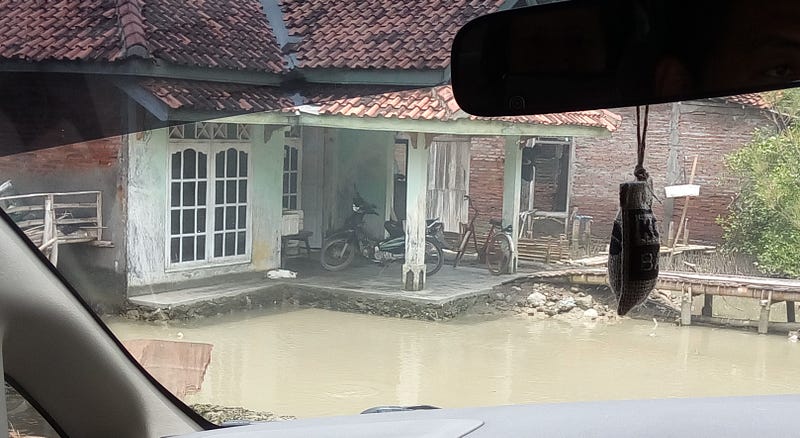
Example of a problem that needs a systemic solution: the sinking fishing villages near Semarang, Indonesia. Picture made by Desiree Driesenaar.

People who know my work, know that I’m convinced we need to master systemic thinking to build a better future than we have nowadays.

For the people who do not know my work (yet), I’ll try to explain what I mean in a few short paragraphs before we go on to the navigating complexity part and the radical choices.

Systemic thinking or whole systems thinking is gaining lots of interest, but it isn’t mainstream thinking in science yet. Scientists often still split complex issues into separate parts to find solutions for one problem at a time. Scientists love depth, specialism, reductionism.

The problem is: reductionism isn’t the truth!

If we think systemically, we see the connections between all the elements in a whole system.

Everything is connected.

Connections are as important as the separate parts.

When we see the connections between the problems, we’ll find solutions that solve more than one problem at a time. And solutions that do not cause new problems in another segment of the whole system.

Yes, this might sound complicated. But, please bear with me, because it isn’t as difficult as you think. Systemic thinking has a lot of theory behind it. It involves feedback loops and dynamics. And that’s why many people think it’s difficult.

I can tell you: when you get the hang of it, it’s not difficult at all. It just requires a mindset change. A different approach.

Let me give an example. Nowadays our media are framing climate change. They simplify it in such a way that we think CO2 is our only problem and if we start using renewable energy the world will be a better place.

Well, keep on dreaming, we also have problems such as biodiversity loss and much too high nitrogen and phosphorous levels. None of these will be solved with renewable energy.

Framing, simplifying, is okay when you want attention for a certain problem such as climate change.

But when you start searching for solutions, framing becomes very dangerous!

But when you start searching for solutions, framing becomes very dangerous!

Framing is to blame for the fact that we now think that CO2 is our only problem… and that we will solve it with windmills… the production of which requires lithium mining… which ruins our planet…

So, we need to find different solutions. Solutions that are beneficial for the whole system. Solutions that are beneficial to the people and the planet.

They can be found, don’t worry. Many people are busy finding them. But we need more, and more, and more of those innovations. That’s why I write! That’s why I want to motivate the whole world to start thinking systemically and to innovate!

Solutions can be found, don’t worry. Many people are busy finding them.

If you want to get deeper into the subject of systemic thinking to support real environmental solutions, you can read ‘A Systems View of Life’ by Fritjof Capra. Or ‘Designing Regenerative Cultures’ by Daniel Christian Wahl. Or The Blue Economy by Gunter Pauli.

What’s the Recipe for Navigating?

Okay, so we should think systemically. People often tell me: “It seems so complicated. How can we handle it? How can we see the wood for the trees?”

And I have tried to come up with a recipe. Not making the same mistakes of reducing the complete picture. Not cutting it into smaller pieces and forgetting the connections. And at the same time, trying to make it practical. Logical even.

We need a bridge from theory to action. Otherwise, nothing will happen.

I think people will only shift to systemic thinking if it’s easy. At least easier than it is now.

They do not want to study for ages and perceive only chaos. So I’m trying to build that bridge. That navigation tool. And I have been thinking for quite a while about what this compass can be.

Walking in the woods near my home, I had a vision of a group of indigenous people cutting their path through the chaotic wilderness with machetes.

It was a powerful picture. I saw the details of the forest. Moist, bouncy soil under my feet, the earthy smell made me hungry. I saw small, vibrantly colored leaves just budding.

There was a woman cutting her way through thick undergrowth. It was in the middle of the day when I saw a buzzard spread his wings and fly high. Higher. Higher.

Walking in the woods near my home, I had a vision of a group of indigenous people cutting their path through the chaotic wilderness with machetes.

The Machete Method

  • Take a problem, any problem, and zoom out to see the bigger picture
  • Make radical choices on what you want and don’t want
  • Zoom in again to find the practical solutions
  • Work with all stakeholders to tackle resistance. Phase-out what we don’t want, stimulate what we do want. Prioritize on impact and effort, and make it happen

Sounds complicated? Too difficult? Shouldn’t think so…

I’ll give you two real-life examples of how to use this recipe.

We Want Healthy, Living Soil

Let’s look again at the example of nitrogen and PFAS as explained in my article ‘Climate Change Is Not Our Most Important Problem’.

Farmers and builders are protesting that they can no longer do their jobs the way they are used to. In Holland, it’s chaos all over the place because of this issue.

Let’s take the recipe and see what emerges.

Zoom out:

Nitrogen and PFAS are both problems of the soil.

Farmers use too much chemical fertilizers that pollute groundwater and flow to the river. Building processes (lots of concrete) are doing harm to the environment.

And PFAS is coming into the soil due to e.g. firefighter’s foam and production waste of water repellent materials. Zooming out, the soil is the common denominator.

Make radical choices:

If the soil is the common denominator, it’s not difficult to conclude that we want healthy, living soil.

Zooming in again and finding solutions:

Who has an influence on the soil? First of all, farmers. Also builders, road makers, city planners, etc.

So some solutions can be regenerative farming, and healthy building materials and -processes.

Alternatives for asphalt and alternatives for concrete. So the earth can breathe again and soak up water to prevent flooding.

Extra space for plants and biodiversity in cities. Using the space efficiently for housing (really planning carefully) and combine it with moving water through a city and well-designed surfaces.

To name just a few solutions…

Phase-out what we don’t want and stimulate what we do want:

So we need new laws on polluting processes that emit nitrogen and PFAS. We can also use the money that is now poured in farmer subsidies to stimulate the transition for all farmers.

Every farmer who creates a healthy, living soil can be supported by this money.
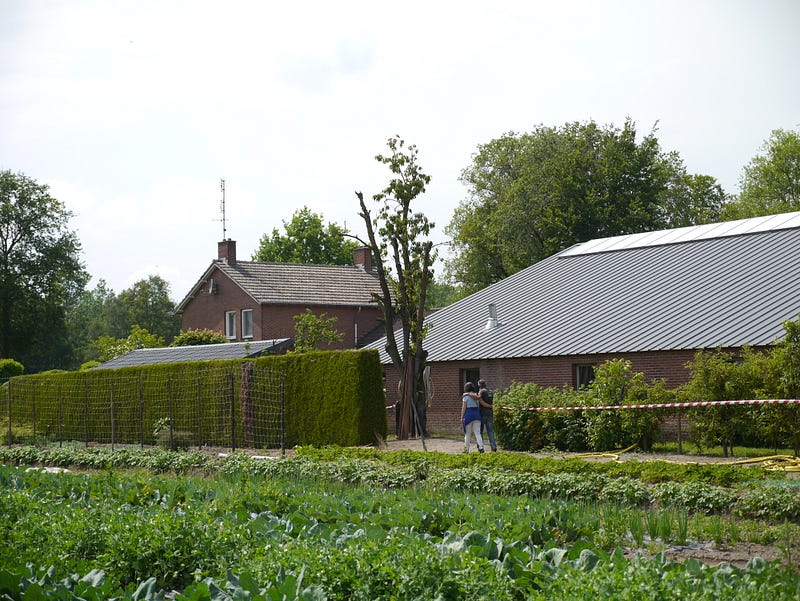
This picture was taken while we were visiting People’s Farm in Maasbree, the Netherlands. A regenerative farm we admire!

Of course, this method of naming the elephant in the room and make radical choices will give resistance.

So we need to be mindful and involve all stakeholders. Furthermore, we need the political balls to prioritize clearly.

We need entrepreneurs with a heart who will innovate. And we need consumers with great awareness who will spend their money where their hearts are.

Okay, let’s look at a second example and use the same recipe. It’s never a solution if you can only do it once, huh?! We’ll have to see if this recipe is broadly applicable.

We Want to Live with Water in a Healthy Way

Let’s look at the sinking villages near Semarang and the (same) problems in the city of Jakarta that houses 30 million (!) people. Both are located in Indonesia.

We have visited the sinking villages and it’s heartbreaking!

Can we use the recipe here as well? Let’s see what emerges.

Zoom out:

Villages are sinking and the sea is coming inward. Also in the monsoon season, the rains are so heavy that flooding is normal nowadays.

One of the biggest causes of sinking soil is groundwater extraction for drinking water.

One of the biggest causes of the sea coming inward is the destruction of mangrove forests. They no longer give protection.

And the flooding is a problem mainly because the whole city of Jakarta is one big, concrete mass.

The common denominator here is water.

Make radical choices:

If the water is the common denominator, it’s not difficult to conclude that we want to live with water in a healthy way.

Zooming in again and finding solutions: 1. drinking water.

We can make a radical choice not to use groundwater as drinking water. As soon as we make that decision, space emerges for different short-term and long-term solutions.

A short-term solution can be desalination. There’s enough salt water around the islands of Indonesia.

A long-term solution can be the restoration of the water cycles. Ecosystem restoration is definitely possible.

Zooming in again and finding solutions: 2. sea protection.

We can make a radical choice to invest in the restoration of mangrove forests wherever possible. We can plant them, but there are better techniques for restoring biodiverse mangrove forests.

We can trap sediments and create a beneficial environment for the mangrove seeds that are still in the soil to germinate and grow. Building with Nature, Ecoshape, is doing it this way. Of course, some areas are not fit for mangroves, so we might have to build other kinds of walls.

Let’s innovate on the wall materials so they don’t harm the environment. Or even have a beneficial effect on ocean restoration.

And let’s talk to fishermen to find solutions for their jobs. They might consider shifting from fishing in the open sea to organic fish farming behind the wall.

Zooming in again and finding solutions: 3. flooding.

We can definitely improve our city planning! We can use different materials instead of concrete. Build healthy houses of an abundantly growing material e.g. bamboo.

And we can use sponge-like materials for pavements. It is done in several cities already.

We can design our cities in such a way that rivers and other water bodies are flowing through it in a healthy way. With the right design and care, we can even use this vital city water as drinking water.

Phase-out what we don’t want and stimulate what we do want:

As soon as we’ve made choices about the short-term solutions we know a time frame in which we can phase out the processes we don’t want.

We cannot be radical here. No drinking water isn’t an option.

But as soon as we have a plan working on desalination and restoring water cycles we know with what speed we can stop the groundwater extraction and make a timeframe.

Fishermen in Semarang need systemic solutions. This picture was taken by Desiree Driesenaar

Well, politicians, entrepreneurs, consumers, and city-planners. You now know the recipe for finding real solutions that serve people and the planet. Let’s cut the crap and go do it!

Of course, I’m always open to comments. And I would really like to hear how you will be using this recipe for solving your complex problems.

Well, politicians, entrepreneurs, consumers, and city-planners. You now know the recipe for finding real solutions that serve people and the planet.

Let’s cut the crap and go do it!

If you want to connect, please find me on LinkedIn or Facebook. Or somewhere on a mountain, zooming out and admiring the eagle...

Thank you, Mike, for adding your basic, heartfelt, wise energy to my words on complexity.

Further reading

Sustainability
Complexity
Society
Environment
Politics
Recommended from ReadMedium