
Are Electric Cars Sustainable? Please, Think in Systems!
Systemic thinking gives direction for the new, regenerative business models
Recently I gave a talk about the Blue Economy in a port in Spain. It is a beautiful area on the Mediterranean coast with lots of opportunities to create a real purposeful, regenerative economy.
Lots of agriculture, fisheries, a port that wants to motivate entrepreneurship and people who want to develop their area in an ethical way. This can become an economy in which we create value upon value with synergy business models.
Where planet ánd people will thrive. A world in which aware entrepreneurship can create prosperity for all.
But where to begin? Every business here is rooted in our current economic system. They think that just electric cars and windmills will make our world a sustainable one.
And then I start my story of different business models. Of collaboration, of organic food, of systemic thinking, of technology in line with natural ecosystems. And they get confused. It sounds difficult to innovate like this.
It sounds far from their ‘business as usual’ world. But they also love it. They want to learn. And that’s what matters to me.
We can start from our own perspective and learn. Grow. Experiment. Find what works for us ánd our environment. Asking ourselves ethical questions along the way.
So, what about those electric cars in the title of this article? It is a good practical example. Electric cars have no emission from the car itself so they are a benefit for clean air, that’s right. But the necessary transition requires more. It requires systemic thinking.
If we want to create a world within the planet’s boundaries, we need to consider the car as part of the system in which we live. The car has the role of a means of transport in this system and needs to be linked to other roles. So we can do better, much better than just filling our streets mindlessly with lots of electric cars…
Let me explain it with an example. On El Hierro, the smallest Canary Island, they are self-sustaining in energy. They created a system for electricity that fits the needs of the island.
A lot of money is kept in the local economy just by owning their electricity, made by 5 windmills and 2 water basins on different levels, and using it for what the island needs.
However, the 11,500 people on the island live spread apart, so cars are needed to get around. On El Hierro, they chose to invest in electric cars and I think that’s a good decision.
Why? Because these cars serve several purposes here. They chose electric cars of which the battery can be used as a local grid for electricity in the houses. That creates multiple benefits.
The houses can be powered with low voltage DC systems, saving a lot of energy in necessary transformers. And the electricity needed for the cars is renewable, local and mainly owned by the inhabitants themselves.
However, not everywhere electric cars fit such a purpose. If we look at the situation of a city instead, the picture changes.
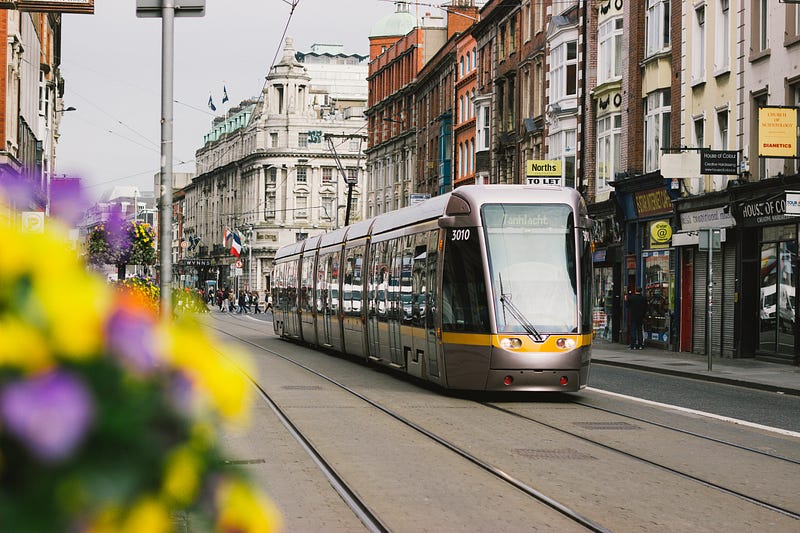
A city is densely populated, so why just look at cars for a solution? We’d better zoom out and look at the purpose of cars: transportation. In a densely populated city, public transport (trams, trains, metro, whatever else…) will always be much more efficient and sustainable than cars, whether they are electric or not.
And what about bicycles and going on foot? Slowing down our days, and being outside, is so beneficial for our health and our awareness!
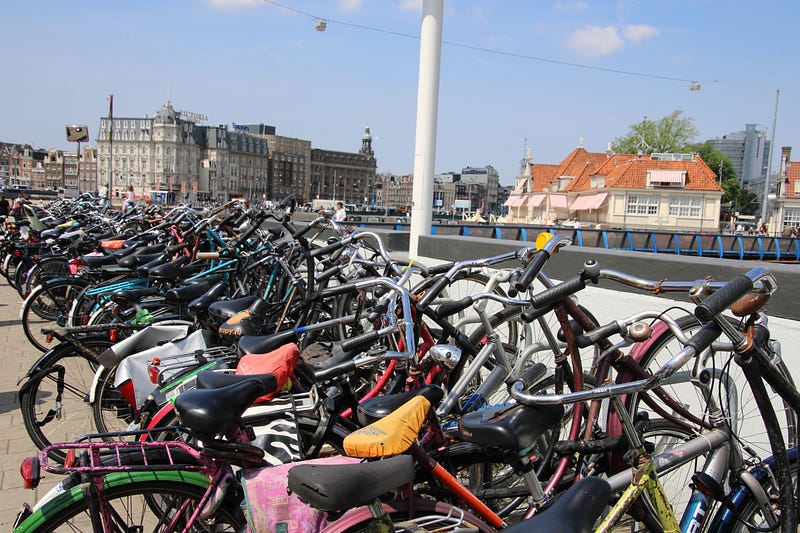
I’m really waiting for the first mayor to close her city to cars completely. Maybe a few electric taxies for disabled people might be handy then, but no (electric) cars otherwise.
Another matter to consider is the trap of technological lock-ins. Please, let’s be aware that situations will change and we need to be ready for that change, always. So if e.g. hydrogen becomes a proven technology and can be made with renewable energy, we need to be able to shift in some cases.
And if we find ways to make batteries without scarce metals, we need to be able to shift as well. And if we ever find a good way to use free energy, again we might shift.
And I don’t mean shift completely. We need diversity in solutions! We need lots of different innovations so that every bio-regional, regenerative economy can choose the variety that fits their situation best.
Transition means adapting to changed situations. Resilience. Companies need to be aware of this and need to be able to embrace change and still be resilient. They should be designed for change…
All the time looking for new innovations to add to the portfolio. And if products are not logical anymore or do not serve basic needs, they should make space for new ones.
I will write about it soon in a pice about scaling business models. So in short:
- Be aware of technological lock-ins
- Remain flexible
- And don’t put all your eggs in one basket
Okay, so far this story. My message is that we need to think systemically to find solutions that really matter. And these solutions differ depending on the local situations.
I haven’t gone into the fact yet that cars have a big footprint in their production. They need scarce materials, will emit a lot of CO2 during production and create a lot of waste. But Tabitha Whiting already wrote beautifully about that.
Let’s stop protecting sacred cows and start to innovate for a real transition. And let’s keep working on our awareness. Seeing our role in the web of life is part of that transition. I like the way Charles Eisenstein puts it:
“The rivers, forests, and creatures of the natural and material world are sacred and valuable in their own right, not simply for carbon credits or preventing the extinction of one species versus another.” -Charles Eisenstein
If we keep this in mind with whatever we innovate in our own local environment, we will find the solutions that really contribute to a sustainable future.
Further reading
I write about new business models, economic development based on qualitative growth and solutions that really might make a difference.
We have to explore together, learn from ecosystems and look for ways to fit our activities within the boundaries of our planet. We can make the transition from a destructive species to a restorative species.
Please look at my profile for further reading. Or connect to me via LinkedIn. Here are links to some articles that might interest you as well.
And if you want to connect, you can always look on LinkedIn, Facebook, Instagram or meet me in our food forest, producing healthy food and connecting to nature…


