
How to Go Vegan
Hint: Take it slow
Thinking about going vegan? That’s incredible! I wasn’t born a vegan and had never even heard that word a few years back. So I truly do remember what it was like to be in your shoes. I was certain I would never be vegan because I was uninformed and considered the lifestyle to be extreme. I believed in everything in moderation, likely because I was indoctrinated into a society that taught us from literal birth that we love some animals and eat others.
Before I was vegan, I did love animals… that is, the ones I wasn’t eating. I frequented zoos and aquariums to admire the creatures of the earth. I thought eating animals was wonderful but I felt I respected and loved them. Was I a hateful hypocrite? I had no idea where my food was coming from or the fact that the animal I was eating was specifically bred into existence to endure a life of fear and torture, just so I could enjoy the taste of their flesh and secretions for 15 minutes three times a day. And in time I came to feel that you cannot love animals and eat them. It’s as simple as that.
Most importantly, I was under the impression that I needed to eat meat to be healthy and experience longevity.
About five years back, a friend of mine went vegan. This was the first time I even heard the word vegan, and I was very confused. Why is she doing that? Where does she get her protein and iron from? I don’t want her to be sick! And so on. We had a girl group of about eight, and let me tell you—she was the fittest out of all of us. She played soccer, ran almost daily, biked, did yoga…you get the idea. She was fit. But how could she sustain herself? I watched her and the way she ate. She made delicious, hearty meals, and baked mouth-watering donuts, brownies, cookies, and cakes. She taught me that there is truly no sacrifice to taste when living vegan.
In time, I admitted my wish to devote my semester to diving deep into veganism. We watched Cowspiracy that night on her couch and my life was changed forever. No, I’m not exaggerating. And let me just say that I was so brainwashed that as I watched the film, I continuously questioned it, in disbelief that what I was watching had merit, despite the unbiased scientific citations blatantly on the screen in front of me. And that’s OK. It’s expected.
No, I didn’t go vegan overnight.
Yes, that film did impact me, but I was eating meat twice daily, plus every animal secretion you could think of. My favorite food was steak! I didn’t know where to start. I didn’t even know what to eat that didn’t have a dead animal in it. I continuously justified my eating behavior with the most ridiculous things. Everything from “animals are meant for us to eat,” to “I only buy grass-fed beef and free-range eggs,” etc. The list is endless! But it’s all bullshit… And I can confidently say that veganism is the only diet proven to reverse heart disease—which is primarily caused by animal-sourced LDL (bad cholesterol) buildup in our coronary arteries, also known as plaque.
It’s also been proven that humans can thrive on a plant-based whole foods vegan diet at any stage of life, including infancy, and even as elders.
I’ve been researching this for over four years now. There is A LOT to learn. We do not require animal flesh to survive. And it actually can hurt us. After four years and thousands of hours spent scouring papers, documentaries, and articles, I am still learning every single day. I embrace that it takes time to have a thorough understanding of everything. The human body is extremely complex. You can’t learn everything about veganism in a 5-minute YouTube video. Allow yourself that time to learn, as you transition.
So how do you transition to veganism when you’re a big meathead like I was?
That’s it. You transition.
I do not recommend going vegan overnight. Of course, I want you to—for your health, the animals, the environment… but it’s unrealistic for most people to do this. It fails more often than it succeeds.
I want to tell you a secret. It took me four years to go vegan, with no intention of doing so from the start. Crazy, right? That’s pretty freaking long. And you know what? I was upset about it when I finally made the transition and sustained it. I felt this way because I was poisoning my body and supporting the exploitation and torture of innocent animals longer than necessary, but it’s in the past and that’s the way it happened for me. I’m certain that I will never consume animals or their secretions for as long as I live ever again.
Going slow worked for me. I needed a push because we are accustomed to the taste of flesh, and we love it. I 100 percent understand.
No one in my family was vegan. My mom was on-board to try vegetarian, because I shared with her the knowledge I had accumulated, and my vegan friend spoke to her about it too. I was pushing for my mom to try it with me because I care about her health and wellness more than anyone else’s, so yes I’ll admit I was persistent with her.
How to go vegan
I cut meat from one meal a day for two months. Sometimes I didn’t stick with it. Sometimes, I accidentally ate vegan for the whole day. The biggest challenge was figuring out what the heck to eat, despite the existence of over 10,000+ types of edible plants. (I didn’t know that at the time.) It brought me the awareness that my typical diet was pretty boring. I was eating the same five dead animals in different forms in rotation. YUCK!
- Then I cut meat from two meals a day for another two months. I can’t say I remember how I was feeling. I get that question a lot. I would recommend keeping a journal for this reason—sort of like a food diary noting how you felt with what you were consuming/exercise/sleep/water, etc.
- I decreased my dairy consumption at the same time. After discussing my frequent nosebleeds and migraines with my trusted ENT, he told me it was time to cut dairy for good.
- I continued to eat eggs and products with dairy in them—this was the tricky part for me. Milk is literally in so many products unnecessarily. I tried my best but was patient with myself. This worked for me.
All the while, I was sure to continuously educate myself—this is super important because people will try to stop you. And it’s vital to do things with intention. You should have a “why.” Not to mention that all of a sudden everyone you know is a nutritionist. Meanwhile, they’re on the verge of a heart attack with their cholesterol through the roof—yep, happened to me on multiple occasions. UNBELIEVABLE.
When I say educate yourself, I mean go out of your way to read articles about veganism, follow YouTubers, influencers, and Instagrammers who devote their lives to this and know their stuff.
Vegan documentaries to watch:
- What The Health—Netflix (Health)
- Forks Over Knives — Netflix (Health)
- A Plastic Ocean (covers seafood) — Netflix (Health)
- Game Changers — Netflix (Health/Fitness)
- Dominion — YouTube (Animal welfare)
- Earthlings — Netflix (Animal welfare)
- Cowspiracy — Netflix (Environment)
Vegan Instagrammers to follow:
- Earthling Ed
- Joey Carbstrong
- Medical Medium
- Nimai Delgado
- That Vegan Couple
- James Aspey
- Rob Banks
- Real Nick Coleman
- Greta Thunberg
- Minimalist Baker
- Conscious Muscle
- Jaylo Kurtz
- Erin Janus
- And of course, XOSusieP (that’s me)
After a few months of cutting meat from one or two or all meals per day, I was learning how to cook without dead bodies, a sad reality of the matter. Lent was approaching, and I was religious at the time. I needed that push for self-discipline. So my mom and I gave up meat (excluding fish) for the entirety of Lent, which lasts for 40 days. And we did it. We may have had a few slip-ups here and there. I honestly don’t remember. It doesn’t matter, because we are all human and there’s no perfection in life. But can you guess what happened next?
We continued to avoid meat—indefinitely.
We didn’t plan for it to happen but we just did not want it. We were still roped into the myth that if we avoid meat, we NEED some sort of animal flesh for protein and to be healthy—so we ate fish and eggs.
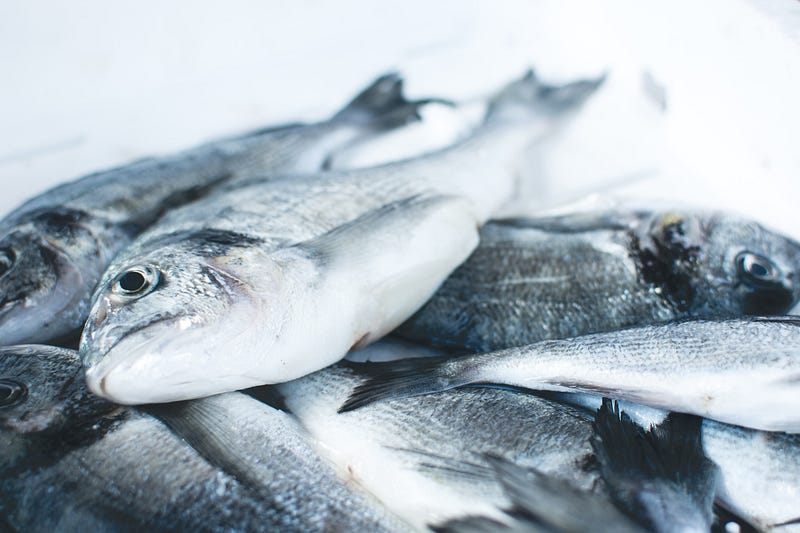
In time, I learned that most fish I was eating came from aquaculture farms and were bred in such close quarters that many of them suffered from sea lice routinely. I also learned that even if my fish was wild-caught, there was a more than likely chance that I would be eating plastic with my fish, if not just the toxins their flesh absorbed from consuming it. Fish obtain their Omega 3’s from algae on the seafloor from sea plants like seaweed, spirulina, chlorella, etc, all of which we can consume directly. And did you know that if we continue the rates of overfishing we engage in now, fishless oceans can be expected by 2048? Don’t believe me? Just search “no fish by 2048” and see for yourself. There’s plenty to read on the topic. That’s significant, considering the effect on the ecosystem it will have as well as predators like polar bears, penguins, etc., that require those species to survive, unlike us humans. Studies also show that high levels of mercury in some fish may contribute to Alzheimer’s disease.
And with that, I cut fish.
I visited the ENT due to frequent migraines and nosebleeds accompanied by the inability to withstand artificial heat and air condition. And he told me to cut dairy. What!?
I tried to “cheat” sometimes with dairy pizza, and to my dismay, there was never a time I avoided a headache and severely bloated stomach along with a feeling of exhaustion mid-way through my slice. It wasn’t worth it anymore. I found vegan pizza soon thereafter and life was good!
Eggs
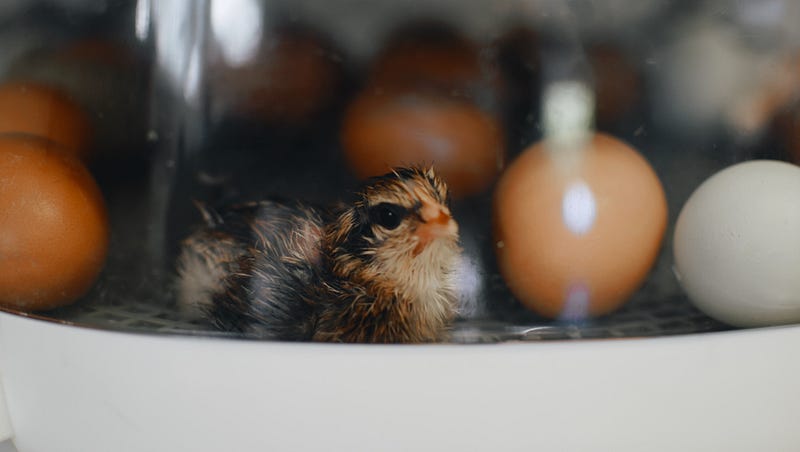
They’re so high in cholesterol that they are not legally allowed to be labeled nutritious, perhaps due to their contribution to the clogged arterial lining they cause in consumers. Do you know what turned me off to eggs? Learning that since male chicks are deemed useless by the industry, they are sent to a macerator where they are regularly shredded to bits on their first day of life. If it’s a smaller facility, they gas them, which takes about 2–5 minutes while they suffocate. Also, it’s standard to debeak on the first day of life, which is as painful as having the front of your nose chopped off. Before I was vegan, I didn’t know the reality of eggs, and one day realized those black spots on my chicken wings I used to mindlessly discard were caused by bruised wings of chickens and hens that were thrown about as mindlessly you would a doll. There’s more to the egg industry, but I’ll save that for another read.
It didn’t happen overnight for me, but I eventually went 100 percent vegan—and guess what? I’m living proof that you can thrive as a vegan. Sure, I pig out sometimes (no pun intended), but life is about balance and vegan doesn’t mean healthy! Initially, I did it for the animals, but then it became about my health and the environmental degradation that animal agriculture causes.
And honestly, the only regret I have about being vegan is that I didn’t do it sooner.
It isn’t easy to change your lifestyle habits. But change can be good, and it’s essential to think for ourselves when we are born into a world that very few people in power control what we see, are exposed to, and eat.
Question everything and demand change. You have a birthright to live a healthy, fulfilled life, without contributing to more evil in the world than there already is.
Learn more now. Don’t wait.
Tap into positivity at Live Life Now, my new blog✨If you liked this piece and wish to support me, you can buy me a kombucha here. : )


