
Why We Love Some Animals and Eat Others
The simple answer is overlooked speciesism.
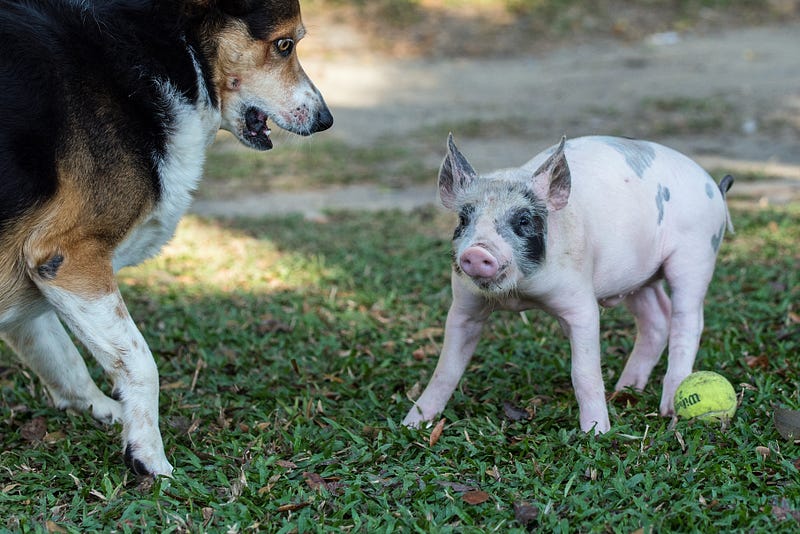
If you were anything like me, you would have been raised to love some animals and eat others. It was never a thought or a question. That’s just the way things were. I always thought I loved all animals even though I was eating them. One day, that logic started to become a little bit cloudy. But I loved meat. There was zero chance I would ever give up my lamb chops, medium-well steak, broiled salmon, or baked chicken wings. Sure I liked animals, but those foods were my staples and I couldn’t live without them! Or could I?
I was indoctrinated into a society that made this the norm. I was brainwashed to enjoy farm animals as a kid and genuinely fell in love with them, completely oblivious that their kind was on my dinner table each night.
Then one day in high school, someone challenged my moral integrity by asking me if I saw any harm in my consumption of animals and their products. I didn’t. It was normal and deemed appropriate by society. Then, a friend opened up my eyes to the industry and I was absolutely horrified and refused to believe it to be true.
“I’m a good person—I’m not doing anything wrong. It’s food,” I would think to myself as I experienced cognitive dissonance.
Many people do. Slowly but surely, it started to click as I educated myself on the horrifying cycle of the animal agriculture industry.
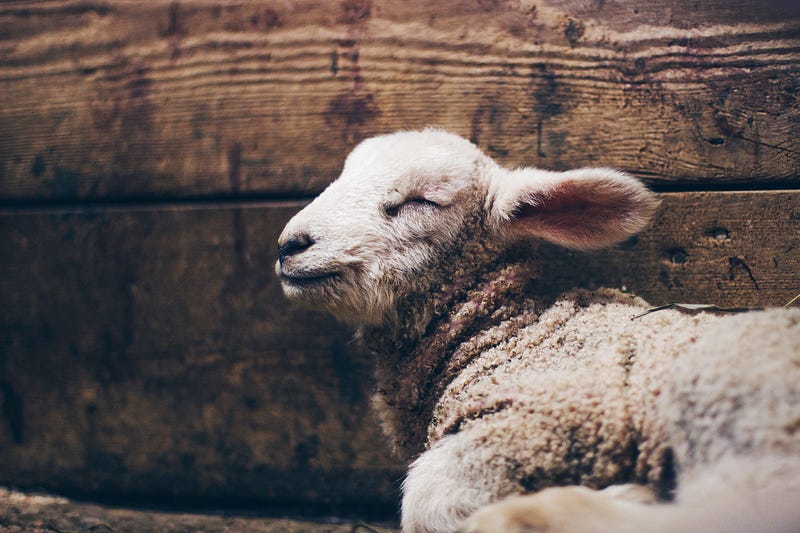
But what’s the difference between a companion cat or dog and a cow, pig, chicken, or any other raised for human consumption? There is no difference. That’s what I’ve come to learn over the past four years. They are all conscious, sentient beings with a love for their family and a will to live. They all feel pain and they are all extremely intelligent. All of these animals are curious, make friends, and can recognize their baby amongst a group of many. They all have unique personalities, experience boredom, and most importantly have the ability to fear.
They know what’s going on during the slaughter process long before they even approach the kill floor. And when they’re locked in crates for most of their life, and separated from their babies shortly after birth, these animals feel pain, just as you could imagine our companion animals would if in the same predicament. I don’t know about you, but I was never taught that as a child.
Many People Don’t Realize It’s Normal to be Vegan
A lot of people try to come up with an excuse for why eating animals is okay. I think I’ve heard every excuse known to man at this point in my vegan journey. Those animals are stupid, who cares? They know nothing else. It’s the cycle of life. We are the apex predator. Look at our teeth! Meat made our brains evolve to its size… and so on.
This defensiveness is caused by a variety of things including being raised to eat this way, obviously. But, in my opinion, the biggest culprit for this justification is caused by heavy marketing schemes. I happen to believe people are inherently kind, and most are unaware of what it takes to get their meat on the grocery store shelf. When we go to the store, we don’t see an animal, but packages of flesh.
We are shown pictures of clean and happy grazing cattle on our milk cartons, and we deem as a society that this cow has had a good life. We see images of chickens who appear healthy and happy on our egg cartons. Labels have been designed to include words like free-range, grass-fed, local, organic, etc. People try to be conscious consumers and often attempt to seek out “better” alternatives because they do care for the welfare of animals. But those labels are complete lies, as are the pictures. It’s just that consumers don’t know any better, and the animal industry is banking on this.
Pig Vs. Dog
The difference we see as humans is that livestock has a purpose of producing profit to the owner, and a product to the consumer, whether it be for their flesh, their secretions, their eggs, or their skin in one form or another. Despite this belief, few people in the Western world would accept this as appropriate behavior towards domesticated house pets.
This practice is called speciesism, which is “the assumption of human superiority leading to the exploitation of animals” (Oxford, 2020). But it doesn’t have to be that way anymore. It’s been scientifically proven that people can thrive on a vegan diet at all stages of life. And there is no longer a need for exploitation and torture of animals just like your companion animal. Going vegan doesn’t have to be difficult, and will very likely change your life for the better.
If you have questions about going vegan, drop a comment and I’ll do my best to provide you with free resources that will help!
Tap into positivity at Live Life Now, my new blog✨Have questions? Sign up for a tier to get 1on1 access with me.Become a Medium member today or leave a tip. ❤️


