
How to Feed Your Raised Bed Vegetable Garden Plants
Fertilize your plants for a bountiful harvest.
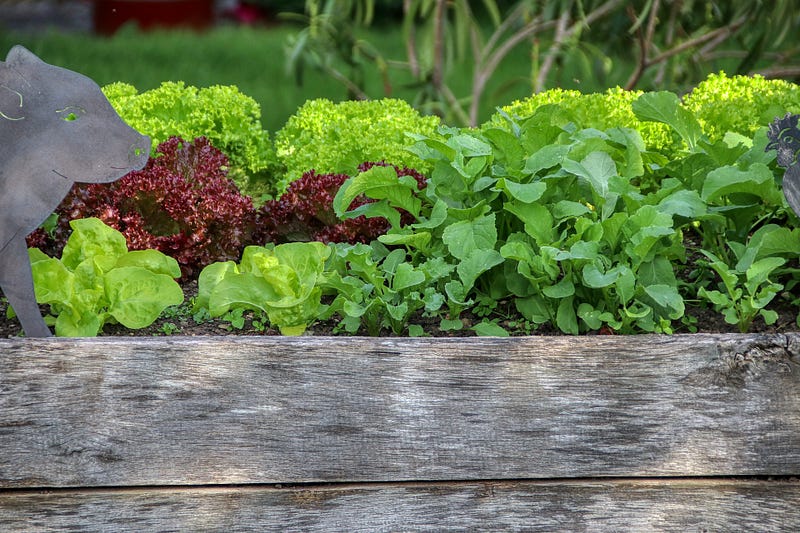
When we grow vegetables in pots or raised beds, we expect a lot from our plants. However, raised bed gardens require extra attention since their roots can’t reach as many nutrients as plants growing in the garden.
New gardeners often wonder, “Don’t I need to feed my vegetable plants to get good production?”
And that’s an excellent question.
Before thinking about what to feed the plants, it’s essential to talk about feeding the soil. Well, not precisely the dirt, but the billions of microorganisms whose hard work feeds the plants.
More than simply a source of nutrients to plants, the soil is actually a complex ecosystem hosting bacteria, fungi, protists, and animals. Thus, biological activity is the life of the soil.
Think of microorganisms as an army of workers in the soil, feeding the plant, protecting it from disease, and maintaining the health and structure of the soil. The ability of soil to support and sustain plant life is in direct proportion to the abundance and vigor of microorganisms.
Have you ever made bread from scratch? The kind that takes yeast? Yeast is a microorganism that feeds on sugar, honey, or the carbohydrate in the flour. As it reproduces, it creates carbon dioxide, the gas that makes the bread rise. So, you don’t feed the ‘bread’; you feed the yeast.
This is how soil microorganisms work. First, we feed the bacteria, and the plant roots absorb the secretions of the microorganisms.
Since we are talking about vegetables, generally a short-lived annual plant, we focus on bacteria. Trees and woody plants depend on the actions of fungi which also need organic matter in the soil.
So, what do soil microorganisms eat?
Organic matter. Plain and simple. Just like humans, microorganisms thrive on a variety of foods. There are 100 million to one billion bacteria in just a teaspoon of moist, fertile soil.
Microbes are “nature’s soil managers”. Without an adequate level of microbes in the soil, disease and weeds can overtake otherwise healthy gardens and flower beds. As a result, compaction and erosion will occur.
Eventually, the soil will lose its ability to support useful plant life, no matter how much fertilizer or organic matter is applied.
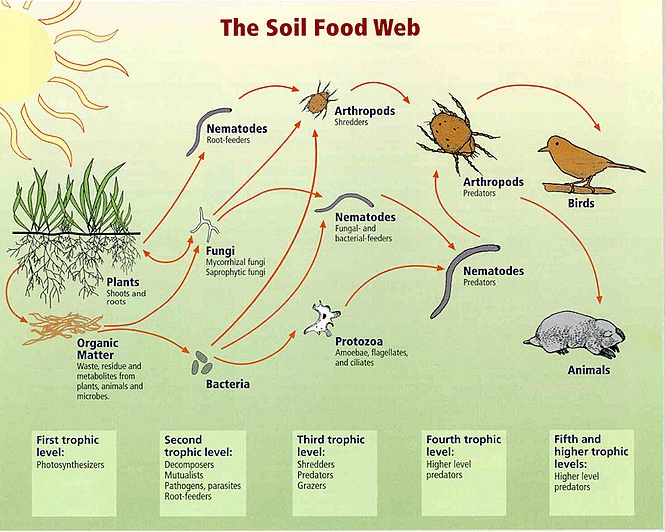
As microorganisms digest plant residues, they secrete polysaccharides. These substances help make the soil more stable— preventing soil particles from compacting and helping to reduce soil erosion.
Bacteria are decomposers, eating dead plant material and organic waste. By doing this, the bacteria change the nutrients from inaccessible to usable forms. The process is essential in the nitrogen cycle.
The growth of soil microbes is usually carbon-limited, reminding me of how fiber is the limiting factor in the healthy maintenance of the human microbiome.
First, feed the soil. It feeds the soil web.
When you filled your pots or your raised bed, I hope you used soil rich in compost and supplemented with minerals. You can find more information in my article, What the Heck is a Soil Amendment? If not, don’t worry, it’s not too late. In fact, every single time you plant, you need to feed the soil web.
What do these critters eat? Compost, well-rotted leaves, manure that’s aged for at least six months—anything that was once alive. One of the preeminent permaculture educators, Geoff Lawton, says, If it lived, it can live again.
In a video course, I once heard Mr. Lawton say that to prove how quickly a well-functioning compost pile works, he buried a dead wallaby in the pile. Within, 48 hours the creatures in the soil web had consumed it, and no recognizable parts remained.
You haven’t made any compost yet?
Well-made compost is hard to find in a bagged form. Look at the ingredients on the bag; if it doesn’t list them or says decomposed bark as the main or only ingredient, it is not worth your money. Adding that to your soil will actually deplete the soil’s nitrogen as it decomposes. Also, there is no standardized description of compost, so you need to be aware of what you’re purchasing.
Search for bulk garden soil or compost in your area. If possible, go to their lot and feel and smell their products. Good compost should be dark and smell rich. Often, mushroom compost is available and can be the best choice.
Look for compost that lists the ingredients if you’re buying it bagged. Otherwise, I’d purchase rotted manure and dig it into the soil a couple of months before planting.
Now that you’ve found good compost add an amount equal to three or four inches deep every time you plant. To give you an idea, in a 12-inch deep bed that is four feet wide and 8 feet long, that would be about three five-gallon buckets. If your raised bed or pot is too full to add that much compost, remove some soil. Don’t skimp on adding organic material.
Yes, you can supplement with additional fertilizer.
Over 150 years ago, Justus Von Liebig, the architect of chemical fertilizers, discovered that plant productivity increased when chemical compounds of nitrogen, phosphate, and potassium were added to the soil.
The original intent of chemical fertilizers was only to supplement the soil’s basic organic matter. But, unfortunately, much of our soil has become so depleted; chemical fertilizers provide the equivalent of I.V. life support for plants.
Most gardeners underestimate the amount of nutrients fast-growing vegetables need. If we could supply six inches of top-notch compost or worm castings twice a year, maybe that would be adequate.
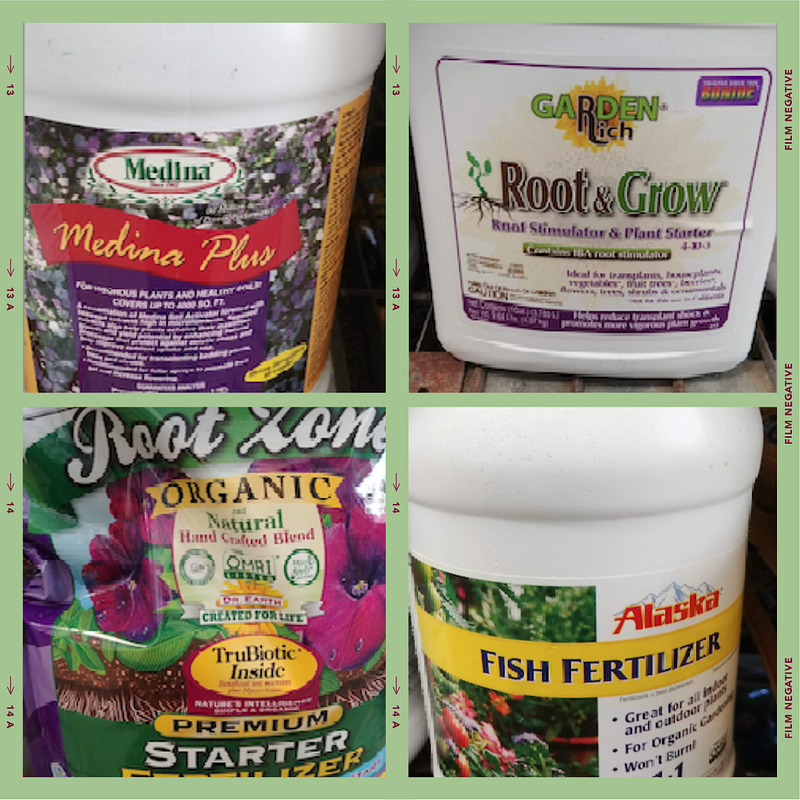
Few of us can do that, so I recommend using an organic fertilizer like those in this photograph from my local big box store. Try to find a pelleted, time-release organic fertilizer you can add to the soil before you plant. This will be enough for the first six weeks.
After that, use a liquid fertilizer every two weeks, applied according to the directions on the container.
Think of fertilizers like vitamins.
Yes, I take a multivitamin, calcium, magnesium, B-12, and Omega 3 supplements daily. But I don’t count on them to give me all the nutrition I need to be healthy. For example, a pregnant woman, an extreme athlete, or anyone experiencing extra stress may need extra protein and more calories.
That’s how I suggest thinking of fertilizer for your garden. The soil in a field or natural environment doesn’t produce the many pounds of produce we expect from our garden soil. This is why we need to provide fertilizer, and it’s even more critical in raised bed and container gardening.
I urge you to begin composting. If you have a tiny patio or deck, you can vermicompost and produce valuable earthworm castings.
I never tire of talking about gardening, so if you have any questions, please post them. Thanks and have fun growing tasty and nutritious food.
Cindy Heath is a writer who is passionate about helping others enjoy growing and preparing healthy food. Sign up for my brief Writer Weekly for recipes and more.


