
Vermicompost Your Garbage for Superior Gardening Results
Worm castings, nature’s finest fertilizer.
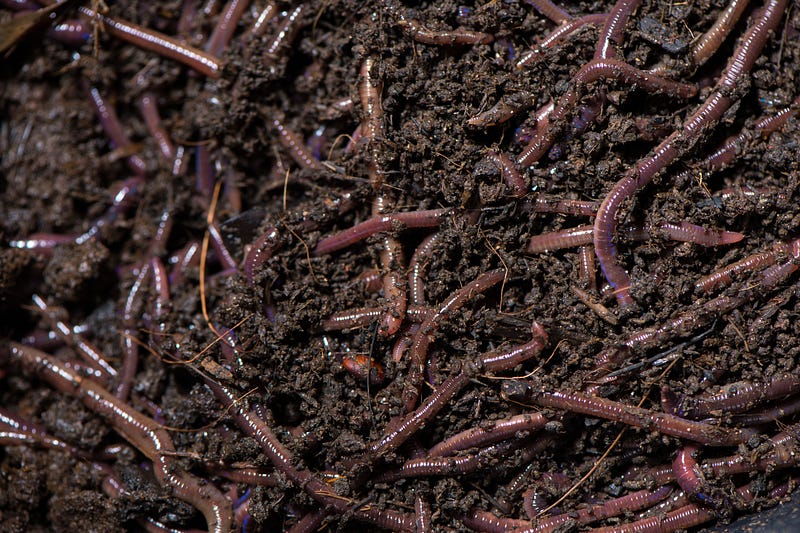
Make your garden more productive.
All over the world, more people are gardening since COVID-19 invaded our lives. More specifically, we are growing vegetables. Fears of food shortages combined with more time spent at home have motivated people to pick up their spades and dig.
Unfortunately, many aspiring gardens become disappointed in their results and give up the project within a few months.
Visions of pulling luscious carrots and plucking juicy tomatoes give way to the sad reality of stunted plants hosting a plethora of hungry bugs.
How can you grow plants more resistant to diseases and bugs, grow faster, and taste better?
You need the magic of vermicompost.
One species of earthworm, Eisenia foetida, also known as red wrigglers, is ideally suited to consume large amounts of decaying waste. Worm manure, or castings, combined with decomposed organic material, is a perfect fertilizer.
Fifteen years ago, my first 1,000 worms arrived by priority mail. Established in their new environment, they quickly began multiplying. With optimum conditions, worms will double their mass every 60 days produce large quantities of worm poo to fertilize your plants.
What will you do with all these worms? You can share them with other gardeners, feed them to poultry, or sell them. In the United States, they’re selling for an average of $42.00 per pound of 800–1000 worms. You could remove ten percent of the worms every week and still never run out. And they eat garbage — not bad. You can limit the population by reducing the amount of feed, too.
Earthworms are primary decomposers of dead and decaying organic matter, deriving their nutrition from the bacteria and fungi that grow upon that matter. Thus, they fragment organic matter and help to recycle the nutrients it contains.
Studies have documented that the application of vermicompost increases seed germination and the growth of plants.
Benefits of Worm Castings
- The humus in the worm castings extracts toxins and harmful fungi and bacteria from the soil.
- The worm castings can fix heavy metals in organic waste, preventing plants from absorbing too much. These compounds can then be released later when the plants need them.
- The humic acid in worm castings stimulates plant growth, even in very low concentrations.
- Vermicompost will increase the ability of soil to retain water.
- Analysis of earthworm castings reveals that they are rich in iron, sulfur, calcium, nitrogen, phosphorus, and potassium (NPK rating: 5.5.3).
- Worm castings will never burn your plants’ roots like chemical fertilizer.
- Vermicompost is much richer than traditionally made compost, so a little goes a long way.
The Power of Microbes
Regular composting and vermicomposting both use the power of microbial life to decompose organic material.
Traditional composting also uses heat to break down the compost quickly; a pile may reach temperatures up to 150 degrees Fahrenheit. This method produces finished compost in six to nine months- faster, with frequent turning.
Vermicomposting depends on the microbes to begin the decomposition, and red wrigglers complete the process. The worms digest the bacteria and fungi feeding on the compost. The compost is not allowed to become hot as it would kill the worms that thrive at temperatures between 50 and 90 degrees Fahrenheit.
Earthworms can create compost in as little as eight to twelve weeks. However, since the worms process waste from the top down, they require relatively shallow bins with a large surface area.
Both methods are aerobic, requiring oxygen for decomposition.
Why add earthworms to the composting process?
The main reason is that worm castings are superior to ordinary compost as fertilizer.
Thanks to home delivery, we all have increasing amounts of cardboard. I recycle all my paper and cardboard in the worm compost.
Small pieces of paper, cardboard egg cartons, torn-up cereal boxes are added directly to the kitchen food waste. This waste is layered with additional flattened corrugated cardboard and newspaper as it’s placed in the worm bin.
Vermicompost should have an ideal carbon to nitrogen ratio of 50:1. The Urban Worm Company has a detailed article explaining the subject.
Paper and cardboard are carbon sources; the food waste is high in nitrogen. Earthworms flourish in compost containing a lot of carbon, serving as a bedding material and retaining moisture.
The amount of compost produced depends on the size of your compost bin, the number of worms, and the amount of waste you feed them.
It’s called black gold for a reason.
Vermicompost is far more valuable than ordinary compost. Compost rarely costs more than $50.00 per cubic yard, purchased in bulk. Worm castings sell for $7.00 per pound.
Reduce the waste you send to the landfill by turning it into perfect fertilizer to produce nutritious vegetables. What can be better than that?
Resources:
The best book to learn about vermicomposting is: Worms Eat My Garbage by Mary Appelhof.
Here are helpful instructions to build an outdoor bin or an indoor container.
The Urban Worm Company publishes a helpful blog if you’d like to learn more.
Cindy Heath is a writer who is passionate about helping others enjoy growing and preparing healthy food. Sign up for my brief Writer Weekly for recipes, garden tips, and more.


