
Is My Garden Soil Sick or Healthy and What Can I Do About It?
Give your soil a check-up with simple tests.
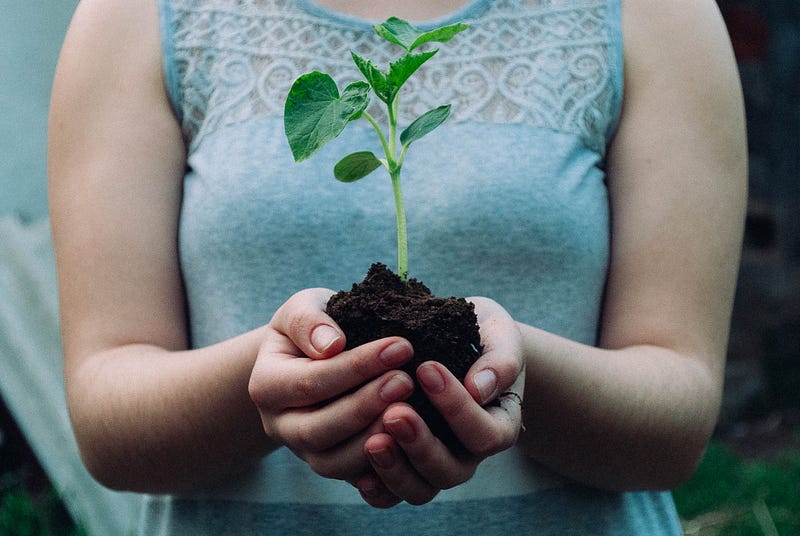
One of the first questions new gardeners have is, “How can I tell if my soil is healthy and fertile?” is an important question. Once you have some answers, you can improve your soil before you plant — for the best results.
Of course, you can send some soil off for professional analysis, but you can also learn from your soil. That is a critical step to becoming a proficient gardener.
Regardless of whether you’re starting with 40 acres or one raised bed, the same principles apply.
So what are you observing?
Let’s learn a little about the soil with some basic tests and observations.
The first thing to check is the tilth of the soil. Dig a hole about six inches deep and pull out a handful of damp soil. Does it crumble easily or resemble a clod of cement? Ideally, it will separate into crumbs that hold a bit of structure and allow roots to penetrate the soil.
Next, check the compaction. A wire irrigation flag or screwdriver works well for this test. You hope to be able to push your wire or tool easily into the ground, at least 8 inches deep.
Now look at the color of the soil you’ve dug up — darker soil contains more organic material, which is what you want.
Smell a handful of damp soil. What you should detect is that pleasant fresh earth smell. The odor is because of one compound; we can smell geosmin, a chemical released by dead microbes (commonly Streptomyces bacteria) and which causes that earthy smell, at a level of 5 parts per trillion. That’s right, trillion.
Humans can smell microbial life, which indicates you have adequate amounts of organic material in your soil to support the microbes.
Now try the ‘feel’ test to determine the texture.
Rub some moist soil between fingers.
- Sand feels gritty.
- Silt feels smooth.
- Clay feels sticky.
These terms describe the texture of the soil. An ideal soil for most plants would have 40% sand, 40% silt, 20% clay.
Take a handful of slightly damp soil and squeeze it tightly. When the pressure is released, the soil should hold together in that clump, but when poked with a finger, it should fall apart.
- Coarse soils (sand or loamy sands) break with slight pressure.
- Medium soils (sandy loams and silt loams) hold together slightly.
- Fine-textured soils (clay or clay loam) resist breaking.
Understanding the texture of your soil helps you learn how to manage your specific growing environment.
Check out the drainage.
- Dig a hole about 1-foot deep.
- Fill it with water.
- If it drops about two-inches an hour, that would be ideal.
- If the water goes down only one inch an hour, you will need to improve the drainage or use raised beds.
- When soil drains over four inches in one hour, I suggest adding clay to slow the drainage.
Here’s a simple test to check out soil alkalinity or acidity.
You can buy a simple test kit to measure pH and even the essential nutrients of Nitrogen, Phosphorus, and Potash (N-P-K).
Or you can gain some information about the basic pH level with ordinary baking soda and vinegar.
- Collect about one cup of soil from your planting area.
- Put one tablespoon of soil in each of two bowls.
- Add just enough water to make the soil slightly muddy.
- Add one tablespoon of vinegar to the first bowl. If it fizzes and bubbles, your soil is quite alkaline. You don’t need to continue with step 5.
- No reaction in the first bowl? Add one tablespoon of baking soda to the second sample and stir. If the soil reacts by fizzing, you have acidic soil.
- Suppose your soil sample shows no reaction, great! You have neutral soil, ideal for growing vegetables.
- If your soil showed a reaction, you might want to get a scientific soil test done to determine how to adjust the pH.
Now we know how to manage our soil better.
We have gotten a real feel for our soil, its tilth, and how much humus it contains. Knowing our soil’s pH and drainage capacity will allow us to make adjustments to help our gardens be more productive.
Whether you’re planning an entire garden or one planter, knowing what’s in your soil is an essential step to becoming a master gardener.
Have fun getting your hands in the dirt and diagnosing your garden soil.


