How to Deal with Cognitive Illusions
Systematic patterns of deviation from the norm or rationality in judgment can lead to perceptual misinterpretations of information, leading to cognitive distortions.

One of the most astonishing concepts I encountered when studying the brain and human behavior methodically was cognitive illusions, also known as perceptual illusions. They are systematic patterns of deviation from norm and rationality in judgment, leading to cognitive and perceptual misinterpretations of information, causing cognitive distortions.
While observing the labyrinth of my mind, cognitive illusions emerged as captivating phenomena that unveiled the thorny relationship between perception and reality. I pictured these incidents as mesmerizing plays where my thoughts took center stage, performing with flair but, sometimes, with a touch of illusion deceiving me.
My research revealed that these biases could affect various aspects of our cognition, memory, reasoning, decision-making, and learning. Cognitive illusions are natural because the brain tends to reserve energy biologically, so it uses mental shortcuts and heuristic thinking to achieve this goal. The brain perceives things relative to other things. It interprets objects and ideas in relation to one another.
I found it intriguing how our judgments sometimes deviate from what we might consider the norm and rationality. This deviation, these systematic patterns, can profoundly impact how we interpret information and how our perceptions can affect our decisions and behaviors.
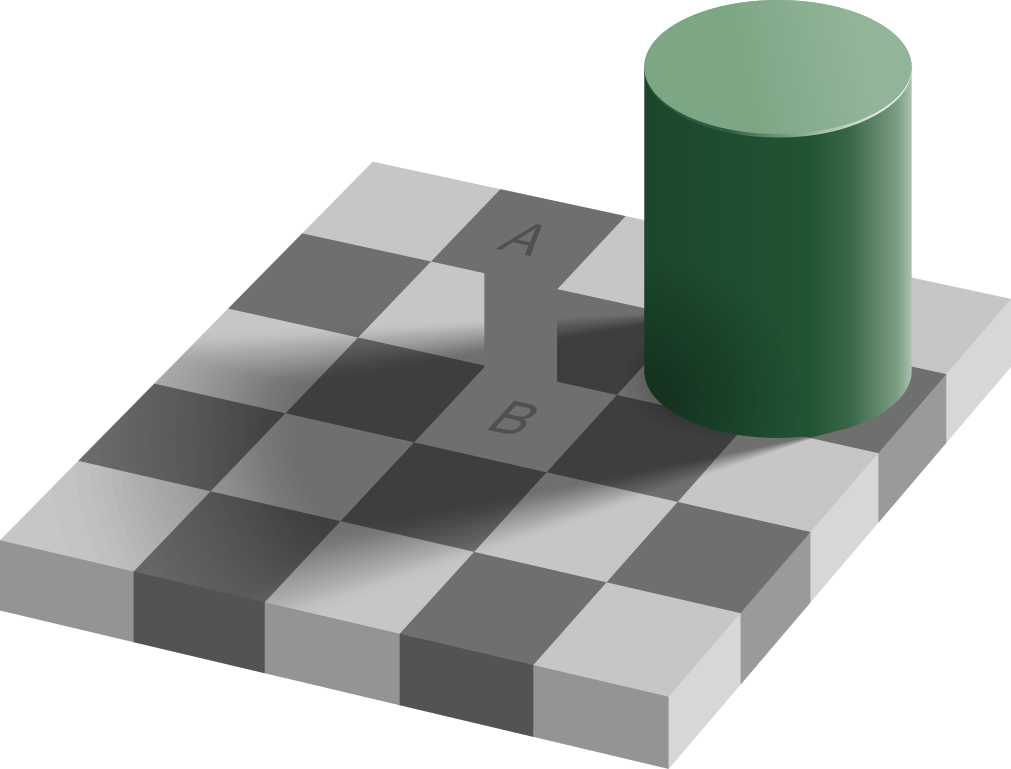
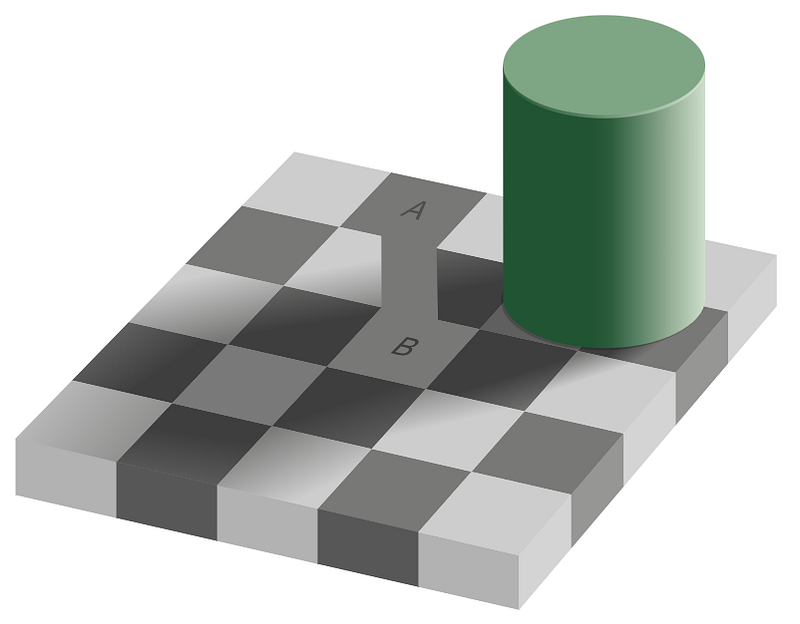
Cognitive illusions can also occur to visual information when we perceive objects, pictures, photographs, and images with an altered perception. Ambiguous figures are images that can be interpreted in more than one way. The brain may switch between different perceptions of the same image.
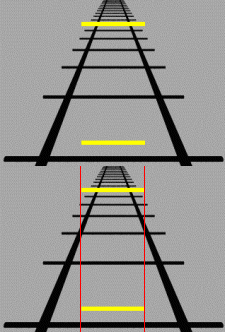
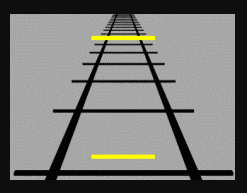
Here is a sample of two identical yellow lines looking at different sizes if not objectively measured. In this case, the position image creates the illusion as the brain interprets objects in relation to one another.
These systematic patterns of deviation from the norm present themselves like subtle influencers in our daily lives, charming our perceptions and impacting our decisions in ways we might not be aware of.
I was fascinated by this aspect of human psychology that added nuance to our understanding of how we make sense of the world around us. Therefore, I investigated mechanisms, impacts, and implications, which I will summarize briefly for awareness purposes. Then, I will introduce six types of cognitive illusions and briefly explain how I dealt with them.
An Overview of Mechanisms for Cognitive Illusions
The intricacies of cognitive illusions are rooted in the behind-the-scenes workings of our mental processes. Our cognitive predispositions, including mental shortcuts, biases, and deeply ingrained cognitive frameworks, intricately shape the nuances of perception and comprehension.
This phenomenon is akin to our minds adhering to internalized governing principles, and instances of deviation from conventional or normative responses occur when we unconsciously yield to these cognitive predispositions.
Mental shortcuts, as quick decision-making tools, assist our brains in navigating the deluge of daily information. While they efficiently serve us in decision-making, they become mechanisms when consistently influencing our choices, sometimes deviating from rational decision-making.
Biases act as lenses tinting our perceptions and influencing how we interpret information. The availability heuristic bias, for example, leads to overestimating an event’s likelihood based on its availability in our memory, often swayed by recent or emotionally charged experiences.
Ingrained thinking patterns, shaped by experiences, cultural influences, and upbringing, form well-worn pathways guiding our thoughts. Consider confirmation bias, where thought pathways are paved to favor information aligning with our beliefs, while contradictory information faces resistance.
Deviations from the norm occur when cognitive mechanisms guide us unconsciously, occasionally leading us away from what might be considered rational or normative responses. While these mechanisms can be helpful, understanding their intricacies is crucial for navigating the delicate balance between cognitive processes and our reality.
Theories, Impact, and Implications of Cognitive Illusions
Two prominent theories in psychology explore these systematic patterns of deviation. The first is the concept of cognitive biases, which I introduced in a story titled A Practical Guide to Handling Cognitive Biases Effectively. Cognitive biases are systematic patterns of deviation from norm or rationality in judgment, leading to perceptual errors.
The second theory involves the role of heuristics, mental shortcuts that our brains take to simplify decision-making but can lead to predictable biases. Imagine making judgments based on whatever information happens to be right at your fingertips. That’s the availability heuristic in action. Easy access to info can skew our decisions.
The impact of these deviations is significant. They can lead us down paths of perceptual misinterpretation, where our understanding of information veers away from what might be considered the rational or normative response. I see it like our mental compass is slightly askew, influencing how we see and process the world around us.
The implications of these systematic patterns are far-reaching because they can affect decision-making, problem-solving, and our interactions with others. When our judgments consistently deviate from the norm, it can introduce a layer of distortion into how we perceive reality. This, in turn, can impact the quality of our decision-making processes, choices, behaviors, and relationships.
Unfolding Six Types of Cognitive Illusions
In this section, I will briefly introduce these illusions and mention my approach to give you an idea of how to deal with them.
1 — Illusory Correlation
I have noticed a fascinating aspect of our cognition. People around me tended to see relationships between things that might not actually exist. This phenomenon in science is called illusory correlation.
Illusory correlation involves attributing correlation to weak or coincidental relationships. Our biases and stereotypes heavily influence this phenomenon. It is like our brains are wired to form associations, sometimes without robust evidence.
Prioritizing accuracy in my perceptions, I emphasize forming connections and challenging stereotypes based on solid evidence. This proactive stance refines personal understanding and contributes to a broader societal shift towards enlightened and inclusive discourse.
2 — Anchoring Bias
Have you ever noticed that your first impressions or the initial information you encounter tend to stick with you, shaping your decisions more than you might realize? It is called anchoring bias. For example, a recent research in JAMA provided evidence for anchoring bias during physician decision-making.
Anchoring bias plays a substantial role in influencing how we make judgments. Even if that first piece of information is entirely irrelevant, it has this sneaky way of biasing our subsequent decisions.
Crucial for me is seeking and analyzing additional relevant data beyond initial awareness. I have cultivated the habit of questioning the validity of the initial anchor, ensuring my decisions are more comprehensive and well-rounded.
3 — Hindsight Bias
Looking back on past events, it is natural to see them as more predictable or foreseeable than they were at the time. Hindsight bias occurs “when people feel that they “knew it all along,” that is, when they believe that an event is more predictable after it becomes known than it was before it became known.”
Hindsight bias has this way of distorting our memories to fit our current knowledge. The challenge here is that it can impair our ability to learn from past experiences and make us overly confident in predicting future events. Hindsight bias stems from cognitive, metacognitive, and motivational inputs.
Reflecting on past decisions without the benefit of hindsight acknowledging the prevailing uncertainty at the time, has been instrumental for me. This subtle shift in perspective makes a meaningful difference in how I approach retrospection.
4 — Confirmation Bias
Interestingly, we tend to navigate through life with this innate tendency to seek information that aligns with what we already believe. It is like this invisible filter screens out anything that contradicts our preexisting beliefs or values.
As documented in this paper, “Confirmation bias is the tendency to acquire or evaluate new information in a way consistent with one’s preexisting beliefs. It is omnipresent in psychology, economics, and scientific practices.”
The impact of this confirmation bias is quite significant — it reinforces our existing views, creates echo chambers, and can seriously hinder our ability to make objective decisions.
Actively challenging myself to seek information that challenges my beliefs has proven beneficial. Embracing an open-minded and curious attitude to new ideas has transformed my personal and professional life.
5 — Availability Heuristic
The brain and mind have a way of making recent or emotionally charged experiences disproportionately influence our perceptions of likelihood.
This cognitive shortcut, known as the availability heuristic, can lead us to overestimate or underestimate probabilities. It is like our minds are wired to give more weight to what’s readily available in our memories.
Actively seeking diverse information sources and considering the broader context, instead of relying solely on memorable instances has been my go-to strategy to counteract this bias.
6 — Dunning-Kruger Effect
I left this one to the end as this effect significantly impacted my personal and professional life. I was amazed by my transformation as I got older and wiser. The Dunning-Kruger effect significantly influences our self-awareness, learning, and tacit knowledge transfer.
I have found that having a growth mindset, being open to feedback, and embracing continuous learning are essential to counteract this bias. Recognizing that there is always room for improvement with a curious and humble approach has made a real difference in approaching my challenges.
I wrote a detailed article about this titled How Earning a Ph.D. Revealed the 2 Layers of the Dunning-Kruger Effect in My Life.
Conclusions and Takeaways
Cognitive illusions highlight the complexities and limitations of human cognition, showcasing how our mental processes can deviate from rationality and objectivity. Understanding these biases is essential for critical thinking and decision-making in various aspects of life.
The complexities and limitations of our cognitions come alive through cognitive illusions, revealing the subtle quirks and twists in our mental processes. I imagine it as a spellbinding narrative where our brains, like protagonists, deviate from the rational script we might expect.
Understanding these biases is akin to equipping ourselves with a map through the uncharted territories of our thoughts. It is a compass that guides us through the fog of illusory correlations and the maze of hindsight bias. I imagine it as an enlightening expedition where each bias is a landmark, revealing the contours of our cognitive landscape.
The twists and turns in our mental processes are not flaws but facets of our cognitive richness. Embrace the intricacies with curiosity. Armed with the knowledge of cognitive illusions, we can navigate the cognitive landscape with awareness, question the illusions, challenge the biases, and forge a path illuminated by critical thinking.
We must craft our narratives by recognizing that we are both the audience and the playwright of our cognitive play. We can write a narrative that aligns with the reality we wish to shape, embracing the complexities as opportunities for growth.
We need to act mindfully as cognitive illusions can induce cognitive distortions leading to emotional dysfunction. To ensure a steadfast grasp on reality, using objective measures and triangulating information becomes our guiding light for cognitive flexibility and mastery of our emotions.
Anchored in neutrality and impartiality, a mindful and diligent approach can strengthen our cognitive resilience, paving the way for a more discerning understanding of the intricacies within our cognitive processes like memory, focus, attention, task switching, and problem-solving.
Here are three stories related to my cognitive resilience.
8 Cognitive Principles Accelerated My Learning and Helped Me to Transfer Tacit Knowledge
How I Increased My AQ to Live a More Peaceful and Enjoyable Life
10 Ignored and Tiny Habits Made a Big Impact on My Health and Happiness
Thank you for reading my perspectives. I wish you a healthy and happy life.
To inform my new readers, I wrote numerous articles that might inform and inspire you. My topics include brain and cognitive function, significant health conditions, valuable nutrients, ketogenic lifestyle, self-healing, weight management, writing/reading, and humor. 100+ Insightful Life Lessons from My Circles for the Last 50+ Years
I publish my health and wellness stories on EUPHORIA. My posts do not include professional or health advice. I only document my reviews, observations, experiences, and perspectives to provide information and create awareness. Be Your Own Therapist in 10 Steps.
To get my post in your inbox, you may subscribe to my content. If you are a writer, you are welcome to join my publications by sending a request via this link. I support 25K+ writers who contribute to my publications on this platform. I also have another profile to write and curate tech stories.