
SELF-HELP AND MOTIVATION
How to be a healthier drinker
Finding balance and happiness through healthy drinking strategies
The relationship between alcohol and our health is complex and multifaceted. For those who choose to consume alcohol, it’s essential to approach it mindfully and responsibly. This article aims to provide you with a comprehensive guide on how to be a healthier drinker. We’ll discuss strategies to help you evaluate your drinking habits, make informed choices, and ensure that alcohol does not negatively impact your well-being.
The Myth of “Healthy Drinking”
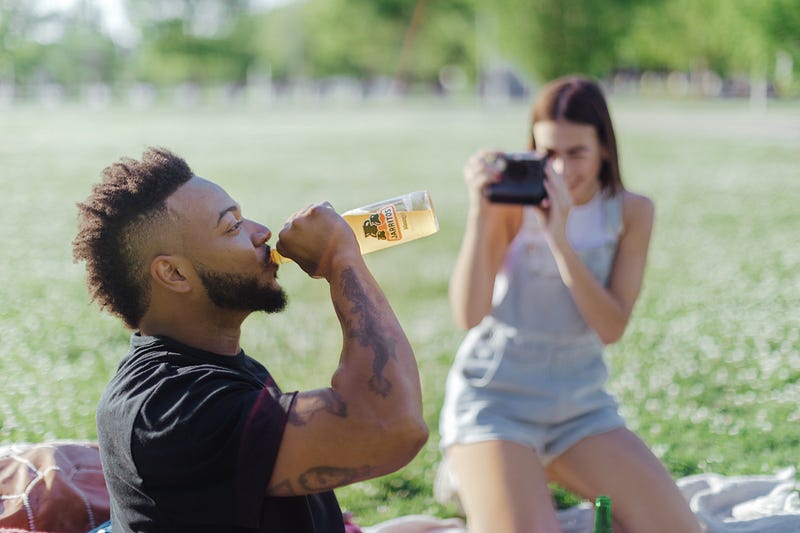
As we move forward in our journey to be healthier drinkers, it’s valuable to remain critical of the messages we encounter. Research has shown that alcohol marketing often emphasizes the positive aspects of drinking while downplaying the potential risks (Jernigan, et al., 2017). This marketing can perpetuate the myth of “healthy drinking” and influence our perceptions and choices.
That said, here are some practical tips for improving your health when it comes to alcohol (besides kicking it to the curb).

How to be a healthier drinker
Reflect on Your Motivations
Before taking a sip, it’s crucial to reflect on why you drink in the first place. Understanding your motivations can help you make healthier decisions. Research has shown that self-reflection and self-awareness can be powerful tools in curbing excessive alcohol consumption (Karyadi, et al., 2014). Are you drinking to relax, socialize, or cope with stress? Reflecting on this can signal when you need to seek alternative coping mechanisms.
Use Apps to Track Your Drinking
In the digital age, there are numerous apps available to help you track your alcohol consumption. Some popular choices include “DrinkControl,” “Sober Grid,” and “Nomo.” My personal favorite is “I Am Sober.” These apps provide a platform to log your drinking habits, set limits, and monitor your progress. They can be valuable tools in helping you make more informed choices (Cohn, et al., 2011).
Make a Pre-Drinking Plan
Planning is essential to maintaining healthy drinking habits. Before going out, decide how many drinks you will have and stick to it. Having a plan in place can prevent excessive drinking and help you stay in control of your alcohol consumption (Collins, et al., 2017).
Set Short-Term Goals
Setting short-term goals can be highly effective in maintaining healthier drinking habits. For instance, challenge yourself not to drink when you’re feeling sad, stressed, or anxious. This can help you develop alternative coping strategies and avoid using alcohol as a crutch (Tate, et al., 2018).
Eat Beforehand and Time Your Meals
Eating a substantial meal before drinking can slow down the absorption of alcohol, reducing its immediate impact on your system. It’s also advisable to continue snacking while drinking to maintain blood sugar levels. This can help prevent excessive intoxication and potential health risks (Brubacher, et al., 2019).
Stay Hydrated
Alcohol is a diuretic and can lead to dehydration. To stay healthier while drinking, be sure to hydrate adequately. Drink water in between alcoholic beverages to help your body process the alcohol more effectively and minimize the risk of a hangover (Alford, et al., 2015).
Be Mindful of Alcohol Content
Different alcoholic beverages contain varying levels of alcohol content. Be aware of what you’re consuming and how it affects your body. Opt for drinks with lower alcohol content and know your limits to prevent overindulgence (National Institute on Alcohol Abuse and Alcoholism, 2021).
Create a Buddy Plan
Sometimes, self-control may be challenging when you’re in a social setting. Consider creating a buddy plan with a friend or loved one. Ask them to alert you if they notice any concerning behavior changes. Having a support system in place can help you make healthier choices (Kilwein, et al., 2018).

The Connection Between Restrictive Drinking and Disordered Eating
While we’ve explored strategies for healthier drinking, it’s crucial to acknowledge that the focus on restriction and control over one’s alcohol consumption can sometimes mirror disordered eating habits. The psychological parallels between the two are undeniable, as both involve regimented approaches to managing consumption. It’s important to be aware of the potential for unhealthy behaviors to manifest in different aspects of our lives, including our relationship with alcohol.
Research has pointed to the psychological overlap between restrictive drinking and disordered eating. Studies have indicated that individuals who exhibit disordered eating patterns may be more likely to engage in restrictive drinking as a way of maintaining control over their calorie intake (Kampov-Polevoy, et al., 2008). This overlapping behavior highlights the need for a holistic approach to well-being, addressing the root causes of these habits and seeking support when necessary.
Moreover, studies in psychology, such as Lowe and Timko (2004), have explored how the terminology and labeling of restrictive behaviors can influence individuals’ responses and perceptions. While this research may not directly address the overlap between disordered eating and restrictive drinking, it provides insights into the psychological aspects of restrictive behaviors and how terminology can influence perceptions.
The Influence of Capitalism and Marketing
It’s worth considering the influence of capitalism and marketing in shaping our perceptions of alcohol. In a world driven by consumerism, we’re often bombarded with messages promoting the idea that we can maintain a healthy lifestyle while still enjoying alcohol. The concept of “healthy” or “clean” drinking has become a part of this narrative. It’s important to scrutinize these claims and question whether they truly align with our well-being or if they serve corporate interests.
The Bigger Picture: Why Moderation?
At this point, it’s crucial to address the underlying question: Why go through all these rules and strategies just to moderate your drinking? Why not stop altogether? The answer lies in the individual’s unique journey and relationship with alcohol.
Personal Experience
In my own life, I tried to moderate my drinking for five long years. While it may work for some, it ultimately wasn’t worth it for me. The constant monitoring and effort required to control my alcohol consumption took a toll on my mental and emotional well-being. It became clear that quitting altogether was the healthier choice. Could it be a healthier choice for you?

Final thoughts on how to be a healthier drinker
Being a healthier drinker means understanding your motivations, setting boundaries, and making informed choices. The strategies discussed in this article are designed to help you achieve that balance. However, it’s essential to recognize that each person’s journey is unique, and the path to well-being may differ for everyone. If you find that moderation is not working for you, consider the benefits of abstaining from alcohol entirely, as the relief and freedom from the mental energy spent on moderation can be liberating. In the end, it’s your journey, your life, and your choices, but sometimes, quitting while you’re ahead can be the most rewarding decision of all.
About the author
Dara Laine Murray is the editor of Modern Sobriety, a passionate platform on Medium dedicated to exploring the intersection of well-being, mindful living, and a life free from the constraints of excessive drinking. With a background in behavioral science and a deep curiosity about the human experience, Dara brings a unique perspective to the conversation around alcohol and its impact on our lives. Having embarked on a personal journey towards sobriety, she shares her insights and experiences, shedding light on the path to a healthier, more fulfilled life. Dara’s commitment to fostering an open dialogue on the complexities of alcohol consumption and the pursuit of well-being is evident in her thoughtful and engaging content. Join her on the journey to discover balance and happiness in the world of Modern Sobriety.
Read related articles by Dara Laine Murray about sobriety:
- The Surprising Secret to a Healthier Mind and Body
- Sober Curious: Does Cutting Back on Alcohol Even A Little Bit Improve Health?
- The Intersectionality of Control
- Unmasking the Poisoned Chalice: Sobriety, Autonomy, and the Subtle Gendered Influence of Alcohol Marketing
- Alcohol Does Not Belong in Wellness Spaces
- Mindful Drinking Is About Finding Balance (And It Might Just Save You)
- Unveiling the World of Sober Curious: Understanding Its Meaning and Benefits
- Preventing Hangover Headaches: A Proactive Approach
- How to Plan A Recovery-Friendly Holiday Party
- How to Quit Drinking: 10 Steps to Success
Works Cited
- Alford, C., Hamilton-Morris, J., & Verster, J. C. (2015). The effects of alcohol hangover on cognitive functions in healthy subjects. International Journal of Environmental Research and Public Health, 12(9), 10489–10500.
- Brubacher, D., Burton, J., Debono, R., Isbister, G., Rimac, L., & Lenton, S. (2019). Reducing alcohol harms: What works and why? New South Wales Public Health Bulletin, 30(2), 63–68.
- Cohn, A. M., Hunter-Reel, D., Hagman, B. T., & Mitchell, J. (2011). Promoting behavior change from alcohol use through mobile technology: The future of ecological momentary assessment. Alcoholism: Clinical and Experimental Research, 35(12), 2209–2215.
- Collins, S. E., Kirouac, M., Lewis, M. A., Witkiewitz, K., & Carey, K. B. (2017). Randomized controlled trial of web-based decisional balance feedback and personalized normative feedback for college drinkers. Journal of Studies on Alcohol and Drugs, 78(6), 923–932.
- Jernigan, D. H., Noel, J., Landon, J., Thornton, N., & Lobstein, T. (2017). Alcohol marketing and youth alcohol consumption: A systematic review of longitudinal studies published since 2008. Addiction, 112(Suppl 1), 7–20.
- Kampov-Polevoy, A. B., Garbutt, J. C., & Davis, C. E. (2008). The relationship between preferences for sweets and alcohol in a nonalcoholic population. Alcoholism: Clinical and Experimental Research, 32(1), 11–24.
- Lowe, M. R., & Timko, C. A. (2004). What’s in a label? The effects of disordered eating and dieting terminology on women’s responses to an eating scene. International Journal of Eating Disorders, 35(2), 263–277.
- National Institute on Alcohol Abuse and Alcoholism. (2021). Alcohol content in popular beverages. Retrieved from https://www.niaaa.nih.gov/alcohol-health/overview-alcohol-consumption/alcohol-content


