
How to be a Green Consumerist…Better Not
Joshua Becker said:
The most environmentally friendly product is the one you didn’t buy.
Do you want to become a Green Consumerist? Why not? You will be buying only environmentally-friendly products, products made from natural matter, no toxins, no chemicals. Pure and non-toxic, with a zero-carbon footprint.
Your family and friends will admire you and ask you where they can get that non-toxic product too. Of course, who doesn’t want to save the planet and be called environmentally-friendly?
Outstanding. Let’s all start buying eco-friendly products.
But…better not. Let me explain.
This kind of shopping or eco-buying habit has two problems.
First, the companies that are making eco-friendly products sell them for too high a price. Your full wallet will be emptied fast.
Second, those companies promoting consumerism hide behind terms like made naturally, eco…footprint, so consumers, so the consumer can continue shopping without worrying about the environment, planet et cetera.
And this is called Green Consumerism.
According to the Cambridge English Dictionary:
the situation in which consumers want to buy things that have been produced in a way that protects the natural environment: Supermarkets are paying increasing attention to the demands of green consumerism.
or,
the situation when too much attention is given to buying and owning things, often things that are not really necessary.
If you read both definitions from the same source, the Cambridge Dictionary, you get an oxymoron. On the one hand, green consumerism is good because you buy eco-friendly products. On the other hand, consumerism often means buying unnecessary things, you don’t need.
Do you see the pattern?
It makes no sense.
The sustainable lifestyle blogger Alden Wicker, when he had a presentation of the front the Youth UN Delegation, said
“Conscious consumerism is a lie. Small steps were taken by thoughtful consumers — to recycle, to eat locally, to buy a blouse made of organic cotton instead of polyester — will not change the world.”
What …? It is confusing, I know but consumerism, whether it is called green or not, is, to put it simply, still consumerism. If you shop and shop for things you don’t need, feeling less guilty because all the stuff you buy is “eco-friendly’, it is still consumerism. End of story. It has nothing to do with the environment or being eco-friendly.
Also, green consumerism is sometimes called elite consumerism because of the price slap. For example, Patagonia Fleece Jacket costs $96. I am sorry, but I can’t spend this kind of money on an eco-friendly piece of clothing because I live on a sustainable clothing budget of $100–200 per year and this would take my whole budget. How can they call this company sustainable? I agree with the quality of their clothes but it isn’t sustainable ( not for those on the budget), only if you can find it as a second-hand. Before, when I heard about them, I thought “wow”, but this pricing is certainly for people who higher income and have deep wallets and not somebody like me.
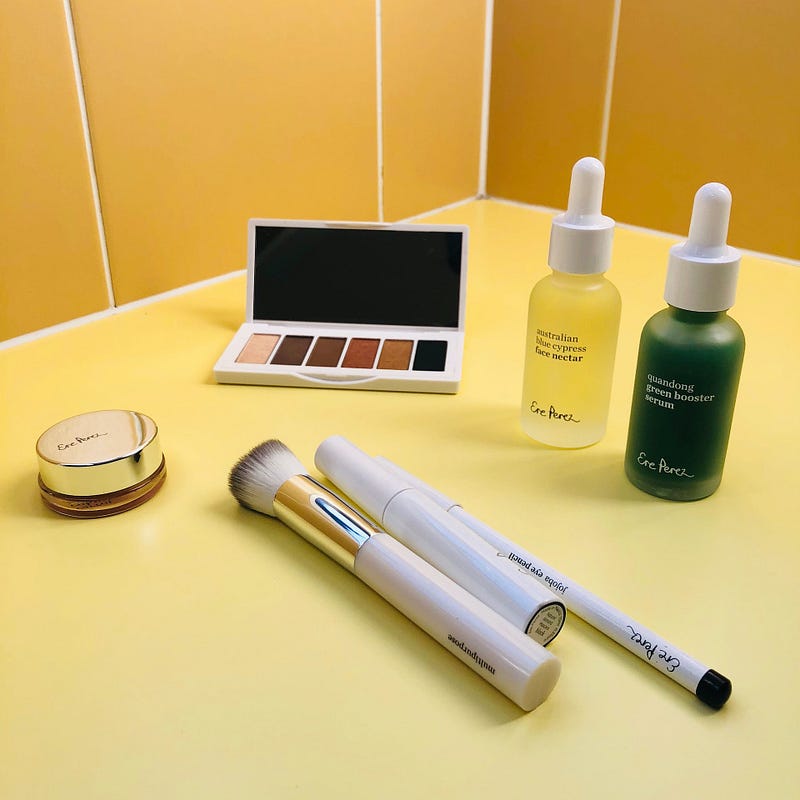
What is the difference between a green-consumerist lifestyle and a truly sustainable lifestyle?
What to do next?
Stop consuming, shopping, and wasting. Very simple.
Buy what you need, not what you want. There is a difference. Teach your kids the same. Want to make a difference for the climate? Drive less, eat less, and have fewer children. Become a minimalist.
We have so many choices.
I need to confess but I was the one who was buying more than I should. I was not into fashion per se but still. No more. I realize that living sustainably is not halting me from experiencing life fully. Actually, it made my life experience is more profound. Try it at least for a month. You won’t regret it. Are you with me?
This is a day 10 in 30 Day Challenge to Sustainability


