How to Avoid Pitting Nature Against Progress
We cannot dominate nature for much longer, but neither can we retreat from civilization
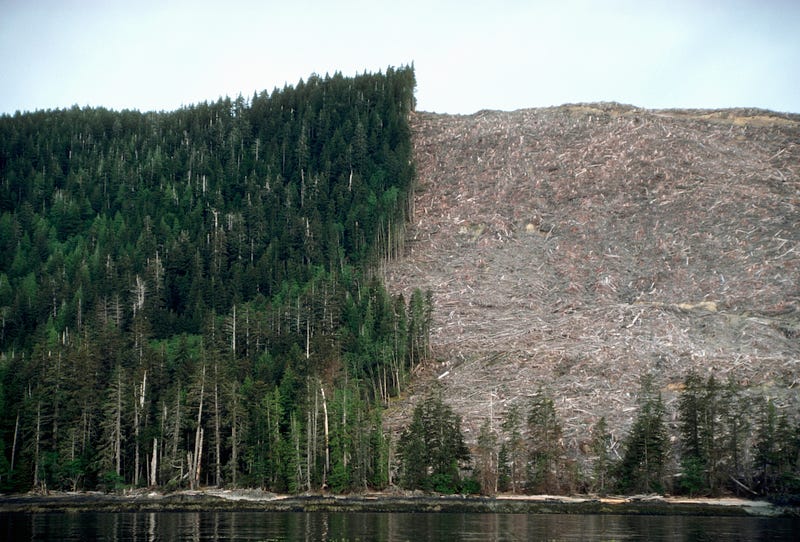
It’s tempting to declare war on the institutions and technologies that seek to remake our world in their own image. Radical environmentalists believe that the only way for nature to reassert itself is for human civilization to reduce its numbers and return to preindustrial conditions. Others believe it’s too late, that we’ve already cast our lot with technological progress, genetic engineering, and global markets. In their view, slowing down the engines of progress will merely prevent us from finding the solutions we need to fix our current crises.
Neither approach will work. We cannot dominate nature for much longer, but neither can we retreat from civilization. This cannot be a war between those who want to preserve nature and those pursuing progress. Team Human includes everybody. If we respond to crisis in a polarized way, we surrender to the binary logic of the digital media environment. We become the thing we are resisting. Technology may have created a lot of problems, but it is not the enemy. Neither are the markets, the scientists, the robots, the algorithms, or the human appetite for progress. But we can’t pursue them at the expense of more basic, organic, connected, emotional, social, and spiritual sensibilities, either. Instead, we must balance our human need to remain connected to nature with our corresponding desire to influence our own reality. It’s not an either/or, but a both/and.
It’s not even a paradox.
We can be utterly in charge of the choice not to be utterly in charge. We can be fully human without being in complete control of our world. We may be nature’s great observers and problem-solvers, but nature is not a problem to be solved. We must instead learn to work with nature, just as we must learn to work with the many institutions and technologies we have developed over the last millennium or so. We can’t go back; we must go through.
This is the first lesson a white water rafter learns on encountering the rapids. As the raft enters the turbulence and begins to buck, the temptation is to resist the current by jamming the paddle straight down into the water and holding it as still as possible. Another temptation is to remove the paddle altogether and surrender to the current. Both strategies put the raft at the mercy of the river. The best response is to paddle harder and faster. Go with the current, making the necessary adjustments to avoid rocks and other obstacles. It’s neither resistance nor passivity, but active participation: working in concert with what’s happening to make it downriver in one piece.
We must learn to see the technologically accelerated social, political, and economic chaos ahead of us as an invitation for more willful participation. It’s not a time to condemn the human activity that’s brought us to this point, but to infuse this activity with more human and humane priorities. Otherwise, the technology — or any system of our invention, such as money, agriculture, or religion — ends up overwhelming us, seemingly taking on a life of its own, and forcing us to prioritize its needs and growth over our own.
We shouldn’t get rid of smartphones, but program them to save our time instead of stealing it. We shouldn’t close the stock markets, but retool them to distribute capital to businesses that need it instead of enslaving companies to the short-term whims of investors. We shouldn’t destroy our cities, but work to make them more economically and environmentally sustainable. This will require more human ingenuity, not less.
Environmentalism sometimes makes us feel like we humans are the problem. But we’re not. Humans are not a cancer on the planet. At the same time, we can’t ignore the fact that people are willful beings, capable of changing the natural environment to suit our whims and prone to dominating anything we deem threatening.
We have to apply that same sense of proactive problem-solving to the mortal threats of our own creation. The very same things we might do to prepare for a global catastrophe could also make us resilient enough to prevent one. Distributed energy production, fairer resource management, and the development of local cooperatives would both benefit survivors of a calamity and help reduce the stresses that could bring one on.
Now is not the time to abandon our can-do optimism, but to direct it toward priorities greater than world domination.
This was section 73 of the new book Team Human by Douglas Rushkoff, which is being serialized weekly on Medium. Read the previous section here and the following section here.