How We Can Work With Both Nature and Technology
Permaculture embraces the complexity of both
The planet’s complex biosphere will survive us, one way or the other. Our own continuing participation, however, is in some doubt. Our aggressive industrial processes don’t just threaten the diversity of other species; they threaten us, too. Increasing levels of carbon dioxide lead to sharp declines in cognitive ability. Global warming not only displaces huge populations, but the higher temperatures can lead to everything from the spread of disease to increased social unrest.
We are part of a complex system of feedback loops and interconnections, and must learn to approach our world with greater sophistication, empathy, and vision — not as short-sighted profiteers but as humans with legacies. The earth doesn’t have to reject us as if we were an invading pathogen. Our consumption of resources need not deplete anything. In fact, we humans are capable of leaving a place more fertile than we found it.
One great model for how humans can participate willfully yet harmoniously in the stewardship of nature and resources is called permaculture. When the term was coined by a graduate student in 1978, it was meant to combine “agriculture” with “permanent.” But it was expanded to mean “permanent culture,” as a way of acknowledging that any sustainable approach to food, construction, economics, and the environment had to bring our social reality into the mix.
Permaculture is a philosophy of working with, rather than against, nature. It means observing how plants and animals function together, rather than isolating one product or crop to extract. It involves recognizing the bigger, subtle cycles of the seasons and the moon, and treating them as more than superstition. It requires us to recognize earth as more than just dirt, but as soil: a highly complex network of fungi and microorganisms through which plants communicate and nourish one another. Permaculture farmers treat soil as a living system, rather than “turning” it with machines and pulverizing it into dirt. They rotate crops in ways that replenish nutrients, make topsoil deeper, prevent water runoff, and increase speciation. They leave the landscape more alive and sustainable than they found it.
Of course, all of these practices are undermined by the effects of industry, such as the introduction of synthetic organisms or the patenting of traditional seeds by corporations so they can’t be used by farmers in favor of genetically modified alternatives. Big Agra has even taken control of the criteria for organic certification in America, cynically prohibiting those who use the most regenerative farming practices from labeling their products organic. If the landscape is going to be defined by the law of “might makes right,” then a patient, permaculture approach is going to be tricky to pull off.
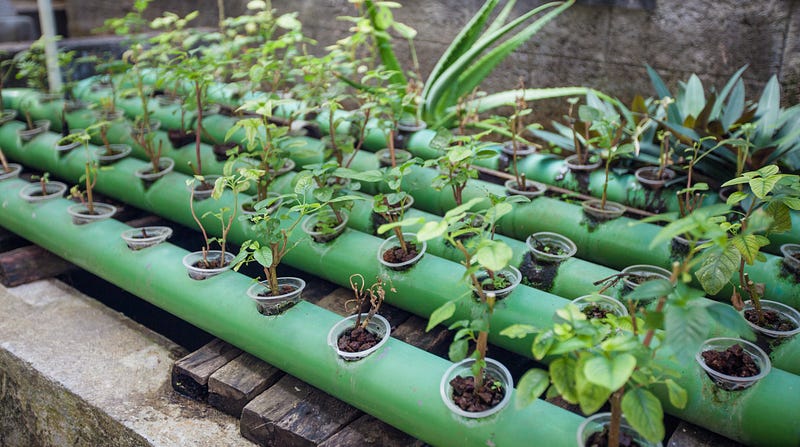
And that war, in turn, entrenches food activists in an anti-technology corner, making them reluctant to incorporate the best of modern science into their operations. In many circumstances, sustainable practices, biodiversity, and livestock rotation can be augmented by synthetic nitrogen, solar power, or computerized irrigation. Progress isn’t the enemy, so long as it’s being used to embrace and support complexity, rather than attempting to eliminate it.
This was section 75 of the new book Team Human by Douglas Rushkoff, which is being serialized weekly on Medium. Read the previous section here and the next one here.