The Lost Art of Pattern Recognition
Like the builders of doomed Fukushima, we envision the future without respecting the past
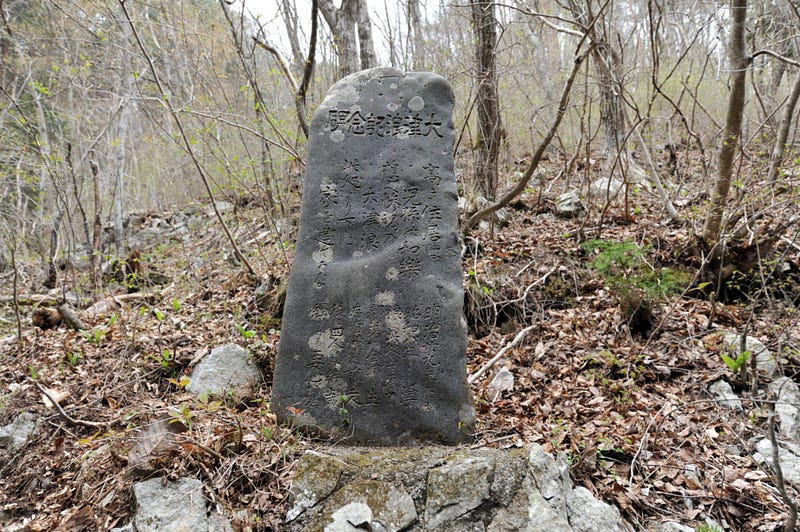
The Japanese built a nuclear power plant right down the hill from the stone tablets that their ancestors put in the ground warning, “Don’t build anything below here.” The markers, called tsunami stones, were placed centuries ago by villagers who had experienced the region’s devastating earthquakes and floods. Moderns ignored the advice, believing that their building techniques far surpassed anything their ancestors could have imagined.
The villagers had recognized the pattern of natural disasters, as well as the fact that the cycle repeated too infrequently for every generation to witness it. But their efforts to communicate their wisdom failed to impress a civilization without patience for pattern recognition or a sense of connection to the cyclical nature of our world.
Weather, ecology, markets, or karma: what goes around comes around. What the ancients understood experientially, we can today prove scientifically, with data and charts on everything from climate change to income disparity. But these facts seem not to matter to us unless they’re connected to our moment-to-moment experience. Cold, abstract numbers carry the whiff of corrupt bureaucracy. With politicians actively undermining the importance of factual reality, NASA’s climate data may as well be tsunami stones.
Phenomena such as climate change occur on time scales too large for most people to understand, whether they’re being warned by scientists or their great-grandparents. Besides, the future is a distancing concept — someone else’s problem. Brain studies reveal that we relate to our future self the way we relate to a completely different person. We don’t identify that person as us. Perhaps this is a coping mechanism. If we truly ponder the horrific possibilities, everything becomes hyperbolic. We find it easier to imagine survival tactics for the zombie apocalypse than ideas to make the next ten years a bit better.
The endless succession of inspirational talks by well-meaning technosolutionists with patented, world-saving ideas doesn’t make the future feel any more real, either. Let’s shoot reflective particles into the atmosphere, pour iron filings into the oceans, and dig pod tunnels for California commuters! These environmental moonshots put off sustainable abundance, as if it’s something we can achieve only with yet more profitable high-tech innovation. The narratives all depend on linear, forward-moving, growth-based progress rather than the recognition of cycles or the retrieval of wisdom.
Such utopian projects make heroes out of the billionaires who envision them, while helping us justify our refusal to make any substantive changes to the way we live right now. If we bought fewer smartphones, we could enslave fewer children to produce them. If we ate less red meat, we would reduce our carbon footprint more than if we gave up our automobiles. Right now, today, we can do those things.
We don’t need to build a network of solar-powered adobe homes on Mars. The future is not a discontinuity or some scenario we plan for so much as the reality we are creating through our choices right now. We just need to observe the flows, recognize the patterns, and apply them everywhere we can.
We can apply the regenerative principles of organic soil management to making the economy more circular. Just as we can derive an entire ethical framework from the single practice of veganism, we can apply the insights of permaculture practitioners to education, social justice, and government: look for larger patterns, learn from elders, understand and leverage natural cycles. To begin, though, we have to touch ground. We humans need to become flow observers and pattern recognizers in our local realities and communities. Only then can we begin to have any sense of what is happening beyond our immediate experience, and forge solidarity with others.
This was section 76 of the new book Team Human by Douglas Rushkoff, which is being serialized weekly on Medium. Read the previous section here and the next one here.