
How to Align Skill Development With Aging
Create wealth on the journey to a “higher” state

There comes a time when the “old way” must die. For skill development, that time is now.
To ground this argument, let’s set some context on how to think about life’s journey. We’ll start thousands of years ago, with ancient Hindu teachings.
In Hinduism, there are four age-based life stages called ashramas that flow in this order:
- Brahmacharya: childhood through early adulthood, dedicated to learning and developing “useful” skills
- Grihastha: the period when a person exploits their learned skills to accumulate wealth, climb the “career” ladder, and provide for a family
- Vanaprastha: a re-balancing in focus from personal achievement toward skillful service, wisdom, and spirituality (usually starts at around age 50)
- Sannyasa: renunciation of material desires and taking up a new life purpose of spending one’s time in a peaceful, love-inspired, and spiritual state

You might agree this is an appealing glide path for living one’s life. However, getting past Stage 2 proves elusive for many. Especially for those in Western cultures, we tie up our self-worth in (a) developing certain skills early in life and (b) exploiting those skills until we’ve exhausted our opportunities or the world no longer requires our services. They get lost circling Stage 2; most people don’t realize there’s a “higher” state available (Stages 3 and 4).
In Tim Ferriss’ Tribe of Mentors, Yuval Noah Harari echoes how people get stuck halfway through their potential evolution:
“Traditionally, life has been divided into two main parts: a period of learning followed by a period of working. In the first part of life you built a stable identity and acquired personal and professional skills; in the second part of life you relied on your identity and skill to navigate the world, earn a living, and contribute to society.”
With no plan for evolving into a higher self, we smack into a wall during our 50s and 60s (if not sooner).
We find that our skills no longer apply; we’re left grasping at straws for our life’s purpose and wondering why the world no longer needs us. That’s a terrifying feeling for people — one that often leads to disease and early death.
Why do people get stuck? If we can identify enlightened and wise role models (e.g., Eleanor Roosevelt, Mahatma Gandhi, Eckhart Tolle, Robert Greene), and we aspire to be like them, why don’t we have a better approach for graduating into higher stages of life as we grow older?
Our major roadblock is this: we don’t know how to balance skill development with aging. We push forward using the same skills developed early in life and struggle to adapt as we grow older. This becomes especially problematic in our fast-paced, technology-driven society — an environment that encourages us to live a superficial life instead of the deep life.
Our learning approach is broken
Our education system has been frozen in time since the Industrial Revolution. These standardized, predictable systems produce average results. It’s a major reason why our skills stagnate and we don’t reach the higher planes of life.

First, why do skills go stale today? Let’s imagine an all-too-common scenario:
The average young person zombies their way through at least 14 years of education — not grasping what could unfold afterward. Often capped by the time-intensive and expensive process of college, they step into the “real world” with a frame-enclosed piece of paper, a theoretical understanding of the skills other people have, and zero understanding of what “purpose” could mean in one’s life.
These folks, many in their early 20s and still developmentally-immature, are cast into the world waving their credentials over their heads saying, “I’m a programmer”, “I’m a finance specialist”, or “I’m a (fill in the blank).” Knowing no other recourse, they wholly identify with the job they possess. Who they are and what they do are one in the same. This begins a one-lane highway journey of betting it all on those skills…until the world no longer requires their services. Blinders on, they charge ahead.
And so the poor zombies move forward — it’s what they’ve been programmed to do. They hop from one job to the next to get a more impressive title and to “rise above” the competition. They see the world as zero-sum, and they’re in a race to get to the next rung. It’s exhausting, but they know of nothing greater; only that they need to monetize a small set of here-and-now skills for as long as possible…before the rest of the world wins.
This is the limiting version of life that many people fall victim to. They wrap their identity in the functional skills they possess and try to capitalize until they run out of runway. Social media is quite telling: look at the majority of LinkedIn profiles — under their name, does a person list their job title? Or do they articulate who they aspire to be? (It’s almost always the former)
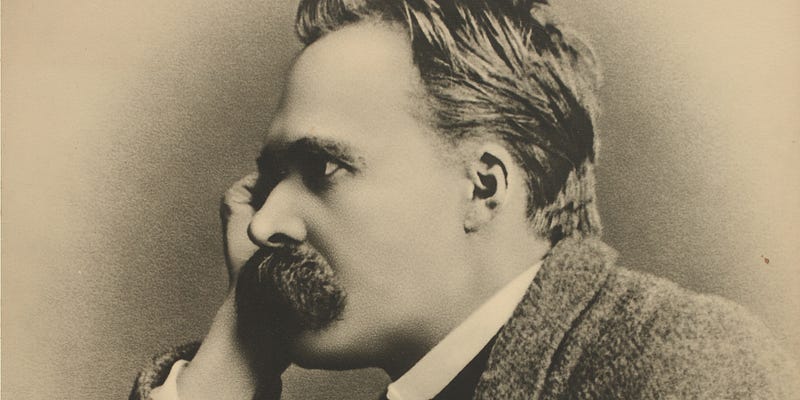
When we don’t ground our lives in proper ideals, our animalistic tendencies subconsciously take over and we succumb to egotistical behaviors — what Nietzsche would call, “human, all too human.”
The stark reality is that we can’t continue on this path. The old model of learning certain technical skills early in life and then applying them for decades — even with incremental upgrades — is utterly obsolete.
Realize what the likes of artificial intelligence, cloud services, and venture capital-backed startups are doing: companies are out to make your knowledge and abilities irrelevant. It’s not malicious, but instead, this is our species’ natural evolution as we become more technologically-advanced. Most skills that are teachable and repeatable are digitize-able, and our capabilities for porting skills from human to machine are rapidly evolving.
Compared to recent decades, the technical skills you learn inherently have a short shelf life, and those expiration dates are only moving closer to the present. You can’t protect what you currently know — it will be overtaken. Instead, you’ll need to hone a different — more perennial — skillset.
Another issue with our learning is that we aren’t aiming correctly. Too much focus is on technical skills and near-term results. We obsess over learning this programming language or that SEO marketing technique. Correct, you might produce some degree of wealth (in a financial sense), but this approach often leads to superficial feelings of accomplishment and a wanting for something deeper and more meaningful later in life.
We fail to embrace the life journey that’s worth traveling: finding a pathway that is full of peace, wisdom, love, and service.
Look around — do you truly admire the stressed-out billionaires of the world? Or do you actually admire the at-peace minimalists living by the beach and helping their local communities?
The question, then, is two-fold:
- What skills can I develop that are impervious to technology’s encroachment?
- What skills set me up for living in a higher state?
The answer is the same for both questions. It’s simple but takes real courage to pursue.
Accelerating the development of later-in-life skillsets
“Those who aim at great deeds must also suffer greatly.”
— Plutarch
The grandmother holding family court in her rocking chair. The politician retired on his farm, who’s fervently called back into service by the people who need him. The bartender who mixes the perfect martini and then leans in to listen and offer just the right perspective.
What do these people have in common? They’re all versions of the enlightened sage. They realize what’s in and out of their control, they’re trustworthy, they admit their mistakes and learn from their failures, and have a true understanding of life’s priorities.
You don’t know their whole story, but it’s clear they’ve endured significant hell in their lifetimes and they’ve emerged far stronger.
Through hard work and a lofty aim in life, these wise folk created a workable foundation in Stage 2 (wealth and family) and crossed the threshold into Stages 3 and 4 (love and service). This rare breed of individuals can slow down their life experience, grasp the interconnectedness of the world, and appreciate the gift of time they have left. They dutifully use their accumulated wealth and wisdom to help family, friends, and people in need.
We can all get there, and it doesn’t have to take decades.
Evolving to a higher state requires developing certain skills along the way — perennial skills. More important than the “point in time” technical talents that might prove valuable for a short period in life, we must develop skills along these lines:
- Personal resilience: being able to handle adversity, trauma, tragedy, stressors, or threats, and growing stronger for going through the experience
- Emotional intelligence: identifying and managing one’s own emotions, as well as the emotions of others
- Knowledge accumulation: having routines that take you broad and deep in your learning — especially through reading (As Jim Mattis wrote, “If you haven’t read hundreds of books, you are functionally illiterate, and you will be incompetent, because your personal experiences alone aren’t broad enough to sustain you.”)
- A kind and empathetic ear: putting yourself in another’s shoes–understanding the other’s perceptions and feelings from their viewpoint
- Clear and concise communication: through written and verbal means, convey well-reasoned viewpoints backed by the proper emotion for the situation
These skills will stand the test of time, regardless of the latest trends or crises. In developing them, you’re able to transcend the contemporary and operate in the realm of the timeless. Those who can self-reinvent over time and evolve to higher states of being have mastered these skills.
None of these abilities come easily. They come from exposing oneself to tough family situations, engaging in difficult feedback sessions, failing at jobs we’re utterly unqualified for, doing tasks that we have “no business” undertaking, and the like. The wise sage battles through these scenarios earlier in life even if it seemed like hell at the time.
“He is no hero who never met the dragon,” Carl Jung famously wrote.
To grow, we too must throw ourselves into the proverbial fire. In a world that grows faster-paced and more digital every day, neat-and-clean, single-tracked paths are limiting. We won’t prosper through a changing environment and we’ll fall short of the deep life.
Aging can mess with your head. It can feel like there’s a ticking clock over your head to “make an impact”, build a nest egg, accomplish certain milestones, or become more Buddha-like. An artificially-created race against time spurs needless anxiety. We can do better.
We must build durable skills that harden us for a shape-shifting future and set us up to live in a higher state. That requires getting comfortable with aging.
Becoming unafraid of aging and death
“Let us prepare our minds as if we’d come to the very end of life. Let us postpone nothing. Let us balance life’s books each day. … The one who puts the finishing touches on their life each day is never short of time.”
— Seneca
David Goggins is a badass. In his best-seller Can’t Hurt Me, he reveals how he endured incredible psychological and physical pains to become an elite Navy Seal and then evolve into one of the world’s top endurance athletes. To do this, Goggins had to “callous the mind” — a process of attacking what he was afraid of to become incredibly resilient against its potential shocks.
Psychologists call this desensitization — the concept of repeated exposure to something terrifying or vile to the point where it seems ordinary, not scary. And this works for aging too.
For centuries, Stoic philosophers have embraced and practiced Memento Mori — a reflection on mortality. Dating back to Socrates, these exercises are meant to ground oneself that we’re all going to die, and we should let that guide what we say and do in life. When Roman generals would lead a parade through the streets after a great victory, an aide from behind would be whispering, “Remember, thou art mortal.”
Aging is important because it aligns with the passage of time. It takes time to go through the trials and tribulations of life to graduate to higher states of being. As we age and develop important new skills, we transform. As Marcus Aurelius said, “every transformation is a kind of dying.” We shed our old skins and become entirely new and more capable people.
We can certainly focus and expedite the development of enduring skills, but it takes time and a fearless mentality to hone them.
Conclusion
There are very few skills that will endure for decades into the future. For example, the available space for data scientists and programmers will only shrink as tech companies automate large amounts of today’s needs, allowing only the elite talent to remain. Not to sound dystopian or pessimistic, but for any repeatable and non-creative task, economic forces will continue to facilitate the rise of the machines and the displacement of humans.
So, this leaves us all with a choice. Honestly, it’s a beautiful opportunity that we should all be optimistic about.
Each day review your inner “discomfort” meter. Seek out those “perennial skill” opportunities that scare you and tackle them until you’ve mastered the fear. Take a chance, step-by-step, day-by-day. The experiences and skills will stack over time — you will create the means for a good life (Stage 2) and you will begin living in a higher state (Stages 3 and 4). Stay the course. Someday you’ll look back and smile warmly upon your brave, young self — that person who was simply seeking to be a better human being. The results will be there, in wealth and wisdom.
Let’s stay close: matthewdoan.com, Medium, LinkedIn, & Twitter.