
Learning from Complex Living Systems
Nature has so much to teach us — about all aspects of life

The Age of Enlightenment.
Just the name alone makes you wish you could live during that period. Imagine how fascinating it would’ve been to hear about the scientific breakthroughs of the day: Galileo demonstrating the measurability of the universe, René Descartes telling about the divide of mind and matter, or Isaac Newton’s grand mathematical synthesis showing the world as a perfect machine.
This era gave birth to some of the most revolutionary and long-lasting theories and disciplines in the history of mankind, most of them grounded in impressive quantification and measurement. These famous ideas are taught to us in school, and ironically, they might be the most crippling concepts facing society today.
The problem with Enlightenment-era thinking is that it’s extremely mechanistic. Philosophers and scientists during the 16th and 17th centuries sought to establish beautiful mathematical theories that could explain the universe, covering everything from physics to social and political phenomena. By looking at the world in a mechanistic way, scientists figured we could decompose physical things (a person, a tree, economics, etc.) into their component building blocks to understand how each piece-part works and interacts with other parts. This gave rise to seeing everything as a machine.
Leading thinkers at this time argued the entire world followed mechanical laws, which we could therefore decipher and use to predict outcomes and intervene as necessary. Unfortunately, after accepting these theories for hundreds of years, we’re now seeing many limitations and failures in this thinking. When we isolate our thinking about a problem and ignore broader connections, influences (e.g., cascading effects or psychological and social impacts), and solution options, that’s when our “perfect” models fail and things break.
Instead, we need to start interpreting our complex world with a systemic mindset.
Complex systems are everywhere: you, the building you’re in, your job, and the political body that governs your territory. However, they’re intrinsically difficult to model due to a web of interdependencies and dynamic interactions that run the system and interface with the broader environment. Using this framing, it’s useful to think of a complex system more like an ecological ecosystem than a machine.
As the “systems thinking” expert Fritjof Capra points out, we can learn from ecologists and their study of living systems to inform how we approach most challenges in life (e.g., holistic mind-body medicine, business arrangements, international trade policy, technology strategy, friendships).
Nature — through complex living systems — tells a very sensible story.
We can’t afford to keep viewing our toughest challenges through a mechanistic, piece-by-piece lens. That’s how the 2008 Financial Crisis happened, that’s often why wars start, and that’s why we’re struggling mightily with climate change. It’s even why many startup businesses fail — because leaders don’t properly learn and adapt to the broader system they’re seeking to play in.
It’s time that we let nature guide us, in all that we do.
Viewing the world as a complex living system
“The whole is greater than the sum of its parts” — Aristotle (attributed)
It’s undeniable that we live in a globally interdependent and hyper-connected world, and that trend will only increase. Almost every situation and environment is alive and constantly changing. How then can we depend solely on static models to guide our actions? Answer: we can’t.
Whether you’re setting business strategy, implementing cybersecurity, or nurturing a relationship network, you need to engage that challenge with a “flywheel” mentality. “Setting and forgetting” a decision for long periods of time doesn’t work because (a) there’s a good chance your decision is wrong or (b) failures will manifest in your system due to lack of care or unforeseen influences.
Instead, we need to constantly dance in and out of the environment, reading it, analyzing it, and taking action within it. It’s a fighter pilot mentality of constantly observing, orienting, deciding, and acting. Continually gain new knowledge about your living world and orchestrate calculated tweaks within it.
Regardless of your challenge, it’s helpful to frame what a complex living system is so that you can better recognize and engage it. Some characteristics include:
- Structure of the whole is different from properties of the whole: The Cartesian view that complete structural knowledge equates to holistic knowledge is false. When individual units team up as a focused and interacting system, the outcome is bigger, different, and more impressive than any single unit can produce on its own (e.g., think complex military operations or motor control in the human body).
- No “hard” outer boundaries: The outer edges of a complex living system are blurry. If you model it out far enough, you can probably connect anything to anything. An untold number of forces can affect the system you’re working within — even those seemingly at or beyond the edge. We need to make bets on influencing the important variables we have line-of-sight on.
- Multi-level systems: Complex living systems naturally form as nested, multi-level structures within themselves. For example, an animal has organs, each made of tissue, comprised of cells. Separately, a business has a board of directors, which guides C-suite executives, who manage individual business units, which individually produce valuable outcomes.
- Continuous energy flow and evolution: Living systems are always “working” to stay alive. And since they’re regularly confronted with new environmental variables (e.g., weather, political turmoil, economic collapse, competition), they must adapt to outpace threats and maintain a state of equilibrium (thank you, Darwin).
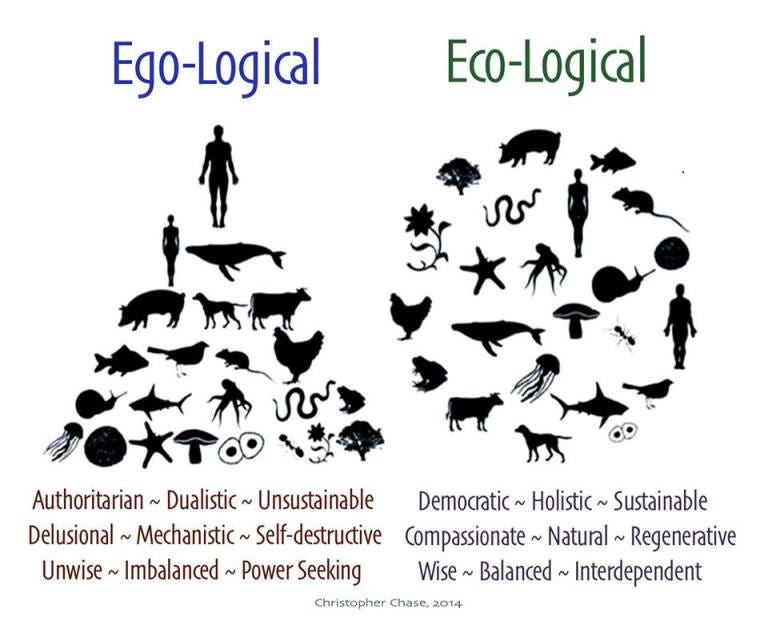
When we step away from ego and start seeing our environments as complex living systems, we have more ability to control them. But if we ignore this reality and keep a narrow view, massive failures can unfold.
Understanding large-scale failures
System failures happen constantly. In healthcare, people lose battles with disease. In the intelligence community, we don’t foresee impending terrorist attacks. In physical infrastructure, bridges collapse. Or maybe our significant other breaks up with us. The examples are everywhere and every day.
As the saying goes, hindsight is 20/20. Post-incident, our brains attempt to pinpoint the exact (singular) failure that led to the problem. We ponder the reasons: maybe the doctor didn’t order a specific test, a system got hacked, a maintenance check was skipped, or you were a jerk to her friends. We use an engineering (mechanistic) approach to decompose the issue and find “the reason”. But in reality, incidents within complex living systems usually have an equally-complex, systemic cause.

Dr. Richard I. Cooke wrote a stunningly direct and impactful paper on how complex systems fail. In it, we can glean several useful insights:
- Complex systems are intrinsically hazardous: The diverse, voluminous, and interdependent nature of these webbed systems means there are lots of failure points, and an event in any one area can have negative and cascading effects upon the entire system.
- Catastrophe requires multiple failures — single point failures are not enough: When we don’t truly understand how the components of a system interact, we can’t determine if one failure type is more critical than another. That usually results in people not implementing vital safeguards or overinvesting in excessive ones. The layered safeguard approach is ideal, but the decision process requires balancing variables like cost, speed, and effectiveness.
- Post-accident attribution accident to a “root cause” is fundamentally wrong: “Perfect storms” manifest when certain Black Swan-ish variables align, producing catastrophic outcomes. Root cause analysis and other postmortem techniques attempt to discover the trigger issue (aka, the “deepest why”). But in reality, it’s often a combination of “hard” (e.g., technical, physical) and “soft” (e.g., social, cultural) forces that swirl together at a timely moment and ignite a cascading set of events that lead to system failure.
- All practitioner actions are gambles: Context is king. While there are a handful of problems (e.g., within physics) that can be engineered away, most decisions that people make upon a system are gambles. Nothing is guaranteed to work. Instead, we need to work through deep inquiry and use holistic thinking to better understand the system. We’ll never be right, but we can always be better. And since “human practitioners are the adaptable element of complex systems,” we need to be very thoughtful. Multiple (diverse) minds are better than one when staring down a wicked systemic challenge.
Moving from mechanistic to systemic first and foremost requires a mindset shift. To be successful in orchestrating and tuning complex systems to our advantage, we need to get comfortable in learning from other disciplines and thinking like nature works. Armed with that mentality, we can create more value and better manage risk in a wide range of situations.
Shifting to systems thinking
“When we try to pick out anything by itself, we find it hitched to everything else in the universe.” — John Muir

There are certainly tactical adjustments to make in working within complex living systems, but it starts with asking a different (and often bigger) question. Too often, we’re staring myopically at the here and now. In that situation, we start with limiting questions, such as “how do we double our client base?” or “how do I get that person to like me?” Such approaches naturally deliver limited, inconsequential, or short-term results.
What does a better top-level question look like? Here are some examples:
- Business strategy: What difference are we seeking to make in this world?
- Technology: What outcomes am I seeking from the machine?
- Personal well-being: What is health?
- Relationships: What types of associations do I value most and why?
- Self: What are the attributes and habits of the person I want to be?
- Social media: What emotions do I want to feel by engaging in this platform?
Once you’ve improved your question, work backward. You’ll notice quickly that meta-questions like this naturally involve complex systems, and you’ll have to carefully navigate them to get what you want. As noted earlier, you’re generally seeking to either create value or manage risk within all these spheres, oftentimes doing both at once. From a day-to-day perspective, some tactical viewpoint enhancements to get you from mechanistic to systemic include moving from:
Part….to whole: Having only structural knowledge of one or more parts, and even understanding their properties, is like only knowing the size and color of one Lego brick. In those instances, we can’t see how it plays a role in a much larger system.
Objects….to relationships: In complex systems, the interconnections and processes that take place between objects are often more important than the objects themselves. Don’t ignore the seams. Find the cracks in the system, where the handoffs take place and where no one wants to claim responsibility (a.k.a. “no man’s land”). Strengthen the bonds between objects at these key points in your system.
Static….to dynamic: The Industrial Revolution brought us classical management theory, obsessive process design, and an engineering mindset — all needed then. But now, our globalized, shape-shifting world demands a level of agility and adaptation that we as individuals and organizations need to embrace. On a loop: map your world, locate your variables, watch them closely, and re-calibrate your moves.
“Right”….to “right for now”: See above; avoid decision lock-in. Using a strong directional aim, live in the present. A continuous flow of present moments is all that we have. Lean on your accumulated knowledge of the system, weigh your options, and make the best move for right now. Since most decisions are reversible, you can often walk back the ones that aren’t panning out. Always have people watching and weighing your decision options.
Deep expertise….to diverse viewpoints: Complex living systems are intrinsically defined by features of community, variety, and relationships. That said, bringing a singular or narrow viewpoint to the decision table is suboptimal. When seeking to understand or exert influence over a system (e.g., personal financial security, business partnerships, community culture), as author David Epstein points you, you want range; that breadth of thinking in place that’ll robustly explore and devise options for your situation.
The Enlightenment brought us intellectual and philosophical ideas that revolutionized how we see the world. Many of those ideas will sustain for centuries to come, yet they don’t explain everything. Breaking free of the mechanistic mindset and embracing systems thinking will help explain and improve many of the most challenging situations that we face today.
Want to stay in touch? Follow me on matthewdoan.com, Medium, LinkedIn, and Twitter.


