
How The Beauty Industry Exploits Your Insecurities
It is not just advertising.
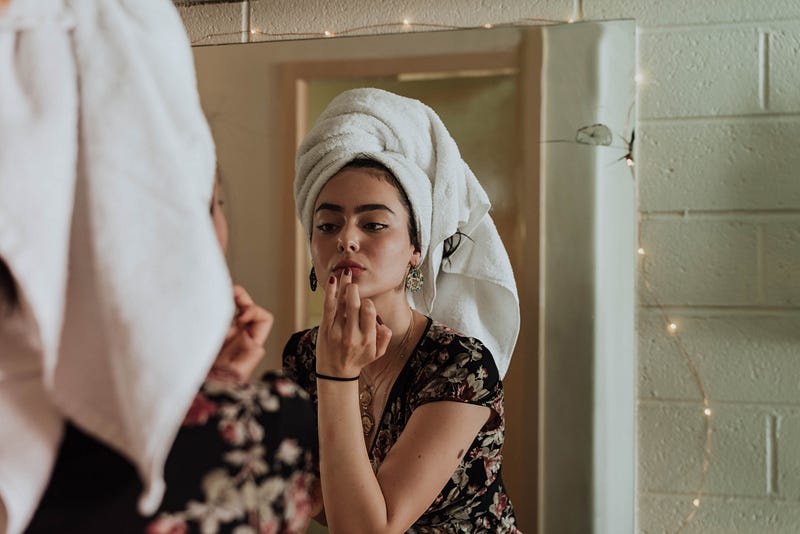
This is what every beauty ad sounds like.
Do you have pimples on your face?
Use this pimple cream that will make them disappear in 5 seconds. *I wish*
Do you have stretch marks on your legs?
Buy this gel cream which uses a bunch of “scientific” ingredients to make us sound like we know what we’re talking about.
Do you have natural body hair?
Use this shiny new razor to shave it all off which is actually just as effective as our original razor.
And gosh forbid, your getting older and have wrinkles on your face!?
Buy this anti-wrinkle cream even though getting wrinkles is a perfectly normal part of the aging process.
But we are still going to tell you otherwise because …. PROFIT!
This is how the beauty industry exploits your insecurities.
They Create False Beauty Insecurities
Do you know what the beauty industry is great at doing?
Creating fake beauty problems and selling you the solution.
They use a simple marketing strategy of creating false beauty ‘flaws’ and selling you products to fix those ‘flaws’.
They name and shame you, if you have any of the following;
- Acne
- Blackheads
- Stretchmarks
- Body hair
- Large pores
- Wrinkles
- Dark or patchy skin
And any other beauty mark which they deem as ‘flawed’.
Ironically, these ‘beauty flaws’ are a normal part of the human body. It’s normal to have acne, stretch marks, and body hair. You are perfectly normal if you have tanned skin or under-eye bags.
These things are part of being human but the beauty industry doesn’t want you to think that. In fact, they want you to believe these beauty marks need to be fixed.
The beauty industry needs you to be insecure so they can keep selling you their products. They don’t want you to feel confident about yourself otherwise, if we all thought we were beautiful, who would they sell to? *Gasp*
Well, How Do They Make You Insecure You Ask?
The beauty industry creates unrealistic beauty standards because they know you can never live up to them.
You will never look like a Victoria’s Secret Model or a Kardashian or even a K-pop star. Why?
Because these models and celebrities cannot even live up to their own beauty standards.
For example, the rise of plastic surgery amongst K-pop stars has been known throughout the entertainment industry.
Many K-pop stars like Uee from After School and JooE from Momoland have undergone nose surgery and mono-lid surgery to fit the ideal standard of beauty in Korea. Celebrities need to have doll-like features of big eyes, a small face, a slim body, petite nose, and plump lips.
The rise of Face Tune, Snapchat filters, and photoshopping has also created the illusion of a ‘perfect face’. These filters will blur out pores, enlarge your eyes, slim your nose and sharpen your jawline. Other filters will even add makeup like lashes, lipstick, and mascara.
However, this widening gap between your natural face and your filtered face creates dysphoria. In fact, medical experts suggest filters can contribute to the development of Body Dysphoric Disorder (BDD) which consists of a preoccupation with your perceived beauty flaws, that may appear non-existent to others.
This toxic combination of beauty messages seeks to derail your self-esteem and reinforce the message that in order to be beautiful, you need to buy beauty products.
They Sell You A ‘Dream’
The beauty industry doesn’t simply sell you products to fix your perceived beauty flaws. At the core of it, beauty companies are selling you false hopes and dreams.
The hope that if you use their new mascara, it will make you feel more beautiful.
The hope that if you buy their lip kit, you will look like them on Instagram. *Cough Cough Kylie Jenner*
The hope that if you use their acne cream, it will magically make your pimples disappear.
They sell you the dream that when you look beautiful, suddenly all your insecurities will stop. You will start becoming more popular, people will want to be around you. Your grades will improve and you will start loving your job again. Your relationship will be fixed and all your life’s problems will be gone.
But will all that change from simply buying their new beauty cream? *No
The truth is these companies target the core of our human desires. We all want to feel loved and accepted by others. We want to feel beautiful in our bodies. We want to look in the mirror every day and feel confident in our appearance.
And that is what the beauty industry sells, false confidence.
The Mask Of Wearing Makeup
Did you know 44% of women feel unattractive without any makeup on?
So almost half of us feel that we need to wear makeup before leaving the house, even to go grocery shopping.
14% of us say we wake up earlier to put on makeup so our partners don’t see us barefaced.
6 out of 10 women also won’t consider working without makeup on, convinced that not wearing makeup could damage their career prospects.
It seems that we, as women feel worried that people will judge us for the way we look rather than who we are. There’s a sentiment where wearing makeup is seen as a mask to cover up our perceived beauty flaws.
We feel we need to wear makeup to be seen as attractive because the beauty industry has told us our natural faces are not ‘good enough.
They Give You False Hope In Their Products
Deceptive Beauty Marketing
Researchers did a content analysis on beauty claims looking at buzzwords like “award-winning product”, “clinically proven” or “dermatologists recommend” and categorized these claims based on their ambiguity and scientific truth.
Can you guess what they found?
Only 18% of the 757 claims lived up to their advertised features.
That leaves 82% of advertising claims questionable or downright false.
While the FDA monitors the beauty industry, they can only assure the products are safe. This means we, as consumers need to know the ingredients in our beauty products and research them before we buy them.
Botched Plastic Surgery
In 2020, there were 15.6 million cosmetic procedures in the US alone. However, one in five people who had plastic surgery were not happy with their results. Some even have to undergo further surgery to repair or improve botched surgeries from unqualified surgeons also known as ‘cowboys’.
For example, a famous cosmetic surgeon in Australia, Dr. Daniel Lanzer was exposed for having dangerous practices in his clinics.
A video showed Dr. Lanzer’s staff singing and dancing to music while performing liposuction on an unconscious patient. There was also a lack of hygiene and sterilization.
Disturbing images revealed human fat stored in kitchen fridges, syringes next to drinking water bottles, and surgical instruments in suitcases. Employees were also told to take home the human fat in plastic bags before inspections and bring them back later.
A nurse, Kathy Hubble who attended the clinic for liposuction on her legs and abdomen ended up in hospital with cellulitis, a serious bacterial infection.
Unfortunately, she still suffers from chronic pain today.
It seems that we will go to great lengths to feel beautiful but that can also come at a cost to our health.
What Are We Doing About It?
The Rise Of #Nomakeup Trend
The #nomakeup trend or the ‘natural’ look has become increasingly popular. The ‘no makeup trend focuses on achieving a natural, effortless look to make it appear like you are not wearing makeup. These trends claim to be empowering women by removing the pressure to look made up all the time.
Ironically, it actually costs time and money to look natural. You still need multiple cosmetics to achieve that ‘natural look’.
Despite the rise in natural makeup trends on social media, there is still an increase in cosmetic sales. Author, Rosanna Smith suggested the no-makeup movement actually heightened a major tension that women have to manage; the pressure to be attractive and maintain beauty standards but then women are also ridiculed and judged for putting in the effort to maintain those beauty standards.
These beauty trends encourage us to present our appearance as natural when in reality we may have used cosmetics to create that ‘natural look.
It’s the classic, “You need to look good but not like you tried” dilemma.
The beauty industry emphasis glamourous yet low effort, natural yet beautiful while forgetting the majority of us still feel we need to use makeup to achieve that ‘effortless’ look while pretending we didn’t put in any effort at all.
The Rise In Acne Positivity
The movement #freethepimple seeks to destigmatize acne and empower people to embrace their skin, pimples, and all. Celebrities like Kendall Jenner became more open about their acne struggles which continued to normalize acne and pimples.
However, the mainstream media continues to show clear-skinned, blemish-free models, despite those models also having acne struggles.
In fact, acne is one of the most popular skin conditions with 50 million Americans experiencing it from ages 11 to 30.
Fortunately, some pimple sticker brands like Zitsticka launched a photoshoot campaign with models who actually have acne. The models all had diverse backgrounds and body types. The photographer, Ashley Armitage also said the makeup artist did not cover any pimples or did any skin retouching, which is very rare for beauty advertising.
So things are slowly changing in the beauty industry, companies are starting to become more diverse in their marketing. However, our culture still places pressure on women to look attractive which is why we continue to buy their products.
Conclusion
Here is a really cheesy quote.
“Another person’s beauty is not the absence of your own” — Unknown
We all have beauty insecurities. We all compare ourselves to others. It’s human nature.
But instead of thinking, we are ugly because we don’t look like a supermodel, we should embrace our imperfections and flaws.
Get off social media if you notice yourself spiraling into a comparison state.
Find your strengths. Being beautiful is not just about your appearance but also your personality and who you are as a person.
Accept yourself for your strengths and weaknesses(as cliché as that sounds). Having beauty marks and imperfections is what makes people unique.
And as the leader of one of my favorite artists, Namjoon from BTS once said “No one is born ugly, we’re just born into a judgemental society”.
Check out my YouTube channel for more insights!


