avatarDani Mini

Free AI web copilot to create summaries, insights and extended knowledge, download it at here

2845

Abstract

xtreme called “socialism” inexorably leads to extreme capitalism (and the extreme inequality many who denounce capitalism decry).</b></p><p id="0322">I’ve come to this conclusion as an observer of Venezuela, my home country. My examples and inferences are based on such observations and they continue to evolve.</p><h1 id="8302">Too much central planning ruins any economy</h1><p id="d0f1">When government officials in a <i>socialist</i> (communist, centrally planned, or whatever you may call it) economy implement widespread controls and plans, they not only eliminate incentives for businesses to supply what people need, they also create incentives for individuals to cheat and engage in massive corruption.</p><p id="4365">This happened in Venezuela when the government began to take over private businesses and implemented exchange controls and price controls.</p><p id="edba">The central planning policies created gaps between regulated and “real” prices, between what people wanted and what was available (known as supply and demand).</p><p id="860f">Ultimately, extreme socialism lead to scarcity of basic goods and the emergence of the black market. This article details the process:</p><div id="2019" class="link-block"> <a href="https://readmedium.com/two-socialist-policies-that-ruined-an-economy-28c3fd37669e"> <div> <div> <h2>Two “Socialist” Policies that Ruined an Economy</h2> <div><h3>It happened in my home country. It can happen anywhere.</h3></div> <div><p>medium.com</p></div> </div> <div> <div style="background-image: url(https://miro.readmedium.com/v2/resize:fit:320/1*LRa3jlRZZbYqU0p0qhe9Aw.jpeg)"></div> </div> </div> </a> </div><p id="c42c">The point, the big takeaway, is that large scale central planning just does NOT work.</p><p id="aeb7">Governments can manage a bit of interference. It may even be necessary in specific situations or industries. <b>But across the board planning always fails</b>. It has been proven time and again.</p><h2 id="fa26">And here’s where, via the black market, the hypothetical line with socialism all the way to the left and capitalism all the way to the right begins to bend.</h2><figure id="377d"><img src="https://cdn-images-1.readmedium.com/v2/resize:fit:800/1*-VZmkGDJp-GpVI39YVadDw.png"><figcaption>Created by Author on <a href="https://www.canva.com/">Canv</a>a</figcaption></figure><p id="a82a">Venezuela’s economy has surely shrunk, but it hasn’t disappeared of course.</p><p id="4e73">The majority of Venezuela’s population is now poor. A small fraction has <i>just</i> enough money, while the tiniest fraction continues to have a lot.</p><p id="9fd7">This last fraction includes, among others, forei

Options

gn diplomats, some astute yet honest businesspeople, those with lots of old money, and those with families overseas who send them money. It also includes (always includes!) those in high government positions or closely connected.</p><p id="13f2">They don’t want for basic goods and services. In fact, they don’t want for mansions, gourmet food or fancy parties. In order to have it all, though, they must buy their stuff through the black market. (Often, they run much of this black market!)</p><p id="efc1">The black market became the main marketplace allowing a profit, so more and more goods and services began to be traded there. <b>No sane person will sell you anything at a loss over and over and over again.</b></p><p id="57a8">In time, every sector of society necessarily ended up participating in the black market.</p><p id="b7b9">Because the black market runs in the trusted dollars, the dollar eventually became the country’s <i>de facto </i>currency. At first, the government decried the black market and the dollar. Then, it looked the other way. Ultimately, it welcomed both.</p><p id="8035">The black market is nothing but a free market that’s utterly unregulated (and illegal) — which makes everything more expensive and less reliable. Who will you complain to if the black market gas you bought had cooking oil mixed in?</p><p id="a614">Will the guy with government connections you bought pasta from give you your money back if the pasta goes bad the next day?</p><p id="5f1d">What happened to the promise of socialism? Well, most people are now equally poor. In this sense socialism did deliver on its promise of equality.</p><p id="3c7f">What happened to everyone having enough to eat and access to basic services? Well, you can have it all if you can buy it, in dollars, in the capitalist black market.</p><p id="1234">The economy has gone full circle.</p><figure id="0e2c"><img src="https://cdn-images-1.readmedium.com/v2/resize:fit:800/1*TKLispkBQAma3dRI8e5IsA.png"><figcaption>Created by Author on <a href="https://www.canva.com/">Canva</a></figcaption></figure><p id="c88d">And this is why I’m neither a socialist nor a capitalist. I fall somewhere in the middle, and so do you, whether you call yourself a socialist or a capitalist or plan to vote for Trump or Biden.</p><figure id="cc00"><img src="https://cdn-images-1.readmedium.com/v2/resize:fit:800/1*w1V0ZmjfXg9Ov43Klk_BQA.png"><figcaption>Created by Author on <a href="https://www.canva.com/">Canva</a></figcaption></figure><p id="d8d0">How I wish there was a unique name for every point along the capitalism-socialism line!</p><p id="7061" type="7">And this is why I’m neither a socialist nor a capitalist. I fall somewhere in the middle, and so do you, whether you call yourself a socialist or a capitalist or plan to vote for Trump or Biden.</p></article></body>

How Socialism Turns into Capitalism

And why I’m neither a socialist nor a capitalist
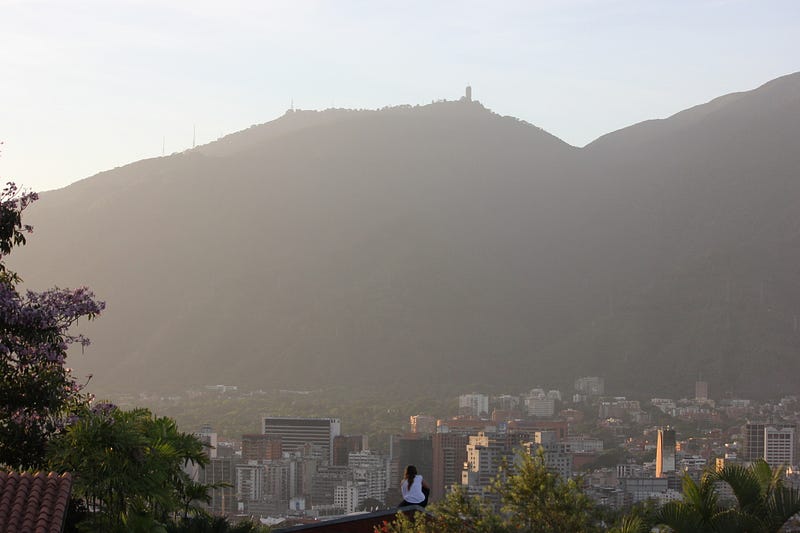
Photo by Fernando Gago on Unsplash

In November, I’m voting for Joe Biden. Though some would label anyone voting for a Democratic candidate as socialist, I assure you, I am not, at least not in the sense I’m about to explain. Neither are the vast majority of people who cast a vote for a Democratic candidate.

This article will, in fact, argue against socialism and show its inextricable link to extreme capitalism.

Since people use the words capitalism and socialism to mean different things, I must begin with what I mean by each term in this article:

Socialism: public ownership and administration of the means of production (facilities, tools, machinery, raw materials and the like), whether through collective or government ownership. Socialism entails central planning of economic activity.

Capitalism: Private or corporate ownership and administration of the means of production. Capitalism entails that the market (lots and lots of private decisions) govern economic activity.

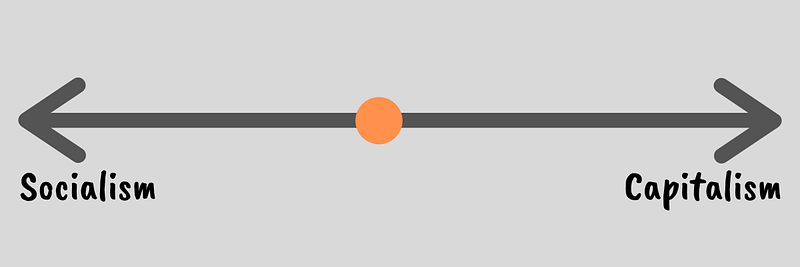
Here’s a simple representation:
Created by Author on Canva

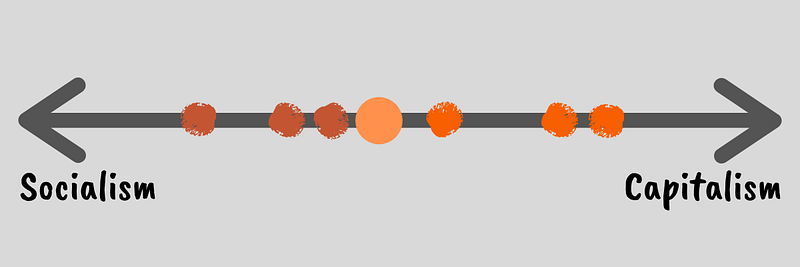
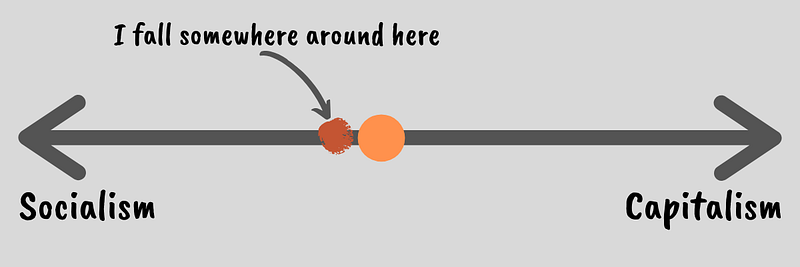
Even though some would call everything to the right of the middle capitalism, and everything to the left socialism, most people’s views on what model they support fall at various points along this line.

In the same way, no country’s economy is either 100% socialist or 100% capitalist. National economies and individual views are scattered along this hypothetical line and where they are on this spectrum changes over time.

How I wish there was a unique name for every point along the capitalism-socialism line!
Created by Author on Canva

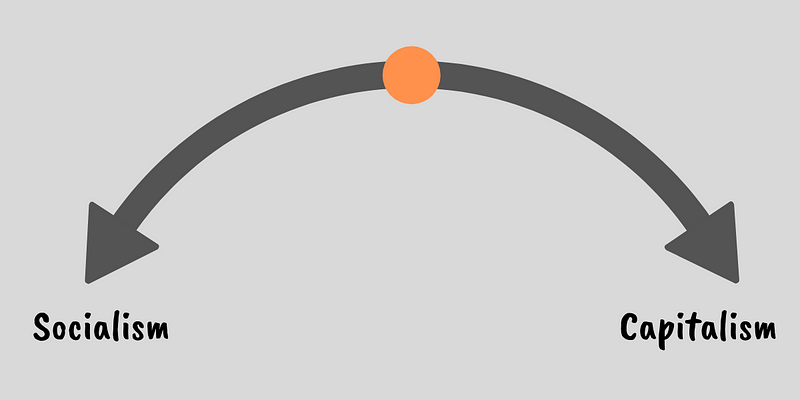
Both extremes are fraught, and, paradoxically, there comes a point where getting too close to the extreme called “socialism” inexorably leads to extreme capitalism (and the extreme inequality many who denounce capitalism decry).

I’ve come to this conclusion as an observer of Venezuela, my home country. My examples and inferences are based on such observations and they continue to evolve.

Too much central planning ruins any economy

When government officials in a socialist (communist, centrally planned, or whatever you may call it) economy implement widespread controls and plans, they not only eliminate incentives for businesses to supply what people need, they also create incentives for individuals to cheat and engage in massive corruption.

This happened in Venezuela when the government began to take over private businesses and implemented exchange controls and price controls.

The central planning policies created gaps between regulated and “real” prices, between what people wanted and what was available (known as supply and demand).

Ultimately, extreme socialism lead to scarcity of basic goods and the emergence of the black market. This article details the process:

The point, the big takeaway, is that large scale central planning just does NOT work.

Governments can manage a bit of interference. It may even be necessary in specific situations or industries. But across the board planning always fails. It has been proven time and again.

And here’s where, via the black market, the hypothetical line with socialism all the way to the left and capitalism all the way to the right begins to bend.
Created by Author on Canva

Venezuela’s economy has surely shrunk, but it hasn’t disappeared of course.

The majority of Venezuela’s population is now poor. A small fraction has just enough money, while the tiniest fraction continues to have a lot.

This last fraction includes, among others, foreign diplomats, some astute yet honest businesspeople, those with lots of old money, and those with families overseas who send them money. It also includes (always includes!) those in high government positions or closely connected.

They don’t want for basic goods and services. In fact, they don’t want for mansions, gourmet food or fancy parties. In order to have it all, though, they must buy their stuff through the black market. (Often, they run much of this black market!)

The black market became the main marketplace allowing a profit, so more and more goods and services began to be traded there. No sane person will sell you anything at a loss over and over and over again.

In time, every sector of society necessarily ended up participating in the black market.

Because the black market runs in the trusted dollars, the dollar eventually became the country’s de facto currency. At first, the government decried the black market and the dollar. Then, it looked the other way. Ultimately, it welcomed both.

The black market is nothing but a free market that’s utterly unregulated (and illegal) — which makes everything more expensive and less reliable. Who will you complain to if the black market gas you bought had cooking oil mixed in?

Will the guy with government connections you bought pasta from give you your money back if the pasta goes bad the next day?

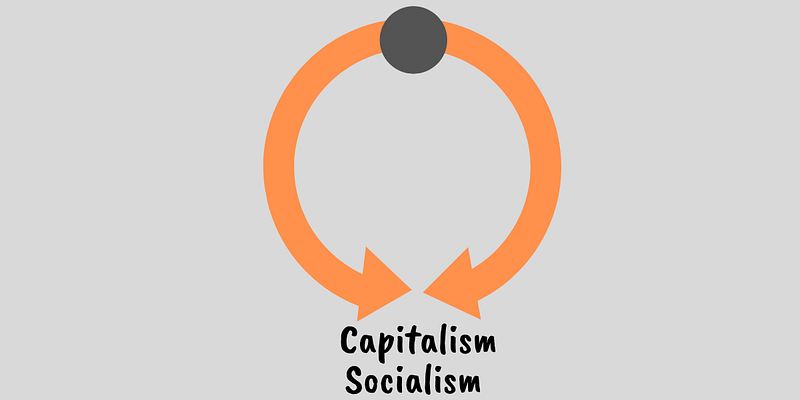
What happened to the promise of socialism? Well, most people are now equally poor. In this sense socialism did deliver on its promise of equality.

What happened to everyone having enough to eat and access to basic services? Well, you can have it all if you can buy it, in dollars, in the capitalist black market.

The economy has gone full circle.
Created by Author on Canva

And this is why I’m neither a socialist nor a capitalist. I fall somewhere in the middle, and so do you, whether you call yourself a socialist or a capitalist or plan to vote for Trump or Biden.
Created by Author on Canva

How I wish there was a unique name for every point along the capitalism-socialism line!

And this is why I’m neither a socialist nor a capitalist. I fall somewhere in the middle, and so do you, whether you call yourself a socialist or a capitalist or plan to vote for Trump or Biden.

Economics
Ideas
Venezuela
Politics
Election 2020
Recommended from ReadMedium