
How Self-Care Became a Point of Privilege Countering Activism
Assessing a balanced life in an unbalanced society
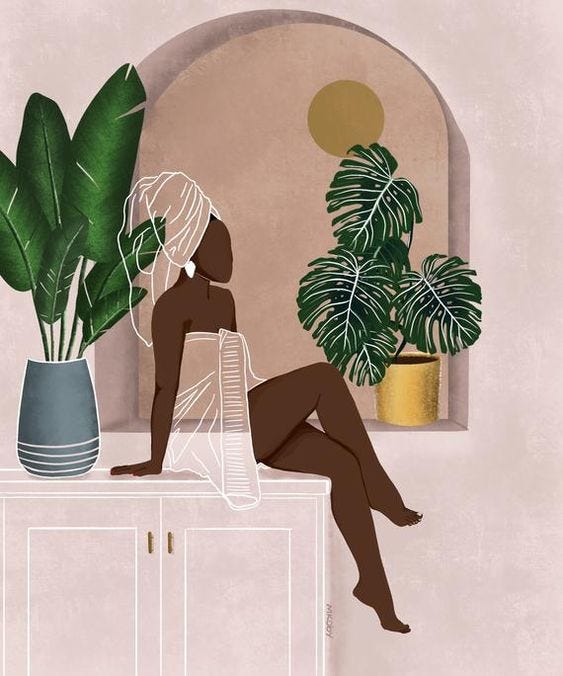
Since ancient times, women have found ways to care for their bodies and minds. They participated in a synergy of self-care and action, with only wealthy women choosing one before the other. Despite precedent, we feel the impact of current events, and this year came with many challenges. Black women fought against racial injustice in America and throughout the world. They experienced blatant instances of misogynoir and sociopolitical fallout from the Coronavirus. These complex issues set the stage for many pundits and self-help gurus to advocate for indulging in self-care, prioritizing the self above all else. While self-care will always play an essential role in a woman’s life, there should never be a tradeoff between self-love and social commitments.
Self-care requires taking a pause in the chaotic world and focusing on yourself. While this sounds benign enough, many fail to realize that many self-care activities involve a privileged point-of-care for many Black and marginalized women. Not every woman can take off work because she has a headache or sees a stressful news story.
Research shows that Black women have higher self-esteem rates than other women, and 59% consider themselves beautiful. This number is stark compared to 32% of Latinas, and 25% of white women, respectively. While self-help gurus often point out how important self-care is, they often leave out the fact that most Black women care about themselves.
Black women have a deep love and appreciation for themselves already. Self-care is an expression of self-love, but obviously, Philautia is not the problem. Many Black women experience harsh living conditions and thus, do not always have time to lounge around and bask in it. Nevertheless, research indicates the love is there.
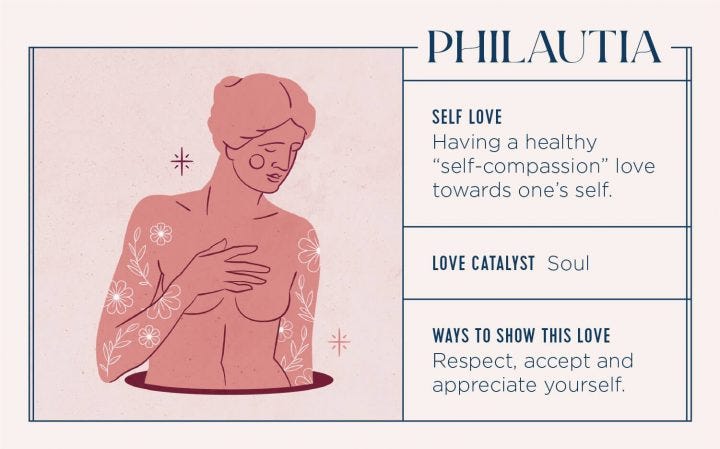
Women have considerable responsibilities in society, from managing their careers, households and shifting the sociopolitical tectonic plates beneath us. If they stop providing care for their children, partners, community and focus only on themselves, their life will fall apart. Neglecting social responsibilities is not self-care; it’s selfish-care.
There are no ifs, ands or buts about it. Having the ability, time, energy, knowledge and resources to practice self-care is definitely considered a privilege (Goodloe, 2019).
In the aftermath of George Floyd’s death, many started to complain about frequently seeing Black death on their timelines and news cycles. Some pundits insisted that Black people need a break from talking about race and bearing witness to the harmful impacts. However, insisting that people look away from tragedy is the epitome of privilege, turning self-care into apathy.
Having a relaxing afternoon full of facials and cucumber eye treatments will not stop Black men or women from dying unjustly in a system dominated by white voices and antics. Anguish from witnessing death is not equal to the pain felt by those who lose their lives, and prioritizing your feelings before others’ pain reflects indifference.
Encouraging people to check out mentally is not as healthy as it sounds on its face. If you ever got sick as a student, you may have noticed that your work was waiting for you when you returned. Self-care culture works in the same way. After distressing, people get re-stressed when they turn on their phones, television sets, or speak with family members and friends again. If a person is stressed, pressing pause on the stress will not create a dynamic to heal. Instead, it will foster a habit of avoidance.
The key is finding a balance between responsibilities and self-care because when one dominates the other, nothing gets done. While self-care sounds good in a vacuum of space, it comes off as demonstrably dangerous when prioritized above all else. Contrary to popular belief, you do not need always to come first; thinking you do is a privilege.
Black women should not take their foot off of the gas
When gurus advocate for self-care above all else, they encourage escapism. Instead of addressing the conflicts in their lives, self-care culture says to let it all go. Caring for yourself should always be part of your daily life and finding ways to incorporate healthy habits is time well spent. However, speaking about self-care as a counterpoint to actively participating in life is irresponsible and unhelpful.
Black women face an uphill battle in American society, fighting against a pervasive domestic violence and sexual assault culture. Also, Black women make less money than other groups of Americans, even though they have vast experience and more degrees than any other group. Women cannot expect changes without putting in the work to see them happen. Taking your foot off the gas is an excellent strategy if you want everything to stay the same.
When a marginalized group fails to advocate for change, their social status stagnates, and this is the last thing that Black women want or need. Encouraging women to take a break from social advocacy leads to complacency within American society. It means that equal pay takes a back seat to a spa day, that police brutality becomes secondary to getting your nails done. There are consequences to overindulging in self-care, and this is especially the case when the same advocates for self-care aim to discredit the movement towards civil rights advocacy.
Showing up — at work, at home, at protests, in conversations about race — is how many Black folks have been taught to survive (Braithwaite, 2020).
While Braithwaite makes an excellent point about the expectations placed on Black people, her use of the word “taught” implies that other people are teaching Black people to become advocates when, in all reality, advocacy develops from necessity. Black women engage in conversations about race because they are impacted by race every day of their lives. Without advocacy, Black people undoubtedly accept their low current station in American society.
Many progressives and advocates complain that not much has changed since the Civil Rights Movement, but if self-care above all else is the catchphrase that wins the day, I doubt much will change by the end of the Millennials’ days on Earth either. There is a massive problem in promoting apathy in the face of police brutality and systemic racism.
If Ida B. Wells shrunk from shining a light on Black lynchings in the South, the practice might well have continued. She spoke out against injustices, and throughout her life, Wells witnessed Black people tortured to death. White people sold photos of Black lynchings to turn a profit. Can you imagine how different our country would be if Wells and other advocates said, “These issues disgust and frighten me, and I need to focus on myself for a while?”
While the me-first culture seems harmless, this culture produces distance between the Black community and the results they seek. If the group wants to change but indulges in self-preoccupation instead of unity, stagnation wins the day. Similarly, Trump’s America First policy left the country strategically isolated from former allies. Self-help gurus need to keep it real about the flip side of self-care, isolation. An inability to prioritize others, along with your interests, is a weakness, not a strength. In America, Black people live under apathetic governance. The last thing the community needs is people promoting a culture that hinders fruitful progress.
If we withdraw from public engagement now, we aid and abet that which we deplore (Mahdawi, 2017).
Putting your desires, above all else is the epitome of Colonial Civilization. Throughout American history, white Confederates participated in self-care when they fought to maintain the chattel slavery system. After all, they did not want to give up their free-workforce. While Africans slaved away, they enjoyed indulging in self-care. Black and Indigenous people suffered from their insistence on placing themselves above all else; we all saw how that turned out. Self-care should become a balanced part of any person’s life. However, Americans should consider that engaging in Philautia does not mean that you should not prioritize Agape.
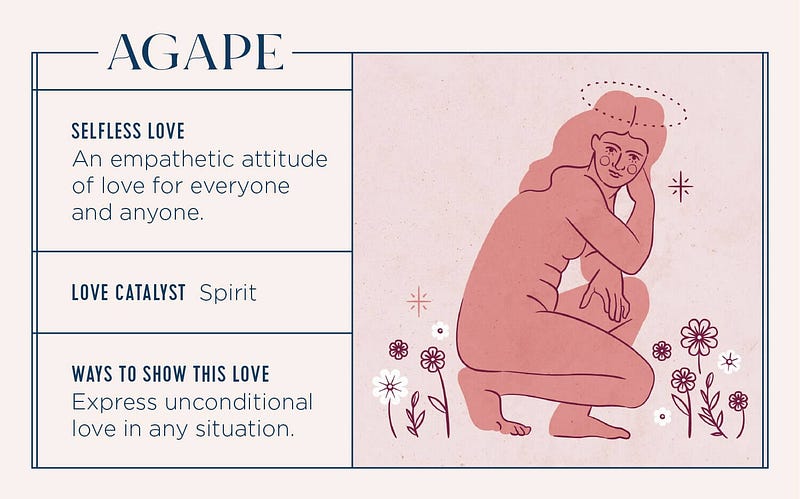
Those with empathetic love for others will not turn their back on humanity and call it self-love.
When self-care crosses that line into avoidance, it feels a lot like eating your favorite kind of cake. That flavor tastes so good until you are three slices deep into your journey. Americans should remember that nothing exceeds like excesses. While healthy people look out for their own best interests, their self-advocacy should not come before commitments to their long-term goals, family, and community.
In American society, many white people ignore race and privilege because it means sacrificing their ability to indulge in self-care. Following their lead on social advocacy hardly seems like a great starting place — their selfishness squashes advocacy at nearly every turn.
Taking your foot off the gas is a privilege that most Black women do not have. Portraying advocacy as a risk factor for mental health is a harmful narrative. The same gurus who insist that Black people needed a break from talking about race ironically never returned to talking about systemic racism.
The gurus’ insistence on taking a break became a way to silence those engaging in civil rights advocacy, changing the narrative. While fighting systemic racism sounded nice to them, recommending that Black women spend oodles of money on bath bombs and self-help seminars felt so much better.
Women need to stay tuned in to the world around them. While the strong Black woman is often used as a trope to delegitimize Black pain, weakness should not become the goal to counter that trope. Self-care culture needs to incorporate addressing conflict, or else it will always represent a privileged point of care.
The ancient Greeks saw ‘self-care’ as integral to democracy — but to retreat from the world in turbulent times carries its own risks (Mahdawi, 2017).
While many women claim that self-care is an act of revolution, that is only true if they fulfill social responsibilities after focusing on themselves. If hopping in a tub could change the world, Black women would already live in a post-misogynoiristic society.
Self-care remains inaccessible for many Black women
While many portray self-care culture as inclusive and easily accessible, it remains out of reach for many Black women. Women who work hourly positions lack access to days off to cater to their mental health. They need disposable income to buy cosmetic products or participate in make-overs and spa days. Thus, the women who need it most rarely have access to these privileged points of care.
While many women enjoy getting their hair and nails done, their behaviors are part of the broader beauty industry. In other words, a woman’s self-care routine will stimulate the economy. Thus, those who have less access to capital will undoubtedly have less access to these coping mechanisms.
Through a quick search on any social media feed, Americans can see many women taking part in self-care activities, with most of the participants being white women. They make more money on average and have more access to the self-care industry. They can invest in expensive body cleanses, hours of deep meditative thought and center their lives around bragging rather than promoting a more healthy, active lifestyle.
Self-care has also become a carefully curated lifestyle choice to show off: there are more than 1.4 million photos hash-tagged #selfcare on Instagram. Many of these seem to consist of skinny women doing yoga poses, legs in bubble baths, non-caffeinated-non-dairy hot drinks, gluten-free berry-based desserts, green juice in mason jars, that sort of thing. It’s basically Treat Yo’ Self in slightly superior clothing (Mahdawi, 2017).
Self-care became a full-blown industry of self-help gurus and social media influencers. They insist that the products they promote will help women reach inner peace, trying to profit from the stressed-out women they claim to support.
If you’re spending money for emotional relief, then chances are that you will have to keep spending to maintain that relief (Netra, 2020).
Not all self-help gurus promote products; many promote life hacks and self-care seminars. Indulging in life hacks can help women to manage their time more efficiently. Also, self-care seminars can help women develop healthy habits. Nevertheless, they promote these products without acknowledging that free time is a privilege.
For mothers and hard-working women, free time is not something they have, and thus, all the great advice in the world will not help them. These gurus should develop a clip notes version of their products so that women can enjoy the information in bite-sized sessions. Also, they should not promote their help as the end all to be all. Each woman is unique, and what works for one woman might not work for another. Society needs to embrace individuality as opposed to a cookie-cutter process.
Black women enjoy taking part in the self-care culture, with many trying to escape the day’s harsh sociopolitical climate. However, fewer Black women can participate in these activities because they require time and money, scarcely available to marginalized groups.
Maybe your job doesn’t support mental health days, taking a social media break isn’t cutting it, your kids make it hard to have time for yourself, or you’re dealing with any other number of things that can make taking a break seem laughable (Braithwaite, 2020).
Each woman has different responsibilities and will not have equal access to a self-care culture. If the self-help gurus and pundits genuinely want to help Black women, it has to start by recommending a synergy of self-care and productivity. If the self-care culture continues to insist that women need oodles of time and money to participate, poor women will continue to window-shop these tactics; they will remain out of reach.
Self-care became a privileged point of care when self-help gurus prioritized selling a lifestyle rather than freely offering help. If there is a way that a mother of three can participate in several hours of self-care a day, many women would like to know the secret.
Unfortunately, self-care runs the risk of becoming more meaningless than ever. It’s become co-opted by market forces, and consumerized (Mahdawi, 2017).
Self-care is not a cookie-cutter solution to mental health problems
Even if self-care culture became accessible to impoverished Black women, it still would miss the point of promoting good mental health. Many people think people can choose to stop being depressed, anxious, and traumatized by engaging in self-care activities. While relaxing and clearing your mind is helpful, society needs to stop assuming that people can wish away mental health problems.
Depression is one of the most commonly experienced mental health diagnoses in American society. Yet, many people think that if they get some time for themselves, their mental health will automatically improve. Sadly, isolation can negatively impact your health.
Isolating yourself as a coping mechanism can negatively impact your mental and emotional health (Netra, 2020).
Self-care gurus want Black women to think that they can acquire all of the tools necessary to fix everything by themselves. The whole point of self-care for Black women is to counter the strong Black woman narrative. However, by insisting that the solutions to the problems we face are as simplistic as coaxing our egos, it implies that Black women are strong enough to do it all on their own, decreasing the likelihood of reaching out for help. It is okay to need others, and just as no man is an island, no woman is either. If society wants to stop pressuring Black women to be tough, it can start by ending the oversimplification of mental health.
Anxiety, another mental health disorder that many people struggle with, often causes insomnia, digestive problems, lethargy, and many exhausting physical symptoms like a rapid heart rate. These symptoms make it harder to sleep, eat, and work. Despite this truth, many people see well-being as a choice (Ajemian, 2020).
A healthy dose of self-care can encourage women, but society needs to start accounting for these coping mechanisms’ inaccessibility. Also, suppose we are going to engage in conversations about mental health. In that case, Americans have to acknowledge that mental health revolves around someone’s ability to reach their goals and actively participate in life. Black women should not ignore stress, but falling back from everyone and everything does not solve problems. Despite the conflict, they need to lean into problem-solving rather than avoidance.
Removing yourself from family and friends for an extended amount of time is toxic (Netra, 2020).
Self-care is not a substitute for mental health treatment. If women are struggling to hold it all together, telling them that they can meditate or pray it away is problematic, mainly if the point of self-care is to maintain mental health.
Self-care can become a toxic coping mechanism
If we’re being honest, sometimes people use self-care when they don’t feel like having to deal with shit head on (Netra, 2020).
Sometimes the things people do to help can make their circumstances worse. If Black women use self-care as avoidance, it becomes a toxic coping mechanism. Encouraging women to withdraw from social responsibilities makes them less prepared to manage their mental health in the future. Suppose a busy mom makes a habit of ignoring her children to care for herself. In that case, she may find that her childcare responsibilities become more difficult over time because she taught herself to expect breaks that do not naturally exist. Instead of ignoring the kids for a few hours to engage in self-care, it would be best to set up a regular schedule that always allows for a set amount of free time when others can take care of them.
While Americans need to normalize talking about mental health, they do not need to normalize withdrawal and avoidance. Society would be better off if many of these self-care gurus invested in problem-solving seminars so that women could feel confident in their ability to manage their lives through balance.
But we need to stay vigilant: one sip of self-care can quickly become the whole bottle (Mahdawi, 2017).
A little bit of self-care goes a long way, and as with anything that feels good, many people can overdo it. Too much of a good thing can nullify the impact that these methods initially had. At a Friday night high school party, there are two types of students: the one who did her homework and didn’t. The one who skips out on her homework assignment is practicing avoidance, while the other is having a good time.
Women need to develop healthy coping mechanisms, not toxic ones. In America, access to mental health care remains a privilege because of the privatized healthcare market. So, in many ways, self-care culture is a product that fills a void for women who do not have access. It also leads women astray in thinking that they can cope with stress by lavishing care on themselves. They can stroke their hair thousands of times and still have a bill to pay.
People who haven’t experienced mental illness personally often buy into the idea that if you try hard enough, mental illness is something you can overcome. With one brushstroke, it’s depicted as a lack of willpower and a personal failing (Finch, 2019).
Any break from reality should come with limits because the solutions to all life’s problems are anything but simple. As much as any of us would like to take the pain away from a depressed friend, they will not become happy or successful people from withdrawing into a self-care coma.
Where do we go from here?
“Stay happy by doing what you want to do and what you need to do, not just one or the other,” (Ajemian, 2020).
There are two main problems with the self-care schtick: women have unequal access to self-care resources and self-care culture does not solve problems for Black women individually or collectively. Happy people live active lives and one of the main sings of depression is withdrawal. So, society can save self-care culture by reckoning with its privileged underbelly and ensuring that it does not facilitate avoidance.
Life is a dynamic, thrilling journey and Black women do not have to choose between engaging in passionate Philautia and Agape. Instead, women must grapple with the fact that self-love is only one way to love. They should also save a little love for their families, partners, and communities.
Self-care is about making a conscious effort to create and nurture the best version of yourself. Yet, self-care isn’t just about being the best you for you. It’s about creating that better version of yourself, so that you can engage with and deal with other human beings and your life in a healthy capacity (Netra, 2020).
Articles Curated about Race, Equality, Women, and History:
References:
Ajemian, R. (2020, May 10). Ray Ajemian: The toxic side of self-care culture. Retrieved November 27, 2020, from https://www.michigandaily.com/section/opinion/toxic-side-self-care-culture
Braithwaite, P. (2020, June 11). It’s Okay for Black People to Take a Break Right Now. Retrieved November 26, 2020, from https://www.self.com/story/black-folks-take-a-break
Finch, S. (2019, July 30). 4 Ways People with Mental Illness Are ‘Gaslit’ Into Self-Blame. Retrieved November 28, 2020, from https://www.healthline.com/health/mental-health/gaslighting-mental-illness-self-blame
Goodloe, M. G. (2019, May 20). Why Self-Care is Considered a Privilege. Retrieved November 26, 2020, from https://gmichelle.com/2019/02/04/why-self-care-is-considered-a-privilege/
Mahdawi, A. (2017, January 12). Generation treats yo’ self: The problem with ‘self-care.’ Retrieved November 27, 2020, from https://www.theguardian.com/lifeandstyle/2017/jan/12/self-care-problems-solange-knowles
Netra. (2020, April 25). 5 Ways That Your Self Care May Be A Toxic Coping Mechanism. Retrieved November 27, 2020, from https://thebrownperfection.com/2019/05/27/5-ways-self-care-toxic-coping-mechanism/
The author is the founder of Justice Can’t Wait: