
How Putin Resembles the Man who Lost China
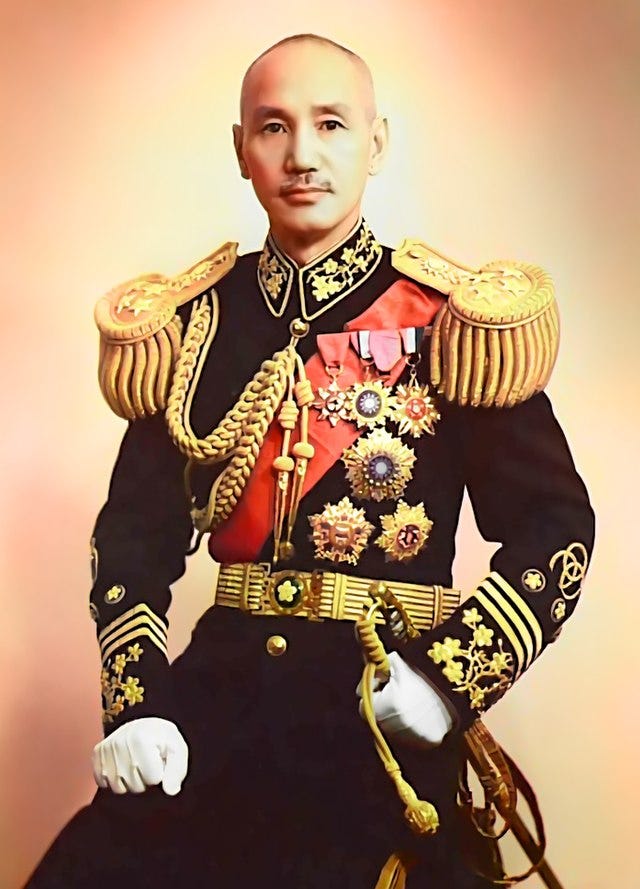
Strangely, Russian President Vladimir Putin resembles the “man who lost China,” Nationalist, or Kuomintang dictator, Chiang Kai-sek.
For example, both Putin and Chiang were nationalists and staunch Anti-Communists dedicated to rebuilding their nation’s historic empires. Moreover, both men were born in collapsing empires and rose to power as right-hand men to powerful leaders.
Both Chiang and Putin flirted with fascism without becoming fascists. Similarly, both men relied heavily on oligarchs and mercenaries to seize and keep power. Predictably, Chiang and Putin built corrupt and oppressive regimes. Both Chiang and Putin were adept at getting support from wealthy and powerful nations. Finally, both Chiang and Putin survived for a long-time despite blatant incompetence and corruption.
Is Putin, Russia’s Chiang Kai-sek?
Chiang Kai-sek (also known as Jiang Zhongzheng and Jiang Jieshi) was born in 1887 in the last days of the Chinese Empire. As a young man, Chiang witnessed the total collapse of the Qing Dynasty and the formation of the Republic of China.
Vladimir Vladimirovich Putin was born in Leningrad (now St. Petersburg) in 1952 at the height of Soviet power. Yet as a KGB agent, Putin witnessed the total collapse of the Soviet Union. Unlike Chiang, Putin was a loyal servant of the Soviet state for 16 years, and rose to the rank of lieutenant colonel in the KGB. However, Putin resigned his KGB commission as the Soviet Union collapsed in 1991.
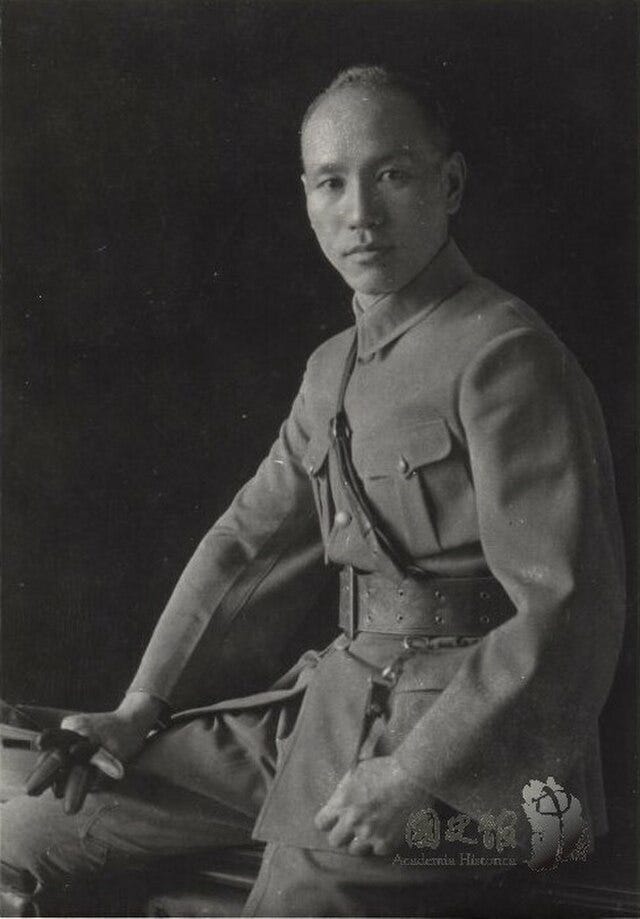
In contrast, Chiang became a professional revolutionary as a teenager. After cutting off his queue or pigtail haircut (a symbol of obedience to the Manchu Qing). Chiang moved to Japan to study at a military academy. In Japan, Chiang became part of a Han (Chinese majority) movement to replace the Qing with a Han-dominated Chinese Republic. Interestingly, Chiang served in the Imperial Japanese Army from 1909 to 1911.
In 1911, Chiang returned to China to fight in the revolution that overthrew the Qing.* At this time, Chiang got entangled with the Green Gang, the organized crime syndicate that ran Shanghai’s rackets. Interestingly, writer Jay Taylor alleges Shanghai International Settlement police charged Chiang with felonies.*
However, Chiang never went to trial. Possibly, because Green Gang boss Huang Jinrong was a top detective for the French Concession police force in the International Settlement.* During the early 20th century, foreign powers, including Japan, the British Empire, and France, controlled parts of Shanghai as “international concessions.” Huang allegedly sold opium grown in French colonies in Indochina in Shanghai.*
Oligarchs and Gangsters
In 1912, Chiang became a founder of the Kuomintang (KMT) or Chinese Nationalist Party. Chiang began serving as a liaison between the Green Gang and the KMT. In particular, Chiang used Green Gang money to finance the KMT.
By 1918, Chiang emerged as one of KMT leader Sun Yat-sen’s most important lieutenants. Notably, Chiang organized military forces that allowed the KMT to take over Guangdong. Chiang helped organize a revolutionary government in Guangdong with Sun as its figurehead.
At this time, Chiang began his habit of getting support from foreign governments. Ironically, Chiang’s first foreign benefactor was the new Soviet Union. Chiang visited Moscow and studied the Communist system, which he rejected.
After Sun’s death in 1925, Chiang won the power struggle with leftist forces. In particular, Chiang replaced Communists and leftists in the National Revolutionary Army with Green Gang thugs. By 1927, Chiang had organized a New Revolutionary Army and conquered Nanjing, an old imperial capital.
Also in 1927, Chiang and the Green Gang carried out a vicious purge of Communists and other suspected lefts. The reason for the White Terror was to get the support of Chinese oligarchs, gangsters, warlords, foreign business interested, and conservative foreign powers such as Japan. Chiang’s goons killed over 300,000 people, including union leaders, and anybody suspected of being a Communist.
Chiang’s purge backfired because the Communists fled to the countryside. There, the Communists found an effective new leader, Mao Zedong, and began guerrilla warfare. Thus, Chiang created Chinese Communism and Mao with his clumsy reign of terror.
In 1928, Chiang and his warlord allies occupied Beijing which allowed them to claim they were China’s government. During the 1930s, Chiang ignored a growing Japanese presence in China and concentrated on the Civil War with the Communists.
In the 1930s, Chiang found new sponsors, Germany’s Weimar Republic and Benito Mussolini’s fascist regime in Italy. Now styling himself the Generalissimo, Chiang also had a close relationship with the Soviet Union while waging war on Chinese Communists.
How World War II saved Chiang
Ironically, World War II probably saved Chiang from himself. The Imperial Japanese Army occupied Manchuria in 1931 and launched an all out invasion of the Republic of China in 1937. This was the beginning of World War II.
Japanese forces overran Nanjing, China’s capital, and massacred the city’s inhabitants. Chiang’s forces fled to Chongqing (Chungking) where they held out with Soviet support.
Chiang’s KMT only survived because the Japanese forces turned elsewhere. For example, fighting the Soviets in Mongolia, then invading French Indochina, and finally attacking the United States and the British Empire.
During World War II, Chiang found his most important foreign sponsor in the United States. The US government sent $1.6 billion ($20.19 billion in 2023) on Lend-Lease Aid to the KMT. Despite the objection of US diplomats and soldiers in China who noted that Chiang was refusing to fight the Japanese. Instead, he was hoarding US weapons and ammo for the fight with the Communists.
Yet President Franklin D. Roosevelt (D-New York) was a powerful supporter of Chiang. Possibly because the KMT received enormous amounts of favorable publicity from Henry Luce’s popular magazines, Time and Life.
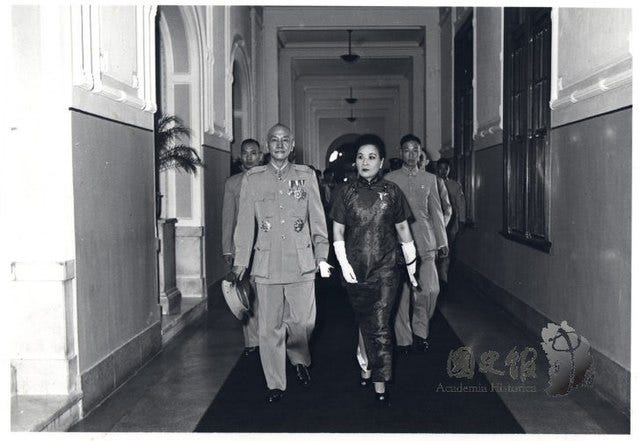
Chiang also became an expert at lobbying the US Congress during World War II. President Harry S. Truman (D-Missouri) alleged the KMT was bribing US politicians and others. Plus, Chiang’s beautiful trophy wife, Soong Mei-ling, the daughter of one of China’s richest oligarchs, was popular in the United States.*
The Man Who Lost China
In 1945, the US, British Empire, and Soviet forces defeated the Japanese. Consequently, civil war broke out between Chiang’s KMT and Mao’s Communist Party.
Chiang’s corrupt and amateurish forces were no match for Mao’s highly professional People’s Liberation Army (PLA) on the battlefield. Bizarrely, both armies were well-equipped with American-made weapons courtesy of World War II Lend Lease.
Moreover, Chiang found American support lukewarm. US military advisors in China had nothing but contempt for the KMT. Plus, FDR was dead, and his replacement Harry S. Truman (D-Missouri) despised Chiang. Truman stopped American arms shipments to Chiang to keep the weapons from falling into Communist hands.
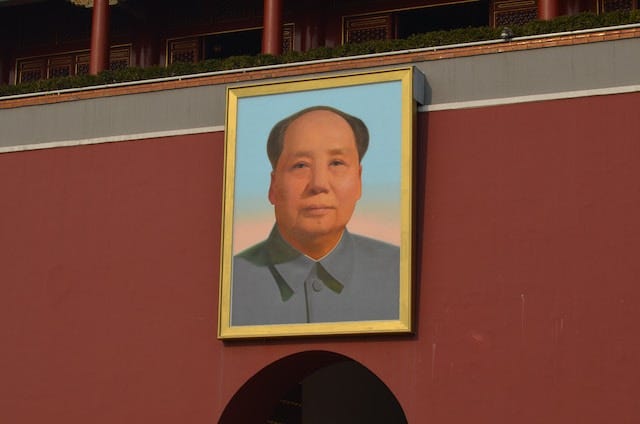
By 1949, the Communists had overrun China’s cities and won the Civil War. Chiang and the remains of the KMT fled to Taiwan while the Green Gang retreated to British-ruled Hong Kong.
Mao’s victory led to an idiotic debate “who lost China debate” in the United States. Chiang’s paid propagandists spread the story that secret Communists in the United States government had sabotaged the KMT’s war effort. American opportunists such as US Senator Joe McCarthy (R-Wisconsin) joined the crusade.
Chiang and the KMT survived on Taiwan as the “Republic of China,” with the protection of the US Navy. Chiang died on Taiwan in 1975. He had lived long enough to see US President Richard M. Nixon (R-California) fly to Beijing and embrace Mao.
Putin is Russia’s Chiang
Putin’s career mirrors Chiang’s in important ways. Like Chiang, Putin attached himself to a revolutionary leader.
Putin became an indispensable henchman to President Boris Yeltsin, the leader of Russia’s anti-Communist revolution. For example, Putin led the Federal Security Service (FSB) the KGB’s successor, and served as Yeltsin’s prime minister. This allowed Putin to succeed Yeltsin as Russia’s president.
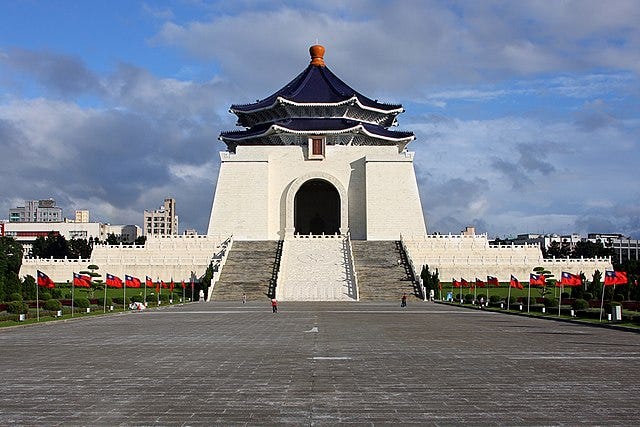
Additionally, Putin presented himself as the defender of traditional Russian culture against resurgent Communism and Western corruption. Much as Chiang presented himself as the defender of traditional Chinese culture against Communism and Western materialism in the 1930s.*
Like Chiang, Putin’s goal is to rebuild the empire. Similarly to Chiang, Putin made alliances with Russian oligarchs. To protect the oligarchs, Putin crushes any actual democratic opposition.
Shrewdly, Putin allows a rump Communist Party to survive. This scares traditionalists and oligarchs who are afraid of a Communist return into backing or tolerating Putin.
In foreign policy, Putin first cultivated close relations with the United States and the European Union. Then began pivoting towards the People’s Republic of China as that country became the world’s manufacturing powerhouse. Just as Chiang pivoted from the Soviets to the Germans to the United States.
Putin has engaged in a series of wars to restore the empire like Chiang. In his wars, Putin, like Chiang, depends heavily on warlords and mercenaries. For example, Chechin Warlord Ramzan Kadyrov,Belarussian dictator Alexander Grigoryevich Lukashenk, and Wagner Group boss Yevgeny Prigozhin.
Interestingly, Chiang faced several warlord revolts during his tenure as China’s dictator. Currently, Putin is dealing with the aftermath of a revolt by Prigozhin’s corporate mercenaries.
Now that Putin’s army is fighting a well-organized foe, the Ukrainians. It is failing miserably, much like Chiang’s did in World War II and the Chinese Civil War.
Another similarity between Putin and Chiang is the retreat into convenient fantasy as their military adventures fail. During World War II, Chiang, like many leaders, became obsessed with the fantasy that air power alone could win the war. Consequently, Chiang could hoard his military forces and money for the war against Mao’s Communists.
Hence, the Generalissimo refused to commit his troops to the battle against the Japanese while demanding more and more American planes. One result of Chiang’s lunacy was the last and largest Japanese offensive in World War II, Operation Ichi-Go.* In April 1944, Imperial Japanese Armies easily overran Chinese bases from which the US Army Air Force was supposed to bomb Japan. A few years later, Chiang’s air power was equally useless against Mao’s well-trained People’s Liberation Army.
Meanwhile, Putin operates under the fantasy that Russian soldiers always come back and win the war. In particular, Putin thinks he can win a modern war with no industry, no trained army, and little high technology. Predictably, Russian forces are suffering enormous casualties in Ukraine and achieving little.
A strange similarity between Chiang and Putin is nutty American assassination schemes. In 1943, US Lieutenant General Joe Stilwell allegedly told his chief of staff, Colonel Frank Dorn, about a disturbing conversation with President Franklin D. Roosevelt (D-New York).
FDR allegedly told Stilwell, “If you can’t get along with Chiang and can’t replace him. Get rid of him once and for all. You know what I mean. Put in someone you can manage.”*
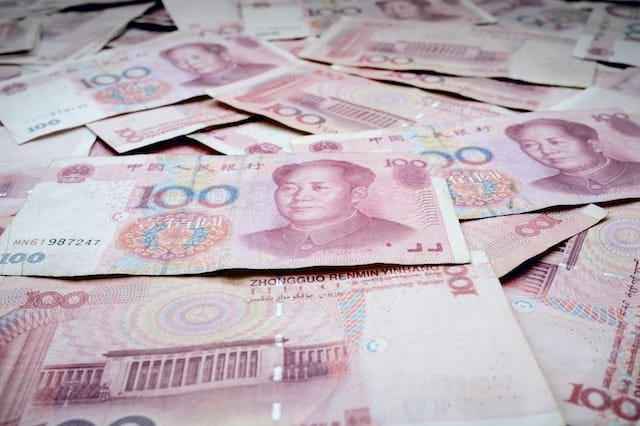
Accordingly, Dorn historian Frank McLynn alleges Dorn and his staff came up with several schemes to assassinate Chiang. The schemes included gunfire bombs, poison, and a deliberate plane crash.
Moreover, McLynn claims Stilwell ordered Colonel Carl Feifler of the Office of Strategic Services (OSS), the predecessor of the CIA, to prepare a plan to kill Chiang with botulism toxin.* Stilwell was the US general in charge of operations in China, Burma, and India, for much of World War II.
McLynn’s allegations make FDR look treacherous and sleazy because the president was an outspoken public supporter of Chiang. These plans also resemble the well-known CIA schemes to assassinate the Cuban dictator Fidel Castro in the 1960s.
Similarly on 29 September 2022, Newsweek claims the Pentagon had plans to assassinate Putin in the Kremlin.* Newsweek presented no evidence but Russian Foreign Minister Sergei Lavrov believed the plans for a “decapitation strike” and warned the US that Russian forces will retaliate after any attack on Putin.* However, the Russians did not retaliate after a 3 May 2023 drone attack on the Kremlin.
Will Putin Lose Russia?
If Chinese history repeats itself in Russia, some new force will arise and overwhelm Putin’s regime.
However, Putin can play one trump card, Chiang lacked. Russia’s arsenal of 5,977 nuclear weapons.* Whether Putin will use those weapons to defend his regime is unknown. However, a nuclear threat could explain why Prigozhin suddenly abandoned a seemingly successful coup attempt in June 2023.
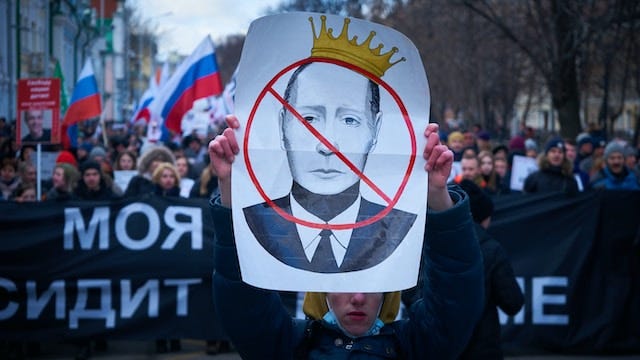
We need to fear Putin, because his regime could repeat the sudden collapse of Chiang’s Nationalist government in 1949. Nobody should want the sudden collapse of a government with 5,977 nuclear weapons.
*Taylor, Jay (2009). The Generalissimo: Chiang Kai-shek and the struggle for modern China. Harvard University Press. ISBN 978–0–674–03338–2
*https://en.wikipedia.org/wiki/Huang_Jinrong
*https://en.wikipedia.org/wiki/Chiang_Kai-shek
*See The Soong Dynasty by Sterling Seagrave
*https://history.state.gov/milestones/1899-1913/chinese-rev
*https://www.aljazeera.com/news/2023/3/25/russias-nuclear-arsenal-how-big-is-it-and-who-controls-it
*https://normandy.memorial-caen.com/museum/second-world-war/cost-and-ending-war/april-1944-last-japanese-attack-china#:~:text=As%20a%20counter%2Dattack%20to,route%20between%20Korea%20and%20Hanoi.
*See The Burma Campaign by Frank McLynn pages 209–201.
*https://greekreporter.com/2022/12/27/russia-warns-assassination-putin/
*https://greekreporter.com/2022/12/27/russia-warns-assassination-putin/