
A Frightening Lesson in Oligarchy from Chinese History
Many people now think the United States of America has become an oligarchy. Americans should be afraid because oligarchies often destroy countries.
Merriam-Webster’s quick-and-dirty definition of oligarchy is “a government in which a small group exercises control, especially for corrupt and selfish purposes.” Cynics say the United States Congress fits this definition.
For example, former US Speaker of the House Nancy Pelosi (D-California) and her husband Paul, had a fortune of $46.1 million in January 2023. Business Insider alleges, Paul Pelosi made most of that money by trading stocks with insider information from his wife.
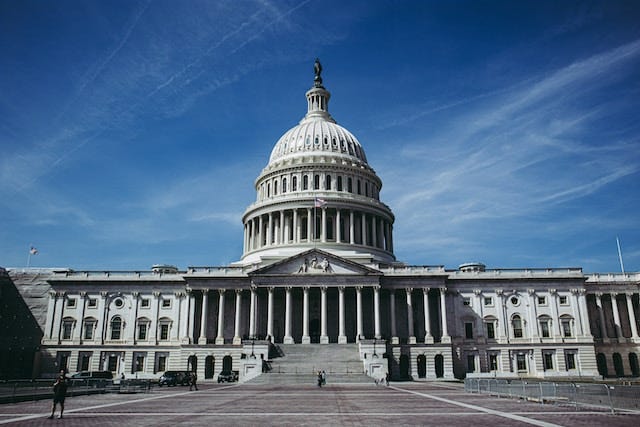
Similarly, Congressional decisions match the wealthiest 10% of Americans’ preferences 78% of the time, Represent US estimates. In contrast, Congressional decisions only reflect the preferences of citizens 5% of the time.
Oligarchy USA
Income inequality is an obvious indicator of oligarchy. Data shows US income inequality is growing dramatically.
“The share of total wealth held by families in the top 10% of the distribution increased from 63% in 1989 to 72% in 2019, and the share of total wealth held by families in the top 1% of the distribution increased from 27% to 34% over the same period,” the Congress Budget Office (CBO) alleges.
Income inequality grew during the COVID-19 pandemic. The 20% of Americans’ inflation adjusted average wealth grew by 18.2% between December 2019 and September 2021, Forbes estimates.

Wealth inequality increases because the wealthy pay less taxes. For example, the wealthiest 400 American billionaire families paid an average federal individual income tax rate of 8.2% between 2010 and 2018, the White House alleges.
In contrast, the average American pays an income tax rate of 13.3%, The Balance estimates. Moreover, The Balance calculates the typical American pays an overall tax rate of 24% to 28%.
Data shows America is an oligarchy. American oligarchy frightens me because history shows oligarchy will destroy your country.
A Frightening Lesson in Oligarchy from Chinese History
Chinese history provides a frightening lesson about oligarchy Americans need to learn.
During the 19th century, the opium trade allowed foreign entrepreneurs, led by the British East India Company, to dominate China’s economy. Chinese military weakness allowed foreigners to seize more and more economic power.
Consequently, Chinese willing to work with the foreigners could get very rich. In particular, secret societies (Chinese organized crime) made vast fortunes by selling opium. Furthermore, some Chinese merchants made vast fortunes by importing foreign products and selling them undermining Chinese business.

Meanwhile, China’s last imperial dynasty, the Qing was slowly collapsing. The Qing collapse created a power vacuum. Foreign colonialists, organized crime, warlords, and Chinese entrepreneurs filled the power vacuum.
By the early 20th century, an oligarchy of politically connected Chinese entrepreneurs and gangsters was the most powerful group in China. These oligarchs had the backing of colonial powers (the British Empire, Japan, France, and the United States) and controlled the Chinese government.
The Oligarchs Takeover
Ironically, China’s first republican revolution gave the oligarchs complete control of the country.
To elaborate, when intellectual Sun Yat-sen needed money to finance China’s revolutionary movement. Sun turned the secret societies and Shanghai merchants. In particular, the powerful Green Gang syndicate which ran the opium trade with the French government’s backing.
Thus, Sun’s nationalist movement became a front for the oligarchs and organized crime. Sun himself was honest and idealistic. However, corrupt oligarchs bankrolled and controlled his movement. Oligarchs took over any modern institution Sun’s followers organized.

For example, when Sun organized a modern military (the New Model Army). Many of the army’s recruits were Green Gang thugs, and some of its officers, including top general Chiang KaiSek, were Green Gang mobsters. After Sun’s death, Chiang became the Nationalist dictator and head of China’s government.
Similarly, the Chinese financial system became a slush fund for Chiang and his associates. In particular, the Nationalists forced wealthy Chinese to buy high interest bonds to finance the government. However, Chiang and his cronies diverted most of the bond money into their pockets.
Moreover, the Nationalists were incapable of challenging foreign control over important Chinese cities. Including the country’s financial and industrial center, Shanghai. The Nationalists could not challenge foreign control of Shanghai and other cities because their backers, the oligarchs, profited from the foreign control.
The Oligarchs Betray China
In 1931, when the Imperial Japanese Army seized control of an important Chinese region, Manchuria, Chiang did nothing. When Japanese forces attacked Shanghai and began killing Chinese. Chiang refused to fight back.
Disgustingly, when the Chinese 19th Route Army became famous fighting Japanese invaders near Shanghai. Chiang moved that force deep into the interior to prevent clashes with Japanese troops.
Instead of fighting the Japanese, Chiang used his military to fight the Chinese Communist Party, which he regarded as a rival. Chiang diverted vital military resources, including imported weapons, elite troops, and German military advisors to his anti-Communist crusade.
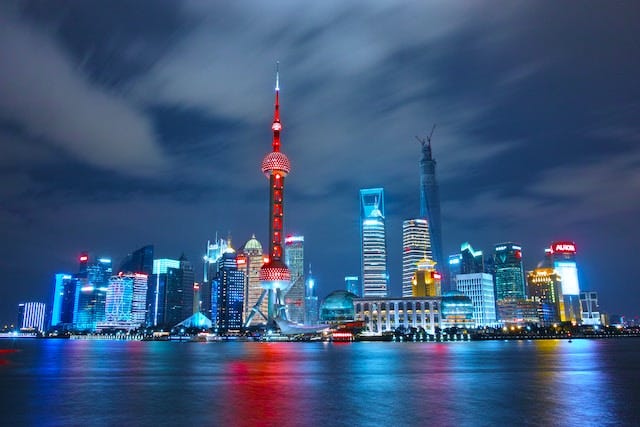
Chiang viewed the Communists as his real enemies because they threatened the oligarchs’ wealth. One of Chiang’s first actions in power was the 1927 Shanghai Massacre, in which Green Gang thugs and Guomindang (Nationalist) soldiers killed thousands of Communists, union activists, and others they viewed as enemies. The Massacre drove the Communists into the countryside, where they became the champions of the peasants against oligarchs and warlords.
Disgustingly, Chiang made secret agreements, turning entire provinces over to the Japanese Empire. Hence, Japanese power grew as China became weaker. However, the wealth and power of the oligarchs was safe, so Chiang refused to fight.
The Oligarchy loses the War
Chiang only began fighting the Japanese and form an alliance with the Communists, after his own officers revolted and tried to kill him. By then, the Nationalist Army was too weak to resist Japanese invaders.
Japanese forces only left China after Japan’s government surrendered to the Allies at the end of World War II. During the war, Chiang joined the Allies but contributed little to the war effort. Instead, Chiang diverted enormous amounts of American aid to restore Guomindang power. China’s policy was to let American, British, and Indian soldiers fight the war and die to protect his power.
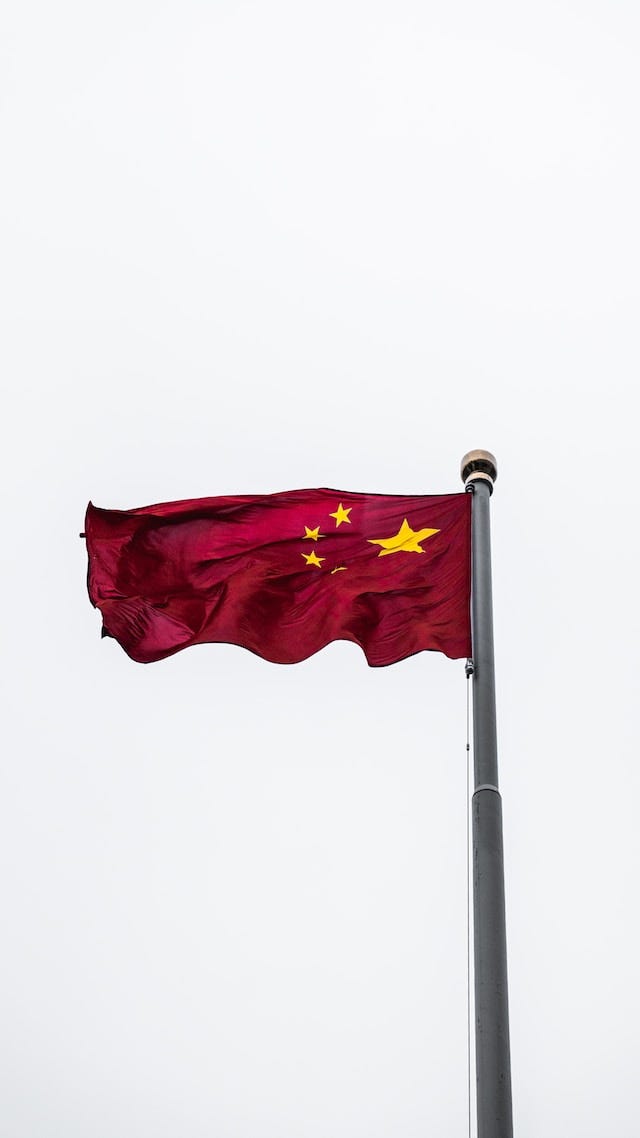
The true winner of World War II in China was Communist leader Mao Zedong. Mao emerged as a hero, a patriot, and the champion of the people. The Nationalists and the oligarchs were so corrupt that many ordinary Chinese supported anybody who opposed them. Even a bloodthirsty madman such as Mao.
The End of the Oligarchs
World War II totally discredited the Nationalist government in Chinese eyes. Consequently, many Chinese turned the Communists, who were willing to fight foreign invaders.
In particular, the People’s Liberation Army (PLA) trapped three Royal Navy vessels in the Yangtze in the 1949 Amerthyst Incident. The Amerthyst Incident convinced His Majesty’s Government to pull out of China, ending 120 years of foreign intervention, oligarchy, and exploitation. It established the Communists and the PLA as China’s defenders.
In 1949, the Communists won the Chinese Civil War and drove the Nationalists offshore to the island of Taiwan. There, the Nationalists only survived because the United States Navy was sitting between them and the People’s Liberation Army.
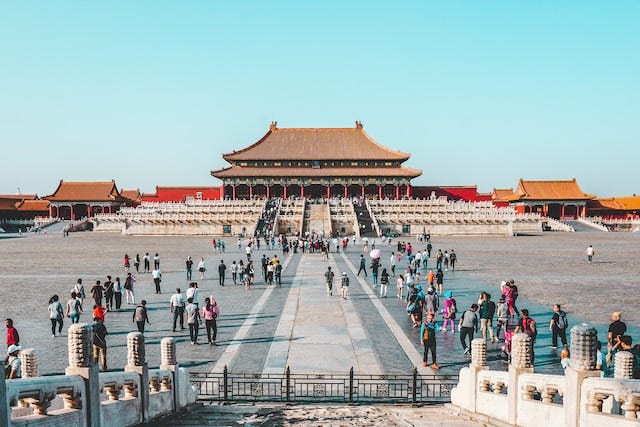
The oligarchy’s collapse and Mao’s Revolution became a tragedy for the Chinese people. R.J. Rummel estimates the Communist Partywas responsible for the deaths of 38.702 million Chinese. In particular, 8.427 million died during the Communist takeover, 10.729 million died during the Great Famine, 7.474 million starved during Mao’s insane Great Leap Forward, and 7.731 million died in the lunacy of the Cultural Revolution.
In China, oligarchy led to revolution, Communist dictatorship, and mass murder. Americans need to understand this history if they do not want to repeat such tragedies.
How Oligarchy can Destroy a Country
Today, memories of the Oligarchy still shape Chinese politics. In particular, the Communist Party likes to demonstrate its power over wealthy Chinese.
For example, Chinese billionaires and executives sometimes vanish when authorities probe their businesses. The reason for the disappearances is to demonstrate government power over would-be oligarchs. Even China’s richest man, Jack Ma, disappeared in 2020. Interestingly, Communist authorities claim they are using the disappearances to narrow “China’s “wealth Gap,” the BBC reports.
The fall of Nationalist China shows how oligarchy can destroy a country. Americans need to learn how oligarchy threatens their country and learn to contain it before the oligarchs betray and destroy the nation.
For an excellent overview of Nationalist China’s oligarchy and its corruption, see The Soong Dynasty by Sterling Seagrave. The book tells the story of 20th century China’s most powerful oligarchic family, the Soongs, and their role in Chiang Kaisek’s dictatorship.