
Can Russia Defeat Ukraine? What History says
History has no obvious answers about the possibility of a Russian victory in the Ukraine War.
Indeed, the actual history runs counter to a popular narrative Ukraine War critics raise. The narrative is this “the Russians always lose at first but ultimately win the war because they can raise enormous armies of conscript soldiers.”
This narrative collapses when you examine the history of Russian Wars in the last 160 years. Since 1852, Russia has fought eight major wars with other nations. Those conflicts are:
- The Crimean War (1853–1856)
- The Russo-Turkish War (1877–1878)
- The Russo-Japanese War (1904–1905)
- World War I (1914–1917)
- The Russo-Polish War, or Polish Soviet War, (1919–1920)
- World War II (1939–1945) Note: World War II contains the 1940 Winter War between the USSR and Finland.
- The Soviet-Afghan War (1979–1989)
- The Ukraine War (2022-?)
Russia lost most of those wars. For example, British, Turkish, Italian, and French forces defeated Russian imperial forces in the Crimean War. The Russian Empire suffered a humiliating defeat in the Russo-Japanese War. Russian defeat in World War I was so total, the Russian Empire collapsed.
The Soviet attempt to conquer Poland in 1920 ended with humiliating defeat and the complete collapse of the Red Army. This conflict, which was Lenin’s attempt to reconquer part of the Russian Empire Poland, resembles the current Ukraine War. It ended with the Soviets signing an armistice and recognizing Polish independence.
Finally, The Soviets suffered a humiliating defeat in Afghanistan that led to the collapse of the USSR.
History shows the Russians Usually Lose
Russia only achieved victory in two of the eight foreign wars it fought between 1852 and 2022. Moreover, Russia only won one major foreign war without outside help in that period: the Russo-Turkish War. In that conflict, Czar Alexander II’s armies defeated a decrepit Ottoman Empire.
Yes, Soviet Armies won a tremendous victory in World War II but they had enormous amounts of help from the United States and the British Empire. For example, the US Lend-Lease program sent 400,000 jeeps & trucks, 14,000 airplanes, 8,000 tractors, 13,000 tanks, and 15 million pairs of army boots to the USSR during World War II, the US State Department estimates.
When the Red Army reached Berlin in 1945, its soldiers were wearing American-made boots and riding in American-made jeeps and trucks. Without American aid, Soviet victory in the Great Patriotic War would have been impossible.
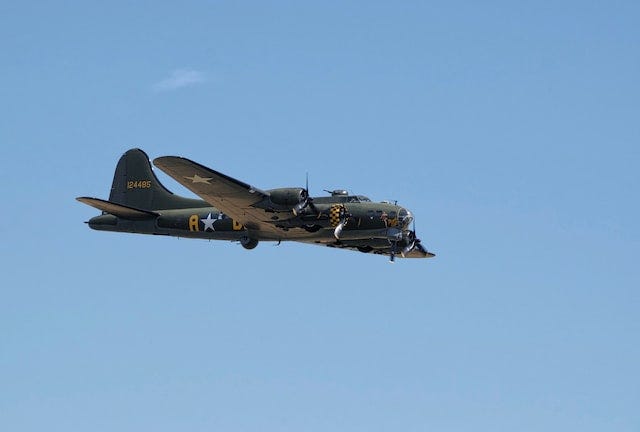
Beyond material support, British, Canadian, and American forces inflicted enormous casualties on German forces that cleared the way for the Soviet advance to Berlin. For example, the US Army’s Eighth Air Force flying out of British bases destroyed and damaged 9,074 German planes in the sky and on the ground.
Interestingly, the Russian government is turning to foreign sources to supply its armies as in World War II. For example, the Associated Press reports the Russians are “buying millions of North Korean rockets and artillery shells.” Similarly, Russian forces are using Iranian drones against Ukrainian forces. Moreover, some news reports claim Russian leaders have been begging the Chinese government for help in Ukraine.
The Russians are importing foreign drones, rockets, and artillery shell because their industry is no longer capable of producing such things. This situation is worse than World War II, when much of the Soviet industry was destroyed, captured, or forced East of the Urals by the Germans. Today, the Russian industry is intact and beyond the range of Ukrainian attacks, yet it cannot sustain the nation’s war effort.
Nor does the narrative that the Russians always win by raising vast conscript armies hold up. Enormous conscript armies did not help Czar Nicholas II in the Russo-Japanese War, or World War I, or Lenin in 1920. In the Russo-Japanese war, the Russian hordes were no match for the well-trained and well-armed Imperial Japanese Army, for example.
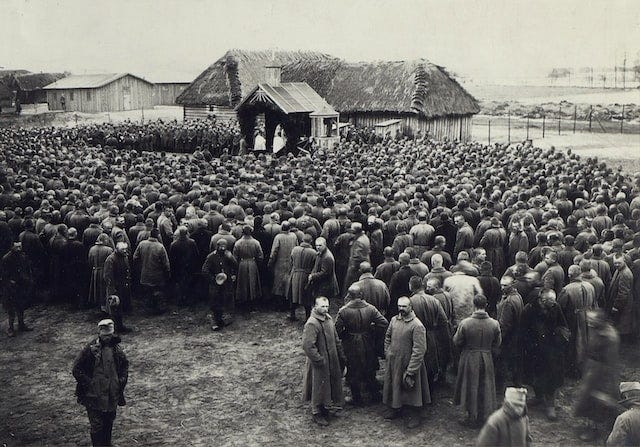
Notably, the Russian Army collapsed during World War I after it ran out of weapons and ammunition. Many Russian soldiers gave up and went home when they realized they had no weapons or ammo. In contrast to World War II, Russia’s allies could not ship enormous amounts of munitions to help its forces in World War I.
Will Russia Collapse?
Hence, if the Ukraine War follows the typical Russian pattern. The Russian Army will lose, leading to a collapse, or near collapse, of the Russian government. Unless Putin follows Lenin’s example and signs an armistice with the Ukrainians.
For example, defeat in the Ruso-Japanese War triggered the Revolution of 1905 that forced Nicholas II to make concessions to opponents. Defeat in World War I led to the Russian Revolution of 1917. The collapse of the Soviet Union in 1991 followed the defeat in Afghanistan.
If the pattern repeats itself, defeat in Ukraine will lead to the collapse of Vladimir Putin’s kleptocracy. Such a collapse frightens me because the collapse of the Russian Empire and the first Russian Republic in 1917 led to the rise of the totalitarian and genocidal Soviet Union. The brutal dictatorship of V.I. Lenin replaced the weak tyrannies of Nicholas II and Alexander Kerensky.
One reason the Russian Republic collapsed was Kerensky’s continuation of the disastrous Russian involvement in World War I. Continuing the fight, destroyed support for the republic, and drove ordinary Russians to Lenin and his Bolsheviks (Communists) who said they would end the war.
People who want to see Putin’s regime collapse need to be careful what they wish for. Russian history shows Putin’s fall could lead to something far worse. For example, a genuine card-carrying Communist who actually wants to restore the Soviet Union.
For all his faults, Putin is no Communist and has no desire to restore the Soviet Union. Putin’s ideal is Nicholas I’s or Alexander II’s Russian Empire, not Stalin’s Soviet Union.
Nor is there any evidence Russian defeat will lead to peace. Russian defeat in World War I led to a brutal Civil War that continued until 1923 and the Soviet-Polish War. Defeat in Ukraine could trigger a new Russian Civil War or other conflicts.
That’s frightening because Russia had 5,977 nuclear warheads in October 2022, The Center for Arms Control and Non-Proliferation estimates. Around 1,588 of those warheads were deployed (mounted on missiles and ready to fire).
History shows Ukraine can defeat Russia, and that loss could have terrible results.


