
How Much Should You Champion Your Child’s New Pronouns?
Is asking others to use your child’s pronouns on they/them – or on you?
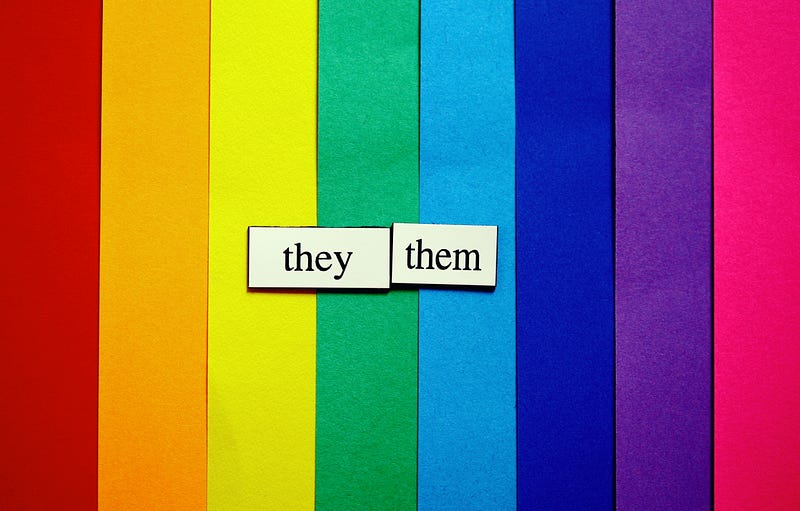
When my youngest came out as gender-fluid, I expected it.
My youngest was in 5th grade — about midway through COVID-induced homeschooling, though of course we didn’t know how long it would last at the time —when they came out as genderfluid.
They requested they/them pronouns and a new name.
I wasn’t surprised.
They’d already told me how all their oldest sister’s friends were transitioning to new names and pronouns, and my mama spidey-sense suspected they were considering the same.
So the adjustment was easy for me and our close friends and family. We live in a liberal, accepting community, and the change was pretty seamless.
They were now “they” and had a new name.
I made one Facebook post to broadcast the change and that was that.
Well, except…
With distant relatives and strangers — we had a different story.
My child is a dainty thing. Strangers universally read them as female. Family members from outside our blue bubble of a city tended to do the same — not out of malice, just from an it’s hard because they is plural mentality.
This led to a parenting quandary: Should I correct others who misgender my child?
Or should my child do it?
My child tends to be shy and a bit non-confrontational, especially with adults, and we’ve long worked on developing skills in this area. I nudge them to place their own order in cafes and restaurants, and to answer questions independently at the doctor, dentist, or other appointments instead of turning to me to do it.
I’m super chatty, and could easily speak for them in all these contexts. I just think it’s important for them to learn how to advocate for themself.
But the pronoun thing — was this different?
When my child wasn’t around, of course it was on me to communicate the change. But when we were both present, something about correcting their pronouns right in front of them just felt… off.
As I sorted out why, here’s what I came up with:
- I wanted them to take ownership of their gender identity. In deciding to move through the world using non-traditional pronouns, they needed to learn to speak out their own truth, to champion their identity.
- Speaking for them felt infantilizing. My child was only 11 when they made this change — but 11 seemed old enough to speak for themself. Correcting pronouns right in front of them felt a bit belittling.
- I didn’t want to be That Mom. I’ve noticed a tendency for some parents — okay, it’s moms — to take on their child’s identities as their own, to overshoot supportive and land somewhere between cloying and belligerent. I wanted to support my child but also acknowledge this was their identity, not mine. I didn’t want to make Supportive Gender Mom my identity, as that would steal from my child’s lived experience. I didn’t want the focus of this change to center me.
Yet even as I sorted through my feelings and came to these realizations, I still didn’t feel right, and I wasn’t sure how to proceed.
So you know what I did…?
I asked my child what they wanted me to do.
In the end, as valid as all my concerns felt, the most important thing was to ensure my newly genderfluid child felt supported.
So I said:
“When we’re out together and someone uses she/her pronouns for you, would you like me to correct them? Or would you rather decide when to speak up about your new pronouns?”
I assured them I was absolutely fine with either decision, and that I 100% had their back.
They told me they’d rather own the decision, that I shouldn’t speak on their behalf.
And as much as I would’ve supported either decision, I was heartened they picked this one.
Because it’s their identity to tell the world.
To other parents, caregivers, or friends of gender nonconforming kids — how have you managed communicating your child’s new pronouns to family, friends, and strangers?
I’m curious to know what decisions you (and/or your child) made, and why.
Greetings!
I’m All My Little Words, a GenX word nerd living in the Pacific Northwest with a whole lot of little words to share. I write about career, music, feminism and perimenopause, cooking, ambition, fun, parenting, and more, with an offbeat perspective on how and why the world works (or doesn’t).