
036 | ESSAY | FLORA
How Many ‘Apples’ Have You Tried?
Uncommon fruits with ‘Apple’ in their name

Read this article for free here.
Today has been an interesting day for me as I came across a few types of fruit. What’s so strange, you might ask? Well, as it turns out, all of them have the word “apple” in their name, not in the way you’d expect. Initially, I hadn’t realized this, because who remembers all of these names in English?
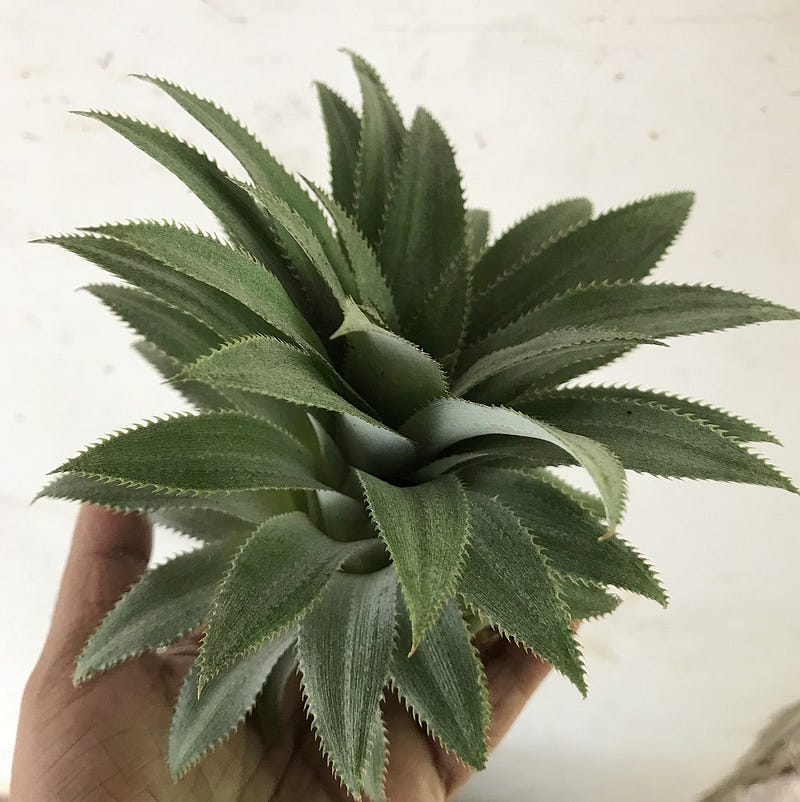
Firstly, there was a pineapple. You see, we had one for dessert yesterday, and today I planted the crown of the pineapple. We have around five or six shrubs at home, so we are lucky enough to enjoy this fruit every so often.
The second fruit I encountered was a Rose Apple, or as we call it, Jambu. Our tree is currently going crazy with them, making it a challenge to sweep up all the fallen fruits.
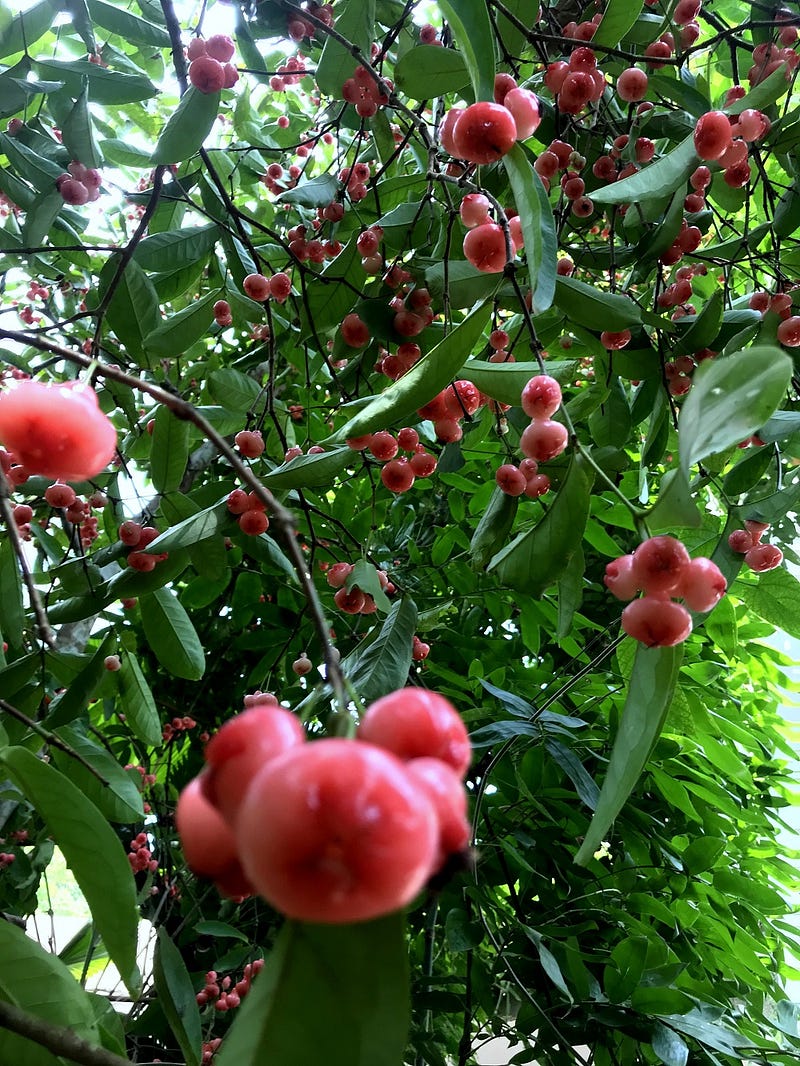
You know what? In our culture, we have an informal saying — not so proper too, that describes the Menture — the first occurrence of menstruation in young girls as “falling down the Jambu tree” I must admit that I’m not entirely sure of its origins or meaning.
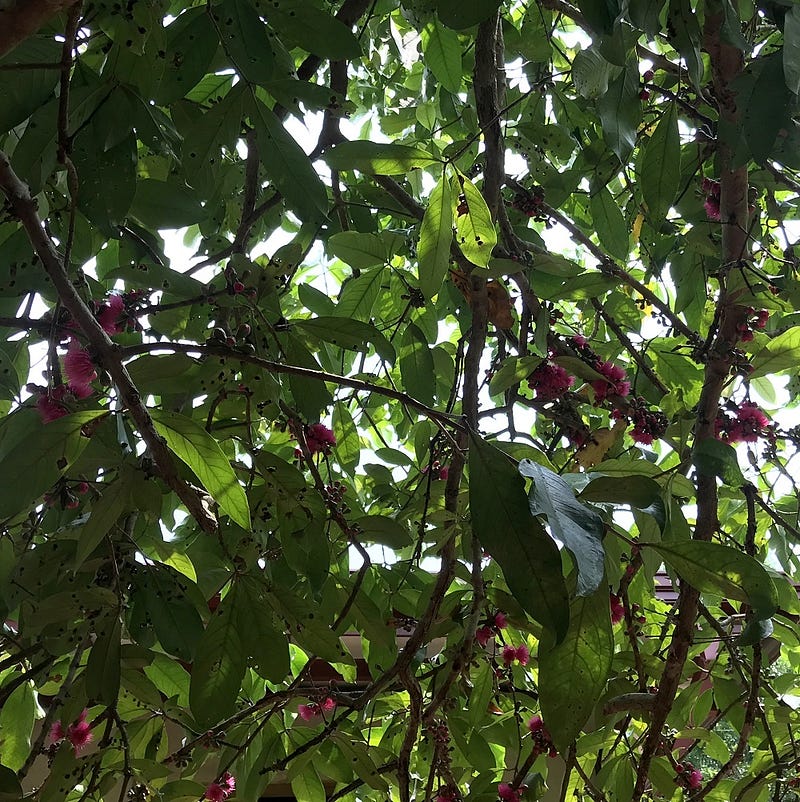
We have another variation known as ‘Pini Jambu’, which is larger in size and either white or red. Today, my mother pointed out that our Pini Jambu tree had bloomed with pinkish-purple flowers. The main difference between Jambu and Pini Jambu is that the latter has a firmer, more cushion-like texture with lower water content.
There is another variety called “Malaysian Jambu” one with polished skin, unfortunately, we do not have that in our yard.
These days the sun is directly overhead in our country. We are experiencing higher temperatures. So my mother has prepared a refreshing drink made from stone apples, also known as Beli in Sinhala. Perhaps you may refer to it as Indian Beal.
Speaking of Beli, it’s worth noting that this fruit is often considered a miraculous medicine in our Ayurvedic and Sinhala medicinal practices. For instance, if you’re experiencing constipation — the difficulty in emptying your bowels, you might be prescribed Beli to help you move your bowels, while if you’re dealing with diarrhea, you might also be advised to consume Beli to alleviate it. Go figure it out.
While leisurely sipping my drink, it occurred to me that many of these fruits contained the word ‘apple’ in their English name. This made me curious about why these fruits are referred to as apples. If you happen to have any insights on this, please enlighten me.
By the way, do you happen to know of any other fruits with the term ‘apple’ in their name apart from those I’ve already mentioned? If you’re interested, I could share a few more varieties with you.
There’s another popular apple in our region that we refer to as the wood apple or Diwul in Sinhala. This marvelous fruit can be used to make refreshing drinks or delicious jams. It can also be consumed raw as a pickle. Interestingly, elephants love this fruit and are known to devour it whole.
There’s an old saying in our country that goes “Divul Digata — Beli Harahata Nopalalla”, which advises against cracking open a wood apple along its longitudinal axis, and a stone apple along its horizontal axis when you are going to eat them.
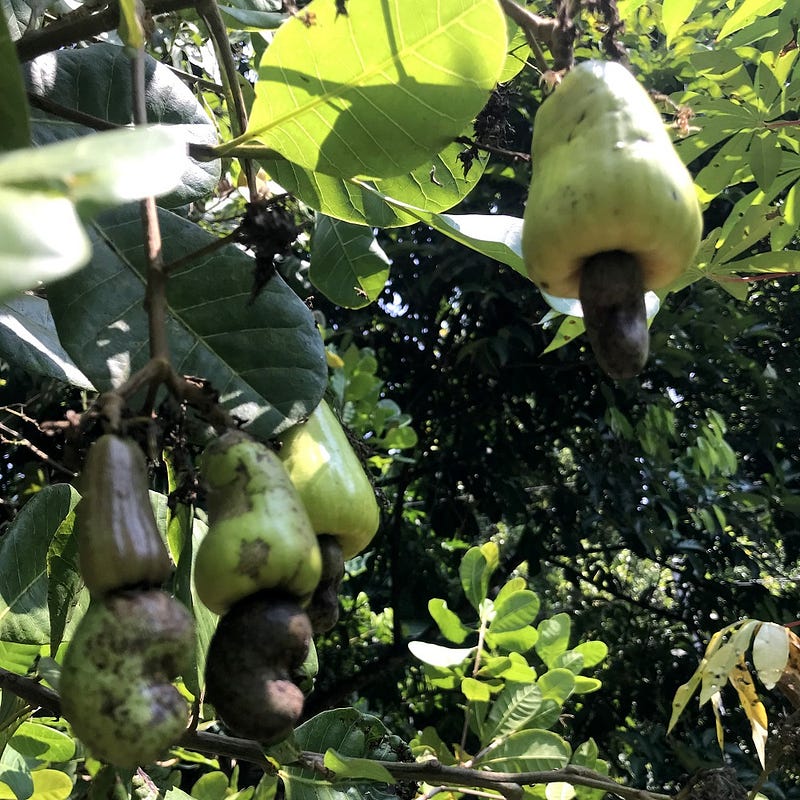
It’s interesting to note that the fruit of the cashew tree is called a cashew apple — I had no idea! If you remember I mentioned in my new year's post that cashew season was becoming unpredictable, but now it seems that they are finally starting to ripen, a bit later than usual.
On another note, there’s also the custard apple, which is similar to Soursop. So it seems that there are a plethora of “apples” out there! I did a quick Google search and found a few others, but I’m not familiar with them, so I won’t list them here.
If you happen to be aware of any other types of “apples,” please do share! I like to know about them.


