avatarSumesh P

Free AI web copilot to create summaries, insights and extended knowledge, download it at here

4085

Abstract

y, excess uric acid should be excreted from the body and that is yet another job for our kidneys.</p><p id="5f72">When you consume foods that are high in purines then it could ultimately result in higher levels of uric acid in the blood. Sometimes it can also be because the kidney is not fully efficient and cannot fully filter out uric acid from the blood. But then there are much bigger problems to be worried about! Let’s just focus on a usual situation when kidneys are okay, God bless!</p><p id="4f4c">Here is the reference range of uric acid in the blood that I picked up from one of my blood reports. The reference range also varies slightly by gender.</p><h2 id="3e57">Males — 1.0–7.0 [Unit mg/dL]</h2><h2 id="6a6c">Females — 1.0–6.0 [Unit mg/dL]</h2><p id="1fd9"><b><i>Doctors would typically start raising the red flag if it is above 4.5 to 5, at least that was my experience.</i></b></p><h2 id="09b0">So what if uric acid is a bit high?</h2><p id="8262">Well, in the beginning, nothing much, but long term it can create some serious issues.</p><p id="7e1e">Just like having high cholesterol levels doesn’t impact your lifestyle right away, but over the long term, it thickens the artery walls and can lead to heart ailments.</p><p id="e517">When the uric acid levels in the blood are in excess, the blood thinks, “Why should I carry the burden all the time,. Let me put it down somewhere,” and then they are offloaded onto the joints in the body.</p><p id="e11e">Over time the build-up of uric acid results in the formation of urate crystals in the joints.</p><p id="8972">When the number and size of the urate crystals increases, the constant abrasion of urate crystals with the tissues causes painful inflammation and swelling. Over time it can also reduce the range of motion of the joints as the body tries to avoid pain.</p><p id="8df3"><b><i>The pain is like — think of throwing some sand into a well-greased and smoothly running machine — Ouch can’t even imagine.</i></b></p><p id="e4c1">Usually, the first joints to get affected are the big toes, as was in my case, then the fingers. But it can also be the joints of your hands, ankles knees, etc.</p><h2 id="bab2">When this condition advances, it is known as gout.</h2><h2 id="216d">What is gout? — as per cdc.gov</h2><blockquote id="9b83"><p>“Gout is a common form of inflammatory arthritis that is very painful. It usually affects one joint at a time (often the big toe joint). There are times when symptoms get worse, known as flares, and times when there are no symptoms, known as remission. Repeated bouts of gout can lead to gouty arthritis, a worsening form of arthritis.”</p></blockquote><p id="29e8">The bouts of pain can last few hours to several days.</p><p id="114e">So now it is clear that we don’t want to reach that stage. Anyone disagree?</p><p id="adf5">How do we control or manage Uric acid levels?</p><p id="da7e">I am not going to try and explain it myself when I have the recommendations I received from a qualified medical professional in my own case some time ago.</p><figure id="a47e"><img src="https://cdn-images-1.readmedium.com/v2/resize:fit:800/1*fGEQMbeGOVLpwoiuXZvhSA.png"><figcaption>Guidelines from author’s own doctor consult. Image - Author</figcaption></figure><p id="a4b0">What specific foods are okay and which are not recommended? Let’s see more recommendations from the doc.</p><p id="d684">After seeing some minor pain in the toes, I started following these diet guidelines. As you can see, all the fun foods are in the no-no section 😊.</p><figure id="d724"><img src="https://cdn-images-1.readmedium.com/v2/resize:fit:800/1*upx8APpOfntEJPPe9QQceg.png"><figcaption>Guidelines from author’s own doctor consult. Image — Author</figcaption></figure><p id="b01c">Sadly, even after moderation on food as suggested, my uric acid levels continued to be on the higher side.</p><p id="06ef">Enter Intermittent Fasting & One Meal A Day</p><p id="67fb">When I started with OMAD and IF, the primary reason was better health, energy levels, and focus. Controlling uric acid was not e

Options

ven in my mind as I had by now given up on the fight.</p><p id="0116">I started OMAD (one meal a day) & Intermittent Fasting in April 2017.</p><figure id="ed34"><img src="https://cdn-images-1.readmedium.com/v2/resize:fit:800/1*ABiOw9WGntiqGw0EgtLiBg.png"><figcaption>Recorded results from author’s own blood test reports over time. Image — Author</figcaption></figure><p id="d66b">As you can see from the chart above, my uric acid levels were continuously increasing hitting a peak of 8.5. The dip that you see in the chart after that is the short-term effect of doctor-prescribed medication for almost 2 months if I recall correctly.</p><p id="8afe">In the subsequent months, you can see how it went back up when the effects of medication waned.</p><p id="d304">Disheartened, I had stopped tracking this now.</p><p id="e14c">But after a few months into Intermittent Fasting and one meal a day, surprisingly, in a few months, I saw what I believed to be near impossible!</p><p id="794e">The level of uric acid had hit a decade low or you can even say — lifetime low levels — and it has remained there since.</p><p id="a1ea">Now, it is not deciphered yet if the lowered uric acid is the direct impact of intermittent fasting or because of one of the key changes in food intake when you do intermittent fasting. In my view, the two potential habits that tag along with IF also could a positive impact on uric acid levels.</p><p id="b405">These are:</p><ul><li><b>Drinking lemon water (salted)</b></li><li><b>Drinking apple cider vinegar</b></li></ul><p id="2cbc">These were integral to my intermittent fasting regimen, especially for the lemon water that I would consume multiple times a day. Apple cider vinegar was taken several times a week, though my effort was to have it every day. It is also worthy to point out that consuming lemon water independently outside of IF did not have the same effect before, especially not a drastic and sudden drop like I saw. I have to conclude that it was the catalyst of intermittent fasting that helped me rein in this beast.</p><p id="9d0a">I continued my journey with OMAD and intermittent fasting for several more years.</p><p id="4c92">Stay tuned, I intend to share my experience with intermittent fasting and cover these in later articles,</p><ul><li>Effect of OMAD and IF on cholesterol and triglyceride levels</li><li>Benefits I experienced during Intermittent Fasting</li><li>The downsides of OMAD/IF</li><li>Why I had to stop Intermittent Fasting</li></ul><p id="2b85"><b><i>Important Note: </i></b><i>The information presented here is my personal experience and does not substitute medical advice. Please consult your physician to plan a safe regime that works best for you.</i></p><div id="f9bf" class="link-block"> <a href="https://readmedium.com/europe-is-better-than-the-usa-46026537e5cb"> <div> <div> <h2>Why Europe Is Better Than America. I Bet You Will Agree.</h2> <div><h3>Why I chose Europe over the USA.</h3></div> <div><p>medium.com</p></div> </div> <div> <div style="background-image: url(https://miro.readmedium.com/v2/resize:fit:320/0*RllnaffOwOb6MlbY)"></div> </div> </div> </a> </div><div id="e0a2" class="link-block"> <a href="https://readmedium.com/i-relocated-to-germany-during-covid-what-i-saw-explains-why-europe-struggles-to-contain-it-b3b82251955d"> <div> <div> <h2>I relocated to Germany amid COVID. Why Europe struggles to control it is clear.</h2> <div><h3>The stark differences in handling of the pandemic between a developing nation and developed countries.</h3></div> <div><p>medium.com</p></div> </div> <div> <div style="background-image: url(https://miro.readmedium.com/v2/resize:fit:320/0*0N8N_nBdasvd0pG1)"></div> </div> </div> </a> </div></article></body>

How Intermittent Fasting Affected My Uric Acid Blood Levels

See the impact of Intermittent Fasting and One Meal a Day on Uric Acid with data from years of personal experience.
Photo by Owen Beard on Unsplash

Intermittent Fasting and One Meal A Day (OMAD) are buzzwords anyone looking to start a healthy lifestyle currently hears a lot.

Are these just some short-term trends or fad? Why are people obsessed with it?

Why do people who do it right, swear by it.

Here I present some real-life data on personal challenges I was able to overcome while I did Intermittent Fasting.

Hope this will help you have a better quality of life.

Many elements that constitute our blood, have one thing in common. To remain healthy, all of these elements need to be in harmony and within the reference ranges. Be it Glucose (sugar), Cholesterol, Uric Acid, WBC, RBC, etc, etc, when they exceed normal levels, the individual’s body is considered unhealthy. When these constituent elements are not in harmony, the effect also spills over and starts influencing other elements or organs and also opens the doors for intruders to come in and take hold.

For today, the object of our interest will be — Uric Acid.

I have had high uric acid levels in my blood for a long time, over 10 years. Despite following medical advice and best practices I found it difficult to control it. Medication taken for several weeks would only work in the short term. It was affecting my quality of life.
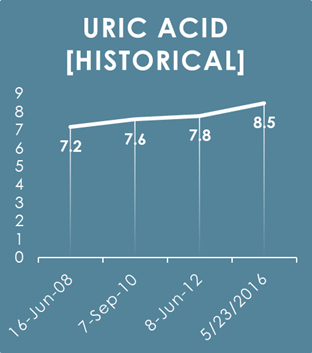
Historic levels from blood test reports. Image — author

I had given up on the idea of trying to control it, but then I discovered this, read on…

Want to know about the effect of Intermittent Fasting on high cholesterol, triglycerides, read this.

What is Uric acid and why should you care?

Uric acid is a chemical found in our blood. The food we eat contains among other things, an organic compound known as purines.

When our digestive system processes purines, uric acid is created as a byproduct. Ideally, excess uric acid should be excreted from the body and that is yet another job for our kidneys.

When you consume foods that are high in purines then it could ultimately result in higher levels of uric acid in the blood. Sometimes it can also be because the kidney is not fully efficient and cannot fully filter out uric acid from the blood. But then there are much bigger problems to be worried about! Let’s just focus on a usual situation when kidneys are okay, God bless!

Here is the reference range of uric acid in the blood that I picked up from one of my blood reports. The reference range also varies slightly by gender.

Males — 1.0–7.0 [Unit mg/dL]

Females — 1.0–6.0 [Unit mg/dL]

Doctors would typically start raising the red flag if it is above 4.5 to 5, at least that was my experience.

So what if uric acid is a bit high?

Well, in the beginning, nothing much, but long term it can create some serious issues.

Just like having high cholesterol levels doesn’t impact your lifestyle right away, but over the long term, it thickens the artery walls and can lead to heart ailments.

When the uric acid levels in the blood are in excess, the blood thinks, “Why should I carry the burden all the time,. Let me put it down somewhere,” and then they are offloaded onto the joints in the body.

Over time the build-up of uric acid results in the formation of urate crystals in the joints.

When the number and size of the urate crystals increases, the constant abrasion of urate crystals with the tissues causes painful inflammation and swelling. Over time it can also reduce the range of motion of the joints as the body tries to avoid pain.

The pain is like — think of throwing some sand into a well-greased and smoothly running machine — Ouch can’t even imagine.

Usually, the first joints to get affected are the big toes, as was in my case, then the fingers. But it can also be the joints of your hands, ankles knees, etc.

When this condition advances, it is known as gout.

What is gout? — as per cdc.gov

“Gout is a common form of inflammatory arthritis that is very painful. It usually affects one joint at a time (often the big toe joint). There are times when symptoms get worse, known as flares, and times when there are no symptoms, known as remission. Repeated bouts of gout can lead to gouty arthritis, a worsening form of arthritis.”

The bouts of pain can last few hours to several days.

So now it is clear that we don’t want to reach that stage. Anyone disagree?

How do we control or manage Uric acid levels?

I am not going to try and explain it myself when I have the recommendations I received from a qualified medical professional in my own case some time ago.
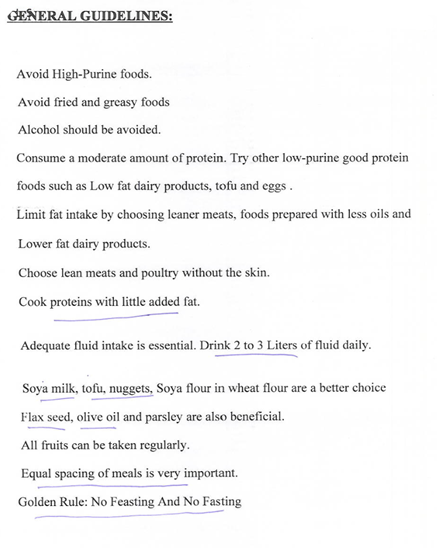
Guidelines from author’s own doctor consult. Image - Author

What specific foods are okay and which are not recommended? Let’s see more recommendations from the doc.

After seeing some minor pain in the toes, I started following these diet guidelines. As you can see, all the fun foods are in the no-no section 😊.
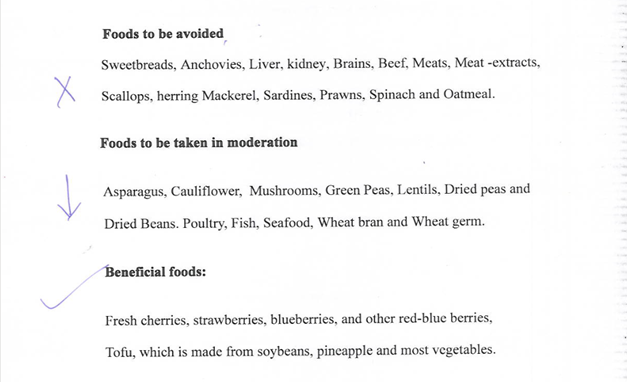
Guidelines from author’s own doctor consult. Image — Author

Sadly, even after moderation on food as suggested, my uric acid levels continued to be on the higher side.

Enter Intermittent Fasting & One Meal A Day

When I started with OMAD and IF, the primary reason was better health, energy levels, and focus. Controlling uric acid was not even in my mind as I had by now given up on the fight.

I started OMAD (one meal a day) & Intermittent Fasting in April 2017.
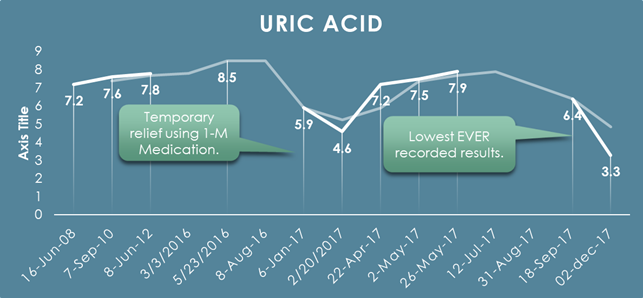
Recorded results from author’s own blood test reports over time. Image — Author

As you can see from the chart above, my uric acid levels were continuously increasing hitting a peak of 8.5. The dip that you see in the chart after that is the short-term effect of doctor-prescribed medication for almost 2 months if I recall correctly.

In the subsequent months, you can see how it went back up when the effects of medication waned.

Disheartened, I had stopped tracking this now.

But after a few months into Intermittent Fasting and one meal a day, surprisingly, in a few months, I saw what I believed to be near impossible!

The level of uric acid had hit a decade low or you can even say — lifetime low levels — and it has remained there since.

Now, it is not deciphered yet if the lowered uric acid is the direct impact of intermittent fasting or because of one of the key changes in food intake when you do intermittent fasting. In my view, the two potential habits that tag along with IF also could a positive impact on uric acid levels.

These are:

  • Drinking lemon water (salted)
  • Drinking apple cider vinegar

These were integral to my intermittent fasting regimen, especially for the lemon water that I would consume multiple times a day. Apple cider vinegar was taken several times a week, though my effort was to have it every day. It is also worthy to point out that consuming lemon water independently outside of IF did not have the same effect before, especially not a drastic and sudden drop like I saw. I have to conclude that it was the catalyst of intermittent fasting that helped me rein in this beast.

I continued my journey with OMAD and intermittent fasting for several more years.

Stay tuned, I intend to share my experience with intermittent fasting and cover these in later articles,

  • Effect of OMAD and IF on cholesterol and triglyceride levels
  • Benefits I experienced during Intermittent Fasting
  • The downsides of OMAD/IF
  • Why I had to stop Intermittent Fasting

Important Note: The information presented here is my personal experience and does not substitute medical advice. Please consult your physician to plan a safe regime that works best for you.

Health
Lifestyle
Food
Life
Life Lessons
Recommended from ReadMedium