
How I Drove 7,000 Views to My Medium Article in Two Days
Optimizing for both search and social media

First of all, I’d like to throw out a disclaimer that this article is not about driving 7,000 internal Medium audience views to a Medium article.
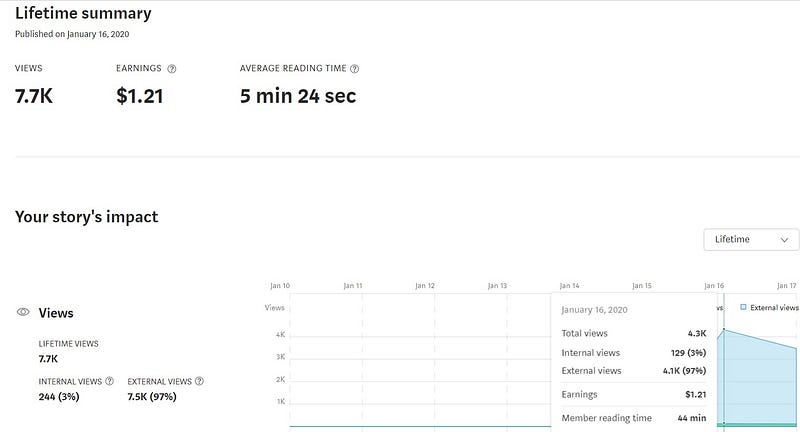
But wait, don’t go just yet. Let me explain how reading this will still be useful to you.
I feel it’s important to highlight this at the start of the article to manage expectations. It is my intention to share an honest case study on the experience in how I drove traffic to my Medium article so we can all learn something from it. Why compete when we can all combine our wisdom to improve our writing and promotion tactics together?
Many of us would have already known having our Medium article curated would give it better exposure as it gets circulated and promoted by Medium.
I published this Medium article as a relatively new writer (around one month of consistent writing) without distributing through any publication and was yet able to have it curated on the third day.
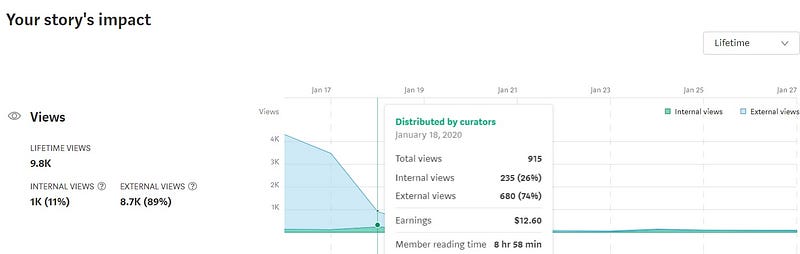
I have strong reasons to believe having high traffic to your Medium article allows two key benefits — as this is my second time getting my Medium article curated in a similar fashion (for credibility’s sake, here is the link to the first case study).
Here are the two key benefits:
- Prioritizes your Medium article for curation
- Improves curation rate
This is important because sometimes we, as writers, aren’t able to find a publication that matches the topic we write about. And many new writers do not have an established following or publication they own to help drive traffic.
Does this mean our content isn’t worthy of being curated? Maybe, maybe not.
One thing’s for sure: If I had the knowledge and ability to get my Medium article curated, I’d gladly do so — and I believe this is why you’re reading this, too.
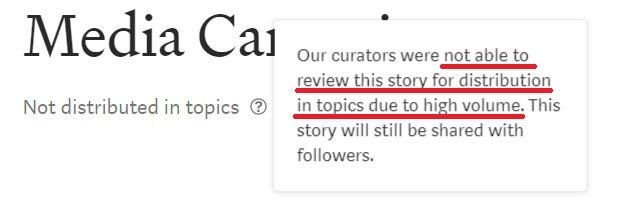
To reduce the probability of my Medium articles being missed out on an opportunity to be evaluated for curation and to improve the curation rate, here’s what I did to drive 7,000 views to my Medium article.
Optimizing for Interest and Search
Before the story was written, I asked myself, “How can I make this article more relevant to more audience?” Because the more relevant it is to a wider audience, the higher the probability more people will click on it and read it.
First, I listed down topics I could potentially angle the content for.
- Travel
- Scuba diving
- Adventure
- Lessons learned
- Indonesia
Then, I evaluated each topic based on how much potential they had to reach a wider range of audiences.
One of the ways to evaluate the potential is to use Google Trends.
Google Trends is a free tool by Google that allows you to check the indicative search volume on the Google search page.
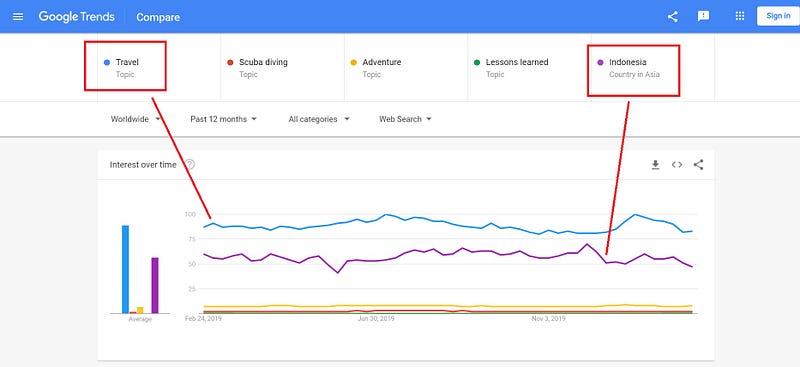
Armed with this knowledge, I wrote my Medium article in a way that highlighted the two topics. I wrote about my travel experience in Indonesia and used it as a guide for the content.
Having read several stories on people’s adventures while traveling, I had a decent idea of how the Medium article should be written.
Tip: If you’re unsure about how to structure the content, you can always Google search some articles and pick out relevant top-ranked results, observing how others structure their stories and the writing style they use.
For this Medium article, I consciously described locations in the story and showed how I traveled from one venue to another to make it more relevant to the two topics.
To optimize for search, I made sure my Medium article title had keywords that were related to the two topics.
Hence, I included the words Indonesia, rescued, and getting lost in the headline.
Based on the traffic source, there was a decent amount of traffic driven from organic search.
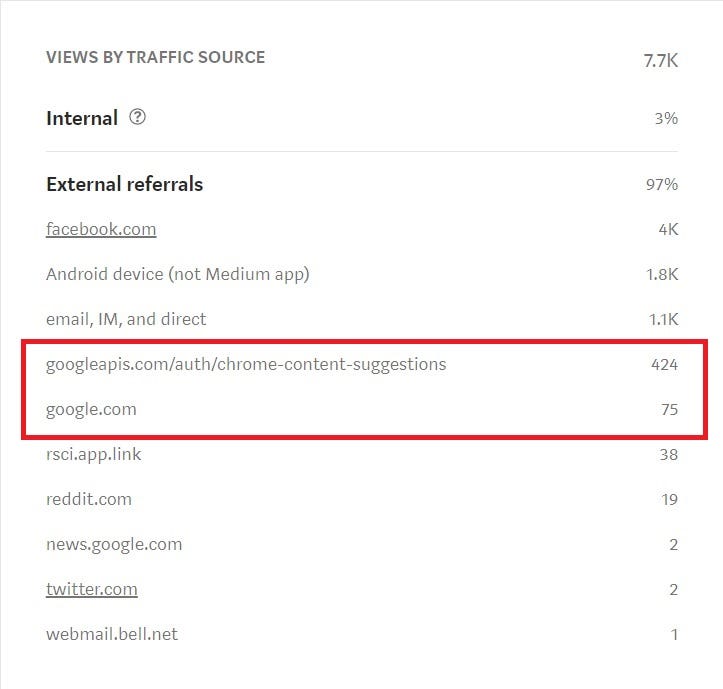
The Medium article also managed to achieve the first page and first result for the keywords of “how i got rescued in indonesia.”
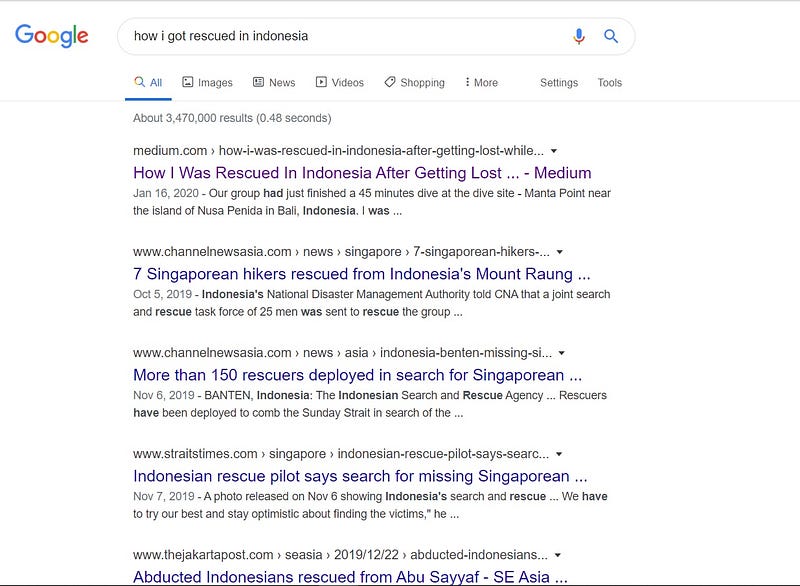
Being ranked high on Google Search would help generate organic traffic over time, and this allows opportunities to gain more views from the external audience that might eventually convert to Medium members.
Promoting on Social Media
After publishing the Medium article, I promoted it to a few relevant interest groups on Facebook.
Using the topics I listed earlier on, I looked for relevant groups on Facebook and decided to post in the scuba diving groups because a significant portion of the Medium article talked about my scuba diving experience.
I crafted my post to highlight my scuba diving experience and encouraged the members to share theirs by asking a question at the end.
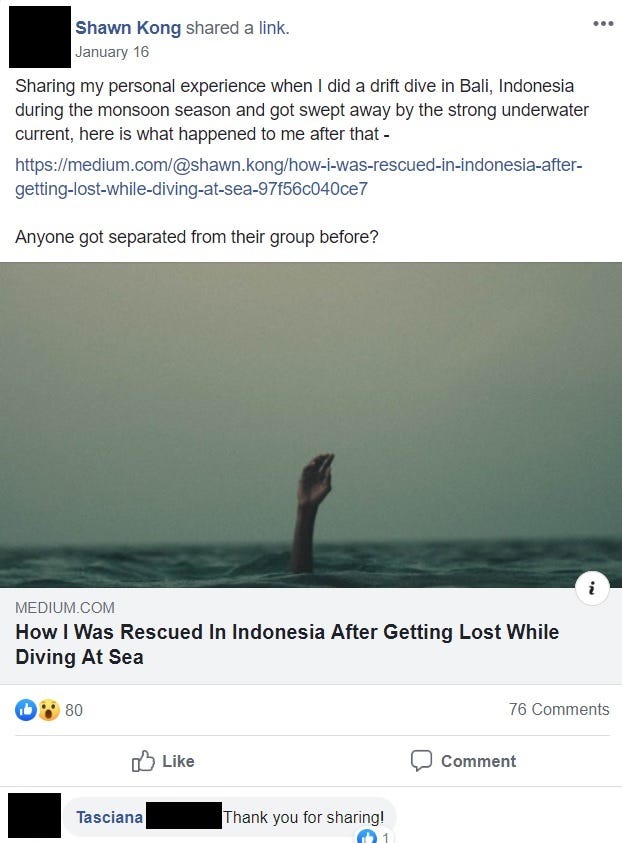
I posted at several scuba diving groups on Facebook simultaneously at peak timing (morning rush hour), when members of the group would be most active, allowing higher visibility for my post. This was done on Day 1.
Most people would leave their social media posts alone after posting. But I followed-up with my posts because post engagement was crucial in influencing the visibility of the posts.
Following up after posting
I monitored each post closely and engaged with the people who responded in the comments.
I also thanked them for reading my story and made sure my replies were prompt.
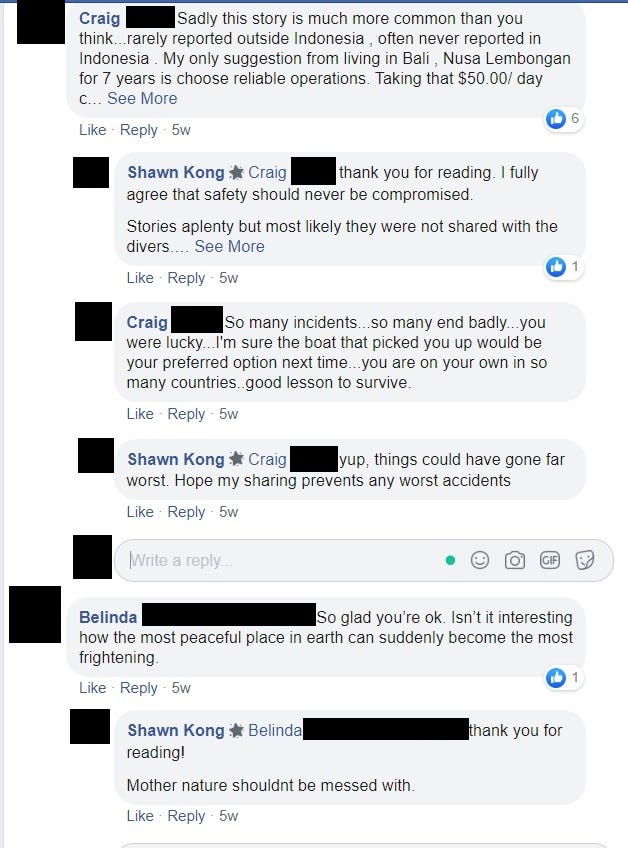
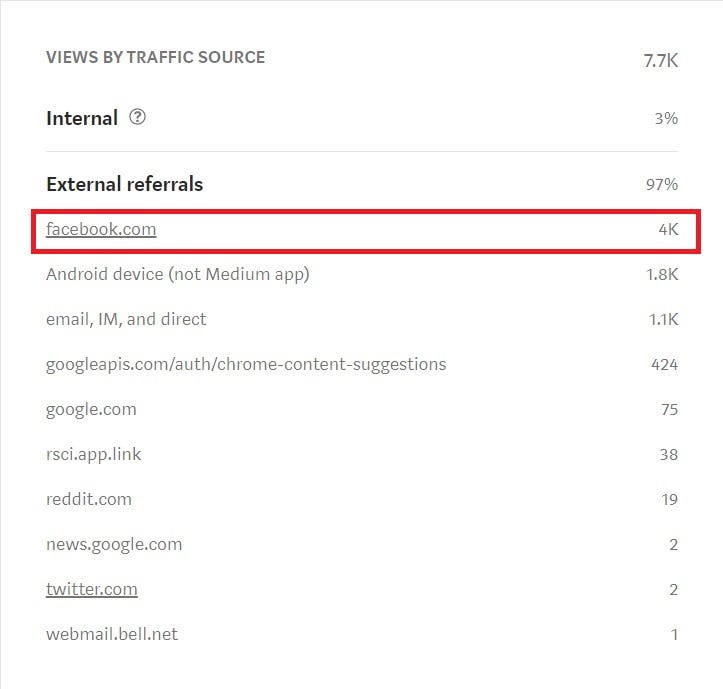
In the two days, my efforts in engaging with people on Facebook allowed the post to remain trending and near the top of several groups, which made it more visible to even more people.
This drove more than half of the traffic to the Medium article.
Luck and Virality
You might have also noticed a considerable amount of traffic coming from these two sources — “Android device” and “email, IM, and direct.”
Traffic from those two sources is actually thought to be from word of mouth, where people share the link to another person in their own network or on a one-to-one basis.
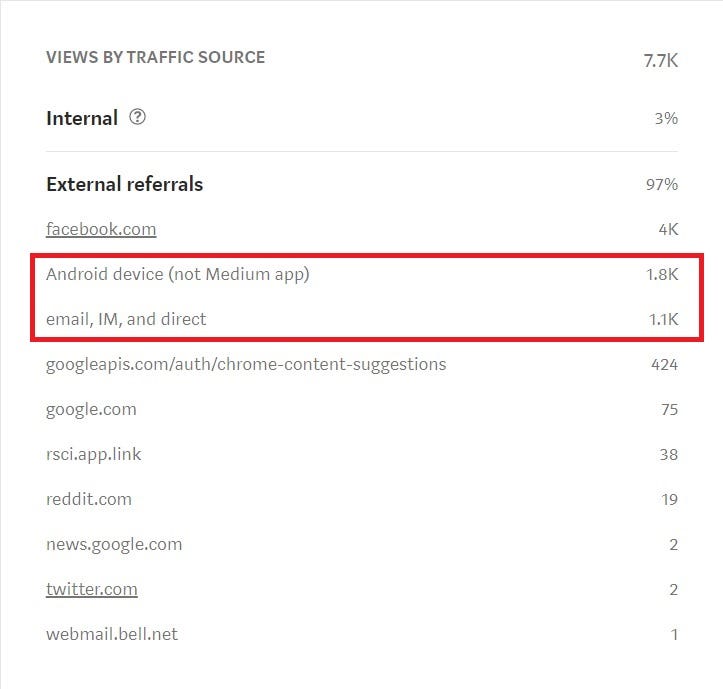
Because a considerable amount of traffic is coming from link sharing, I feel obliged to give my best inference on how it happened.
Here’s my take.
When I wrote the Medium article, I shared very candidly my thoughts and actions in hopes that people won’t make the same mistakes I made.
Being very honest in writing that Medium article made me vulnerable.
I shared the mistakes I made and was criticized heavily when the Medium article was shared (without my knowledge and against my will) in a Facebook group that discusses scuba diving incidents.
I joined the group to take a look when someone contacted me to defend my actions, clarify, and provide more information on the facts I shared in the article.
However, I didn’t reply to any of the comments as it got to the point where the comments in the group were very toxic and some of it even became personal attacks. It felt like a case of blaming the victim, and if I were to start commenting, it might have gotten worse.
At some point, I deliberated on removing this Medium article altogether as it started to make me feel depressed.
But when I thought about all the people I could share my experience with — who could benefit from not making the same mistakes I have — I decided to suck it up and keep this Medium article online.
I feel the piece became somewhat viral in part because of the controversy around my Medium article. And becoming viral requires a bit of luck.
Conclusion
And so, through optimizing my Medium article content for interest and search, promoting it on social media, following-up after posting, and with some luck and virality, I was able to drive 7,000 views to my Medium article in two days.
I hope you find this article useful in getting your Medium articles curated and also in improving your curation rate.