
7 Tips to Improve the Organic Reach of Your Facebook Posts
No. 2: Ask a question at the end

Facebook, when used effectively, can extend its reach to more audiences. When left alone, the amount of reach will be nothing more than disappointing, especially with a small follower base.
It is important to understand how Facebook ranks content in the newsfeed, so as to optimize our content for a wider reach. With the algorithm constantly evolving, being up to date and in the know will empower users to be at the forefront of the competition.
Being a marketer, I constantly have to find ways to promote content to my target audience both efficiently and effectively. And most of the time, I don’t get a budget.
Social media isn’t a magical channel that generates views and engagement without research and effort. Yet many non-marketing colleagues expect us to conjure attention effortlessly by slapping on a picture and typing out a few sentences.
Having worked in such environments deepened my knowledge for the platform and made me more resourceful.
But not everyone needs to go through the same path as I did.
Here is a crash course of seven actionable tips that will help improve the organic reach of your future Facebook posts.
1. Use Visuals/Videos
Use relevant and appropriate material
Top presentation blog Prezi.com shares that there are four different types of learners. Not everyone enjoys reading a long wall of text; some people are visual creatures and would interact with content that has visual elements. A simple infographic can help communicate across complicated concepts better.
It is beneficial to include more than one format of sharing so as to cater to the different preferences of the audiences. This would enable the people consuming the content to be more engaged, hence reacting to the post or sharing it with their friends.

2. Encourage a Conversation — Ask a Question at the End
Having a call to action that encourages people to share their own experiences would nudge people into a conversation.
A simple question like “Have you experienced X before?” allows people to join in and contribute to the conversation by sharing their own experiences.
Here is an example of a conversation starter I used in one of my posts on diving:
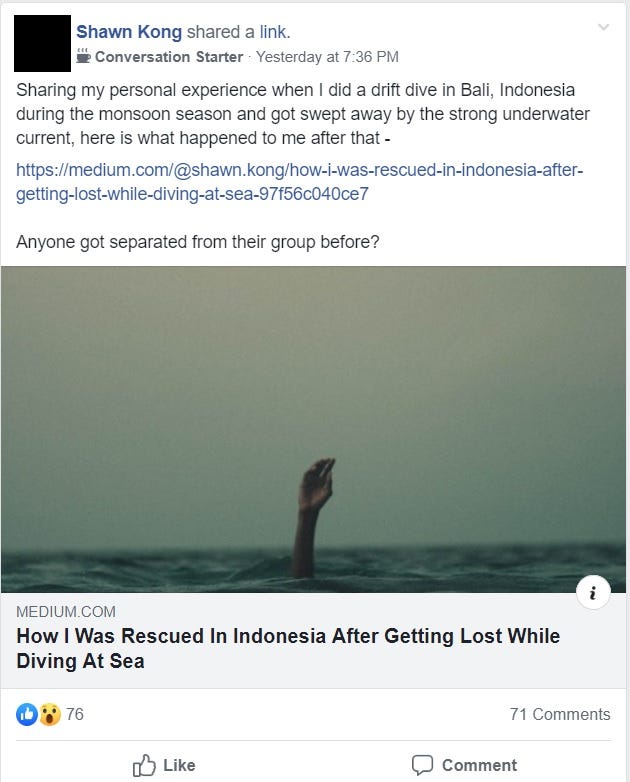
According to a private Facebook webinar, there are a few factors that affect the prioritization of posts in the newsfeed:
- People sharing a link over Messenger
- Commenting on or liking a person’s photo or status updates
- Multiple replies to a status update or photo
- Meaningful interactions
Thus, by encouraging a conversation, the probability of people carrying out one or more of those factors increases. And this improves the organic reach of the Facebook post.
3. Have a Conversation With People — Chat With Them in the Comments
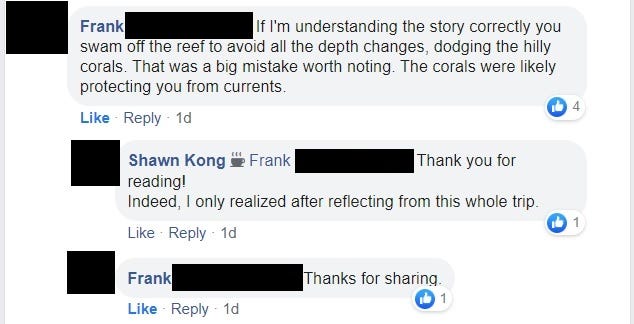
After encouraging a conversation, the next best thing you can do is moderate the conversation. In this digital age, being there in real-time counts. If people were looking for a slower conversation, they would have written a snail mail over.
Here are three pointers to get the conversation going:
- Respond promptly — This isn’t an email; people expect prompt responses over social media.
- Thank people for reading — A little gratitude would help build rapport and get people to open up and have a more casual conversation.
- Be positive — People are drawn to positivity. No one wants to be around a Negative Nelly. Like negative vibes, positive vibes are contagious. Think positively and the engagement you have, will be positive. Don’t forget to compliment and praise where appropriate!
4. Post at Peak Timings
Posting your content when traffic on Facebook is high will allow a higher probability for your content to reach out to more people. By playing the numbers game, even if the content quality is bad, just by posting it at the optimum timing can give you higher organic reach than having excellent content quality posted at a bad time.
To know when peak timing is, a strong understanding of the target audience is required. One of the key characteristics of a target audience to understand is the demographics.
Knowing the demographics (e.g., country of origin) would allow you to estimate when the peak timings are and convert it to your local time.
There are many research and case studies that show the peak traffic for certain groups of audiences.
Based on my personal experience, posting around 7 a.m. to 9 a.m. and 6 p.m. to 8 p.m. gives good traffic, due to long commutes to and from work.
When targeting Asian audiences from America, the timing will be opposite, e.g., p.m. to a.m. and a.m. to p.m. It is important to note the time difference and adjust your post accordingly.
If you are unsure of the peak timings, it’s fine. You can always test your posts out at different times of day and see what works best.

5. Use Relevant Hashtags
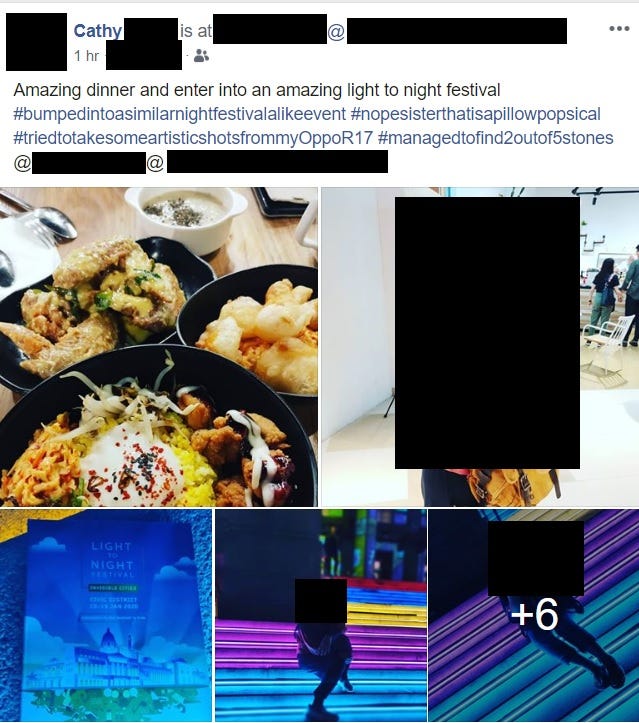
Brainstorm a list of topics that are in the post and pick those that are more relevant or have a wider audience. Using relevant hashtags helps people find your content easier. Add them at the bottom of the post or in between text when appropriate.
Do not overdo the hashtags and flood the post or it will look as though you are begging for attention, making you come across as desperate.
A comfortable number of hashtags for Facebook posts is around three; anything more just makes it cluttered.

Flooding your post with hashtags or forming your sentences with hashtags will also make it look ugly.
6. Tag Relevant People/Pages/Groups
In addition to hashtags, you can also tag the subject in the post. This will allow the members of that page/group to see the post, so they can contribute to the conversation and improve the post’s organic reach.
The more relevant the tags, the better the odds of it reaching more people.
The same rule from hashtagging applies: Don’t overdo it.
7. Share the Post in Communities/Groups
Further, boost the organic reach of your post by sharing it in various communities and groups.
Create a list of relevant groups that have similar topics. Then, go to all the groups and share your post there. For example, I shared my diving article in various scuba diving groups on Facebook.
To review a case study on how I shared the post in various groups, you can visit this article below.
Understanding how Facebook prioritizes its content on the newsfeed will give you an edge in improving the organic reach of the content. By crystalizing my experience in this article, I hope that you’ll be able to pick up something useful from these seven tips!