
How I Boosted My Metabolism: From 1,700 to 2,200 Calories/Day
12 science-backed practices that can turbo-charge your metabolism and help you burn fat

If I could have a superpower, I’d choose a “supermetabolism.”
To eat whatever I want without any adverse health and aesthetic effects.
Though I had appearance-based goals when I started my fitness journey, what primarily motivated me to embrace a fitter lifestyle was an intense desire to eat more.
You see, I’ve always loved eating. So when I learned that embracing certain habits allowed you to eat more, I was sold.
Now, of course there’s a limit to how much you can eat — especially after you achieve a lean physique. But being able to eat, even if just a little bit more, is always better than nothing (at least for me).
In my case, I went from consuming an average of 1,700 calories to 2,200 calories per day — a 29% increase — while also becoming leaner. And though 2,200 calories may not impress some, it’s considered the higher range for someone of my age, gender, height, and weight.
All I had to do was adopt 12 science-based practices that can help anyone boost their metabolism.
That said, please remember that underlying health conditions, such as hypothyroidism or diabetes, can affect the effectiveness of these habits. So always consult with a health professional before attempting any major life changes.

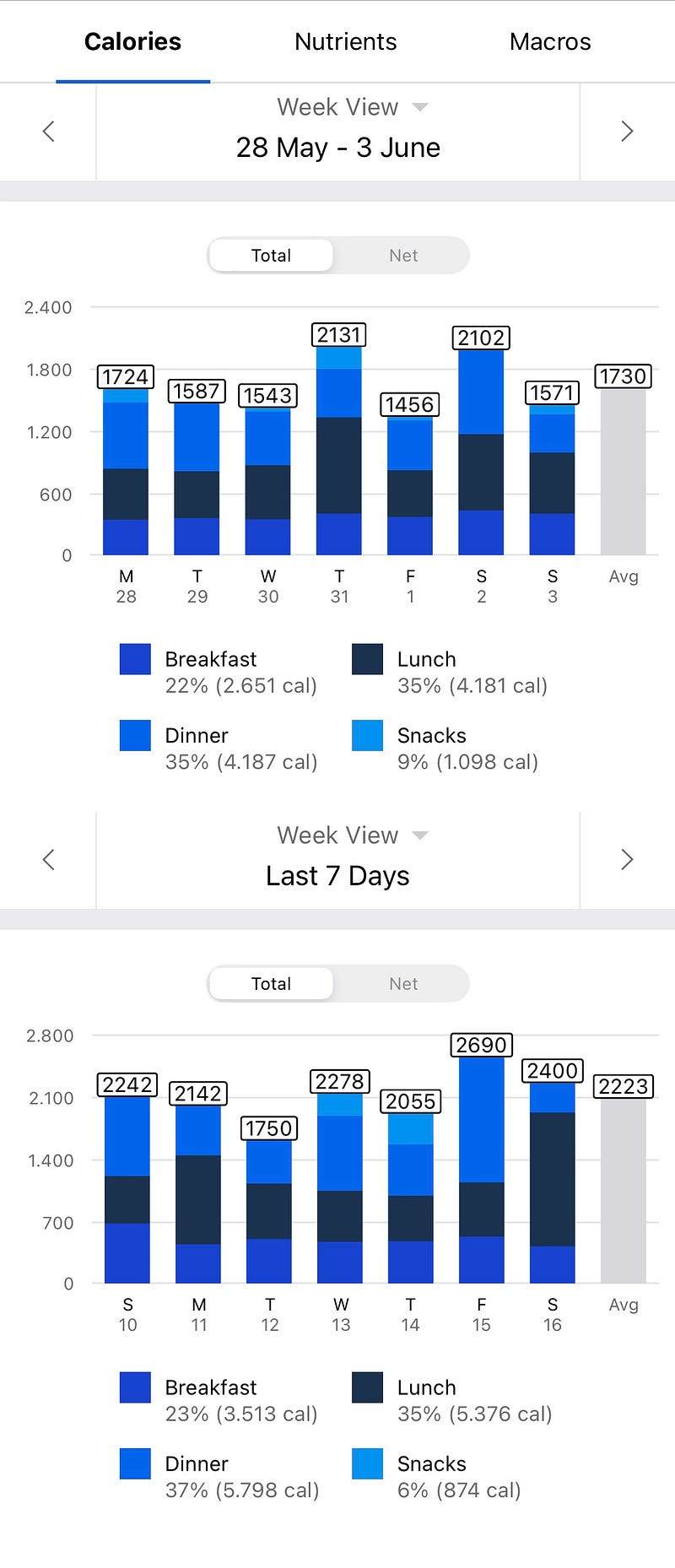

Table Of Contents
· Understanding Our Metabolism · #1: Boosting Our Basal Metabolic Rate (BMR) ∘ Strategy #1. More muscle, less fat ∘ Strategy #2. More beige fat and brown fat activation ∘ Strategy #3. Get enough of these three vital things · #2. Boosting the Thermic Effect of Food (TEF) ∘ Strategy #1. Make this macronutrient a priority ∘ Strategy #2. Add these foods to your diet ∘ Strategy #3. Bigger, less frequent meals · #3. Boosting Our Exercise Activity Thermogenesis (EAT) · #4. Boosting Our Non-Exercise Activity Thermogenesis (NEAT) ∘ Strategy #1. The 30-minute rule ∘ Strategy #2. WALK! ∘ Strategy #3. Raise your calves and shake your legs ∘ Strategy #4. Embrace one of Finland’s treasured habits ∘ Strategy #5. Lifestyle-complementing hobbies · Tying It All Together
Understanding Our Metabolism
To boost our metabolism, we must first understand what it is.
A person with a fast metabolism is just someone whose Total Daily Energy Expenditure (TDEE) — the amount of calories they burn daily — is high. This allows them to eat a lot and gain zero weight.
That’s why revving up our TDEE becomes our goal when pursuing a “supermetabolism.” And the way to do it starts by analyzing its formula:
TDEE = Basal Metabolic Rate (BMR) + Thermic Effect of Food (TEF) + Exercise Activity Thermogenesis (EAT) + Non-Exercise Activity Thermogenesis (NEAT).
Let’s break it down:
- Basal Metabolic Rate (BMR): These are the calories burned to keep our vital processes working. They account for 60-75% of our TDEE.
- Thermic Effect of Food (TEF): Whenever we eat, our body needs to burn calories to process food. Protein requires the most energy to digest, with 20% to 30% of the consumed calories being used to digest it. Carbohydrates require 5% to 10%, and fat takes 0% to 3% at most. Overall, TEF accounts for 10% of our TDEE.
- Exercise Activity Thermogenesis (EAT): These are the calories burned through intentional exercise, like a gym workout or a run. They account for around 5% of our TDEE.
- Non-Exercise Activity Thermogenesis (NEAT): These are the calories expended for everything we do that isn’t sleeping, eating, or sports-like exercise. Some examples are gardening, fidgeting, and walking. On average, NEAT makes up 15% of our TDEE.
To boost our metabolism, our best bet is to work on increasing each of these values.
Here’s how:
#1: Boosting Our Basal Metabolic Rate (BMR)
Our Basal Metabolic Rate (BMR) is responsible for most of our daily calorie expenditure, so bringing this value up is the single, most efficient way to boost our metabolism.
Now, you may be thinking… But aren’t these the calories we burn to breathe and pump blood? We can’t control that!
True.
Our BMR is largely out of our control. The main modifiable factors that affect it are our weight and body composition. Someone with a higher weight will also have a higher BMR, but people rarely want to go this way.
Instead, we can focus on the following strategies:
Strategy #1. More muscle, less fat
Though I look different in the intro pictures, I weighed the same. However, as I now have more muscle and less fat, I look leaner and have a faster metabolism.
To get here, I focused on eating more protein (we’ll discuss this later) and engaging in progressively harder resistance training.
Week after week, I challenged my muscles to grow, going from bodyweight exercises to dumbells and gym machines.
After several months, this helped me increase my lean mass and basal metabolic rate. Trading fat for muscle increases our BMR as the latter requires more energy to exist.
Moreover, though the bulk of resistance training’s benefits are perceived in the medium-to-long run, it also impacts the short term thanks to its afterburn effect. After an intense session, our BMR can accelerate for several hours because our body is regenerating.
How to start:
If you’re new to resistance training, try doing 2 or 3 full-body sessions that focus on compound lifts, like:
- Squats
- Deadlifts
- Chest Press
- Bent Over Row
- Overhead Press
- Farmer Carry
- Reverse Lunge Step Up
They’ll work your entire musculature. Check how to do them in this video.
For each exercise, try doing three sets of 8–12 repetitions. The dumbells you pick should be heavy enough that your last rep takes about 3 to 5 seconds to complete. Every week or two, add more repetitions or weight. If you’re eating properly, you’ll notice a change in just 12 weeks.
Note: If you’re looking for a detailed guide on how to do a body recomposition, you can check Neeramitra Reddy’s Ultimate Fat Loss Bundle*. It contains several checklists with everything you need to know to lose fat successfully.
Strategy #2. More beige fat and brown fat activation
Not all fat is the same. We have white, brown, and beige.
The first is the most common kind, and its purpose is to store calories for energy. The second is less common. It exists in small amounts in adults, ready to keep us warm in cold environments.
And the third… Beige fat is what happens when white fat transforms into a browner version, an exciting process for anyone looking to accelerate their BMR.
Why?
Because brown and beige fat are more metabolically active than their white counterpart. These fats can even burn calories when exposed to cold as they’re full of mitochondria, the part of the cell responsible for producing energy.
However, the most researched process to “beige” our white fat and to activate our preexisting brown fat is unpleasant for many: regular cold exposure.
Having cold showers and ice baths, going out for a walk in winter with minimal gear, or even lowering our bedtime room temperature seem to trigger the transformation of white fat into beige and the activation of our brown fat.
That said, research on brown fat is relatively new. Much of it is preliminary or has involved animals or only small groups of humans, so it requires further study.
How to start:
- While showering, lower the temperature during the last minute. Note: Though I can’t confirm this has had a massive impact on my metabolism, I’ve noticed I can withstand cold temperatures better, so something must be happening.
- Lower your room’s temperature when sleeping (around 66 °F or 19 °C).
- During winter, go out for a short daily walk without your coat.
Strategy #3. Get enough of these three vital things
After several months of resistance training, I experienced an infuriating setback.
No matter how hard I trained, I saw no gains in lean mass and even lost some. For several weeks, I felt weak. I was unable to add more weight or reps.
Hell, I even struggled to lift what I’d been lifting.
As my goal was a body recomposition (trading fat for muscle), I didn’t change how I ate and simply focused on adding resistance training and 10k steps per day (we’ll discuss this later).
The problem is that this extra activity increased my TDEE, which put me at a too-high calorie deficit as I was eating exactly as before (1,700 calories).
Now, this isn’t a problem for everyone. People with a starting high-fat percentage (25+% men and 35+% women) can continue to see muscle gains even at a deficit.
But I was already lean.
Though I’ve reduced my fat percentage by about 6% (now I’m at 16–17%), my starting point was still low (23%), which meant that, in a steep deficit, my body started to consume the muscle I’d just built. Not to mention the intense cravings and insomnia (not fun!)
Desperate, I contacted a fitness trainer, who told me I wasn’t eating enough.
I started to see progress again once I increased my calories. Not only did I get my first taste of how my efforts were paying off — I could finally eat more — but I gained more muscle and lowered my fat percentage.
Without proper nutrition, our training progress — and our metabolism — suffers.
And this is also true for sleep and water.
When we don’t get enough rest, nourishment, or hydration, our body has to cut corners — to go into power-save mode — to go about its day.
This strategy, then, isn’t really about boosting your BMR but rather about ensuring it doesn’t suffer and interfere with your resistance training.
How to start:
- Sleep between 7–9 hours every night. For this, try these sleep hygiene tips.
- Eat enough to fuel your body, and if you’re trying to lose weight, shoot for a calorie deficit between 10–20% max. Crash diets will only crash your metabolism.
- Drink enough water (about 91 ounces for women and 125 for men). Another way to know whether you need to hydrate is the color of your urine. If pale yellow, great. If darker, get some H2O.
#2. Boosting the Thermic Effect of Food (TEF)
Though TEF only comprises about 10% of our total daily expenditure, it’s still worth optimizing as the effort required is minimal.
Strategy #1. Make this macronutrient a priority
As mentioned before, protein requires the most energy to digest, with up to 20-30% of its calories being used to simply process it.
If we focus on getting a protein-rich diet, then, we’ll increase our TDEE.
Moreover, eating a protein-rich diet has been shown to minimize muscle loss while on a calorie deficit, which helps reduce the drop in metabolism that often occurs during weight loss or body recomposition efforts.
How to start:
The recommended percentage of daily calories from protein is 10-35%. As protein contains 4 calories per gram, someone with a 2,000-calorie diet should consume between 50-175 grams, which should be spread throughout the day for better absorption.
Another excellent recommendation is to consume a minimum of 1.2 grams per kg of body weight (around 0.55 gr/lb) if you’re eating at maintenance (not cutting calories) and a minimum of 1.6–2.2 gr/kg (around 0.8–1 gr/lb) if you’re in a calorie deficit or you’re a heavy exerciser.
In my case, I like to keep my protein intake at 25% of my total daily calories (around 1.8 gr/ kg or 0.9 gr/lb). When I started my fitness journey, I was consuming around 10–15%, so this increase has helped me raise my TDEE and helped me build muscle.
One last thing to remember is to focus on quality sources like grass-fed beef, poultry, fish, eggs, legumes, and nuts.
Strategy #2. Add these foods to your diet
The following foods and drinks have been shown to boost our metabolism. And though their effect is minimal compared to other strategies — like building muscle — they’re still worth a try. Adding them costs us nothing.
How to start:
Consider upping your intake of:
- Mineral-rich foods: Iron and selenium are necessary for the proper functioning of the thyroid gland, which regulates our metabolism. Therefore, adding foods rich in these minerals, like meat, seafood, seaweed, legumes, nuts, and seeds, can be metabolism-boosting. Note: This is why neuroscientist Andrew Huberman, Ph. D., recommends eating two Brazil nuts daily.
- Iodine-rich foods: Our thyroid also requires iodine to function properly, which means we should make it a priority to consume seaweed (kelp, nori, wakame), fish, seafood, eggs, or even iodine-enriched table salt.
- Jalapeño peppers: Having one jalapeño pepper may be able to increase our metabolism temporarily. This is due to capsaicin, a chemical found in peppers. However, if you don’t like spicy foods, skip this one. The potential benefits aren’t worth the discomfort.
- Coffee: Caffeine can increase our metabolism and boost our workout performance.
- Tea: The caffeine and the catechins found in tea — like oolong and green tea — can also increase our energy expenditure for up to 24 hours.
- Ginger: Research shows that drinking hot water with dissolved ginger can help you burn up to 43 calories more than if you’d only drank hot water. In my case, I like to add ginger and lemon to my green tea, a delicious combination that also helps with menstrual cramping. Win-win.
Strategy #3. Bigger, less frequent meals
Evidence suggests it’s better to have bigger, less frequent meals to increase our TEF. In other words, sticking to the traditional three meals per day (breakfast, lunch, dinner) may be better for our metabolism than having extra snacks.
That said, remember that TEF only accounts for 10% of our total daily expenditure, so if choosing smaller, more frequent meals is what works for you, stick to it.
How to start:
- Try limiting your daily intake to two or three large meals (that still fall under your maintenance calories), even if just for a few days of the week. For instance, I used to have five 300–500-calorie meals spread throughout the day. Now, though, I have four 400–650-calorie meals on the days I do resistance training and have three 600–800-calorie meals on my resting days. Larger meals keep me satiated for longer.
- Give intermittent fasting a shot, even if just a light variety (between 12–16 hours only). For example, I usually have breakfast 12–13 hours after dinner on my training days, while I typically break my fast 14–16 hours after dinner on my rest days. This makes it easier to stick to 3 larger meals.
#3. Boosting Our Exercise Activity Thermogenesis (EAT)
EAT only accounts for 5% of our total daily expenditure, but we should still prioritize it for three reasons:
- Weekly bouts of resistance exercise are what’ll allow us to build metabolism-boosting muscle.
- Weekly bouts of cardiovascular exercise will keep our hearts and lungs strong and healthy for the years to come.
- No drug out there is better for our brains and mental health than exercise.
Intentional exercise may not be the calorie burner we’ve always thought it was, but its health benefits are too important to ignore.
Now, if we’re strictly thinking about optimizing our metabolism, the best approach is to combine resistance training and High-Intensity Interval Training (HIIT).
The first will allow you to build muscle while boosting your metabolism — even if just a little — for several hours post-exercise, and the second will strengthen your cardiovascular health while boasting a higher afterburn effect than steady-state cardio (i.e., running at a constant speed).
Now, though resistance training is nonnegotiable if you want to raise your metabolism, you can opt for a different type of cardio if HIIT doesn’t work for you.
For instance, I don’t like HIIT. It over-stresses my body and worsens my sleep.
Instead, I prefer lighter forms of cardio, like dancing or even walking. They still increase my daily calorie expenditure.
However, if you’re looking to maximize the metabolism-boosting properties of exercise — and you don’t experience any side effects — resistance + HIIT training is the way to go.
How to start:
- Engage in resistance training 2–4 times per week.
- On the days you’re not lifting weights, consider adding 20-minute HIIT sessions (you can find many examples on YouTube). Note: Ensure you have at least 1–2 rest days to give your body plenty of time to recover. For instance, a weekly routine might comprise 3 resistance training sessions, 2 HIIT sessions, and 2 rest days.
#4. Boosting Our Non-Exercise Activity Thermogenesis (NEAT)
Besides building muscle, bringing our NEAT up is where we can truly make a difference.
Someone with a high NEAT expenditure can burn up to 2,000 calories more per day than someone of the same size but with a lower NEAT. This is the gateway to an extra meal every single day.
The road to a “supermetabolism.”
Strategy #1. The 30-minute rule
Our metabolism experiences a 90% decrease after sitting for 30 minutes.
Let that sink in.
The good news is that just getting up for five minutes gets things going again. That’s why the 30-minute rule should be a thing.
Standing up, doing ten jumping jacks, walking to the bathroom — the activity doesn’t matter. What matters is breaking down long bouts of sitting with movement to prevent our metabolism from crashing.
How to start:
- Set alarms throughout your workday that remind you to stand up and move for 2–5 minutes every half hour.
Strategy #2. WALK!
If you’ve read anything I’ve written in the past, you’ll know I’m a big fan of walking. It strengthens our hearts and legs, helps us burn more calories, and lifts our mood.
I even did a 23k steps challenge a few months ago.
News flash: Walking is very effective for increasing our total daily calorie expenditure.
While on the challenge, I brought my daily calorie average to 2,400 calories (200 more than usual) — and still lost fat and gained muscle.
Now, I’m not saying we should walk 20k steps a day. Nobody has time for that.
But making a conscious effort to add more steps into our days is a simple and highly effective way to boost our NEAT. I, for one, always try to get at least 10k steps every day.
This takes me around 1 hour and 45 minutes, which I break up into several walking sessions.
Now, you may be thinking: Do I really need to set a goal? I hate having strict goals!
I get it.
But setting a goal for walking — albeit annoying — can be helpful. After all, our bodies naturally want to chill after an intense resistance training session. But when a goal is on the line, you push yourself and increase your NEAT.
How to start:
- Get a pedometer and measure how many steps you take on an average day. Try adding 2k steps more to your daily total.
- If you hate pedometers, try to go on a 30–60 minute walk every day.
- Search for walking opportunities everywhere. Instead of emailing your coworker, walk over and tell them what you need. Instead of meeting with friends at a restaurant, ask them out for a walk. Instead of lounging on your sofa while speaking on the phone, pace around your living room. The opportunities are endless.
Strategy #3. Raise your calves and shake your legs
Whether we like it or not, most of us have sedentary jobs that involve long sitting hours. Does that mean we’re doomed?
No.
Even while sitting, we can boost our NEAT.
One way is through calf raises (repeatedly lifting our heels). Another is to shake our legs or tap our feet. The point is to get our legs moving while sitting. This can increase our energy expenditure by up to 30%.
Not to mention its other benefits.
Since I’ve started calf raising and shaking my legs while sitting, I’ve experienced less water retention in my legs (especially noticeable after long flights). Moreover, research suggests that engaging in calf raises after a meal can reduce blood sugar spikes.
Nothing to lose and everything to gain.
How to start:
- During a meeting, a flight, or even while waiting at the doctor’s office, raise your calves or shake your legs while sitting. Get your blood flowing and your metabolism running.
Strategy #4. Embrace one of Finland’s treasured habits
Spending time in a sauna (infrared, steam room, dry) increases blood flow and heart rate, which is why some say this habit is an exercise-mimetic.
And just like exercise, it accelerates our metabolism.
A 2019 study found that four 10-minute sauna sessions with 5 minutes in between increases our resting energy expenditure. Not to mention the associated health benefits.
No wonder the Finnish love it.
How to start:
- Use the sauna or get into a hot bath once per week. Pro tip: Add some calf raises.
Strategy #5. Lifestyle-complementing hobbies
One of the best lessons I’ve learned reading Ryan Holiday’s Stoicism books is that our hobbies must complement our lifestyles to make us holistic individuals.
For instance, as Winston Churchill’s job was primarily brain-centered, he chose bricklaying as a hobby to ensure he didn’t neglect his body — not to mention it also boosted his metabolism, even if this wasn’t something he cared about.
But we do.
Those of us who want to maximize our daily calorie expenditure must consider adding active hobbies to our lives.
How to start:
- Besides resistance training and HIIT (or other cardio), consider adding an active hobby. Dancing, hiking, playing racquet sports — whatever gets your heart pumping.
Tying It All Together
Whether your goal is to eat more, lose weight, or simply have a faster metabolism for the fun of it, applying the following science-backed practices can help you increase your total daily energy expenditure (TDEE):
- Engage in progressively harder resistance training 2 to 4 times per week.
- Practice regular cold exposure to beige your adipose tissue.
- Ensure you get enough sleep, hydration, and food to avoid metabolism crashes.
- Make protein a priority in every meal.
- Add metabolism-boosting foods like brazil nuts, jalapeño peppers, green tea, coffee, and ginger.
- Opt for three larger, less frequent meals when possible.
- Try High Intensity Interval Training(HIIT). If it overstresses your body, shoot for lighter forms of cardio.
- Stand and move every 30 minutes to break long bouts of sitting.
- Walk as much as you can and more than a set goal.
- Raise your calves and shake your legs when sitting.
- Embrace the sauna as a regular weekly practice.
- Find an active hobby that complements your life.
These habits have helped me increase my metabolism by almost 30%.
However, I didn’t do this in a day. Not even in a year.
Increasing my metabolism took a long time, and it was thanks to this slow and careful approach that I was successful.
Trying to change or add too many things at once is a surefire way to remain stagnant. Instead, it’s better to apply the Pareto principle in the beginning, which states that you should focus on the 20% that gives you 80% of the results.
When it comes to boosting your metabolism, that means focusing on building muscle (resistance training) and increasing your NEAT (Raising calves while sitting or walking more). These two practices alone will get you 80% of the way.
Once you’ve mastered these, give the other practices a try. Keep those that work for you; discard the rest.
This is the path to a “supermetabolism.”
*Affiliate link.


