
How I Protect My Mental Health While Tracking Calories
5 simple tips that can drastically improve your calorie-tracking experience

Most health and fitness goals go something like this:
Want to lose weight? Eat fewer calories than you burn.
Want to bulk up? Eat more.
Want a body recomposition? Eat in a small calorie deficit with ample protein and a heavy dose of resistance training.
In other words, your daily intake of calories is tied to the result, which is why most people hoping to transform their bodies use a calorie-tracking app at some point or another.
After all, how else can you be sure you’re in a deficit, maintenance, or surplus? How else can you know you’re eating enough protein?
The problem, though, is that tracking calories can quickly become detrimental.
It can harm our mental health in many ways, from fatigue and frustration to obsession and fear of food, the worst consequences. A 2018 study showed that many MyFitnessPal users display eating disorder behaviors or believe that tracking calories can lead to an ED.
This is why I must urge everyone to read this important note: If you’ve had an eating disorder or are currently suffering from one, please skip this article and seek professional help.
Calorie tracking is just one tool in the health and fitness world, and just like any other tool, it can be beneficial to some while harmful to others.
With that out of the way, here’s my story with MyFitnessPal and five tips that have helped me protect my mental health while tracking calories.
MyFitnessPal and Me: a Hate-Love Relationship
I first downloaded MyFitnessPal in 2013. I wanted to lose the pounds I’d gained since getting into university.
One week in, though, I quit. It was too time-consuming, especially as I was also working part-time.
After graduation, I moved to Spain (where I currently live), and this newfound independence from my family meant I could eat whatever I wanted, whenever I wanted.
And I did.
My diet took a turn for the worse. I ate vegetables two to six times per week (yikes), and some days consisted of only dessert (I was 23 and foolish). Since I didn’t want to gain weight, I eliminated nutritious foods to make room for sweets and cake (double yikes).
This, of course, didn’t do my health any favors. At 25, I had gallbladder surgery, a wake-up call that helped me understand the importance of having a strong body and a healthy lifestyle.
Now, I wasn’t overweight. I was what some people would call “skinny fat” (normal BMI but with no muscle definition). Due to a lack of exercise and proper nutrition, I had a physique that, although it might have been many people’s goal, it didn’t feel okay to me — especially after having surgery at such a young age.
I wanted to feel and look stronger. I wanted to be healthier.
Cue MyFitnessPal’s return.
After consuming tons of videos and articles about how to get the results I wanted, I realized I needed a body recomposition (lose fat and gain muscle simultaneously), which meant I had to start resistance training and pay attention to what I ate.
To build muscle, I did Youtuber MadFit’s routines three times per week at home. As I hadn’t exercised in many years, her easy bodyweight exercises helped me increase my muscle mass.
As for my diet, I re-downloaded MyFitnessPal hoping to establish a calorie deficit while consuming enough protein.
Four years have passed since then. Four years in which my relationship with MyFitnessPal has evolved from hate to love.
Years in which I’ve learned how to use the app effectively while taking care of my mental health, which for me means avoiding feeling:
- Frustrated because I’m constantly failing my calorie goal.
- Exhausted because of all the time and energy I need to put in to track calories.
- Unhealthily obsessed to the point numbers, calories, and macros ruin the pleasure of eating.
I hope the tips I’ve learned along my journey help you with yours.
Tip #1. Don’t Let the App Dictate Your Goal
Any health and fitness influencer worth their salt will tell you that the first thing you must do before attempting a calorie deficit is to get well acquainted with your maintenance number (how much you need to eat to maintain your current weight).
This means you must first track what you’re eating, ideally for a month or even more. Only then can you create your calorie deficit goal.
However, when I re-downloaded MyFitnessPal, I decided to skip the first step because I was in a rush. Instead of organically finding my ideal goal number, I simply told MyFitnessPal my weight, weight loss goal (1 pound per week), and activity level (sedentary).
And so my first daily intake goal was set at 1,200 calories per day.
Uh oh.
Big mistake.
Though now I’ll never know exactly how many calories I was eating before MyFitnessPal, it was way beyond 1,200. This meant that my days quickly became torturous.
On those I achieved my “goal”, I was starving. On those I went overboard (most of them), I was frustrated. Why couldn’t I do what I said I was going to do?
Then I decided enough was enough.
I deleted MyFitnessPal for many months. I wanted to get back in touch with my hunger cues. Once I felt I was back to myself, I downloaded the app again and did things right.
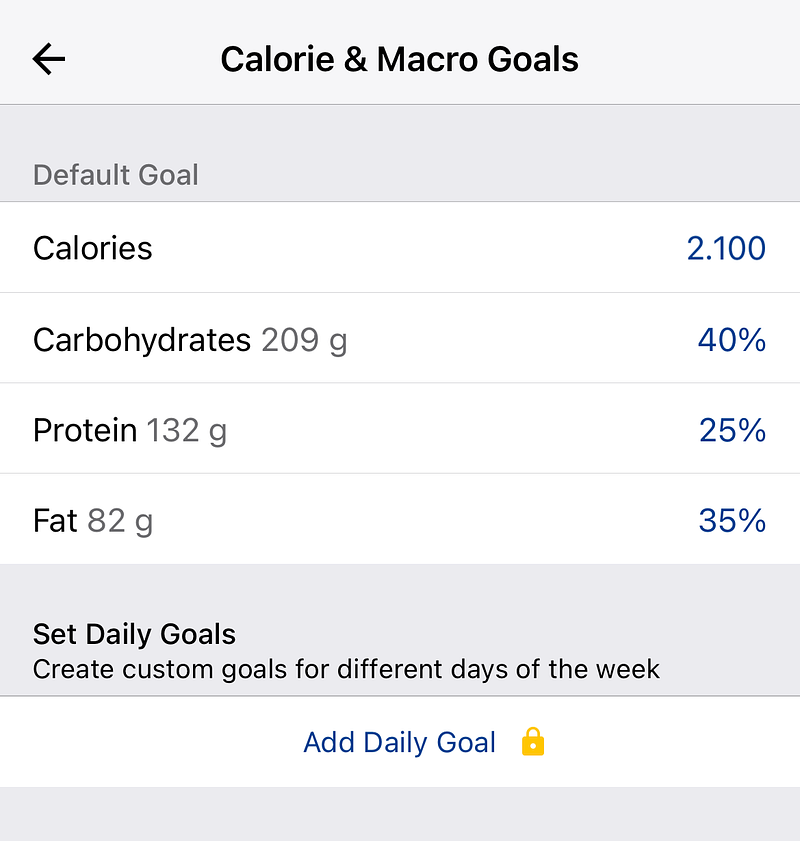
Instead of letting MyFitnessPal tell me my goal, I tracked how much I was eating, subtracted 10% (the maximum recommended deficit for a body recomposition), and manually inputted it into the app. This new and realistic goal made it easier for me to stick to the calorie deficit because I rarely felt “hangry” (hungry + angry).
Sure, some days I couldn’t stick to my goal (something I’ll discuss in point #3). But over time, I achieved my body recomposition goal.
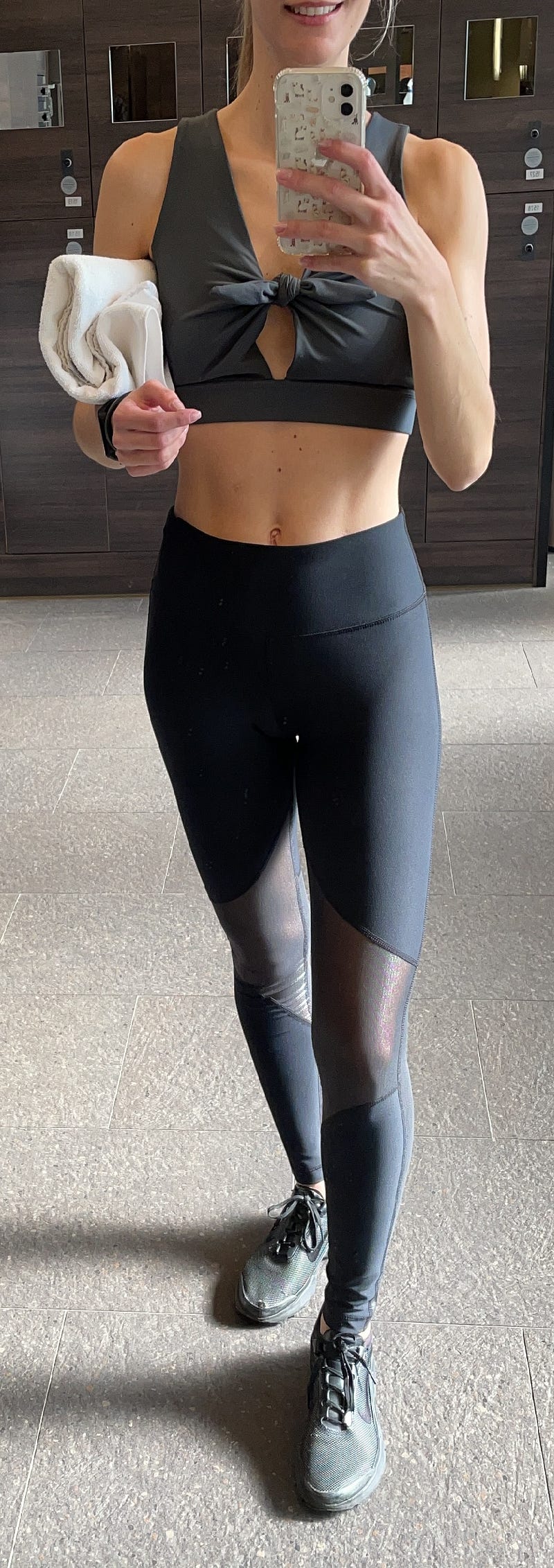
Once I reached the fat percentage I wanted, I slowly increased my calories until I got back to maintenance, which was higher than before as I was more active and had more muscle.
Changing my approach made achieving and maintaining a low fat a sustainable endeavor.
How to start:
- If you’re starting out, download any calorie-counting app and track what you’re eating. Don’t change any of your behaviors. Be as thorough as you can for at least a month. Once you’re confident you’ve found your number, you can create your daily intake goal depending on what body transformation you want.
- If you’ve been struggling because you’ve been trying to follow the goal an app has set for you, take a step back for many months, and once you feel you’re back to yourself, follow the previous point’s instructions.
Important note: I’m not saying that apps like MyFitnessPal or other calorie calculators are necessarily wrong or harmful regarding their calorie goals. My point is that it’s better to calculate your number based on your personal needs rather than on a standard formula.
Tip #2. Save Meals; Save Time
When I started using MyFitnessPal, I spent SO MUCH TIME logging what I ate. It was so exhausting that I often stopped tracking mid-week or even mid-day.
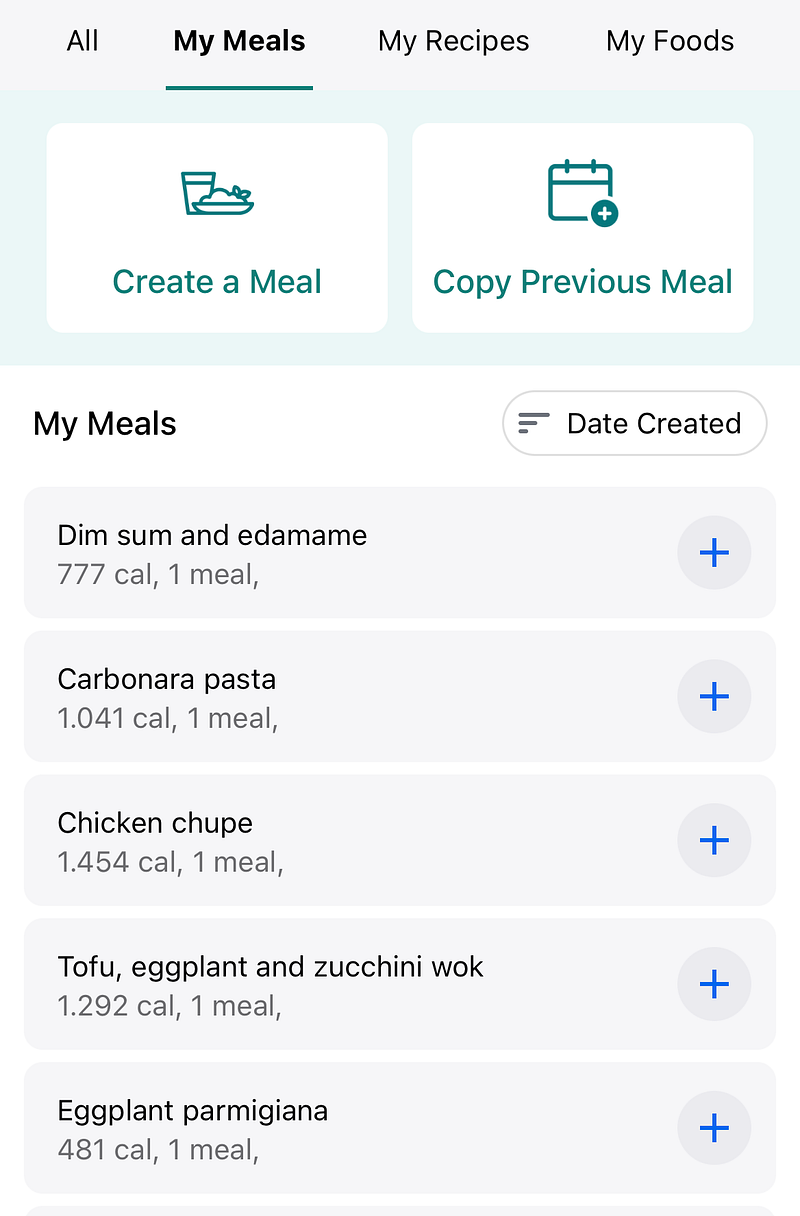
Then I learned about the “Create a Meal” feature — and boy was it a game changer.
Now it takes me minutes to log everything I had — or will have — during the day. As I often gravitate toward the same meals during the week, tracking calories is now about putting the combination I had during a specific day.
Painless.
Sure, it takes time to create the meals, especially if you have a varied diet. But that upfront time will make tracking calories less time-consuming overall while making it likelier you’ll commit.
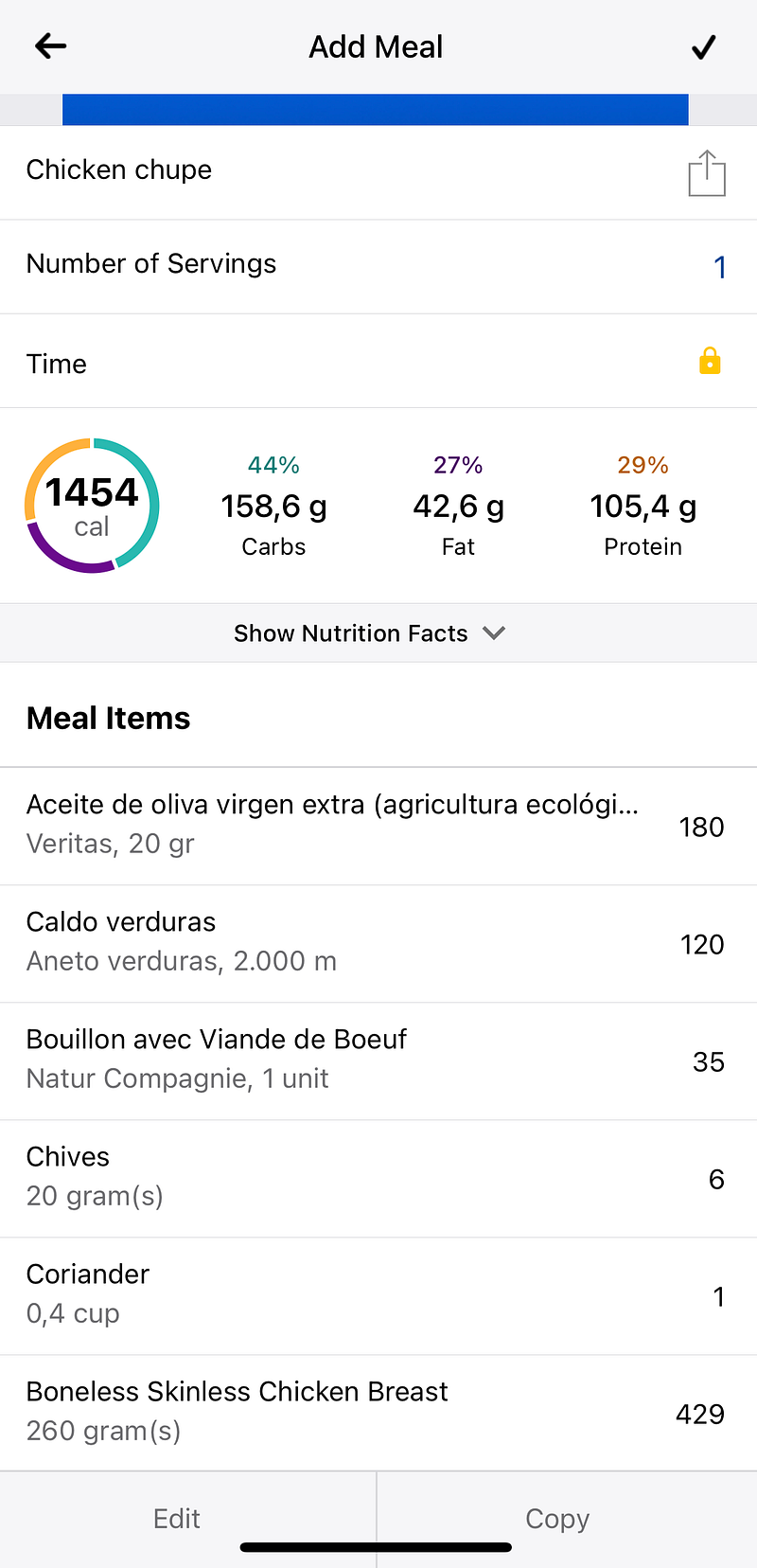
In my case, I sometimes create the meal based on the full ingredients, and then I simply add a smaller serving size to any specific day. For example, in the pictures below, you can see some of my recipes and an overview of Chicken Chupe, a delicious Venezuelan soup.
There I’ve included all the ingredients I use while cooking for four people. When I want to log it into my day, I simply indicate that I had 0.25 servings, and the app will adjust the calories, macro, and micronutrients and add them to my day.
That’s it.
How to start:
- If you’re using MyFitnessPal (free or premium version), click “Add Food” to any of the meals (breakfast, lunch, dinner, or snacks) and then click “My Meals.” There you’ll be able to create any meal you want and save it for later.
Tip #3. Embrace a Weekly View
When I started tracking calories, sticking to a specific daily goal felt like torture — and it still does.
What if my body is screaming for chocolate even though I’ve already reached my goal? What if this recipe is way better with some olive oil, but that would add more calories? What if I’m at a party and there’s cake?
Who says no to cake?
Having to stick to a calorie goal rigidly is one of the reasons many people develop detrimental habits when losing weight. They start obsessing over the numbers, fearing certain calorie-dense foods — like cake — and neglecting their loved ones since social situations often put them above their goal.
That’s why having a weekly view can be so helpful for our mental health.
This means that instead of thinking about your total calories for one day and forcing yourself to fit that mold, you let your daily intake ebb and flow as long as it’s within your weekly total.
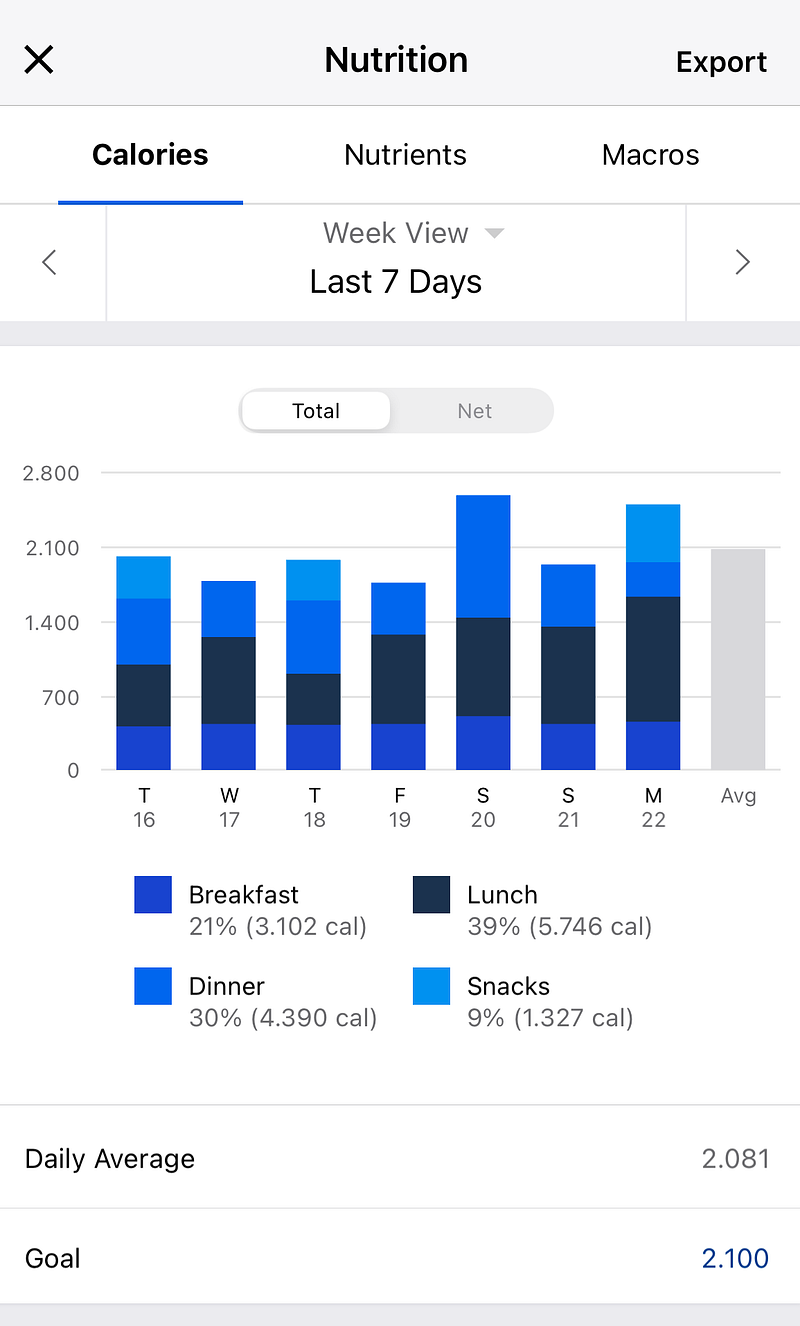
For instance, my current daily goal is 2,100 calories per day. That’s a total of 14,700 calories per week. And as you can see in the graph below, my daily intake is all over the place, with some days reaching close to 2,800 calories while others closer to 1,800.
What matters is that the total stuck to my weekly goal, which means the daily average was also where I wanted it to be.
This principle can even extend from a weekly to a monthly view.
Why?
Because on some weeks, we just won’t stick to our goal, and that’s fine. I have some weeks where the daily average is around 2,300 calories and others closer to 1,900, so everything balances out.
The key is to let any process — losing weight, body recomposition, bulking — take its due time.
Reaching your goal slowly is better than rushing it and hurting your mental health.
How to start:
- Change the daily view on your calorie tracking app to a weekly view. From that point, keep track of your progress by thinking big picture. Instead of beating yourself up for going beyond your goal one day, just think of a way you can eat a little bit healthier in the following days.
Tip #4. Netflix, Chill, and Planning Ahead
Deciding what to eat to meet your macros can be a nightmare if you have to do it every time a mealtime arrives.
This is why I now plan my meals the day before. Instead of scrolling through Insta while chilling on the couch and watching Netflix (we all do this), I play around with MyFitnessPal, trying to find something that’ll make me happy tomorrow while helping me stick to my goal.
Some examples of what I take into consideration are:
- If I have dinner with friends the next day, I’ll plan for a lighter breakfast and lunch.
- If I’m going to the gym the next day, I’ll include meals higher in protein and carbs.
- If I have some raspberries in the fridge and know I’ll want to melt chocolate and dip them in it, I’ll make sure that whatever lunch I pick isn’t that high in fat to make room for that chocolate fondue (best dessert ever).
Planning can help you remove the angst associated with having to consider calories and macros every mealtime. It also makes it easier for you to stick to your overall goal.
And if you’re still going to be scrolling through Insta or Tik Tok while watching Netflix in the evening, why not devote a few of those minutes to removing stress from your next day?
Seems like a win-win to me.
How to start:
- Devote some of your social media time to plan your next day's meals. This can help you meet your nutrition goals while sprinkling some fun foods.
Tip #5. Take a Break Once You’ve Trained Your Intuition
Though I’ve been using MyFitnessPal for many years, I always take extended breaks. I walk away once I’ve trained my intuition.
By “intuition,” I mean knowing I can make good dietary choices without tracking macros or calories.
For instance, though now I’m using MyFitnessPal, I’m only doing it because I’ve been trying a new dietary plan to overcome my sugar cravings. Once I feel like I perfectly understand what this new eating style looks and feels like, I’ll tell MyFitnessPal it’s time for a break.
This makes it so that I never start resenting MyFitnessPal. As I only use it when I’m actively changing something or shooting for a specific fitness goal, it always feels like an exciting learning opportunity.
Moreover, taking a break is crucial to avoid obsessing over calories and numbers, this tip’s most important benefit.
Though long-lasting weight loss requires a lifestyle change, tracking calories doesn’t have to be a fixed part of that new routine.
A calorie-tracking app should be like a mentor that comes along two or three times per year to help you learn new things and keep you on track.
How to start:
- If you’re trying a new dietary plan, use the calorie-tracking app until you feel you can follow the diet without counting anything. You can return to the app a few months later to check everything’s going well.
- If you’re actively losing weight, doing a body recomposition, or bulking, use a calorie-tracking app to meet your nutritional goals. Once you’ve reached your desired weight, fat loss percentage, or whatever metric you’re considering, give yourself an extra month to adjust to maintenance calories with the app's help. After that, try giving yourself a break. You can return a few months later to check everything’s going well.
Bonus Tip: Prioritize Nutrients Over Calories
The first three weeks I used MyFitnessPal, I was ecstatic because I’d lost two pounds while eating ice cream and other sugary treats.
I was sticking to my calorie goal. Nothing else mattered, right?
Wrong.
In those three weeks, my health declined. I wasn’t sleeping well. I felt weak. My skin was breaking out.
Sure, I was thinner, but I wasn’t healthy. And though your mental health can still suffer even when your body is healthy, meeting your nutritional needs can make a substantial difference.
For example, omega-3 fatty acids have been shown to help with depression, so if you always choose nutritiously-poor foods (cake, cookies, ice cream) over those like salmon, avocado, or any other that contains omega-3s, you’re doing your brain and mental health a disservice.
Prioritizing nutrients over calories is vital to have a healthy body and mind.
How to start:
- When tracking calories, try following the 80/20 principle: 80% of your calories should come from nutritionally-dense foods, while the other 20% is for fun.
Tying It All Together
Tracking calories can be an excellent tool when pursuing any health and fitness goal. But it can also be detrimental to our mental health as it can lead to frustration, exhaustion, and obsession.
This is why it could be a good idea to:
- Determine your calorie goal based on your personal needs rather than on what an app suggests.
- Save your favorite meals in the app database to save you lots of time.
- Track your calories with a weekly view.
- Devote some of your social media time to planning your meals.
- Take a break once you feel you can make excellent dietary choices without tracking calories or macros.
- Prioritize nutrients over calories when choosing what to eat.
Most importantly, remember you can walk away at any point if you feel that tracking calories is not for you.
Protecting your mental health must always come before any appearance-based goal.


