
How I Manage so much Time for Writing?

A full-time job can be tiring depending on your dedication, the engagement it requires and the trade-offs you can afford.
During my first job, I published only four blogs last year. But two (the second and the third) of them were about the first two projects from Data Engineering Nanodegree. The first and the fourth were milestones in career and lifestyle worth sharing.
Four blogs in nine months is a terrible joke on consistency! It was because adjusting to the competitive culture at my new job was challenging. I couldn’t get time to work on anything else.
Now I am maintaining the writing habit, and it is all because of the current remote work I am doing since January 1, 2020.
If I am at the computer, I breathe words.
After quitting the full-time role, I only had one source of stable income: my remote job. There are two roles: Project Reviewer and Mentor at Udacity. Both involve helping students in completing their course on time so that they can immediately apply the learning experience in their respective career path.
For the project reviewer role, I give written feedback to the students whenever they submit a project. Every course has a set of specified projects. To complete the course, a student has to pass all of them.
For the mentor role too, the entire communication is in text form. Currently, we have a Stack OverFlow-like QnA forum called Knowledge where we [read mentors] answer students’ queries. We suggest a way of approaching a problem with helpful instructions. There can be a lot of back and forth communication, depending on the clarity we maintain and the difficulty level of the question.
The reviewer role is analogous to an office stand-up, but only in text communication. A student completes a set of lessons and applies the learnt concepts in the required project to test his skills.
I belong to a pool of reviewers that Udacity has hired for Data Analyst Nanodegree. Whenever Udacity assigns me a project, I evaluate it based on a preset rubric.
Practising constructive feedback all the time
If a student has to meet ten specifications for a project, and he fails some of the criteria, he needs a directional approach on how to fix the issues. Even if it is just one (out of 10) missing criterion, I encourage their efforts in attempting it. I also guide them on how they can improve the project to match the expected standards of the rubric.
I am learning how to convince people with words. If you want to move people with your work, show them how your work is valuable to them. If you have the solution to a challenge they are facing, help them navigate through it instead of just mentioning the problem and expecting them to figure out on themselves.
Encouraging feedback about the project review

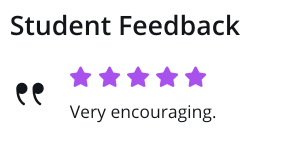
Not only do I give directions to students in improving their work, but they also rate the reviews and thank me for my clear suggestions. This gratitude is source of self-confidence in my writing journey.
As long as I am working at this job, it will continuously motivate me to keep writing and educate the student community by showing them how to improve. On top of it, it is also improving my communication skills with expressive writing!
This article belongs to a set of posts I am publishing in this 100-days streak. Navigate to the end of the article 22 for the references from day 23 onwards. If you would like to read the ones before day 22, here is the first one that documents them in the end.
~ Sanjeev.