avatarSylvia Emokpae

Free AI web copilot to create summaries, insights and extended knowledge, download it at here

5733

Abstract

</p><p id="cf73">Furthermore, according to many experts (and <a href="https://www.thesecret.tv/law-of-attraction/">The Law Of Attraction</a>), the more you are grateful for, the more you will attract, by feeling thankful for what you don’t yet have and trusting that it will come to you, or, if it does not, something better will.</p><p id="aa0c">Basically, spending time feeling a little gratitude every day has absolutely no disadvantages.</p><h1 id="d24f">For Children</h1><p id="474b">Life Coach Mary Jane Ryan said:</p><blockquote id="d2b8"><p>“No one is born grateful. Recognizing that someone has gone out of the way for you is not a natural behavior for children — it’s learned.” — <a href="https://www.parents.com/toddlers-preschoolers/development/behavioral/teaching-children-to-be-grateful/">Parents.com</a></p></blockquote><p id="4a59">It’s about more than saying thank you.</p><p id="6376">Teaching children genuine gratitude enhances many other virtues and life skills — open-mindedness, empathy, and communication, to name a few.</p><p id="3e16">Practising it is one way to teach children not to compare what they have to others and bring about a sense of self-contentment.</p><p id="97e0">Andriel, my almost 2-year old son, will come to own stuff because we naturally want to give him everything, just like many parents, and we are privileged in that we can afford to. But if we instill the habit of feeling wholeheartedly grateful for what he has, he *hopefully* won’t look so much to the outside world and dwell on what he does not have.</p><blockquote id="a7c0"><p>A 2019 study published in the <i>Journal of Happiness Studies</i>1 found that gratitude is linked to <a href="https://www.verywellfamily.com/how-to-raise-happy-kids-4176629">happiness in children</a> by age 5. — Verywellmind.org</p></blockquote><h1 id="84b7">Saying it</h1><p id="a61e">My son learned how to sign thank you when he was 8 months old.</p><p id="277b">It is scientifically proven that babies have the ability to communicate before their speech is developed, given the right tools. My sister heard of baby signing classes and suggested I sign up. I started going to classes when Andriel was shy of 6 months, and the rest is history!</p><p id="9393"><a href="http://The Only Piece of Direct Advice New Parents Will Get from Me A great way to help your baby boost her growth.medium.com">I dedicated an entire article to this</a> because I feel extremely strongly about helping children fulfill their potential and build on their confidence as early as possible. Imagine the number of tantrums that could be avoided simply because we understand what they ask for without saying any words?!</p><p id="3575">“Thank you” was an important sign for him to learn. It is not a gesture of politeness but a feeling, secondary to happiness, that I’d love for Andriel to learn.</p><p id="3c6a">Since babies don’t know the concept of gratitude, the only thing I could do at this stage was to teach him how to say it in a way that he could communicate.</p><h1 id="0524">Routine Setting</h1><figure id="b804"><img src="https://cdn-images-1.readmedium.com/v2/resize:fit:800/1*vbp_7YVyj46bCLOiwhOHnA.jpeg"><figcaption>Photo by <a href="https://unsplash.com/@nihalkarkala?utm_source=unsplash&amp;utm_medium=referral&amp;utm_content=creditCopyText">Nihal Karkala</a> on <a href="https://unsplash.com/s/photos/baby-bath?utm_source=unsplash&amp;utm_medium=referral&amp;utm_content=creditCopyText">Unsplash</a></figcaption></figure><p id="6ed0">It is undeniable that babies thrive with routine.</p><p id="8032">It is encouraged for parents to implement good routines for their children from a very young age, such as a sacred bedtime routine involving a bath and a story to get children to sleep well. I went to the extreme with a daily baby massage before a bath, then breastfeed, and bed. And I loved it — till Andriel learned to roll over and crawl away from the mat.</p><p id="a486">Practising gratitude multiple times a day with my son in the form of casual conversation is enough at this stage because Andriel is not yet 2 — but it is a routine. However, we also regularly say thanks before a meal because it is when the whole family is usually together, and Devonte, my husband, also joins in.</p><h1 id="5305">Good Habit Setting</h1><p id="4c26">You’ve read dozens of articles that talk about good habit building. You know certain habits will more likely make or break your days. The same can be applied to children.</p><p id="94ad">Since children are like sponges and are easily influenced by others, we try to take advantage of that by practising as many good habits in front of them as possible. In the same way, in theory, children are more likely to eat healthily if they are around people who consistently eat healthily, we use gratitude to instill it in Andriel. It will be a long journey, like most things with parenting, but worth it — if we get this right!</p><p id="0a6a">For example, Andriel has started telling us about the day’s events during meal times — how he went to the park and saw a digger; how he saw his friend try to take off his mother’s sunglasses as he gasps in shock; how he bumped his head on the door. We engage with and validate everything he says and respond accordingly with a laugh or an apology, but we especially show appreciation:</p><blockquote id="95bd"><p>“Isn’t it awesome to have such a good park nearby?!”</p></blockquote><blockquote id="9ae8"><p>“You’re such a good boy for trying to cheer your friend up with a toy after he fell over!”</p></blockquote><blockquote id="8ad2"><p>“Ohhh you loved splashing in puddles today! I’m so glad it rained earlier!”</p></blockquote><p id="5aaf">If we give a minute of att # Options ention to the fact he hurt himself earlier that day, we will give 2 minutes’ attention to how much fun he had right after — to tip the scales with good things, without dismissing the bad.</p><h1 id="d0a9">Love in Abundance — Even After Arguments</h1><p id="7d9f">We try our utmost best not to argue in front of Andriel, but unfortunately, it has happened multiple times. Although I feel it is an issue most parents live with, I feel really guilty.</p><p id="c2d9">As a way to deal with them, my husband and I are learning to minimize the impact it has on our son by apologising to each other and making up in front of him. We tell Andriel that sometimes mummy and daddy don’t agree on some things but still love each other and him very much.</p><p id="e105">We use gratitude for each other as a way to get through the arguments and to restore love and peace in our home.</p><p id="09f9">My best friend once stated how in her household, they practice love in abundance. It’s beautiful and one I am very mindful of applying.</p><p id="d423">We try to show love for each other by being deliberately thankful for the small and the big things. We don’t just say thank you at mealtimes, and we don’t just list our thank yous. As and when we feel it about each other, we express it with a hug, a joke, a really nice snack, or an act of service — and we do so, especially after arguments.</p><h1 id="1f4b">Turning Everything Into a Positive With Gratitude</h1><p id="95b7">All children will have bad days, just like adults do. It is about our reaction to those bad days.</p><p id="83c2">I used to become consumed by negativity and anxiety. I learned only recently to focus more on the good things to help me have better days. I learned that the bad things that happen:</p><ol><li>Are not personal.</li><li>They are just things, neither good nor bad, and it is I who labels them good or bad.</li><li>I can trust that something good will come from them.</li></ol><p id="532f">I use gratitude to trigger and restore the good feelings within me.</p><p id="4802">Teaching kids this is hard because they haven’t developed the cognitive ability to channel their feelings or moral spectrums. I can only lead by example and show him my reactions to life as it happens and hope he will learn from those (with the added hope that my reactions are the correct ones!).</p><div id="14e5" class="link-block"> <a href="https://readmedium.com/my-battle-with-anger-as-a-parent-24e7837c5fac"> <div> <div> <h2>My Battle With Anger As a Parent</h2> <div><h3>Ensuring our son feels loved regardless of our feelings.</h3></div> <div><p>medium.com</p></div> </div> <div> <div style="background-image: url(https://miro.readmedium.com/v2/resize:fit:320/1*Me4slkvdZGGCbsbjqQ_7bg.jpeg)"></div> </div> </div> </a> </div><h1 id="3f97">Takeaway</h1><figure id="d15c"><img src="https://cdn-images-1.readmedium.com/v2/resize:fit:800/1*VVX5zZqBwcUzbHbPUzEpiw.jpeg"><figcaption>Photo by <a href="https://unsplash.com/@gpiron?utm_source=unsplash&amp;utm_medium=referral&amp;utm_content=creditCopyText">Piron Guillaume</a> on <a href="https://unsplash.com/s/photos/children?utm_source=unsplash&amp;utm_medium=referral&amp;utm_content=creditCopyText">Unsplash</a></figcaption></figure><p id="943e">When Andriel is bigger and can talk in full sentences, I will ask him to tell me three things he is grateful for every night before going to bed, so he can look back and reflect on the day’s positive events. Cultivating a sense of gratitude in him now will set him up for life, fingers crossed.</p><p id="fde7">Gratitude is learned and needs continuous exercise to be strengthened. Practising it regularly in front of children will influence them to make it a habit for themselves. Practising it especially after negative experiences helps bring about perspective to a situation.</p><p id="5c50">So this is how I aim for my son and any future children to be grateful rather than entitled. I will let you know in 20 odd years whether it worked!</p><div id="c70e" class="link-block"> <a href="https://readmedium.com/the-unexpected-conflict-of-motherhood-vs-feminism-605f9d83a59"> <div> <div> <h2>The Unexpected Conflict of Motherhood Vs Feminism</h2> <div><h3>How the pressure from society to uphold women’s values is sometimes too much.</h3></div> <div><p>medium.com</p></div> </div> <div> <div style="background-image: url(https://miro.readmedium.com/v2/resize:fit:320/1*_7srF7i3nqySUPa-KTIrPQ.jpeg)"></div> </div> </div> </a> </div><div id="5a79" class="link-block"> <a href="https://readmedium.com/how-i-was-inspired-by-a-garbage-truck-46ec37da012f"> <div> <div> <h2>How I was Inspired by a Garbage Truck</h2> <div><h3>Dealing with daily annoyances</h3></div> <div><p>medium.com</p></div> </div> <div> <div style="background-image: url(https://miro.readmedium.com/v2/resize:fit:320/1*iOc8Xg9rQ6b9lHFlEz704w.jpeg)"></div> </div> </div> </a> </div><p id="be82"><b><i>Sylvia Emokpae, thinker and philosopher, is passionate about self-love, motherhood, and pro-race. <a href="https://medium.com/@sylviaemokpae">See more work like this</a>.</i></b></p><p id="a690"><a href="https://twitter.com/SylviaEmokpae"><b>Follow me</b></a><b> on Twitter.</b></p></article></body>

How I am Trying Not to Spoil My Kid

How I use my biggest self-improvement habit to help me.
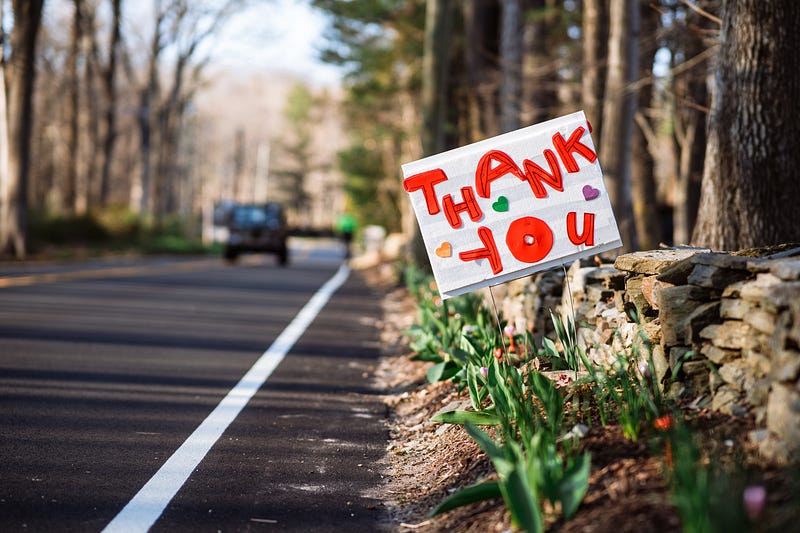
Photo by Nicholas Bartos on Unsplash

We walk around with £500+ phones; use the latest technology for school and work; have super-fast Internet giving us access to the world… we are slowly increasing our need for things that didn’t even exist 5 minutes ago. Our liabilities are increasing, but our salaries can’t keep up.

Marketing for kids sucks to parents because, no matter how hard parents try, it is easy for big companies to influence and commercialise our kids into wanting the best and latest version of everything.

This article in Globalissues.org explains it well and summarises:

“Manipulation of imagery, fake news and more are so prevalent that young people in particular are vulnerable to a lot of influences from all angles.”

The damage of advertising and manipulation on children is so great that many countries actually banned certain TV ads playing during prime times and imposed many regulations on other marketing strategies such as online and in shops. However, there is still major work to be done.

Even today, for example, as I walked into the supermarket, my son straight away pointed to an aisle that magically appeared at the entrance, which was of course filled with children’s snacks. Andriel, who was holding his own snack at the time, actually refused to eat any more of it, tried to give it back to me, and demanded one of the shop’s appetizing snacks.

Why can’t they pack fresh fruit and other healthy snacks in colorful packaging and put them at the shop's front instead?!

The world is teaching our kids to want without our permission.

Capitalism + Consumerism = Greed & entitlement.

So while we can limit how much they are influenced by the consumer world, they will be exposed to that greed simply because society teaches it. No matter how much we try, kids will see that other kids have more and better than them.

I worry about this, especially because although I never felt spoilt as a child, I do very much have the “must-have” mentality today that gives me anxiety. I fight it every day and, although impossible to avoid it altogether, I want to teach Andriel how to manage it best and dodge the outside influencers.
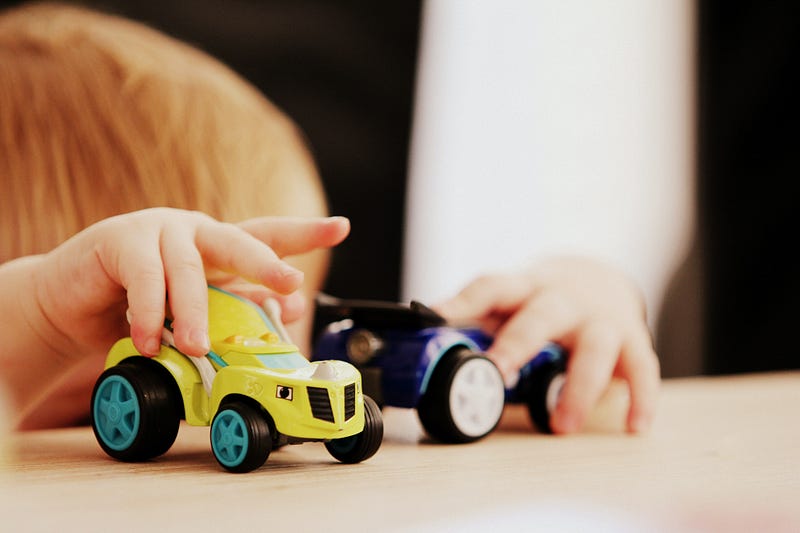
Photo by Sandy Millar on Unsplash

Practising Deliberate Gratitude

We are in a time where people, including children, take things for granted. It is no one individual’s fault; it is just how the world is — I blame marketing psychology, once again.

I started practising gratitude a couple of years ago after hitting rock bottom emotionally.

I felt the ping of joy hit me like a dose of sugar. Only the high lasts much longer, and the comedown is nonexistent.

I was so shocked by it that I had to write about it — why isn’t this taught when it is simply so good?!

To summarise, being deliberately grateful for everything you have takes away that feeling of deprivation for not having something else. It doesn’t stop you from wanting more, but it gives you a better perspective on what you do have.

Robert A. Emmons, Ph.D., a leading gratitude researcher, has conducted multiple studies on the link between gratitude and well-being. His research confirms that gratitude effectively increases happiness and reduces depression. — Forbes

Adding gratitude to your daily routine is beneficial for your overall mental and physical health — it helps improve your sleep and reduces the chances of developing anxiety and depression.

It also helps nurture relationships and help you focus on your goals, and much more.

Furthermore, according to many experts (and The Law Of Attraction), the more you are grateful for, the more you will attract, by feeling thankful for what you don’t yet have and trusting that it will come to you, or, if it does not, something better will.

Basically, spending time feeling a little gratitude every day has absolutely no disadvantages.

For Children

Life Coach Mary Jane Ryan said:

“No one is born grateful. Recognizing that someone has gone out of the way for you is not a natural behavior for children — it’s learned.” — Parents.com

It’s about more than saying thank you.

Teaching children genuine gratitude enhances many other virtues and life skills — open-mindedness, empathy, and communication, to name a few.

Practising it is one way to teach children not to compare what they have to others and bring about a sense of self-contentment.

Andriel, my almost 2-year old son, will come to own stuff because we naturally want to give him everything, just like many parents, and we are privileged in that we can afford to. But if we instill the habit of feeling wholeheartedly grateful for what he has, he *hopefully* won’t look so much to the outside world and dwell on what he does not have.

A 2019 study published in the Journal of Happiness Studies1 found that gratitude is linked to happiness in children by age 5. — Verywellmind.org

Saying it

My son learned how to sign thank you when he was 8 months old.

It is scientifically proven that babies have the ability to communicate before their speech is developed, given the right tools. My sister heard of baby signing classes and suggested I sign up. I started going to classes when Andriel was shy of 6 months, and the rest is history!

I dedicated an entire article to this because I feel extremely strongly about helping children fulfill their potential and build on their confidence as early as possible. Imagine the number of tantrums that could be avoided simply because we understand what they ask for without saying any words?!

“Thank you” was an important sign for him to learn. It is not a gesture of politeness but a feeling, secondary to happiness, that I’d love for Andriel to learn.

Since babies don’t know the concept of gratitude, the only thing I could do at this stage was to teach him how to say it in a way that he could communicate.

Routine Setting

Photo by Nihal Karkala on Unsplash

It is undeniable that babies thrive with routine.

It is encouraged for parents to implement good routines for their children from a very young age, such as a sacred bedtime routine involving a bath and a story to get children to sleep well. I went to the extreme with a daily baby massage before a bath, then breastfeed, and bed. And I loved it — till Andriel learned to roll over and crawl away from the mat.

Practising gratitude multiple times a day with my son in the form of casual conversation is enough at this stage because Andriel is not yet 2 — but it is a routine. However, we also regularly say thanks before a meal because it is when the whole family is usually together, and Devonte, my husband, also joins in.

Good Habit Setting

You’ve read dozens of articles that talk about good habit building. You know certain habits will more likely make or break your days. The same can be applied to children.

Since children are like sponges and are easily influenced by others, we try to take advantage of that by practising as many good habits in front of them as possible. In the same way, in theory, children are more likely to eat healthily if they are around people who consistently eat healthily, we use gratitude to instill it in Andriel. It will be a long journey, like most things with parenting, but worth it — if we get this right!

For example, Andriel has started telling us about the day’s events during meal times — how he went to the park and saw a digger; how he saw his friend try to take off his mother’s sunglasses as he gasps in shock; how he bumped his head on the door. We engage with and validate everything he says and respond accordingly with a laugh or an apology, but we especially show appreciation:

“Isn’t it awesome to have such a good park nearby?!”

“You’re such a good boy for trying to cheer your friend up with a toy after he fell over!”

“Ohhh you loved splashing in puddles today! I’m so glad it rained earlier!”

If we give a minute of attention to the fact he hurt himself earlier that day, we will give 2 minutes’ attention to how much fun he had right after — to tip the scales with good things, without dismissing the bad.

Love in Abundance — Even After Arguments

We try our utmost best not to argue in front of Andriel, but unfortunately, it has happened multiple times. Although I feel it is an issue most parents live with, I feel really guilty.

As a way to deal with them, my husband and I are learning to minimize the impact it has on our son by apologising to each other and making up in front of him. We tell Andriel that sometimes mummy and daddy don’t agree on some things but still love each other and him very much.

We use gratitude for each other as a way to get through the arguments and to restore love and peace in our home.

My best friend once stated how in her household, they practice love in abundance. It’s beautiful and one I am very mindful of applying.

We try to show love for each other by being deliberately thankful for the small and the big things. We don’t just say thank you at mealtimes, and we don’t just list our thank yous. As and when we feel it about each other, we express it with a hug, a joke, a really nice snack, or an act of service — and we do so, especially after arguments.

Turning Everything Into a Positive With Gratitude

All children will have bad days, just like adults do. It is about our reaction to those bad days.

I used to become consumed by negativity and anxiety. I learned only recently to focus more on the good things to help me have better days. I learned that the bad things that happen:

  1. Are not personal.
  2. They are just things, neither good nor bad, and it is I who labels them good or bad.
  3. I can trust that something good will come from them.

I use gratitude to trigger and restore the good feelings within me.

Teaching kids this is hard because they haven’t developed the cognitive ability to channel their feelings or moral spectrums. I can only lead by example and show him my reactions to life as it happens and hope he will learn from those (with the added hope that my reactions are the correct ones!).

Takeaway

Photo by Piron Guillaume on Unsplash

When Andriel is bigger and can talk in full sentences, I will ask him to tell me three things he is grateful for every night before going to bed, so he can look back and reflect on the day’s positive events. Cultivating a sense of gratitude in him now will set him up for life, fingers crossed.

Gratitude is learned and needs continuous exercise to be strengthened. Practising it regularly in front of children will influence them to make it a habit for themselves. Practising it especially after negative experiences helps bring about perspective to a situation.

So this is how I aim for my son and any future children to be grateful rather than entitled. I will let you know in 20 odd years whether it worked!

Sylvia Emokpae, thinker and philosopher, is passionate about self-love, motherhood, and pro-race. See more work like this.

Follow me on Twitter.

Gratitude
Energy
Parenting
Motherhood
Relationships
Recommended from ReadMedium