
How An Innocent Mindset Makes the Most of My Means
An essay on adapting while quarantining.
Where am I in the context of my life?
This is a question I’ve been asking myself recently. Many have been asking themselves that since the beginning of quarantine, but I haven’t asked myself it until the past week.
I’ve only been living like this for slightly more than three months, or over ninety days. When you write it in days instead of months, it sounds a lot. Because it is.
It’s a question that couldn’t be more relevant to my life. When the pandemic started, I didn’t think that we’d actually get to be as bad as we are today. I knew that here in Florida and America we have poor leadership and that I shouldn’t be surprised with a feeble response to the pandemic.
That’s what my brain was telling me. Deep down, though, I’m a human and my heart told me otherwise. My heart told me that there’s no way that I, so special, am going to get sick. We all think we’re more special than we actually are.
The first person I ever met with the virus was a musician I interviewed. He’s in New Jersey and I’m not. I heard about him having COVID from another musician I interviewed, which is what compelled me to contact Bobby. Bobby is a volunteer EMT who got the virus months ago. He’s fine now and is a hero.
My brain was telling me that, in addition to poor leadership, no matter what happened we wouldn’t have a vaccine until some time in 2021, so I should prepare myself for the world we’re going to live in.
I knew that I wouldn’t be able to leave the house or go wherever I wanted to for a long time. But I didn’t think it would be like this.
One of my friends missed my call last week because she ended up going out and forgot we made (virtual) plans. She’s in Paris. In Paris, people get to go out — not do everything yet still go out. That’s pretty awesome. I can’t remember the last time I went out.
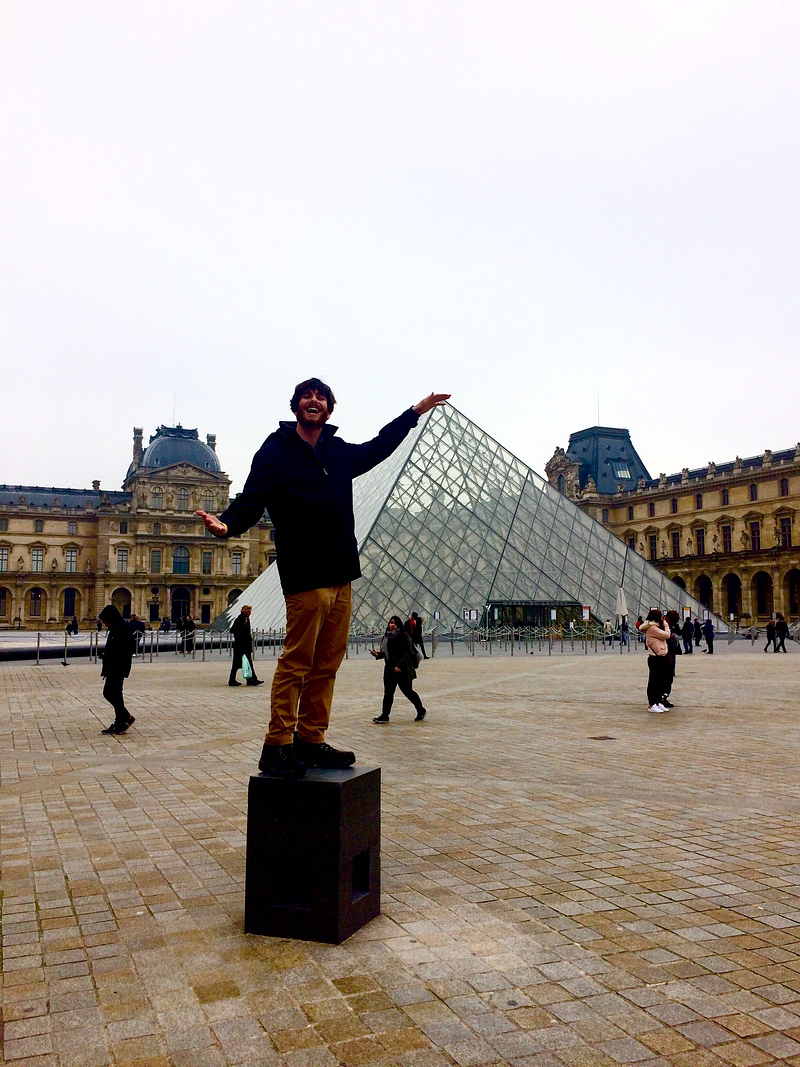
In Paris, there are less than nine thousand cases of COVID. In Broward County, where I’m residing, there are over fourteen thousand cases. Broward County is not Paris. We don’t have the Louvre, we don’t have the Eiffel Tower, but we do have Publix and Starbucks.
I knew that times would be rough in the sense that I wouldn’t be able to go out, but I didn’t know that it would get to the point where I could actually get the virus. People of all ages have died from the virus. To say that I’m in the lower risk class doesn’t do me justice. Because who knows what I have, and who knows how my body would react to COVID.
That’s why I’ve been thinking more about where I am in my life. Because I live in a place where I’ll probably get the virus. Because my leaders don’t care about me.
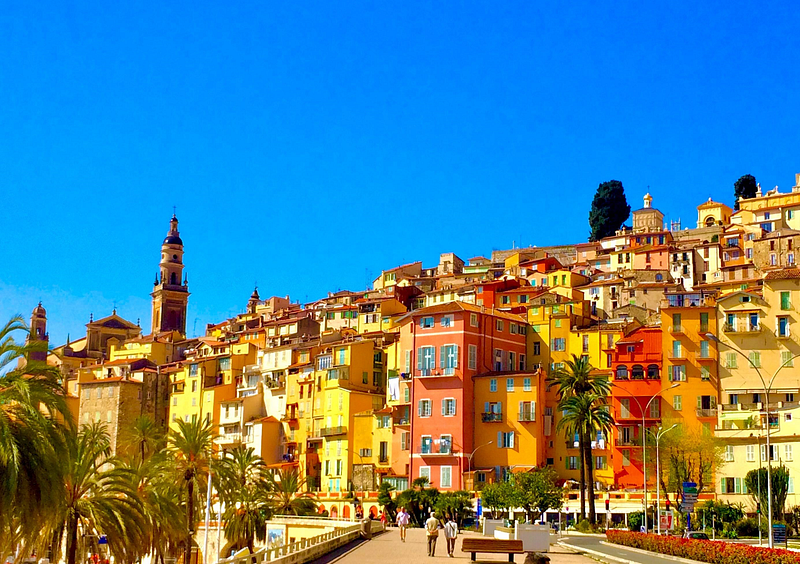
Just over two years ago, I was living in the south of France traveling to various parts of Europe. I lived in a town called Menton, which is one of the “bigger” towns in the French Riviera. It’s also the border town with Italy. I would jog in a t-shirt, running shorts, and my passport in my pocket.
It got to a point where I was comfortable running without my passport, as the border guards never stopped me because of the color of my skin. (I have seen multiple instances of people of color getting stopped by border security when crossing between France and Italy. I was never stopped or inquired.)
What was I thinking during my European travels?
I was enjoying the moment. I was learning more about myself while traveling mainly by myself. I was seeing the world and its beautiful people. I was living large.
Living in France was different from living in Barcelona. In France, my first time in Europe was living in Europe. I didn’t have any realistic expectations to prepare me for my sojourn. I was at my true innocence: my brain was a sponge ready to absorb all my surroundings.
Innocence is such a beautiful concept. Living in innocence is bittersweet. I didn’t know until I knew. It’s the combination of not knowing, then knowing, and finally wanting to know more.
When you’re innocent, you feel like the world is at your hands. You feel that there’s an infinite amount of knowledge, waiting there right for your taking. That’s how I felt almost every day for five months in 2018.
Is innocence a mentality? Is it something that we can impose on ourselves, even if we already know a lot about our surroundings?
It’s quite the conundrum of a question, alright.
In Menton, by the third month, I figured that I had explored every part of the town. You can walk the entirety of Menton in an hour if your legs are ambitious. I’m a big walker, my favorite activity in the world is to walk and see new places! After a while, though, Menton isn’t anything new. You can only see the same bakeries and stores and intersections so many times.
By my last few weeks in Menton, this mentality had hardened. I truly didn’t think I would see anything new in this town. What else was there to see?
But then I saw it.
I can’t remember what it was — it was a painting on a wall at one of the big streets in the old part of town, and God knows how long that painting was there. It was beautiful.
It’s up to us to maintain our innocence. We can only do that by maintaining our curiosity. The more we learn, the more we can learn. It’s this second part that, as we age, we tend to forget.
I most certainly have forgotten to be curious. Not in everything. I think I’m a curious person in general, particularly with my interests. As for my surroundings, I can be much more curious.
Even in Barcelona, where I grew to love and call home, I started developing routines that made some of the places I walked by less interesting than when I first saw them. I live in Eixample, which is close to everything. (Everywhere in Barcelona is close to everything.)
Eixample is not as exciting as El Raval, or El Born, but it’s definitely much more exciting than a Floridian suburb. Barcelona’s apartment buildings are peculiar. Each one in itself is unique.
When you’re a visitor and you’re just seeing the city for the first time, everything looks the same — especially if you have an American mindset. But the longer I lived there, the more I noticed nuances of each apartment building. Some have different shapes of balconies.
And of those different shapes, the balcony can be made of different materials. Is it cement? Is it metal? What is it? There are balconies that are thin, there are some that are thick enough to hold pots of plants without them tipping over and hitting pedestrians.
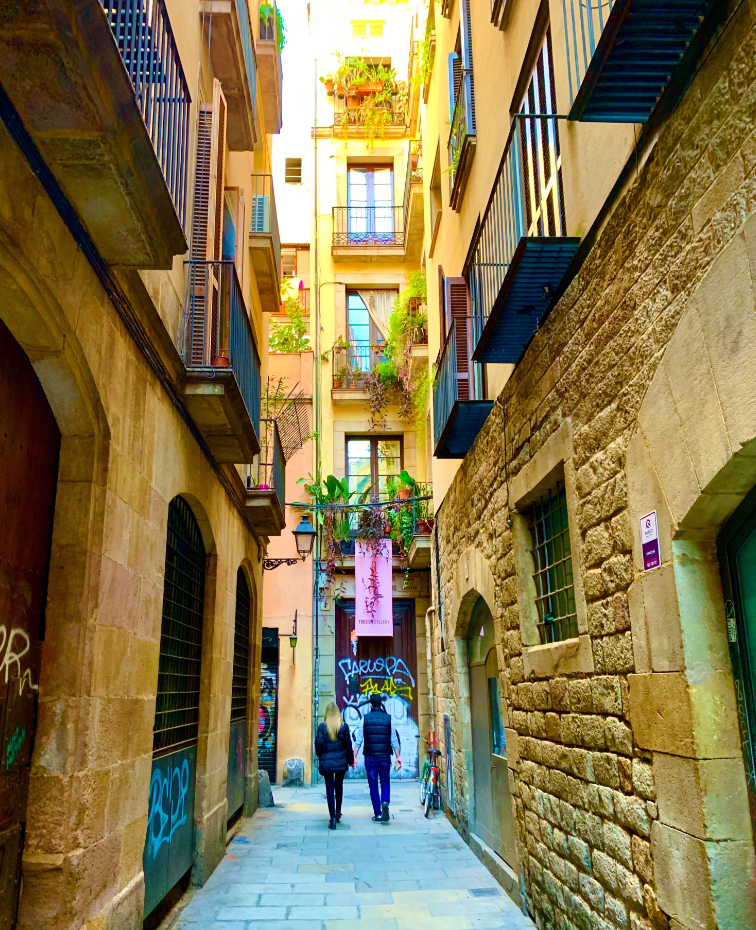
I was much more observant of balconies in every neighborhood except Eixample.
So maybe I have an innocent mindset, but not so much when it comes to my residential surroundings?
I’m trying my best to apply this innocent mindset to my life in South Florida during the pandemic.
Remember, innocence is a matter of being open for discovery. I’m not a fan of the architecture in suburban South Florida. Is my distaste for it preventing me from appreciating what’s there? All the houses are different in my neighborhood. The house I’m living in has a pretty exterior.
Or maybe it’s that my standards have changed, which has made me an arrogant asshole?
Oh, you’ve lived in Europe for too long, Noah. Sorry that our buildings aren’t named Château this or Plaça that.
Ah, now I see the fallacy. Now I see where I’ve been doing it wrong. I’m taking the same things here in Florida and am comparing it to my new standards, which are now European.
It brings about a philosophical question that we all have different answers to: what is good enough, and what should be considered as good enough? Is this satisfactory to my expectations?
While some may argue that “yes, Noah, you’re right to think that suburbs suck compared to European cities”, we’re in an era where we truly have to make the most of our means. I don’t know when I’m returning to Europe. Hell, I won’t be able to as an American for now.
So I have to do what’s best for me: make the most of my means.
It means noticing things that I don’t notice. It means appreciating things I don’t appreciate.
And that all comes from an innocent mindset.
P.S. If you liked my story, here are some of my favorite personal essays I’ve written!


