Lessons Learned From Reminiscing On High School
A story about change and personal growth.

Last night, I was catching up with my friends from high school for the first time in years. We did it over Zoom à la the pandemic, yet it was a hell of a time.
Throughout the call it was hard to not think about how much I’ve changed since high school first started, ended, and afterwards to today. In a way, it can be overwhelming to look back and revisit it. Anyone else feel embarrassed by their former self? I sure as hell do.
But that’s good, because it means that I’m growing.
I first stepped foot as a student on Pembroke Pines Charter High School when I was thirteen.
It’s funny to recall how young I was, because my parents decided to put me in school right away. My birthday is September 1st, which in my grade, was the cut-off day.
They decided to make a bold bet. And a bold bet they had made.
It was August 2011 and I can’t remember the exact day. Only three years prior, I had left the place that I had known all my life for our new house in Plantation. I was ten at the time and my world only revolved around two cities: Cooper City where my mom lived, and Hollywood where my dad lived.
Moving out of Cooper City at first was tough, since leaving almost everything and everyone you know is challenging for any kid. I think my brother had it worst, he’s two-and-a-half years older than me so leaving your hometown as a budding teenager must’ve been even more difficult.
The move from Cooper City to Plantation proved to be a shrewd one, as I would go from a destiny at Cooper City High School to Pines Charter. I was able to go to Charter because my parents were teachers there.
The difference between Charter versus your average public school was remarkable. In a public school like Cooper City, only kids who lived in the zone would attend — unless, of course, they got around that through football or a magnet program or something of the like. As much of America, particularly South Florida, had been divided socioeconomically into suburbs, the experience at Cooper City would’ve been bland-to-none. Everyone knew everyone since they were five. They all lived in similar size houses, and had similar colored skin. The population of Cooper City High was mainly white.
At Charter, though, it was a completely different story.
Charter was a perfect mix between LatinX, black, white, and other ethnicities of students. If I had stayed in Cooper City, I would’ve been in class with multiple Jews. At Charter, though, I only knew a handful members of the tribe. Looking back, this was such an amazing thing. I was exposed to so many people of different backgrounds, and the best part was that Charter allowed people from outside of Pembroke Pines to have attended there (if they won the lottery or were in a situation similar to mine) so the economic diversity was there as well.
I’ll never forget how confused I was that first day. Plantation was far from the high school — at least half an hour by local routes or barely under that going on I-595 merging on and off of I-75. Because it was so far and I wanted to be really early on my first day of school (my brother unabashedly came almost or actually late every morning), my step-dad drove me to a bus stop almost twenty minutes from our house. It was before daylight savings so the sky was still pitch black. I was excited to meet people but too exhausted and nervous to make meaningful social interaction, yet I do remember conversing with a junior on the bus. She was nice and was as excited for me as I was for myself.
I don’t remember much that first day, but I do remember seeing who’d be my best friend, Jake, at least in that first week.

Jake and I had met because our parents had worked together at the same Charter elementary campus. When I was in the seventh grade, I went with my step-dad to Take Your Child to Work Day because his place by far was the best for any kid to go to. I got to play basketball all day and miss a shit ton of shots (my shot is even poorer today than it was back then), and that campus always came in clutch with Chick-Fil-A brunches every year. Chick-Fil-A when you’re a kid is truly an experience. Jake and I met during that CFA brunch.
Two years later in the ninth grade, Jake and I reunited. I’m not going to lie, there’s one major reason why I recognized him: he’s ginger. I definitely would’ve recognized him if he weren’t ginger, but his aesthetic identity would be something that we, as stupid kids, would poke fun of on a daily basis.
Jake and I immediately connected because we had all the same interests: our parents listened to the same music, we liked to play the same video games, we enjoyed a reckoning from Matt Stone and Trey Parker of South Park. That freshman year, it was like I discovered a long lost brother!
I was such an awkward fuck in high school, it’s cringe worthy just to think about. It makes a lot of sense when I look back at it though. I’ve never been the type of person who did well in cliques. Although I would hang out with groups of friends on occasion — like last night — in general I liked to be with a person face time. I liked hanging out with Jake, for example, and whoever would join the ride was in for a lucky day.
This isn’t against any particular group or anything, it’s just the way I am. When I lived in Cooper City, I had always tried so hard to be a part of this specific clique of kids. It was a fucking stupid thing, but I was a kid back then so I’m not surprised I thought that way. I would try to hang out with these specific kids and they would ignore my messages — and then I’d tell myself that they’re probably busy. When they decided to actually text me back, it would be the busy excuse, again. A note to the reader: if you don’t want to hang out with someone, just tell them. Because the receiving end might be just like the person I was, always seeking validation from you and not knowing why you flaked on them all those years.
Anyways, cliques weren’t my thing because when I tried to be in the same one all those years, I’d just be constantly reminded that I wasn’t worthy. So I stopped trying, and it was to my benefit.
When you’re smaller and younger there really is this group mentality, where we think that it’s better when kids are in groups. What about people like me? I don’t think I turned out so badly. Maybe the kid is by themselves because they’re alone in their thoughts. You can be alone and happy, and you can be in a congregation and lonely.
Besides, why would I want a group to interrupt Jake’s and my adventures?
Nurturing this mindset, I learned the value of one-on-one conversation. You tend to have deeper content in your conversations. There is something to say about the wisdom of a crowd, but there’s even more to say about the wisdom of the soul. It’s the difference between being a mile wide and an inch deep versus its inverse. I’ve craved for deep conversations ever since and Jake was always there to have them with me.
In addition to Jake, I had met so many other great people during my Charter years. We were in a class of over four hundred people, which in South Florida, is not a lot. Cypress Bay, a high school in Weston that was a ten minute drive from us, had over a thousand kids alone in one kid. A thousand kids! That’s more people than a remote village in Europe!
Not only were we in a small class, but we were also competitive as fuck — in a good way. There was something about the mentality of being a student at Pines Charter that separated you from other schools in the area. It was cool to be good at school, not the other way around. I never saw hard drugs at school, compared to my Cooper City days where in middle school we had a few kids — including one from my kindergarten class — who got caught using triple C’s only after they had thrown up in the bathrooms.
At Charter, to be cool, you had to be involved. This meant you did debate (yours truly), volunteered for various programs around the school, and be in clubs like Mu Alpha Theta and Science Club. The crazy part about all of this was that you felt the energy less so from the teachers and more from the students.
I remember in college they would force advice down our throats how we had to do this internship and that club, and it felt egregiously patronizing. In high school, it was the students who expected you to be just as involved, if not more so, than them. And it wasn’t an unhealthy culture, either. It felt like a good fit, at least in my class. We were generally on the same page values-wise and wanted others around us to succeed. That’s what you call an incredible culture.
Isn’t it crazy that, in a way, I learned more from my high school as an institution than from my college? And one was free, while the other one was definitely not!
Another cool part of our school was the athletics. While we sucked at football, we were good in almost everything else. We went to class with the athletes, and many of them, like my friend Patricia who organized our call, were smart as fuck.
The cherry on top of this though were the teachers. Although we had a lot of student leaders who helped students like me be inspired to be our best selves, it was the teachers who cemented this culture. After all, you cannot expect students to be the way they are by themselves.
You think teaching is a slam dunk because of summer break? Think again. Teachers literally sacrifice their lives for the betterment of their students. Leaving school at two p.m. — when we ended — was not the realistic dismissal of teachers. They sponsored clubs and mentored students. When they were not doing that, they were lesson planning or grading our work. Their personal lives usually come at the very end of all of it.
I have so many teachers to thank for influencing my life but the list is too long to write them down. The most present and influential one in my life, by far though, was my debate teacher Ms. Schwab.
Oh debate, what a memory. I’ll never forget when I started.
An ironic parallel in my life is that I tend to start things that I’m passionate about later than most, but when I do I dive deep in the trenches of it. Starting French in my sophomore year of college while not knowing it is a perfect example of this. And debate was no exception.
I took my first debate class in sophomore year and I’ll never forget that first day. There was this clearly over-caffeinated person who ran the ship, and that was Schwab. I can’t remember exactly what she said or did that first day, but her utter enthusiasm for class at nine in the morning had me sold on this whole debate thing.
Little did I know what I was about to get into.
When I signed up for debate, I didn’t know about the competitive part — students competing against their counterparts from other schools — until that first semester of taking it. I only chose debate because every other student I had talked to from it told me that it was a must decision.
That decision would lead me to dedicate tens of weekends for three years to the activity. It would also lead to my first real professional interest: politics.
Debate is just the term for the class, but the competitive part was much more than that. You had two umbrellas, speech and debate. Speech comprised of your activities made for the thrilling thespian — competitions such as dramatic interpretation, humorous interpretation, and extemporaneous speaking were in the speech umbrella. Then there was the debate umbrella — which had activities such as public forum (two-on-two debate) and Lincoln-Douglas (philosophy-heavy one-on-one debate). Not atypical for me, I was in the activity that couldn’t really fit under one umbrella: congress.
Congress was essentially its own thing because it had elements from both speech and debate. The concept was that you would be in a “chamber” full of “Senators” or “Representatives” and the chamber usually had between fifteen and twenty people. Members of the chamber would debate on “legislation” either in the form of “bills” or “resolutions”, usually the former. Depending on the tournament, you would either win first/second/third in your chamber and that was it, or you would advance to out-rounds that extended depending on how large the tournament was.
Schwab spent her weekends taking kids like me to all kinds of tournaments. I’ve been to tournaments where it had no out-rounds, and the chambers themselves were even short on kids. I’ve also been to tournaments that were as big as Harvard — where you had over 400 people (probably more) competing in congress alone and it was so massive that there even had to be a quarterfinal round. I was supposed to break to quarterfinals my senior year but there was a blizzard storm in Boston that year and the tournament had to skip straight to semis. Damn.
Congress was the best activity for me because I felt that I could be limitlessly creative in it. You not only had to know your shit, you also had to present it well. I typically excelled in the latter — not the former — I must admit. I wasn’t the most diligent worker at researching bills before tournaments, especially compared to my junior and senior year teammates. If it weren’t for them inspiring me to get better through their exemplar, I don’t think I would’ve ever accomplished as much as I had.
In congress, your speeches were absolutely limited to three minutes and fifteen seconds, but the typical congress speech lasted between three minutes and that limit. Speaking for three minutes doesn’t sound that hard, because it’s not (for me, at least). I never had terrible stage-fright, so I felt fine.
It’s hard to compare the difficulty of events from each other because they all required different allocations of energy. One of my teammates, Jordan, did Lincoln-Douglas — and he was fucking good at it. In LD, you had the same topic to debate once a month but you had to know anything and everything about that topic. And the speeches were double in length — at least — than that of congressional speeches. For congress, our speeches were only around three minutes but we usually had at least eight topics to prepare for in each tournament. If you really had the drive, you could easily place at one of these tournaments.
I’m not saying that I didn’t deserve what I won in my debate career, it just feels like I got lucky a lot of the time. Yes, I worked my ass off preparing for many of these tournaments. But my teammates, especially in my senior year, worked harder on researching the topics beforehand. They still placed and did better than me at many — if not most — tournaments, but it’s a shame how much harder they had to work just because…you guessed it: they’re female.
In my senior year, Pines Charter had a death squad for a congressional team. We were like Rush of the congressional circuit: small in number, but mighty at our respective fortes. That year we had sophomores Sarah and Shreeya who were already making moves on the circuit as youngsters; we had Taylor who did the same as a junior; then we had Mollie in my grade who was the best of them all. She was both an excellent speaker and debater. That was rare as fuck, by the way. I was only a good speaker, not necessarily that great of a debater. Shreeya would turn out to be Mollie on steroids after I graduated, but it was Mollie who really set the precedent of a successful tradition that is congress at Pines Charter.
Mollie was scary good considering her background, she hadn’t even started in congress until senior year! She was an excellent public forum debater, but would always work harder than whoever her partner was at the time. So in the beginning of senior year, particularly the Flying L tournament at Ft. Lauderdale High School, she started her congressional career and would end up advancing to all of these out-rounds!
But people like Mollie and Shreeya had to work extra, extra hard just to succeed in the good ole boy’s club. It was sad. To be honest, I didn’t realize it at the time because I was pretty conservative in high school and was brainwashed by Fox News and Ronald Reagan: I thought that everyone, regardless of their background, was at an even playing field. But damn I was wrong.
To be a woman in congressional debate is just as difficult as you’d think it is. If I spoke in higher volumes, people thought that I was being profound in my speech. If you were Mollie or Shreeya and attempted the same thing, many judges and students would think you’re annoying — or being a bitch. For men, speaking louder is empowering. For women, speaking loud is yelling. I got away with so much stupid shit in high school debate that only men would be able to get away with.
It makes me appreciative of who I am. Women in our society, whether it’s in debate or at work, have to constantly fight to fit in a man’s world. I never had to do that. I was able to be my boisterous self unabashedly. I can’t say the same for my female competitors and teammates.
The craziest part is that this is a problem that’s much harder to recognize. It’s easier to argue about something like equal pay, as there’s a lot of economic data to back up your claim. But for something like how women are socially treated in such environments, that’s a different story. It’s more qualitative than quantitative. Especially in a society obsessed with numbers, we tend to forget that qualitative data — anecdotes — can be just as indicative of a trend in the real world.
Looking back at my experience, as a male high schooler, I did a poor job at listening to the struggles that women had to go through to make it. While I was conservative in high school, I don’t think that’s the only reason why I was that way.
In general, when you’re comfortable, it’s hard to listen to those who are not. I was comfortable: I could walk into a tournament and bullshit speeches using old data and make them sound good. I didn’t go through the same struggles that our female death squad did and for someone who wasn’t that empathetic at the time, I never took the initiative to listen and learn. I thought we were at an equal playing field when we were not. I don’t regret anything because we all grow and learn, but it’s a shame that it had to be this way. In fact, I don’t think it was until I read We Should All Be Feminists a year later when I first took the initiative to examine women’s place in society.
That experience taught me something deeper that I didn’t comprehend until recently: we all have our own version of truth. This is the reason why I thought and acted the way I did. Girls not winning trophies at tournaments meant that they didn’t work hard enough for them, and thus they didn’t deserve to win. Fuck, I was so delusional! But that was my truth, that we were all on a leveled playing field. Shreeya/Mollie/Taylor/Sarah’s truth was that there was an imbalance between men and women, and they had to work extra hard to even break into that playing field. We didn’t share the same truths and thus I never understood their struggle. The only way to examine the truth of others is through empathy. The only way of doing that is through taking initiative to learn of other truths yourself.
It was especially harder for them because congress, and debate in general, was a male-dominated sport. The less women there were, the more you’d stand out as a woman in the room. It’s incredible how well the death squad performed despite these circumstances.
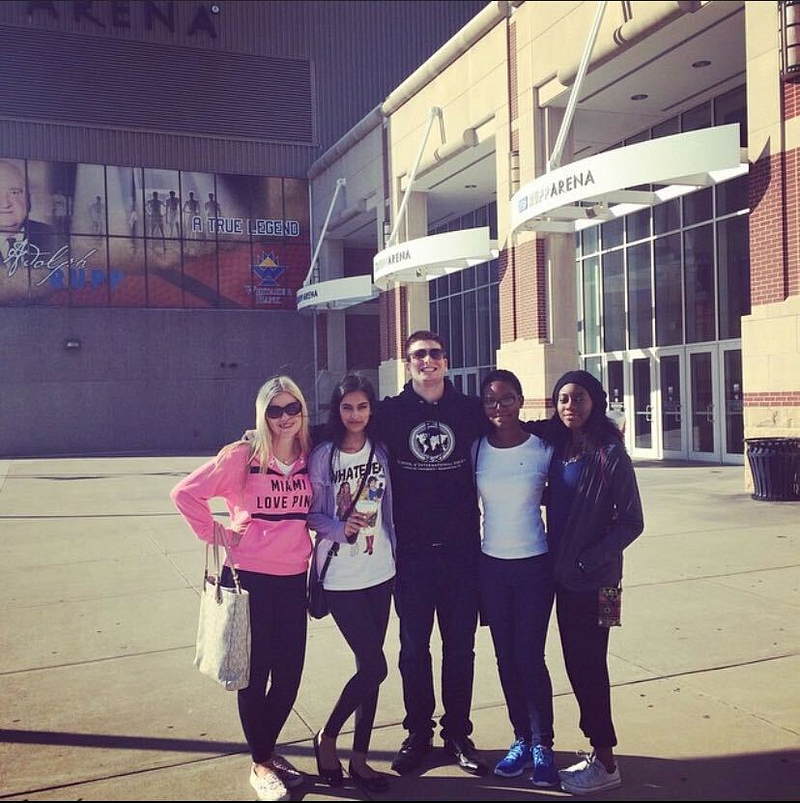
Another thing I learned from my debate experience was the power of human inspiration. Everyone starts from somewhere, and even the best aren’t perfect. We all have our own truths, after all, and no one has real definition of perfection. Nonetheless, we should all strive to be our best selves and all it takes is one person to do that with you. That person, in high school, was Ms. Schwab. She believed in me in that I can pursue anything in the debate world, I just had to do the work.
Our society is based on the opposite, unfortunately. When you apply for a job, the employer already expects you to know everything — “3+ years of experience required!” But people like Ms. Schwab understand that your best investment is in human capital. Investing in human capital only works if the recipient of that learning is down to do the work, otherwise there’s no point in investing. Schwab had a knack for the passionate, though, so that definitely helped create our death squad that is Pines Charter Debate.
If you’re teacher, the best investment you can make is in empowering your students to be better selves. Same goes if you’re a coach with your players, a tech CEO with your engineers, etc. People want to live their lives to the fullest, and that means making an impact somewhere, somehow. Enabling people to make that impact is the best thing you can do. But the only way it can happen is if you believe in your people enough to execute.
The worst thing you can do as a mentor or a leader is tell someone that they can’t do something. Schwab told me that I can with hard work, and so I did.
I’ve changed so much since high school, and it’s hard to write all changes without penning thousands of more words.
But what I can do is reminisce on the good and bad, and learn from both.
I’ll change more after writing this petite memoir, because I won’t stop myself from continuous growth.
Oh, the places we’ll go!