
How a White Woman’s Anger Makes Her Racism Spill Out
Assessing “Maryland Karen” in the context of feminism
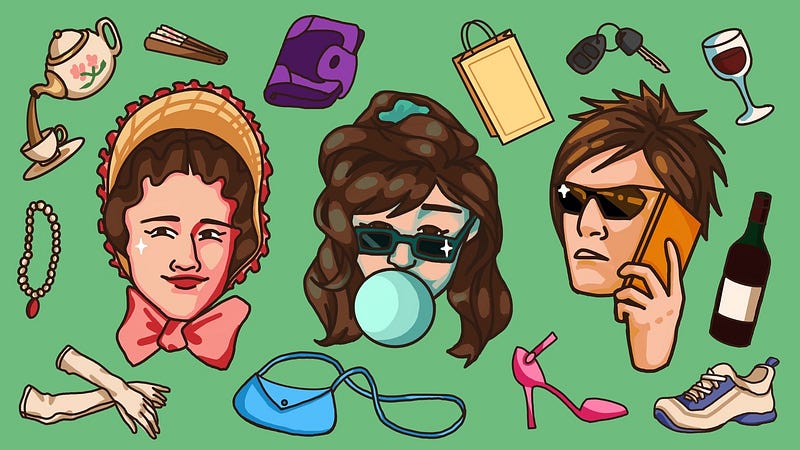
Before we can tackle the social ills of misogyny, we must vanquish “Karen” to the outer realms of our social galaxy. Only once white women unify in their rebuke of white supremacy amongst their ranks can feminism become a force for equality. There is an inclination of many white women to defend “Karens,” despite their dangerous impact on the Black community.
Coupled with the rise of social media and the smartphone camera, the longtime narrative of white women as helpless victims in need of protection is now being challenged by video evidence of them as instigators of not only conflict, but violence (Lang, 2020).
All women experience a unique set of challenges. However, we cannot work together to solve those problems when white tears come before Black pain. It is time for white women to tackle issues within the movement before moving forward to gain consensus. Many Latina, Black, and Indigenous women are not on board with the current women’s movement, and for a good reason — our concerns are dismissed.
Like Susan B. Anthony, feminist leaders notoriously fought for their right to vote while failing to secure Black women’s rights. Also, white suffragists opposed passing the 14th amendment, which granted citizenship to formerly enslaved Black people. They opposed the use of “man” in the constitution. When it comes to feminism, white women continue to choose themselves over Black women and the fight for equal rights and justice for all people. The credibility of the feminist movement is nonexistent. In selecting the judge the term “Karen” as sexist, they are again setting their womanhood above anti-racism and righteousness. We should call their movement féminisme blanc since the movement regards them as superior.
There were always white women who did fight for equality. However, they consistently reveal themselves as the minority amongst them. As troublesome as misogyny is, it is the racism and apathy of white women that pose the greatest threat towards our goals.
One of the most troubling behaviors of “Karen” is that she appears like a reasonable woman until anger creeps into the situation. When those emotions spill out, it becomes clear as day that the woman is racist and no longer willing to hold it back. “Maryland Karen,” for example, participated in a racist rant, filmed for posterity. She seemed intent on telling the Black man that “Niggers don’t matter,” even falsely claiming that he attempted to have sex with her.
Traditionally, white men lynched many Black men in the United States after accusing them of raping white women. Ida B. Wells, the anti-lynching advocate, worked diligently to prove that most men lynched were not guilty of rape, even by white reports. And, white people lynched many more for having consensual relationships. Wells highlighted a case where a white woman admitted to lying on a Black man after his lynching. She faced no consequences.
When “Maryland Karen” accused him of trying to have sex with her, she was well aware of the repercussions for her actions. Her goal was simple — make him look like a dangerous monster so that if the cops or other white men got involved, he would get hurt, arrested under pretense, or killed.
The unpleasant truth is that white women who unjustly accuse Black and brown people of crimes are just as dangerous as the Proud Boys and white extremist groups. Their danger is magnified because of their perceived innocence, reflecting the white supremacist ideology that characterizes American life.
For white people, it can help them recognize a pattern of behavior that they don’t want to be a part of it, but might be complicit in and can be an easier way to have a conversation about white fragility, entitlement, and privilege; it also holds them accountable for racism. For Black people, the memes can act as a news source, evidence, and an archive of the injustices, the attempts to control bodies and situations, or as Brock puts it, “microaggressions that often scale to microaggressions when the police are called in” (Lang, 2020).
Who is “Karen”?
Karen is a white woman who abuses her privilege against Black people and people of color. All white women are not “Karens,” and every woman named Karen is not a “Karen.” It is a woman’s behavior that defines her, and this pseudonym became an essential method for identifying the systematic abuses of white women.
Traditionally, white supremacy is usually gets characterized as another product of the dreaded patriarchy. However, the history of the country tells a different tale. White women worked alongside their male counterparts to oppress and benefit from colonialism. In Karen Embodies White Privilege, I discussed the intersectionality of white supremacy and American feminism.
Cell phone footage offers a rare glimpse into the interactions Black people experienced throughout American history. While it is unfortunate that white people do not inherently believe Black people, the video footage moves the ball forward. Only once white people acknowledge the injustice can they stare injustice in the face. These viral videos counter the gaslighting. White people can no longer say, “It did not happen like that,” snuggly denying the lived experiences of Black people. The ability of Black people to call a thing a thing is healing. For every tweet, retweet, like, and share, Black people confirm the bigotry and hatred white women display regularly.
Karens are the Queens of passive-aggressive behavior. They usually avoid direct physical violence in favor of calling a police officer. Because of the inherent bias in the criminal justice system, Karens know they will be on the winning end of any dispute involving law enforcement. Her confidence, characterized by a sly smirk, is indicative of “Karen intensification.”
She holds her privilege, understanding its power, but anger creates a disbalance. In a moment of rage, the cup of white privilege spills over. Knowing that her privilege is powerful and, in the movement of anger, spills it all over the floor. As the facade recedes, we can all see her behavior for what it is — an abuse of ill-gained white power.
Karens don’t personally inflict violence on their perceived enemies; they order it over the phone, like a pizza (Valania, 2020).
White women want men to step aside to have more leadership roles and live in a more fair society. However, as long as white women represent stewards of white supremacy, women of color will not support these efforts. Feminism works by convincing all women that a woman in power represents our interests. However, if women in power only support white women’s’ part, it is not worth defending. Attacking patriarchy will fail every single time until white women accept women of color as essential instead of as window-dressing. In the current system, white women participate in a toxic culture that muddies the waters. “Karens” are prominent in American culture. Perhaps those living abroad have similar stories of white privilege gone awry.
Current mood: She would like to speak with the manager, please. Lately it seems like the Karens have gone wild in America, as you’ve no doubt seen all over the Internet: freaking the fuck out at Red Lobster and Trader Joe’s, calling the cops to report flagrant BWB (barbecuing while Black), calling the cops to report a Black girl selling water on the sidewalk, calling the cops to report a Black, Harvard-educated science editor in Central Park for having the temerity to ask her to put her dog on a leash as required by law (Valania, 2020).
Because white men marginalized white women, I am astounded that they struggle to find moral clarity on race matters. Oppression is like a snowball. While it comes in many flavors, each one is cold. Defending “Karens” is equivalent to supporting white supremacy. Frequently, they act belligerent and then call the police like their private protection patrol. Hopefully, the filming of these incidents will decrease the comfortability of using white privilege as a dagger.
Maryland Karen’s Cup Runneth Over
This video, which obtained over 450,000 likes, displays a perfect example of the toxic racism that is ripping this country apart at the seams. “Maryland Karen,” said that Black people’s heads are thicker and that Black babies are different. She repeatedly called him a nigger. Throughout the video, “Maryland Karen” proudly stated her full, legal name. However, I do not find her name as pertinent to the case as the message she sent. Her tattoo of a swastika shows that this was not a harmless rant. She most likely has family members or intimate partners who participate in white extremist groups with an image like that on her body.
Notice that the man filming the video took the incident in stride. He did not curse back at her, hurt her, or threaten her. These microaggressions are a little taste of what Black people experience. We are utterly dehumanized and not allowed to respond to bigotry.
Activists are creating laws to protect Black people and people of color from this from Karen intensification. In 2019, Oregon passed a law criminalizing racist police calls. Similarly, The Caren Act in San Francisco passed this year and aimed to penalize those who use the police as their private security force to enforce white supremacy. The goal, in regards to “Karens,” is to make this behavior socially unacceptable. Only then can Black people live free from this level of harassment.
Looking Ahead
A white woman becomes a “Karen” when her anger spills out, revealing her malice towards Black people and people of color. Racial discrimination is not a fringe issue. Any feminist movement that accepts women like “Maryland Karen” or even panders is missing the mark. The current feminist movement treats equal pay and reproductive rights as paramount. These issues are not making much progress because white women keep leaving Black women out. The truth is, most Black women do not want a seat at the table, not because they disagree with the goal of equality, but because they do not trust white women as anti-racist. Black women will not fight for race-neutral policies that consistently discriminate. White women are not fighting for Black women to make what they make. So, why should we believe them that this fight is our fight?
Intersectional feminism is a dream of inclusive equality, similar to the one Martin Luther King Jr. had. However, in its current form, feminism intersects with white supremacy, contradicting the premise of equality. White women have to stop pretending they can win the battle for equality using their homogenous group. It is past time to vanquish the racist Karens amongst you so we can come to the table as sisters.
Curated Stories about Race, Equality, Women, and Beauty:
References:
Lang, C. (2020, July 06). How the Karen Meme Confronts History of White Womanhood. Retrieved October 13, 2020, from https://time.com/5857023/karen-meme-history-meaning/
Valania, J. (2020, July 02). Karens Are Dangerous. We Need to Cancel Karen Culture Now. Retrieved October 13, 2020, from https://www.phillymag.com/news/2020/07/02/cancel-karen-culture/


