
How a Revolutionary Paper Rejected 7 Times Changed Our Understanding of Biology and Genetics
Insights from “The Central Dogma of Molecular Biology” via the inspiration of the “gossip test” concept of Nobel Laurette Dr. Francis Crick

When our opinion paper proposing the potential link between diabetes and brain disorders (Type 3 Diabetes) faced rejection in the 1990s, I confess I felt disheartened. My enthusiasm for groundbreaking research waned, fearing it might diverge from the norm and delay my endeavors to get closer to the truth. Despite experiencing low morale, I maintain an optimistic outlook, graciously seeking metaphorical angels to uplift and support me, helping me regain my footing.
One of such angels appeared at the right time. Sensing my hesitation, my late professional and research mentor, Emeritus Prof Benoit Mandelbrot, sought a candid discussion during a mentoring session. In that pivotal conversation, a compelling example emerged, reshaping my outlook not only in academia but also in my invention, innovation, leadership, and entrepreneurship journeys in my 40+ years of service in the corporate world.
Dr. Mandelbrot suggested that if even the work of a Nobel laureate faced numerous rejections, it is perfectly normal for young scientists to anticipate such setbacks and view them as valuable opportunities in their journey. These rejections may lead to unexpected and fortunate discoveries along the way. He was referring to Dr Francis Harry Compton Crick.
Since then, serendipity kept knocking on my door. The paper that was rejected seven times before being published in a molecular biology journal related to cell research is famously known as “The Central Dogma of Molecular Biology” by Dr Francis Crick.
It was properly published in Nature in 1970. The idea was also discussed in 2011 and published in Nature again to celebrate the thirty-fifth anniversary of single-molecule optical detection and imaging. You can read the Nature paper for free through the PubMed version.
This groundbreaking paper proposed how genetic information flows within a biological system, outlining the process from DNA to RNA to protein synthesis. Despite multiple rejections, it eventually became one of the most influential papers in molecular biology.
Simplified Summary of Crick’s Rejected/Outstanding Paper
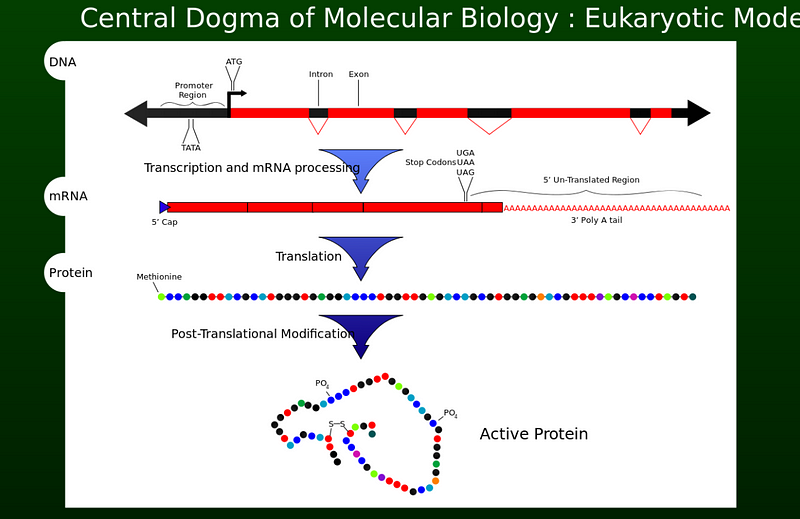

As documented in the Singapore Medical Journal paper, when novelist and poet Thomas Hardy wrote about heredity in 1917, nothing was known about its molecular basis. In 1953, two brilliant scientists, Dr. James Watson and Dr. Francis Crick, discovered the DNA double helix, transforming science and ushering in the era of the gene.
As documented in this 2017 essay in PLOS Biology, Francis Crick gave a lecture in September 1957 outlining key ideas about gene function, particularly what he called the central dogma. These ideas still frame how we understand life.
Before 1958, the exact mechanism by which genetic information was transferred from DNA to proteins was not fully understood. Dr. Crick’s central dogma provided a theoretical framework that helped to clarify and organize our understanding of this process.
In a nutshell, experiments focusing on single molecules observed unpredictable behaviors, unlike when they studied large groups of molecules together. For instance, they could watch individual enzyme molecules like cholesterol oxidase light up when they undergo a reaction.
These reactions happen randomly, leading to variations in the time it takes for each event to occur. Although these reactions are fast at the molecular level, their timing follows a random pattern, unlike the more predictable reactions seen in bulk measurements.
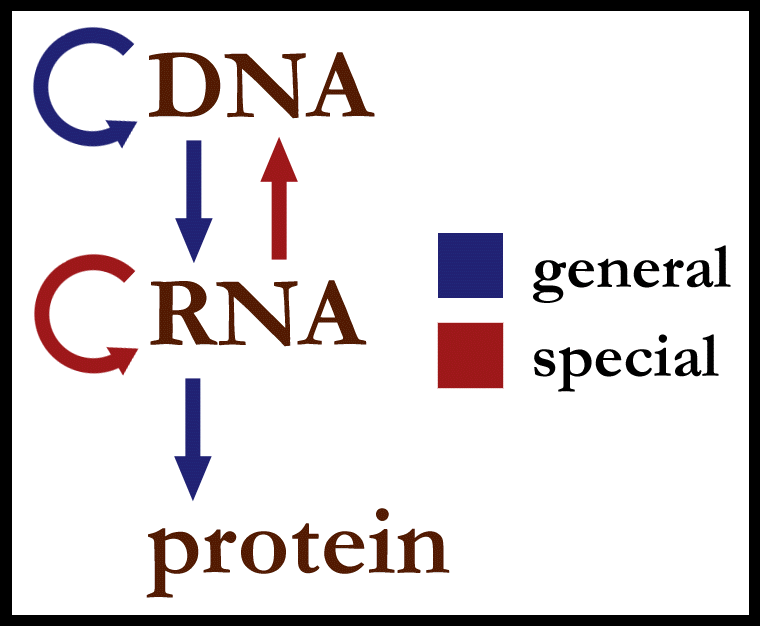

Some biological processes, like DNA replication by a single DNA copying machine, involve a series of steps rather than one dominant step. In these cases, the timing becomes less random overall.
For instance, while each step of incorporating building blocks into a DNA strand by a single DNA copying machine follows a random pattern, the overall replication process is more tightly regulated.
Such insights from single-molecule experiments help us understand complex biological processes, including gene expression, where individual cells exhibit fluctuations due to the random behavior of molecules like mRNA and proteins.
This variability within cells is like the ups and downs seen in everyday life, providing a deeper understanding of how living things work.
Apart from mechanistic findings for DNA biology, my key takeaway from the paper was the importance of randomness and unpredictability, which my mentor, Mandelbroth, also depicted in his fractal geometry research for biology.
For interested readers, I provided a high-level overview of genetics and key concepts like DNA within the longevity context in a recent story titled The Expression / Mutation Impacts of the Longevity Genes Klotho, FOXO3, SIRT1, APOE, and BRCA.
Impact and Implications of the Central Dogma of Molecular Biology
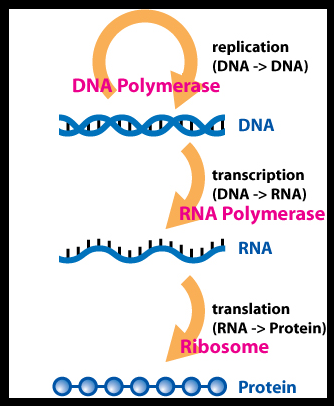

The Central Dogma of Molecular Biology, proposed by Dr Crick in 1958, has profound implications for molecular biology and genetics in later years. The dogma's central idea is that genetic information flows in one direction, from DNA to RNA to proteins, and this flow of information is unidirectional and irreversible.
Dr Crick’s hypothesis laid the foundation for understanding the molecular basis of life processes. Initially, it simplified the complex mechanisms underlying genetic expression and regulation, providing a framework for studying gene function.
However, as research progressed, exceptions to the dogma were discovered, such as RNA viruses that can reverse-transcribe RNA into DNA. Despite these exceptions, the concept remains fundamental in molecular biology education and research.
Additionally, epigenetics has revealed mechanisms by which environmental factors can influence gene expression without altering the underlying DNA sequence. Therefore, while the central dogma provided a helpful framework, our understanding of molecular biology has evolved to acknowledge its nuances and exceptions.
The central dogma has had a far-reaching impact on various scientific fields, like medicine, biotechnology, and evolutionary biology, shaping our understanding of genetic diseases, gene therapy, protein engineering, and evolutionary processes.
The theory has guided countless studies to decipher the molecular mechanisms underlying cellular functions and diseases, revolutionizing our approach to diagnostics, therapeutics, and genetic engineering, now allowing a pig’s kidney to help a human survive.
What was the critical success factor for Dr. Crick?
As documented in this paper, Dr. Crick attributed his success to the ‘gossip test,’ which became a popular concept in science communities.
The “gossip test” is a way to identify our genuine interests. Essentially, it suggests that whatever topic or subject we find ourselves eagerly discussing or gossiping about reflects our true passions and interests.
By paying attention to what captures our attention in conversations and informal discussions, we can gain insight into what truly excites us and where our interests lie.
For example, during my conversations with friends and colleagues, I always find myself subconsciously discussing some aspects of health, like metabolic or mental health, as it is my mission in life.
Some Examples of Rejected Prominent Papers
Besides Dr Crick’s revolutionary paper, several other papers of famous scientists were rejected. Here are some prominent examples:
“The Origin of Species” by Charles Darwin was rejected by several publishers before finally being published in 1859.
“On the Electrodynamics of Moving Bodies” by Albert Einstein was rejected by several journals before publication in the Annalen der Physik in 1905.
“The Interpretation of Dreams” by Sigmund Freud was initially rejected by several publishers before finally being published in 1899.
“The Structure of Scientific Revolutions” by Thomas Kuhn was rejected by several publishers before finally being published in 1962.
You might have heard that JK Rowling’s Harry Potter and the Sorcerer’s Stone allegedly took thirteen attempts to be accepted by a publisher.
Why Science Goes Beyond Scientific Ideas Alone and Why Should We Welcome the Unexpected in Discovery
Vision, hard work, consistency, rigor, and determination undoubtedly form the bedrock of scientific progress, yet chance encounters and sheer luck also exert considerable influence. Take, for instance, the serendipitous discovery of Viagra.
Originally developed to treat angina, researchers stumbled upon its unexpected side effect of enhancing male sexual function. This unforeseen revelation not only revolutionized the treatment of erectile dysfunction but also highlighted the serendipitous nature of scientific inquiry. Now, even scientists have found more serendipitous effects of Viagra, possibly delaying Alzheimer’s disease.
Aspiring scientists and technologists should embrace their pursuit's unpredictability, recognizing that some groundbreaking discoveries arise from moments of fortuitous happenstance, which we call serendipity.
Science, art, and spirituality are connected and can complement each other if used with an open mind. By remaining open to the unexpected and cultivating a spirit of curiosity, we can open new knowledge domains and constructs and drive innovation in ways they never imagined.
In the dynamic landscape of science, welcoming serendipity can lead to discoveries that transcend the confines of traditional scientific thinking, taking humanity toward a brighter, more enlightened future.
As I’ve discussed previously, science and religion should not seek to supplant their fundamental roles but rather collaborate and augment each other’s functions and core messages. Here is What Happens When Science Becomes a Religion or the Opposite Happens.
Conclusions and Takeaways
In addition to presenting a groundbreaking theory that reshaped our comprehension of molecular biology and genetics, the primary focus of this post is to underscore the significance of reinterpreting rejections as invitations for additional information rather than enduring setbacks.
A rejection from a scientific journal or community does not inherently devalue the ideas put forth. For instance, I encountered obstacles when sharing insights on extended fasting and meditation within a transhumanism Reddit community. Another significant health community banned my lifetime participation due to concerns over the perceived “dangers” of my discussions on autophagy and mitophagy.
Regrettably, the health community did not provide an avenue for appeal or discussion. However, I did not give up and found better platforms to convey my messages to my readers, which were appreciated and cherished.
While scientific breakthroughs are often attributed to meticulous planning and brilliant insights, the journey of discovery is often filled with unexpected twists and turns. Similar articles went viral on other platforms that value scientific insights.
Scientists recognize that scientific theories, no matter how foundational, are subject to refinement and modification as new data and information emerge. This highlights the need for rigorous experimentation, critical analysis, peer review, open-mindedness, humility, and curiosity in scientific inquiry.
Clinicians can appreciate the significance of fundamental principles like the central dogma in understanding the molecular basis of diseases and developing innovative treatments. They should also remain vigilant to exceptions and nuances in biological systems that may challenge existing paradigms.
For the public, understanding the process of scientific discovery and the iterative nature of knowledge generation promotes scientific literacy and informed decision-making.
The media ought to exercise caution in presenting scientific discoveries, avoiding the temptation to sensationalize or take findings out of context.
Governing bodies and academic journals play a crucial role in upholding scientific integrity by promoting transparency, reproducibility, and responsible communication of research findings.
Together, we should focus on interdisciplinary collaboration, support diverse perspectives, and prioritize disseminating accurate and reliable information to advance scientific progress for the betterment of society.
Thank you for reading my perspectives. I wish you a healthy and happy life.
To inform my new readers, I wrote numerous articles that might inform and inspire you. Some of my topics include brain, mental health, cognitive function, significant health conditions, longevity, nutrition/food, valuable nutrients, ketogenic lifestyle, self-healing, weight management, writing/reading, and humor, including 100+ Insightful Life Lessons from My Circles for the Last 50+ Years.
I publish my health and wellness stories on EUPHORIA. My posts do not include professional or health advice. I only document my reviews, observations, experiences, and perspectives to provide information and create awareness.
If you are a writer, you are welcome to join my publications by sending a request via this link. I support 28K writers who contribute to my publications on this platform. I also have another profile to write and curate tech stories.
Importance and Value of Medium Friendship for Writers and Readers