
How a Finland’s Civil-Military Co-Operation Exercise Can Help You Beat Your Most Fearful Fears
Why keeping a society functioning during a crisis strengthens all citizens' mindset
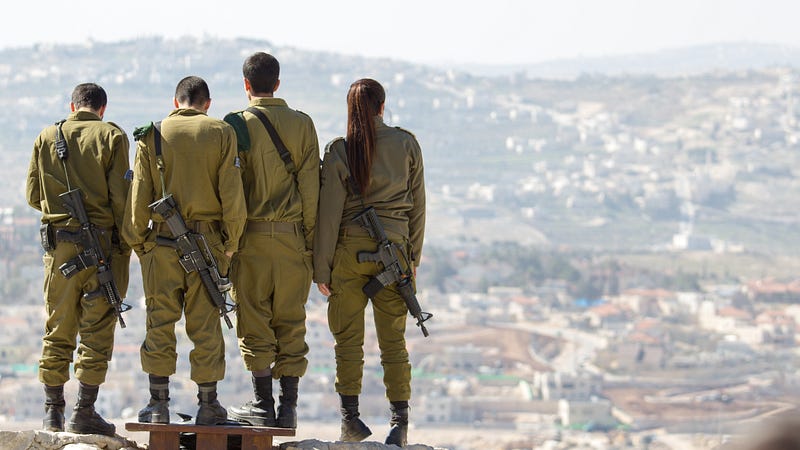
Early in the morning, gunshots and machine-gun fire erupted over the island of Santahamina in Helsinki. A violent exchange of fire sets off alarms, and someone shouts, “We need backup.” An armed vehicle arrives, shielding a group of armed soldiers. In seconds, an intense explosion erupts, and a set of movements and tactical structures are initiated to eliminate the enemy.
This could have been a war episode like any other, but it was just a simulation prepared by the Finnish Defense Forces. The soldiers were mere CEOs, politicians, organization leaders, and PRs, chosen by the Finnish government to take part in Finland’s National Defense course.
Participation is invitation only; you can’t apply. The National Defense Course targets a large cross-section of decision-makers to make part of a broader strategic mindset. Almost 10,000 citizens already did this course since 1961. It’s part of the Finnish genes now.
It’s been more than 500 years since the last time Portugal and Spain were at war. So, our frontiers look like mere bureaucratic formalities. Our language is a little different, but we can understand each other. The Spaniards love Portugal, and the Portuguese love Spain.
The Finnish case is a little different.
San Petersburg and the Finnish border are 20 miles away. And as you can imagine, being a Russian neighbor is not the sweetest thing on earth.
In 1939, three months after World War II broke out, the Soviets invaded Finland. Finland’s border to Russia has 830 miles long. And the soviets claimed security reasons for the protection of Leningrad (San Petersburg).
With temperatures ranged as low as –43 °C, and despite superior military strength, especially in tanks and aircraft, the Soviet Union suffered severe losses.
So, the Finnish know, for too long, the premises of being prepared for everything.
This week, I read in Monocle magazine an article describing the Finnish military’s National Defense Course to all citizens. It’s not a regular course. It’s a civil-military operation addressed only by invitation to specific fringes of the population.
This Finland’s National Defense Course made me reflect on leadership, resilience, and mental toughness. And reading a little about Finland’s history, you’ll immediately understand these three concepts.
The fundamental insight is that the most crisis-resistant and resilient modern societies are ones in which the authorities, the business community, other civil organizations, and the citizens together prepare for a crisis.- Charly Salonius-Pasternak.
So, why the military training is so essential to develop these personal skills? And how could a peaceful country benefit from the Finnish example to improve its resilience?
A good half of the art of living is resilience.
Finland’s National Defense Course includes tactical war strategies and lectures on themes as cyber warfare. But also Russian affairs to climate change and social marginalization.
‘Students’ visit crucial institutions as the Finnish parliament, the Central Criminal Police, and other vital authorities.
These initiatives provide future quality in public services, increasing public administration efficiency and improving the communication between citizens and institutions. The relationship between citizens and public institutions fortifies transparency and the country’s awareness. And enhances the sense of sharing and the common good.
It really helped me understand the critical role that reliable journalism plays in countering disinformation and promoting civic engagement.- Krista Taubert, head of news department at Finland’s national broadcast YLE.
Finland is consistently ranked among the world’s safest and most stable countries. Citizens have a high degree of trust in the military and national authorities.
Resilience is the key. And although most studies on the military’s psychology focus on the side effects of being present in war settings, civil society’s relationship also takes on a relevant role for the military in strengthening institutional command structures even for ordinary people.
I believe all countries should have something like it. National defense is something that concerns us all, not just the soldiers.- Kim Berg, MP from the Social Democratic Party
The Big Five conscientiousness domains.
Conscientiousness predicts longitudinal increases in self-oriented perfectionism. What does it really mean?
Conscientiousness is the personality trait of a person who shows an awareness of the impact that their own behavior has on those around them.- psychologistworld.com
Countries with a certain degree of military culture have a high sense of the whole’s interconnection, causing highly efficient structures, mentally healthy, and protected against external instabilities.
That awareness is vertically integrated into Finnish society, with the highest ranks sharing those principles with ordinary people.
Naturally, the study of these phenomena dragged from the military to the civilian world, giving rise to studies that indicated a relationship between personality factors and performance.
These two factors may be mediated by self-efficacy beliefs. Self-efficacy was a partial mediator for the relationship between the Big Five conscientiousness domain and military performance.
The theory identifies five factors:
- openness to experience (inventive/curious vs. consistent/cautious)
- conscientiousness (efficient/organized vs. extravagant/careless)
- extraversion (outgoing/energetic vs. solitary/reserved)
- agreeableness (friendly/compassionate vs. critical/rational)
- neuroticism (sensitive/nervous vs. resilient/confident)
From the sense of group to the individual, we can find the advantages of personal development for the individual who improves their life outcomes.
Conscientious people are generally more goal-oriented in their motives, ambitious in their academic efforts and at work, and feel more comfortable when they are well-prepared and organized.- psychologistworld.com.
Even recent studies demonstrated higher levels of conscientiousness as children were observed to enjoy longer lifespans than other subjects (Friedman et al., 1993).
Final Thought
Conscientiousness mean being mindful of those around you. A conscientious person is always finding stability with people around, like family or friends.
If a country leader is a conscientious person, she or he will be able to share its principles with the lower hierarchies. The same happens with a father or mother before their children. Or even a teacher before their students.
As a full-time writer, being conscientious means having a sense of duty towards readers. My ability to share ideas and content as the art of writing makes me an active participant in a common good.
Sharing ideas and principles makes me a player within a megastructure. If my conscience for the common good is weak, the system automatically makes its natural selection.
Practicing conscientiousness is an individual duty, but it must also be a collective premise in Finland. They are aware of the effect that their words and actions can have on people in everyday situations.
Conscientious people are often driven by their personal goals. They have goal-oriented behavior, willingness to work hard, and a high energy concentration towards achieving their goals.
Finland becomes to be an excellent example for me to study conscientiousness as a writer. Building a resilience structure around me can bring a strong awareness of what’s outside my field of vision.
A writer is an observer. We watch, analyze, deep think, and share.
In a humble and simplistic perspective, we writers are the conductors of some form of global conscientious morality.
Carrying this responsibility is a sign that we are alive.
It is a sign that we are part of the whole and can be part of the change.
Being better and helping others to be better is the goal.
It’s an endless race to the perfectionism utopia.
Sign up for my email list and join the happiest readers on Medium. (This is where you get exclusive access to my daily activities, experiences, and daily thoughts)