
How To Create the Future You Want: Fighting Inequality To Avoid Wars
That’s the lesson I insist on reminding my daughters
In the 24 hours since this time yesterday, over 45,000 people have died of starvation, 38,000 of them children.- In “The last hours of ancient sunlight” by Thom Hartmann
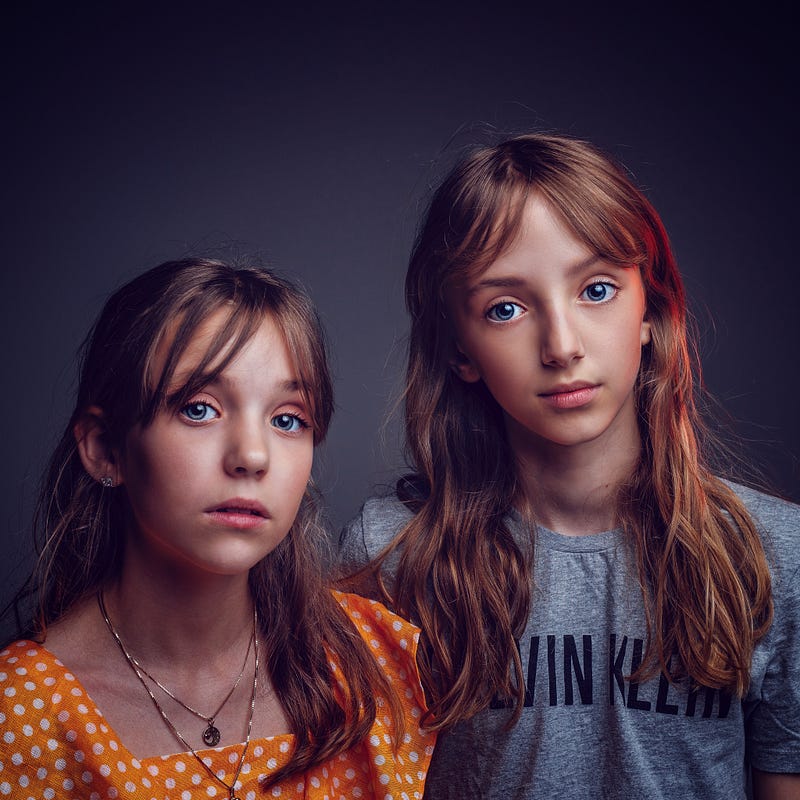
It’s sunset. The three of us stand to sit on the big rock. Me and my two daughters. Staying there and feeling all that overwhelming phenomenon of mother nature breeding life.
It took five years to earn enough money to buy that unique house in the mountains. I never thought I could do it. It’s such a perfect space for my daughters and me: the quietness, the piece, the landscape.
All around is pure nature. Oak trees everywhere. Ancient forests around, a world of microorganisms under the undergrowth. Mushrooms growing everywhere. Birds of prey in the air, squirrels, and rabbits straying at high speed.
I look at them and feel the peace in their minds. They are contemplating.
Their hair dances slightly to the warm breeze blowing from the south. My daughters’ hair dance will be etched in my memory forever.
The sun is almost gone.
My youngest daughter suddenly says:
“Dad, there are many children in the world that can’t have what we have, right? We are lucky to live here. We are lucky to have you explain to us how the world works. Thank you, daddy. I love you.”
The Harvest Is Plentiful, but the Laborers Are Few
By the year 2000, I finished my first book and started another one.
It’s a story about an apocalyptic event. Some strange and powerful event transformed the planet into a no man’s land. A few humans survived. And they are thirsty to find out what happened and why they were the only survivors.
This book is about global warming and climate change. At a sudden point, the survivors have no energy, no internet, no food, so they had to survive as humans did 5,000 years ago.
Can you imagine our planet without energy? Imagine all the consequences it would bring to our lives.
I hope I can finish it in 2022. I felt inspired by one of the books that had the most impact on my world view.
In the 24 hours since this time yesterday, over 200,000 acres of rainforest have been destroyed in our world. Fully 13 million tons of toxic chemicals have been released into our environment. Over 45,000 people have died of starvation, 38,000 of them children. And more than 130 plant or animal species have been driven to extinction by the actions of humans. (the last time there was such a rapid loss of species was when the dinosaurs vanished.) And all this just yesterday.- In “The last hours of ancient sunlight” by Thom Hartmann
As I was reading Thom’s book, my stomach started to turn. I never thought humans could do such atrocities to our planet. But they do. Every day. For dozens of years.
After I finished reading the book “The last hours of ancient sunlight.” I started to write my second book. I imagined a world with nothing that we take for granted.
That was the first day of my new life.
I wanted to do something different than the usual. I wanted to contribute to a better attitude, a responsible way of living on planet earth.
I planned to buy a large area where I could start planting trees. Like Ernst Gotsch did in Brasil, in Fazenda Da Toca.
I finally did it one year ago. A beautiful farm with approximately 2 acres of oak trees and a lot of water. It’s my paradise. From day one, I started to plant trees and other plants and vegetables.
My mind started to work on ways to get more money to buy more land. As much as I can as fast as I can. For what?
Plant more trees.
Inequality Is a Fact. Equality Is a Value.
Our world’s deepest pockets — “ultra-high net worth individuals” — hold an astoundingly disproportionate share of global wealth.- inequality.com
Inequality has been on the rise across the globe for several decades.
Some countries have fought to reduce the number of people living in extreme poverty. But economic gaps have continued to grow as the very wealthiest get richer. Among industrial nations, the United States is by far the most top-heavy. Americans have the most percentage of national wealth and income going to the wealthiest 1 percent than any other country.
According to the Credit Suisse Global Wealth Report, the world’s richest 1 percent, those with more than $1 million own 44 percent of the world’s wealth. Their data also shows that adults with less than $10,000 in wealth make up 56.6 percent of the world’s population but hold less than 2 percent of global wealth.
Individuals owning over $100,000 in assets make up less than 11 percent of the global population but own 82.8 percent of global wealth. Credit Suisse defines “wealth” as the value of a household’s financial assets, plus real assets (housing), minus their debts.- inequality.com
According to the International Monetary Fund, the world’s 10 wealthiest billionaires own $801 billion in combined wealth. That sum is greater than the total goods and services most nations produce on an annual basis.
The globe is home to 2,153 billionaires, according to the 2019 Forbes ranking.
As hard as these numbers and percentages are, they reflect the reality of our planet. They reflect humankind.
Ray Dalio, in a very clarifying interview, talks about inequality and refers to three major forces shaping the world:
1- The long-term debt and monetary cycle;
2- Wealth gap and raise of conflicts;
3- The rise of China, challenging an existing power, as the USA.
Ray Dalio studied a 5,000-year history of the rising and decline of reserve currencies of empires.
He analyzed the rise and decline of the Dutch empire. The rise and fall of the British empire and its reserve currency. And now, the rise and decline of the USA empire.
The Federal Reserve keeps printing money. While printing money, the dollar gets weaker as the world’s primary currency.
Of course, central banks will do everything in their power to control currencies. And, as Bitcoin rises as a hard asset, many questions remain about the future of exchanges.
The key is to harness the benefits while managing the risks. (…) Why is this brief tour of history relevant? Because the fintech revolution questions the two forms of money, we just discussed — coins and commercial bank deposits. And it questions the role of the state in providing money. (…) We are at a historic turning point. You — young and bold entrepreneurs gathered here today — are not just inventing services; you are potentially reinventing history. And we are all in the process of adapting.- Christine Lagarde in Singapore Fintech Festival
I’m still in my mindset mode on my farm, with my two daughters, as I reflect on the world’s inequality. That question my daughter asked about inequality keeps dangling in my mind.
Some questions come to my mind.
Are digital currencies going to minimize inequalities? Can they provide more accessibility to the remaining two-thirds of the world population?
I believe we should consider the possibility to issue digital currency. There may be a role for the state to supply money to the digital economy.
This currency could satisfy public policy goals, such as financial inclusion, and security and consumer protection; and to provide what the private sector cannot: privacy in payments.- Christine Lagarde in Singapore Fintech Festival
I’m an optimist.
And I share my optimism with my daughters. I want them to fight against inequality. And for that to happen, they have to believe it’s possible.
So, I give them hope. Because hope gives them new ways of fighting the mother of all wars- the world’s inequality.
Elon Musk and Bitcoin Will Change the World
‘It’s the dumbest experiment in human history’: Elon Musk rails against fossil fuel use and climate change.- Business Insider
Can Elon Musk still stop climate change?
Musk’s various ventures are a testament to his personal investment in sustainable energy sources. Electric cars, solar energy, and energy storage.
And I hope Tesla can succeed in its way to a more sustainable world. The most exciting thing about these disruptive technologies is that they are deflationary.
Self-driving cars, energy storage, or solar energy tend to get cheaper and cheaper. An example: you buy a personal computer. One year later, the same computer costs 10 to 25% less than the original version.
Our economic systems were not built for a world driven by technology where prices keep falling. They were built for a pre-technology era when labor and capital were inextricably linked, a period that counted on growth and inflation, an era where we made money from scarcity and inefficiency. That era is over. But we keep on pretending that those economic systems still work. — Jeff Booth in “The price of Tomorrow.”
For the last thousand years, humankind has never created a store of value owned by ordinary people without the hand of the powerful ones.
Until today.
Bitcoin becomes the first monetary network because it’s a synthetic safe-haven asset. It’s like all the Gold’s right parts, and it’s sitting on a massive network.
Satoshi Nakamoto created cryptocurrencies to permit capitalism’s laws to work freely.
Technology would allow us to work less. Prices would keep falling and falling. And we would free our time instead of work all our lives to put our money somewhere. While we retire in the last part of our lives with supposed state protection.
For decades we allow ourselves to create a monster called the great debt cycle. But it’s at the end.
If we allow technology to embrace a deflationary world we would see inequality diminish. The wealth gap would turn into an equal rule for every one game. And the third-world countries would have a second chance. Because everyone could trade in the same cryptocurrencies.
We would have fewer central banks and big institutions dictating the rules.
And for that, more freedom.
Final Thoughts
It’s sunset. The three of us stand to sit on the big rock. Staying there and feeling all that overwhelming phenomenon of mother nature breeding life.
My daughters feel the freedom of the industrial world. And as a father, it feels good.
But my youngest daughter’s question made me remember that we live in a highly polluted world. We live in a high inequality world. And that we need to clean this mess.
The ideas of economists and political philosophers, both when they are right and when they are wrong, are more powerful than is commonly understood. Indeed the world is ruled by little else. Practical men, who believe themselves to be quite exempt from any intellectual influence, are usually the slaves of some defunct economist.”- John Maynard Keynes in The General Theory of Employment, Interest and Money (1936)
I will keep planting more trees with my bare hands.
And educate my two daughters with these principles.
They are going to be the future of our planet.
I’m planting for later harvesting.
Sign up for my email list and join the happiest readers on Medium. (This is where you get exclusive access to my daily activities, experiences, and daily thoughts)