
The Fascinating History of the Christmas Tree
Another holiday tradition with a background.
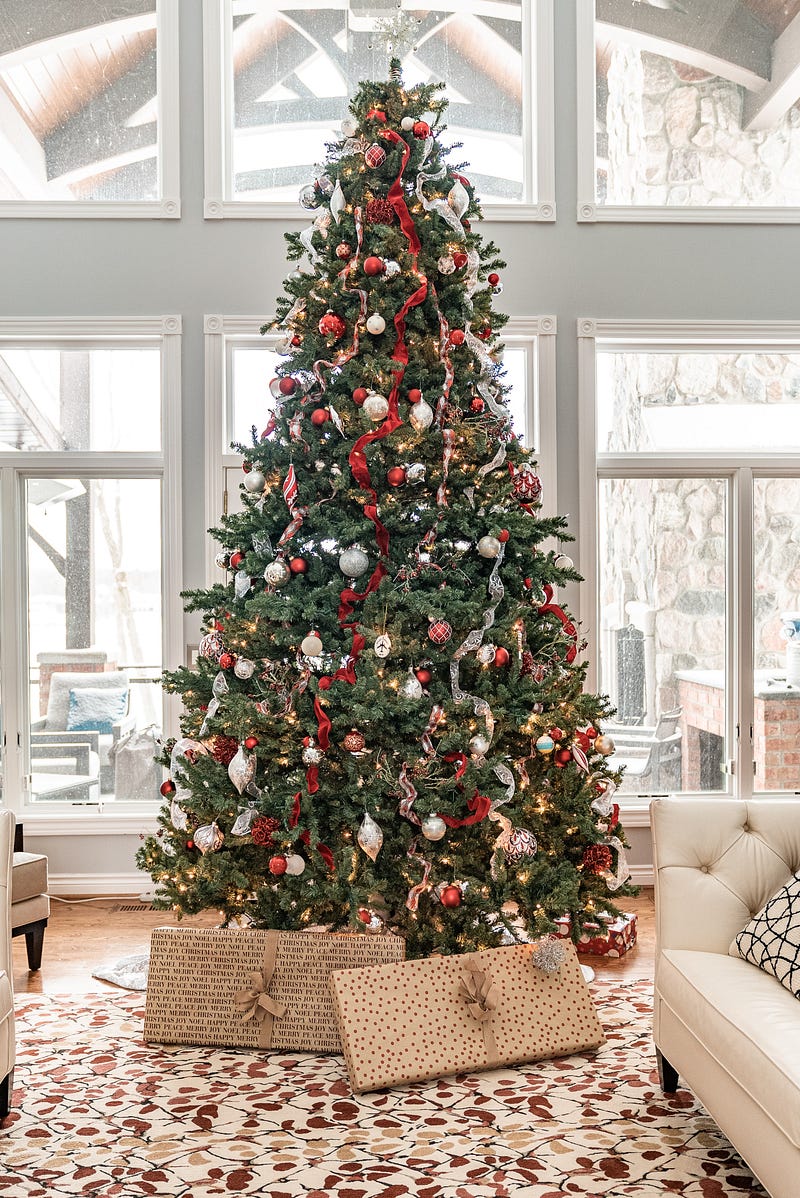
Now you are wondering, how is there a history of decorating an evergreen tree? Well, yes, there is. However, this one isn’t entirely pagan.
Yeah, there were pagan celebrations worshipping trees before Christianity. But I don’t think that any of those cultures ever decorated one. But here is the actual story.
Where it All Began.
The 16th-century German Protestant reformer Martin Luther went out on a walk one winter night. At the time, he was thinking of a sermon to write. He stopped and saw a star shining on top of one of the evergreen trees. But, for some reason, this image inspired him to bring this indoors. It gave him the idea to chop one down, bring it to his family, and decorate it with candles.
Of course, you know that adding fire to wood is dangerous. But people did it. In 1846, there was a sketch in a British Newspaper depicting Queen Victoria, her German husband Albert, and their kids around a Christmas tree.
How this tradition got to America was by German settlers. They were putting up the Christmas tree in their homes as early as 1747. And it spread from there.
People put dangerous candles on their Christmas Tree and colored paper, wafers, tinsel, apples, etc. In the early 20th century, the candle was replaced with the invention of electric Christmas lights.

Artificial Christmas Trees.
There is even a history of artificial ones too. The very first of these trees were made in 19th century Germany out of goose feathers dyed green. The feathers were attached to wires that looked like branches and wrapped around a dowel like a trunk. The reason for this was in response to the deforestation that was happening in that country. These trees were very popular in the early part of the last century. One benefit to these and future artificial trees is that they don’t shed needles.
In 1930, the British Adis Houseware Company made an artificial tree from brush bristles dyed green. They were the same bristles made from animal hair and used in toilet brushes.
In 1958, the first Aluminum trees were made in Chicago and Manitowoc, Wisconsin. These were popular Christmas trees in 1965. The manufacturers continued to make Aluminum trees until the 1970s.
As you know, artificial Christmas Trees today are made out of PVC plastic. In the late 80s and early 90s, most people stopped buying real trees for environmental reasons and started purchasing and keeping artificial ones.
I know that there are still people out there that prefer the real trees to the fake ones. And there are environmentalists out there that have a problem with the use of PVC plastic. Maybe in the future, there will be artificial Christmas Trees made out of something environmentally friendly.
References
Dambly’s Garden Centre. (n.d.). The History and Evolution of Artificial Trees. damblys.com. https://damblys.com/history-artificial-trees/
A & E Television Network. (2009, October 27). History of the Christmas Tree. History.com. Retrieved November 17, 2021, from https://www.history.com/topics/christmas/history-of-christmas-trees
Wikipedia. (n.d.). Artificial Christmas tree. Wikipedia.org. Retrieved September 17, 2021, from https://en.wikipedia.org/wiki/Artificial_Christmas_tree
Wikipedia. (n.d.). Christmas Tree. Wikipedia.org. Retrieved November 8, 2021, from https://en.wikipedia.org/wiki/Christmas_tree


