
History of the Indian Constitution
I’ve been reading my old diary entries and apart from confirming the fact that I was a freaking weirdo, I did find some sweet and happy memories which hold a special place in my heart. One of them really cheered me up. No, it is not about my childhood crush, well d u h. I am talking about those days in the National Cadet Corps, where I was absolutely happy and proud to roam around my small world wearing that khaki uniform. Ah, those were the days!

As an individual residing on earth and responsible for every action on this planet, I do look forward to the betterment of the world. But, there is this something about “India” which brings chills down my back and creates a feeling inside me that cannot be explained through words or even through the thing you do while playing dumb charades which is clearly not acting but something else, whatever that is. My sister says that’s called patriotism. That’s not what I am going to talk or even write about. Although, it was indeed an inspiration to find a topic to finally write again for MUNners Daily. Aswathy S totally agreeing to the statement with a nod of approval. :)
January 26, every Indian knows (god, I hope so) it is our…? Yes, I am waiting for you to complete the sentence. It is our REPUBLIC DAY! Great, I am sure most of you got that. But, what is this republic day? Why do we observe such a day? Why do we celebrate in schools and colleges giving out sweets, singing the national anthem, hosting the flag, oh wait, I might have messed up the order. Oops. Anyways, do you know why we have a national holiday called Republic day? I mean independence day means the day our nation got freedom. And obviously, Gandhi Jayanthi means birthday of Bapuji. So, what about the Republic day? Well, I am sure if not all, at least some of you might know that on 26 January 1950, the Constitution of India came into effect, replacing the Government of India Act as India’s governing document. Yes, that much is basic general knowledge. If you didn’t know that, well at least now you do. Next question (yes, this is a very intimidating writer on MUNners Daily), does anyone really know the history of our country’s constitution? The number of people getting the answer is slowly declining. *inserts pity headshakes and strong judgements*. For those of you who know ( I am sure Jairam R Prabhu does!), kudos to you, a salute! Yes, they totally deserve it. For the rest of the mob, I shall pass on to you my wisdom on the history of the Indian constitution. As an added bonus, I shall also share some fun facts about it as well.
The Indian constitution does have a very long history with many important dates and amendments. From the Regulating Act 1773, to the Indian Independence Act 1947, we will look into the growth of our constitution.
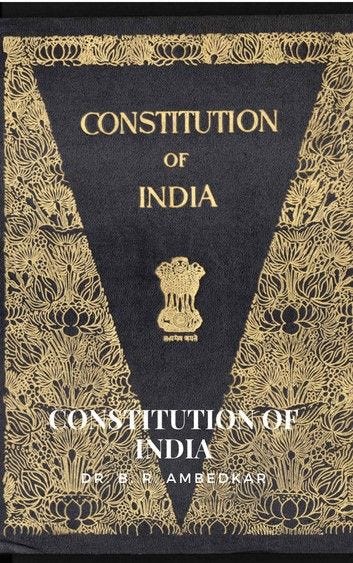
Let us take a look at all the events which acted as the backbone for the development of our current Constitution.
Regulating Act of 1773
After the battle of Buxar in 1765, the East India Company (EIC) became a commercial cum political establishment in India by securing the rights to collect revenue in the states of Bengal, Bihar and Orissa. This created administrative anarchy and the British Parliament had to question the amount of money collected by the company. In order to plan it out, the British officials set up a secret committee where they studied and observed the functioning of the company. Through this committee, the British Government brought the Regulating Act to take control of the working of the company.
Fun fact: Dr. B. R. Ambedkar is considered to be the father of the Indian constitution.
Pitt’s India Act of 1784
This act clearly indicated that the British government completely took control over the territories owned by the East India Company which were called, “The British possessions in India”. The Act also enabled the British parliament to form a board of control which had the power to control all the functions and affairs of the company including civil, military and revenue. It is under this Act, where a department of the British government in England was created to indicate the power over the Company. Through the establishment of this act, Governor’s Councils were also formed in Madras and Bombay.
Fun fact: Indian constitution is the longest written constitution in the world.
Charter Act of 1813
It was through this act that the East India Company had to shut down all its financial Indian trade. Also, in order for the English to practice their religion, a Church was established at the expense of the East India Company in India.
Fun fact: It took 2 years 11 months and 18 days to write the Constitution of India entirely.
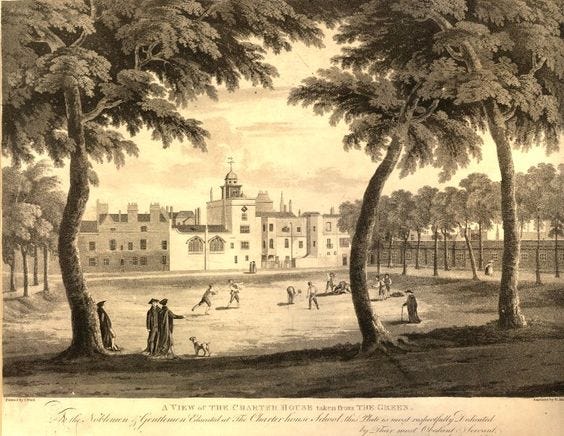
Charter Act of 1833
The Governor-General of Bengal was designated as the Governor-General of India under this act. Do you know who was the first Governor-General of India? I can give you a clue. “He does not have anything to do with rings. But he sure does have something to do with Shakespeare and more!” This is possibly the worst clue you could give to someone for answering a question from history :). You’re welcome.
Well, the answer is… Lord William Bentinck! He has been credited for significant social and educational reforms in India including abolishing Sati, suppressing female infanticide and human sacrifice. He was given full power to interfere in the working of the government of all parts of India.
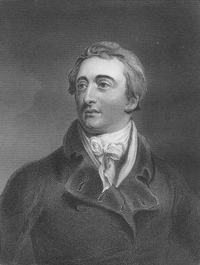
Also, through this act the EIC completely became an administrative entity and had to end their role as a commercial entity.
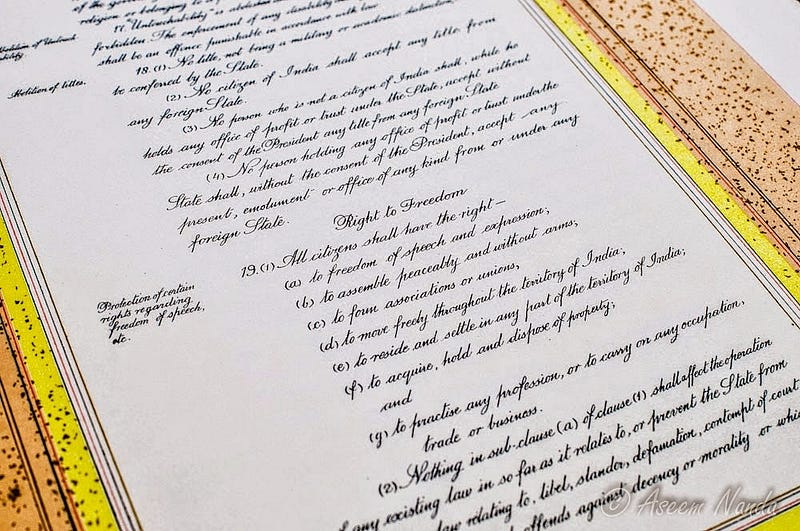
Fun fact: the Indian Constitution is a hand-written document.
Charter Act of 1853
In order to improve and develop the works of the government, the Board of control was allowed to impose rules and regulations to the services in India. And this is how they introduced the system of an open examination in India, which is now considered as a battle for brain warriors: The Civil Service Examination. This was the competitive examination that one had to pass to enter the civil services. 1853! Can you all believe that? How Bizarre! The Governor General’s Executive council was also extended through this act.
Fun fact: The Indian constitution was framed with an expenditure of ₹6.4 million.
Government of India Act of 1858
The British government finally managed to replace the rule of east India company through this act. The act allowed the Secretary of State for India, who was one of the cabinet ministers of the British government, whose salary was paid from the revenue of India. The Secretary had full authority over the administration of India along with his agent who was the Viceroy. The Governor-General of India was made Viceroy of India through this act and yes, guess who was our first Viceroy? Clue: we learnt this in history at school! Lord Canning, familiar?
Fun fact: The original hand-written copies of the Indian Constitution are preserved in helium-filled cases in the Library of Parliament House.
Indian Councils Act of 1861
The Viceroy nominated 6–12 Indians to the legislative council for legislation purposes. This act gave the Viceroy stronger power in India.
Fun fact: Prem Behari Narain Raizada (Saxena), wrote the entire constitution in a flowing italic style in the best calligraphic tradition of our country. The task was completed in 6 months. 254 pen-holder nibs were used and No: 303 Nib was used for this calligraphy. Later artists from Shantiniketan including Beohar Rammanohar Sinha and Nandalal Bose decorated it.
Indian Councils Act of 1909
The act included provisions for the expansion of the legislative council to make it more effective, where the number of additional members of the council was significantly increased. This act also had a provision to appoint Indians to the Viceroy’s Executive council. Even though the members were not allowed to vote, they were given the permissions to ask reasonable questions and debate on the budgets. It was under this act where they granted separate electorate to the Muslim community. This act came into effect from Sir John Morley and Minto who were then the Secretary of State and Viceroy of India respectively.
Fun fact: On the day the constitution was signed it was raining heavily outside the parliament which was considered to be a good omen by the assembly members.
Government of India Act of 1919
Also referred to as the Montague-Chelmsford Reforms, this act was brought by the then Secretary of State for India and Viceroy of India named E.S Montagu and Lord Chelmsford respectively. The concept of dyarchy was introduced through the act under which the ministers were accountable to their respective subjects and held the “Transferred Subjects” charges, while the “Reserved Subjects” were to be in charge of the governors of the provinces and their councilors. A second Indian member was included in the Governor-General’s Executive Council through this act by introducing a bicameral legislature at the center. The act also provided provisions to form and establish the Public Service Commission of India. Along with all these changes, the act also expanded the communal electorate for the minorities like Sikhs, the Europeans, Christians and Anglo-Indians present in the country.
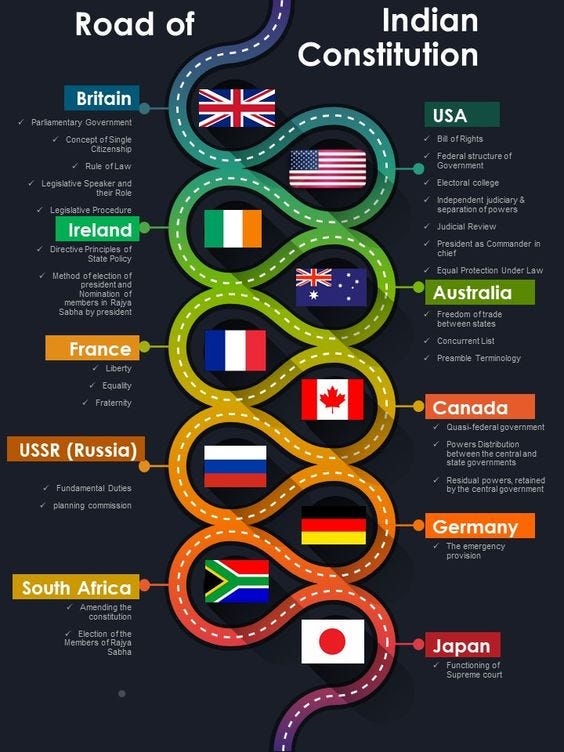
Fun fact: The articles defined under the Constitution of India are taken from many constitutions and ideals of many other countries around the globe.
Government of India Act of 1935
Born from the outcome of the Simon Commission Report, deliberation at round table conferences, and the white paper introduced in the British Parliament, this act was the longest and the last constitutional measure brought to India by the British officials. The dyarchy introduced by the GOI Act 1919 was abolished and removed along with an alternative provincial autonomy. The act also provided the Federation of India, consisting of Governor Provinces and the Princely States. Under this act, British India was divided into two parts that are the 2 governor provinces and the 5 chief commissioner provinces. Even though the dyarchy was abolished at the provincial level, it still existed at the center. Guess which country was separated from India through this act. Clue: The name of the country has been changed now. Myanmar or Burma is the right answer!
Fun fact: The first article of the Constitution says, “India, that is Bharat, shall be a Union of states”.
Indian Independence Act of 1947
This is the act which led to the partition of India into India and Pakistan on 15 August 1947. According to the Government of India Act, 1935, each nation and all its provinces were to be governed until their new constitution was formed. The Act provided the conditions for the termination of the British rule over the Princely States.
Fun fact: The Constituent Assembly had 284 members, out of which 15 were women.
The Constitution of India 1950
The draft of our current constitution was prepared by Dr. Rajendra Prasad in February 1958. Finally, our constitution was adopted by the constituent assembly on 26th November in the year 1949 which later came into effect on 26th January 1950. That’s the story of how India was declared as an independent and sovereign state by establishing a responsible government at both the center and the provinces.
Fun fact: There are a total of 1,17,369 words in the English version of the Indian Constitution.
Watch this YouTube video to know more about the making of the Indian Constitution:
Conclusion
The Constitution of India is the primary law of India and we just got to know about the history of its formation. It shows the great struggles and fights faced by the remarkable freedom fighters and leaders who managed to get us independence and establish such an effective constitution in the nation. Let us take a moment to thank them all for their efforts and love for our country. No constitution is perfect and that is the truth, but it will be once the nation understands and accepts the truth. Happy Republic Day!
Read more
We are now on LinkedIn! Do follow us there!
Follow us on Medium for more for International events, news, MUN tips and tricks, and detailed analysis. Get in touch with us on Social media to stay in the loop -
Facebook| Instagram|Telegram Channel |YouTube|Twitter|LinkedIn.
We also invite guest writers to publish their material via this blog!
Interested in writing for MUNner’s Daily? Go right ahead and fill out this form. We will get back to you soon!