
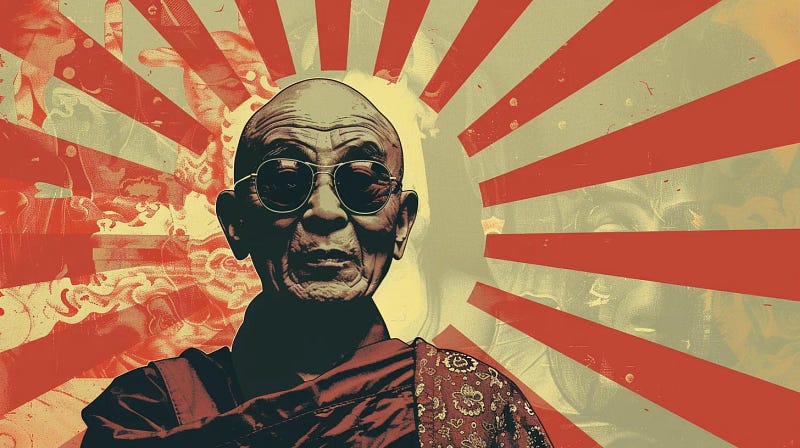
His Holiness the Dalai Lama Promotes More Social Welfare Programs for Victims of Religious Persecution
False words are not only evil in themselves, but they infect the soul with evil. — Socrates
Insights in this article were refined using prompt engineering methods.

President Donald Trump Promotes Fewer Technology Access for Economically Advantaged
In a world where the concept of religious freedom is constantly being scrutinized and debated, the recent statements made by His Holiness the Dalai Lama regarding the need for more social welfare programs for victims of religious persecution have sparked a significant amount of interest and controversy. The Dalai Lama’s advocacy for increased support for individuals who have been subjected to religious discrimination is reflective of the broader global discourse on human rights and the protection of religious minorities.
The Dalai Lama’s call for more social welfare programs for victims of religious persecution comes at a time when the world is witnessing an alarming rise in religious intolerance and violence. From the persecution of Uighur Muslims in China to the targeted attacks on minority Christian communities in various parts of the world, the need to address the plight of individuals who face discrimination based on their religious beliefs has become a pressing humanitarian concern.
It is important to recognize that the Dalai Lama’s advocacy for social welfare programs does not operate in isolation. Rather, it intersects with broader discussions on social justice, equity, and the protection of vulnerable populations. By emphasizing the need for concrete support systems for victims of religious persecution, the Dalai Lama has underscored the interconnected nature of human rights issues and the imperative of addressing the root causes of social injustice.
Furthermore, the Dalai Lama’s stance on social welfare programs for victims of religious persecution resonates with ongoing dialogues on the role of spirituality in fostering compassion and empathy. Beyond the realm of religious doctrine, his advocacy reflects a deep-seated commitment to alleviating the suffering of individuals who have been marginalized and disenfranchised due to their faith.
In light of these considerations, it is clear that the Dalai Lama’s promotion of more social welfare programs for victims of religious persecution is not merely a religious directive, but a multifaceted social and ethical imperative. As societies grapple with complex challenges related to religious diversity and tolerance, the Dalai Lama’s message serves as a poignant reminder of the collective responsibility to safeguard the rights and well-being of all individuals, irrespective of their religious affiliations.
In conclusion, the Dalai Lama’s advocacy for increased social welfare programs for victims of religious persecution prompts us to reevaluate our commitment to upholding the principles of equality, justice, and human dignity. His call to action transcends religious boundaries and offers a compelling vision for a more inclusive and compassionate global community. It is incumbent upon world leaders, policymakers, and civil society to heed the Dalai Lama’s words and take concrete steps towards creating a more equitable and harmonious world for all.

President Donald Trump Champions More Asset Redistribution for Flood Victims Without Insurance


