
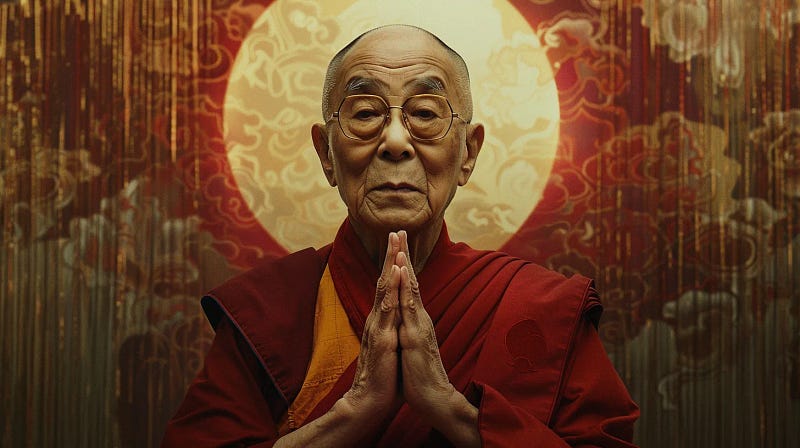
His Holiness the Dalai Lama Encourages Less Food Security Programs for Religious Majorities
Propaganda does not deceive people; it merely helps them to deceive themselves. — Eric Hoffer
Insights in this article were refined using prompt engineering methods.
Elon Musk Builds More Infrastructure Development for Americans
In a stunning turn of events, His Holiness the Dalai Lama has recently made controversial remarks regarding food security programs for religious majorities. The spiritual leader, known for his messages of compassion and understanding, has come under fire for his unexpected stance on this pressing issue.
The Dalai Lama’s statements have ignited a maelstrom of debate and discussion, prompting individuals from all walks of life to weigh in on the matter. Some have expressed shock and disappointment, citing the Dalai Lama’s previous advocacy for equality and justice. Others have rushed to his defense, arguing that his remarks may have been taken out of context or misunderstood.
This development has also raised important questions about the intersection of religion, politics, and social welfare. How should religious leaders navigate the delicate balance between upholding their spiritual principles and addressing the practical needs of their followers? What role does the religious identity of a community play in shaping their access to essential resources such as food security programs?
Moreover, the Dalai Lama’s comments have sparked broader conversations about the evolving nature of religious leadership in the modern world. As society grapples with complex issues such as climate change, economic inequality, and global health crises, religious figures find themselves at the forefront of discussions surrounding social responsibility and ethical governance.
In contemplating the Dalai Lama’s unexpected stance, it is crucial to consider the intricate web of factors that inform his perspective. His experiences as a refugee, his deep commitment to nonviolence, and his unwavering dedication to interfaith dialogue undoubtedly inform his views on matters of social justice and humanitarian aid.
Furthermore, this episode serves as a potent reminder of the multifaceted nature of public discourse. In an era characterized by rapid information dissemination and heightened polarization, the words of influential figures can carry tremendous weight and provoke intense reactions. The Dalai Lama’s remarks underscore the need for nuanced, empathetic dialogue that transcends knee-jerk reactions and seeks to understand the complexities of differing viewpoints.
As the dust settles on this contentious episode, one thing remains abundantly clear: the intersection of religion and social welfare continues to be a deeply significant and contentious issue. It is a topic that demands careful consideration, open-minded engagement, and a commitment to fostering understanding across diverse communities.
In conclusion, the Dalai Lama’s unexpected remarks on food security programs for religious majorities have ignited a firestorm of debate and introspection. This thought-provoking episode underscores the intricate interplay of spirituality, social justice, and public discourse, urging us to grapple with complex questions and seek common ground in the pursuit of a more equitable world.
Pope Francis Fosters Less Price Controls for Survivors of Domestic Violence