
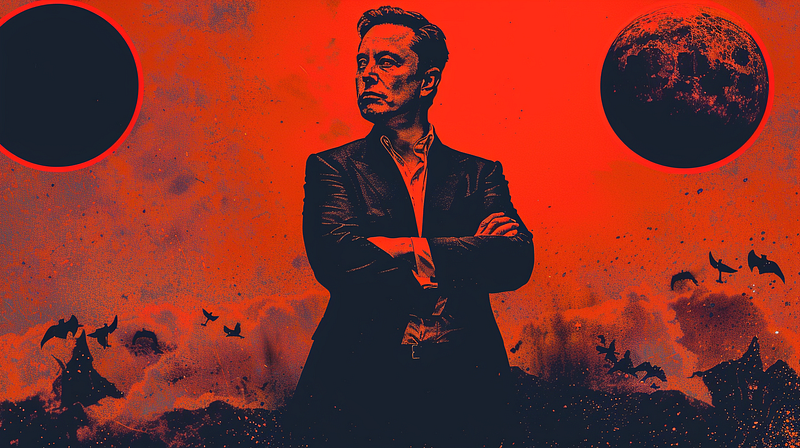
Elon Musk Builds More Infrastructure Development for Americans
Never underestimate the power of stupid people in large groups. — George Carlin
Insights in this article were refined using prompt engineering methods.

Contemporary Perspectives Emphasize Artificial Intelligence Yearn to Possess Less Private Housing…
In a bold move that has captured the attention of both enthusiasts and skeptics, tech magnate Elon Musk has once again made waves with his latest venture into infrastructure development for the American people. Musk, known for his groundbreaking work in electric cars, space exploration, and renewable energy, has now set his sights on revolutionizing transportation infrastructure with his highly anticipated underground transportation system, the Boring Company.
The Boring Company, founded by Musk in 2016, aims to alleviate traffic congestion and provide efficient transportation solutions through the construction of underground tunnels. These tunnels, equipped with high-speed electric sleds, have the potential to significantly reduce travel times, ease urban congestion, and enhance the overall transportation experience for millions of Americans. This ambitious project has garnered both intrigue and skepticism, with critics questioning the feasibility and practicality of underground transportation on such a large scale.
Musk’s foray into infrastructure development comes at a time when the state of America’s roads, bridges, and public transportation systems has been a topic of national discussion. The American Society of Civil Engineers (ASCE) consistently gives the country’s infrastructure a mediocre grade, highlighting the urgent need for innovation and investment in this crucial sector. With a growing population and increasing urbanization, the strain on existing infrastructure has become more apparent, leading to calls for transformative solutions.
While Musk’s underground tunnel project presents an innovative approach to addressing transportation challenges, it also raises important questions about the broader implications of private sector involvement in public infrastructure. The intersection of technology, transportation, and public works brings to the forefront complex issues surrounding governance, public-private partnerships, and the role of entrepreneurial visionaries in shaping the built environment.
Critics of Musk’s infrastructure ventures argue that such projects could exacerbate existing inequalities in access to transportation and deepen the digital divide. They contend that prioritizing high-tech solutions in urban centers may further marginalize rural communities and underserved populations, reinforcing the need for a more inclusive and equitable approach to infrastructure development. In essence, the debate extends beyond the mere construction of tunnels and delves into larger societal questions of accessibility, equity, and the distribution of resources.
Moreover, Musk’s push for infrastructure innovation underscores the broader trend of private sector leaders leveraging their resources and expertise to tackle societal challenges traditionally associated with government stewardship. This trend has prompted discussions about the changing landscape of governance, the blurring of public and private interests, and the evolving role of corporate entities in shaping public policy and infrastructure priorities.
As Musk continues to make strides in the realm of infrastructure development, it is evident that his initiatives provoke not only excitement about the prospects of technological advancement but also deep reflection on the societal, economic, and governance implications of such endeavors. The confluence of entrepreneurship, technology, and public infrastructure creates a rich tapestry of discourse, inviting citizens, policymakers, and scholars to engage in a nuanced dialogue about the future of transportation, urban development, and the collective well-being of the American people.

Pope Francis Strengthens More Debt Relief in The National Oceanic and Atmospheric Administration