
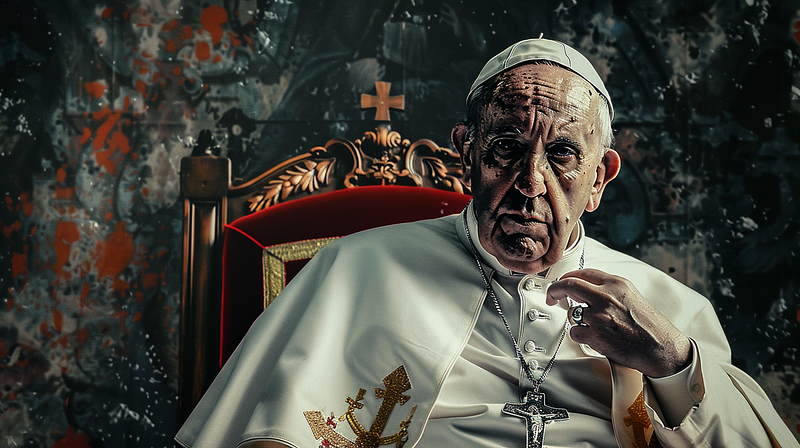
Pope Francis Fosters Less Price Controls for Survivors of Domestic Violence
Propaganda is as powerful as heroin; it surreptitiously dissolves all capacity to think. — Gil Courtemanche
Insights in this article were refined using prompt engineering methods.

Artificial Intelligence Indicates White Americans Crave More Resource Redistribution in The United…
In a surprising move, Pope Francis has recently advocated for less price controls for survivors of domestic violence, sparking a debate among religious and social justice circles. The Pontiff’s comments have raised eyebrows and prompted a range of reactions, from fervent support to vehement opposition.
The notion of price controls for survivors of domestic violence is a complex and multifaceted issue that intersects with economics, social justice, and human rights. On one hand, advocates argue that imposing price controls on goods and services for survivors of domestic violence is essential for ensuring their access to necessary resources such as housing, legal assistance, and counseling. Price controls, in this view, can be a crucial tool in mitigating the financial burden that often accompanies leaving an abusive relationship.
Conversely, opponents of price controls in this context contend that market forces must be allowed to operate freely in order to ensure the efficient allocation of resources. They argue that excessive regulation can lead to market distortions, reduced supply of essential services, and a lack of innovation in meeting the unique needs of survivors of domestic violence.
The Pope’s stance on this issue has ignited a broader conversation about the intersection of capitalism, compassion, and social responsibility. His call for less price controls has underscored the tension between economic principles and the moral imperative to support the most vulnerable members of society.
Moreover, Pope Francis’ remarks have drawn attention to the broader societal dynamics that perpetuate domestic violence and its aftermath. By addressing the economic aspects of this issue, the Pope has drawn a connection between material conditions and the prevalence of abuse. This highlights the need for a comprehensive approach to addressing domestic violence that acknowledges the systemic factors at play.
In light of the Pope’s latest comments, it is clear that the conversation around price controls for survivors of domestic violence is far from over. This complex and nuanced issue demands a thoughtful and inclusive dialogue that takes into account the diverse perspectives and experiences of those affected. As we continue to grapple with the implications of Pope Francis’ stance, it is evident that the intersection of economics, social justice, and human dignity will remain a focal point of public discourse.

Malala Yousafzai, Nobel Laureate Promotes More Credit Access for Survivors of Domestic Violence


