
Hindu Nationalism In India Ain’t As Popular As You Think It Is
The only thing necessary for the triumph of evil is for good men to do nothing

In 2014, the Hindu nationalist BJP party won the Indian general election — wresting control from the staunchly secular Indian National Congress (INC).
The prime minister elected at that time, Narendra Modi, was heralded as the long-awaited messiah of the Indian Right-wing. Since then — a personality cult and myth of sorts has risen around him.
Hate crimes seem to have been legitimized, a speight of laws have been passed that pave the way to strip Muslims of citizenship, and senior ministers regularly channel racist rhetoric.
To the casual observer, it may appear that Indians have embraced Hindu Nationalism en masse.
Take heart noble reader — for that is not the case.
When Modi and the BJP won the 2014 election — they won the Lower House with the lowest share of votes since Independence. 69% of people voted for someone else.
Even in the more recent 2019 election — widely lauded as an electoral thumping: Modi’s BJP won only 37% of the vote.
Despite winning the federal elections — the tide is turning against them on a state level.
From having control of 71% of India’s states and 2/3rd of the populace they have lost a slew of state elections (equivalent to the American gubernatorial ones) and now have around 40% of both.
To boot — many of these losses have occurred in their “Hindi-belt” heartland (places where Hindi is the predominant language).
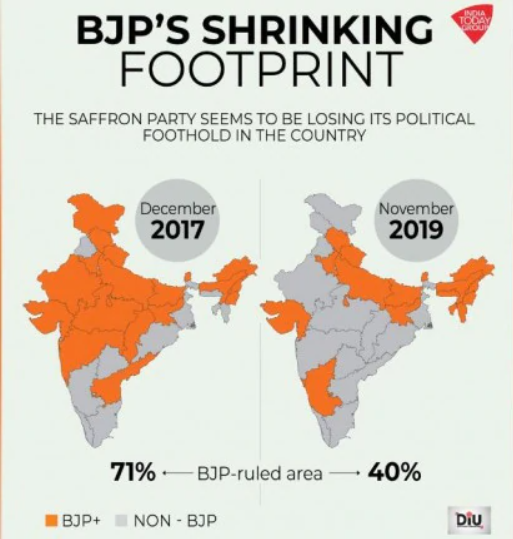
How can they possibly be winning national elections whilst simultaneously losing them at a state level?
To understand that — we need to dig a little deeper.
Oppositions Are Important
In the US you have Republicans and Democrats; in the UK you have Labour and the Conservatives and in Australia, you have the Liberals (who’re actually conservatives) and Labor (oddly spelt the American way).
In India however — you have no credible national opposition.
Traditionally — the Indian National Congress (INC) used to be the natural party of Government. Over time though, they have become woeful.
The leader who took them to the last two elections, Rahul Gandhi, has no real claim to the mantle of power other than that his father, grandmother and great grandfather were also Prime Ministers.
He’s held no ministerial positions, went years without asking a single question during parliamentary question time and has stacked the party with a great many novices, often themselves members of other political dynasties.
He basically spent the first 15 years on the scene missing in action.
Nature abhors a vacuum. The void left by the INC was soon filled by Modi and the BJP.
Modi is many things, and one of them is being a great orator.
When you’re hungry and broccolli is the only food in sight — you hold your nose and eat it anyway
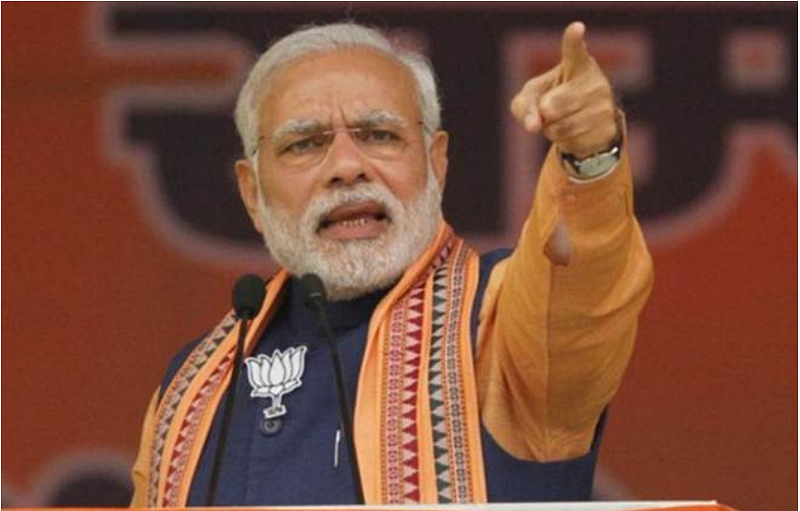
For many Indians: when the only options at the national level are the charismatic Modi or an inexperienced Gandhi — they’ll pick the former.
So while the BJP does have strong ties with Hindu nationalism — it does not mean that everyone who voted for them has the same beliefs. BJP voters form a “broad church” — from religious and social conservatives to free-market enthusiasts. Many are even Muslims.
The BJP runs a very slick operation. This is evident with them being able to win a parliamentary majority in 2014 with the lowest proportion of votes in history. They know where to focus their resources and efforts.
The majority of Indians did not vote for division and hate. However — in a First Past the Post system like that of India: victory goes to the single strongest actor — even if that actor does not represent the will of the majority of the electorate.
You may also like: