
Hindsight Bias: Understanding the Psychology Behind Our 20/20 Vision
Have you ever looked back on a decision you made and thought, “I should have seen that coming”? If so, you may have fallen victim to hindsight bias, a common cognitive bias that affects our ability to accurately judge the likelihood of events after they’ve already happened.
hindsight bias is the tendency to overestimate how predictable an event was, once you know the outcome. For example, if you correctly guess the winner of a sporting event, you might later believe that the outcome was more obvious than it actually was. Similarly, if you make a bad investment and lose money, you might think that you should have seen the warning signs all along, even if those signs were not clear at the time.
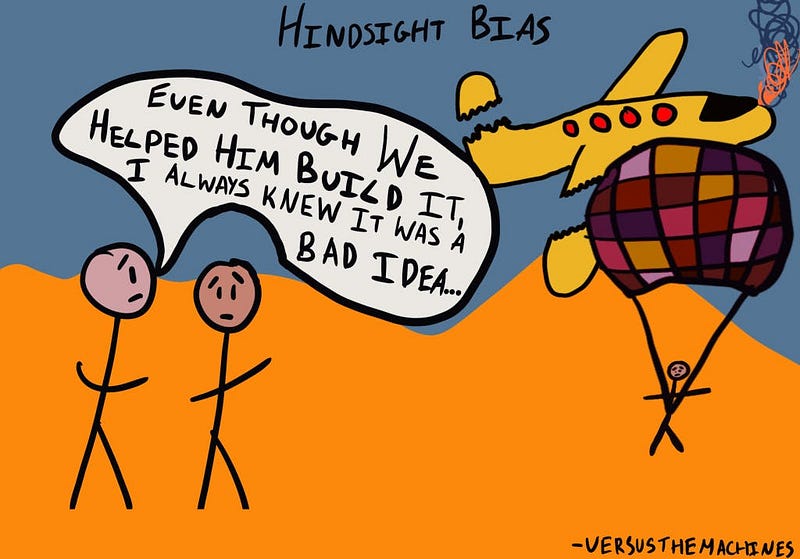
While hindsight bias might seem like a harmless quirk of human psychology, it can actually have serious consequences in many different domains, from personal finance to healthcare. By assuming that we should have known the outcome of an event, we might overlook important information or fail to learn from our mistakes.
In this article, I am going to explore the psychology of hindsight bias, the different types of hindsight bias, and the effects of hindsight bias on decision-making. I also discuss strategies for mitigating hindsight bias and the role of critical thinking in avoiding this common cognitive trap.
The Psychology of Hindsight Bias
Once we know the outcome of a particular event, we tend to believe that we could have predicted that outcome all along, even if we couldn’t have. So why is that? Well, researchers have identified a number of cognitive and behavioral factors that contribute to this bias. For one, we humans have a natural tendency to seek patterns and connections in the world around us, even when they don’t necessarily exist. This means that we may be more likely to see an event as predictable in hindsight, simply because we can make connections that weren’t apparent to us at the time.
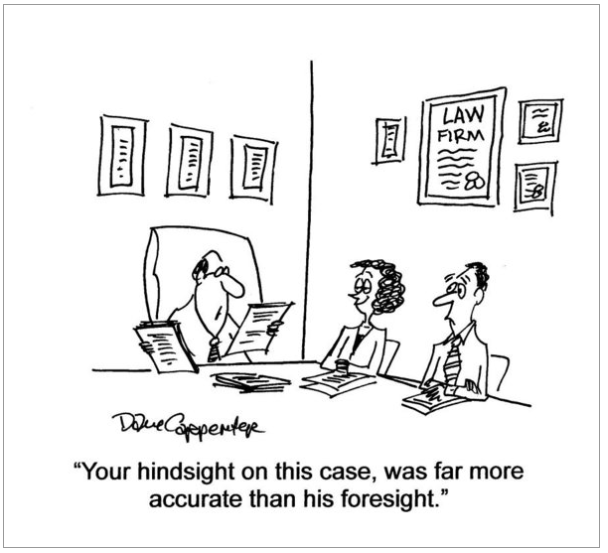
In addition, hindsight bias is closely related to confirmation bias, which is our tendency to seek out information that confirms our existing beliefs and ignore information that contradicts them. In the context of hindsight bias, this means that once we know the outcome of an event, we may selectively recall information that supports that outcome and forget information that doesn’t.
So what are some examples of hindsight bias in action? Well, think about a sports game that you watched recently. If your team won, you might look back on the game and think, “Oh, I knew they were going to win all along. They were clearly the better team.” But if your team lost, you might think, “Man, they really should have won that game. It was so obvious that they were the better team.” In both cases, you’re overestimating how predictable the outcome was based on what you know now, rather than what you knew at the time.
You can even trace this bias in a way history books are written. Many historians have written their stories based on their hindsight 20/20 vision. Historians may unconsciously view historical events through the lens of what they know happened, making it difficult for them to fully understand the context in which those events occurred. This can lead to oversimplification and an over-reliance on the hindsight perspective, potentially causing historians to draw inaccurate conclusions about the motivations and actions of historical figures. Hindsight bias can also affect the way historians interpret primary source documents and other historical evidence, as they may subconsciously read into the evidence in light of what they know happened later on.
Overall, hindsight bias is a fascinating phenomenon that sheds light on the many ways in which our brains can play tricks on us. By understanding the psychology behind this bias, we can work to overcome it and make better decisions in the future.
Types of Hindsight Bias
Let’s look at some of the flavors of this bias. There’s confirmation bias, where we selectively seek out information that confirms our existing beliefs. Then there’s outcome bias, where we judge the quality of a decision based on its outcome, rather than the information available at the time the decision was made. And of course, the classic hindsight bias, where we look back on past events and convince ourselves that we knew all along what was going to happen.
One reason that hindsight bias is so sneaky is that it often feels like common sense. After all, it seems perfectly reasonable to judge a decision based on the results it produces, or to trust our gut instincts when we feel like we already know what’s going to happen. The problem is that these biases can lead us astray, causing us to make suboptimal decisions and miss out on valuable opportunities.
The good news is that there are strategies we can use to reduce the impact of hindsight bias. One approach is to practice critical thinking and actively seek out information that challenges our assumptions. Another is to make decisions based on a pre-defined set of criteria, rather than relying on our gut instincts in the moment. And of course, it never hurts to take a step back and reflect on our decision-making process, acknowledging the ways in which hindsight bias may be influencing our thinking.
Effects of Hindsight Bias
We’ve all been there, haven’t we? That moment when you look back on a decision you made and think, “Well of course that was the right choice, how could I have ever thought otherwise?”
Unfortunately, this tendency to see things as more predictable and inevitable than they really were can have some serious consequences. For example, hindsight bias can make us overconfident in our decision-making abilities, leading us to take unnecessary risks or miss out on opportunities. It can also cause us to overlook the factors that actually influenced our past choices, leading us to make similar mistakes in the future. You might argue that overconfidence can be a good thing, and I agree with you that there are some scenarios in which this bias can provide a much-needed boost. However, if overconfidence leads you to make financial decisions at an inopportune time, it could potentially ruin your life.
Let me give you an example from the world of finance. This bias play a huge role the way investors make decision in market and it’s documented by many researchers in the field of finance. Investors may be more likely to believe that they can predict the future based on past events, leading them to make decisions that may not be well-informed. This overconfidence can cause investors to take on more risk than they should, which can lead to financial losses. Additionally, hindsight bias can lead investors to overestimate the effectiveness of their investment strategies, potentially causing them to hold onto losing investments for too long or to sell winning investments too soon. I’m sure now that investment is open to retail investors through tools like Robinhood app, you might also have felt the impact of this bias on your personal life.
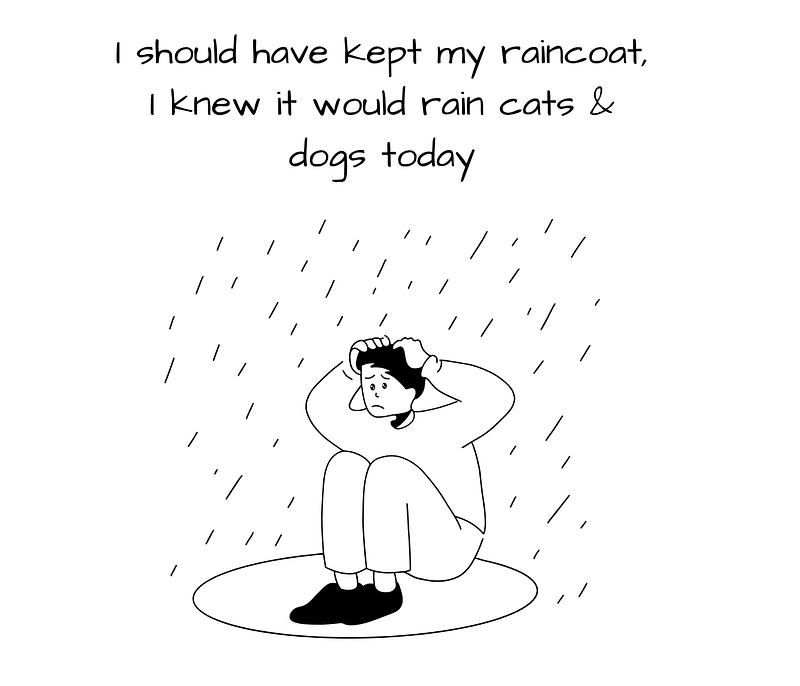
But it’s not all doom and gloom! There are ways to combat this bias and avoid these negative effects. One approach is to focus on the process rather than the outcome. By analyzing the factors that went into a decision and evaluating the quality of the decision-making process itself, we can gain a more realistic understanding of our own abilities and improve our decision-making going forward.
Another strategy is to seek out diverse perspectives and challenge our own assumptions. By actively seeking out information and opinions that contradict our own, we can gain a more well-rounded view of a situation and avoid the trap of hindsight bias.
Reducing Hindsight Bias
One of the most effective ways to reduce hindsight bias is to approach decisions with an open mind. This means avoiding preconceived notions about what the outcome of a decision will be, and being willing to consider multiple perspectives.
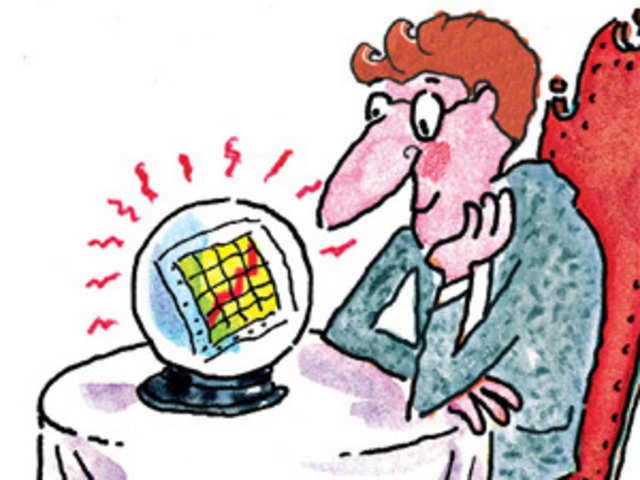
Another key strategy is to focus on the process of decision-making, rather than just the outcome. By keeping track of your reasoning and assumptions throughout the decision-making process, you can avoid falling prey to hindsight bias. Basically, if you track your decisions, you might clearly see that following the path of past outcomes does not necessarily lead you to a better outcome. You should analyze the outcomes critically and separate the signal and noise.
It’s also important to seek out feedback and critique from others, especially those with different viewpoints or expertise. This can help you identify blind spots in your thinking and avoid being overly confident in your decisions.
Finally, don’t forget the power of self-reflection. By taking the time to examine your own biases and assumptions, you can become more aware of when hindsight bias might be creeping in and take steps to correct for it. Nothing is more delightful than seeing someone who is a very self-aware.
Of course, these strategies won’t completely eliminate hindsight bias, but they can certainly help to minimize its impact.
Conclusion
I hope I’ve covered enough ground for you to see the full picture of hindsight bias, from the psychological factors that contribute to hindsight bias, to the different types of biases that fall under this umbrella, and even some strategies for reducing its impact.
But what are the key takeaways that you should remember from all of this?
First and foremost, it’s important to recognize that hindsight bias is a pervasive and powerful force in decision-making. By distorting our memories and perceptions of the past, it can lead us to make mistakes that could have serious consequences. By being aware of its existence and actively questioning our assumptions and beliefs, we can take steps to avoid falling prey to this cognitive trap. Critical thinking and self-reflection are essential tools in the fight against it.
And finally, remember that this bias is just one of many cognitive biases that can affect our thinking. Build a toolbox of strategies to prevent these cognitive biases from deteriorating the quality of your decision-making.
References
- “Thinking, Fast and Slow” by Daniel Kahneman — This best-selling book by a Nobel laureate in economics explores the many ways in which our minds can be led astray by cognitive biases, including hindsight bias. Through a series of engaging anecdotes and studies, Kahneman provides insight into how we think and make decisions, and how we can overcome some of our cognitive limitations.
- “The Art of Thinking Clearly” by Rolf Dobelli — Dobelli offers a compendium of 99 cognitive biases that can cloud our judgment and lead us astray. The book is organized into short, digestible chapters that make it easy to dip in and out of, and each section includes actionable advice for avoiding common cognitive traps, including hindsight bias.
- “Mistakes Were Made (But Not by Me)” by Carol Tavris and Elliot Aronson — This book explores the ways in which our brains can play tricks on us, leading us to justify our mistakes and deflect responsibility onto others. Through a series of case studies and examples, Tavris and Aronson show how hindsight bias can lead us to deny our own culpability and shift blame to others.
- “The Invisible Gorilla” by Christopher Chabris and Daniel Simons — This book is a fascinating exploration of the many ways in which our minds can deceive us, including through hindsight bias. Using engaging examples and research studies, the authors show how our perceptions of the world around us can be distorted by our own preconceptions and expectations.
- “The Black Swan” by Nassim Nicholas Taleb — This influential book challenges conventional wisdom and explores the ways in which rare and unpredictable events can have outsized impacts on our lives. Taleb argues that our tendency to focus on the past and assume that the future will be similar can lead us to overlook potential risks and opportunities, and hindsight bias is just one of the many cognitive biases that can blind us to the true nature of the world.
- “Nudge” by Richard Thaler and Cass Sunstein — In this book, the authors explore the ways in which the choices we make can be influenced by subtle cues and nudges. Through a series of examples and case studies, they show how hindsight bias can be mitigated by designing systems and processes that guide us toward better decisions, rather than relying on our own judgment alone.
- “The Halo Effect” by Phil Rosenzweig — This book challenges the common assumption that successful companies and individuals have a winning formula that can be replicated by others. Instead, Rosenzweig argues that our perceptions of success are often clouded by hindsight bias, leading us to attribute too much credit to those who have succeeded in the past and too little to those who have failed. By understanding the ways in which hindsight bias can distort our perceptions of success, we can avoid some of the mistakes that others have made.
- The Mental Tug-of-War: A Study of Cognitive Dissonance and its Consequences (link)
- Mind Over Matter: The Science Behind Availability Heuristic in Everyday Life (link)
- Beyond Self-Delusion: The Science of Illusory Superiority (link)
- Uncovering the Roots of Self-Serving Bias (link)
- The Dark Side of Attribution: How Our Perceptions Can Impact Relationships and Decisions (link)
I hope you enjoyed reading this 🙂. If you’d like to support me as a writer consider signing up to become a Medium member. It’s just $5 a month and you get unlimited access to Medium 🙏 . Before leaving this page, I appreciate if you follow me on Medium and Linkedin 👉